
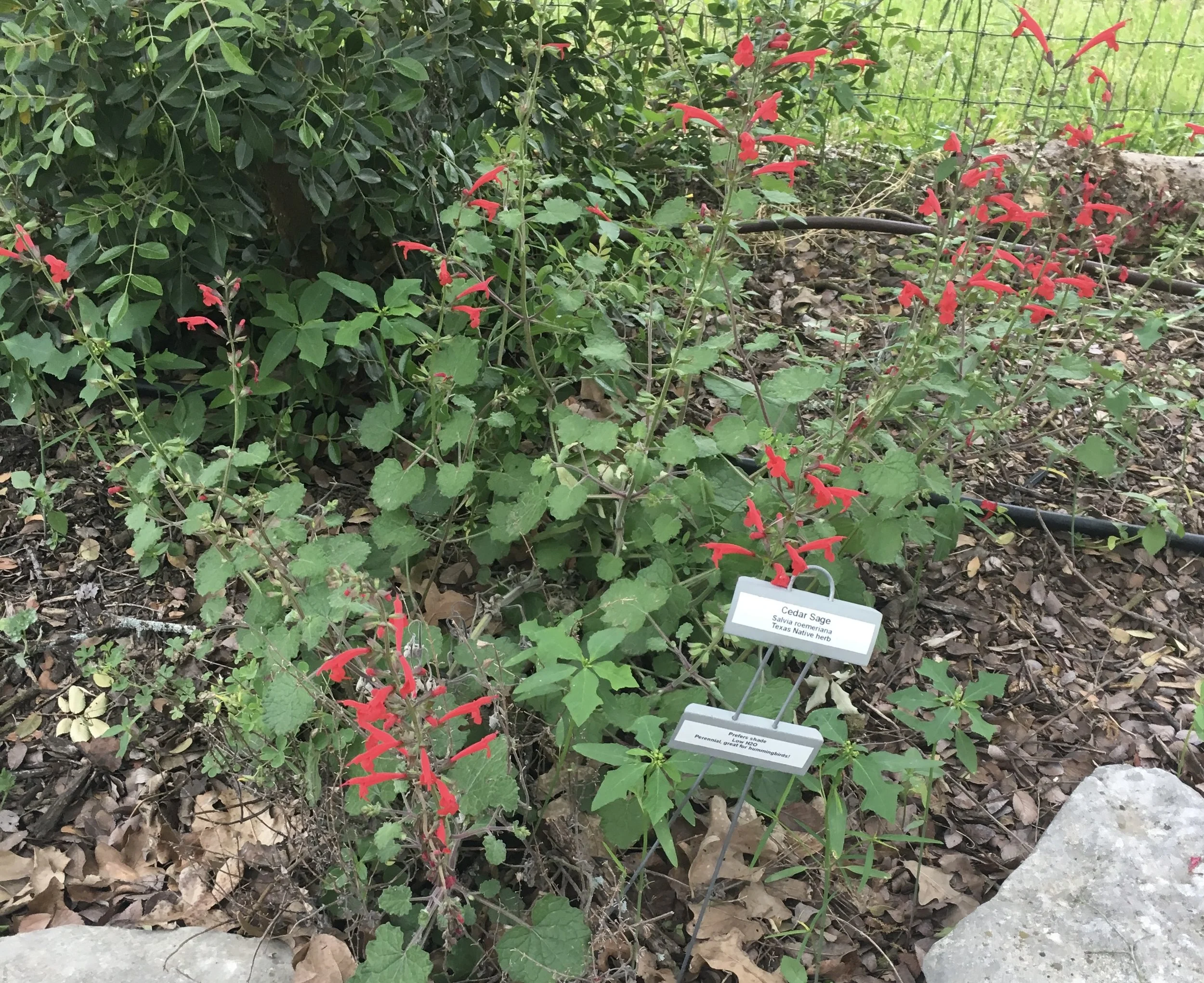
Cedar Sage
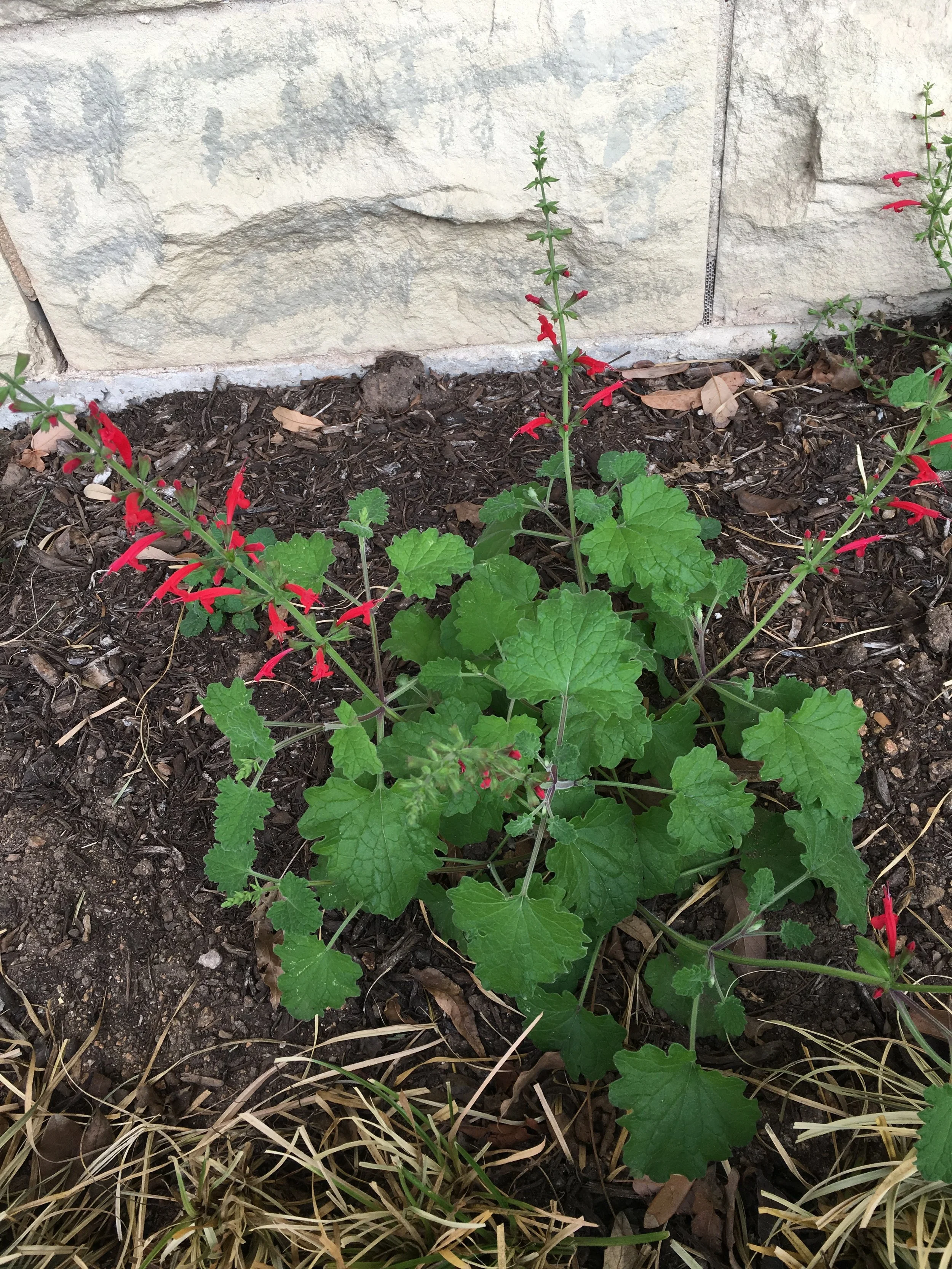
Cedar Sage (Salvia roemeriana) is a beautiful native Texas perennial that brings brilliant red flowers to shady gardens from spring through early summer, with occasional reblooming after rains. One of the best hummingbird plants for Central Texas, it also attracts butterflies and native bees while thriving beneath trees and in limestone soils where many flowering plants struggle. Its lush green foliage forms an attractive mound, making it an excellent choice for woodland gardens, shaded borders, and naturalized landscapes. Once established, Cedar Sage is easy to grow, deer resistant, and a dependable source of color and wildlife value.
Mexican Buckeye
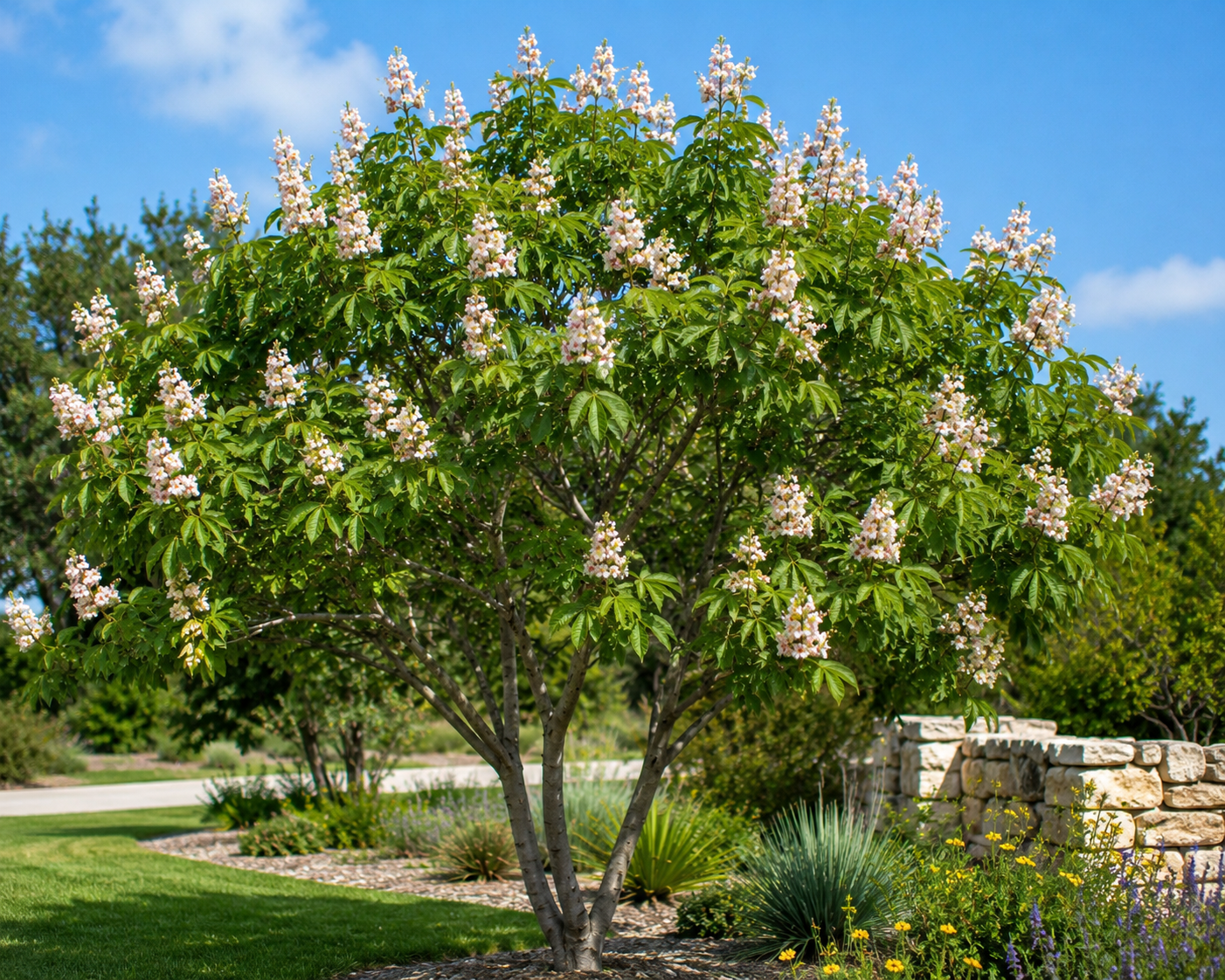
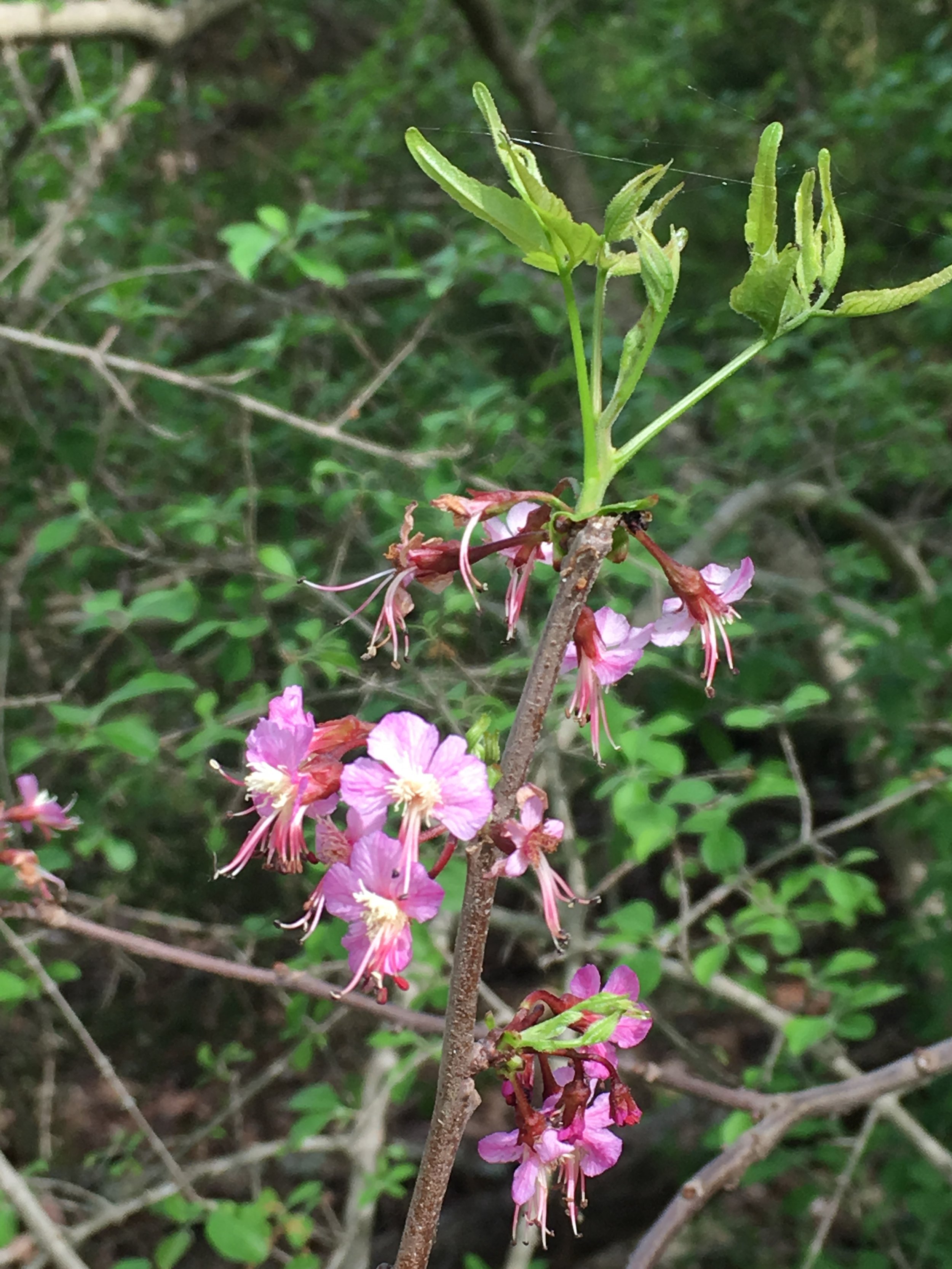
Mexican Buckeye (Ungnadia speciosa) is a beautiful native small tree or large shrub that brings year-round interest to Central Texas landscapes. In spring, its branches are covered with clusters of fragrant pink to lavender flowers that resemble redbud blossoms and attract bees and other pollinators. Glossy green foliage turns shades of yellow and gold in fall, while the distinctive seed capsules add ornamental interest well into winter.
Mexican Buckeye thrives in full sun to part shade and is well adapted to the limestone soils and periodic droughts common throughout Central Texas. Its moderate size, seasonal beauty, and wildlife value make it an excellent choice as a specimen tree, understory tree, or accent plant in native and water-wise landscapes.
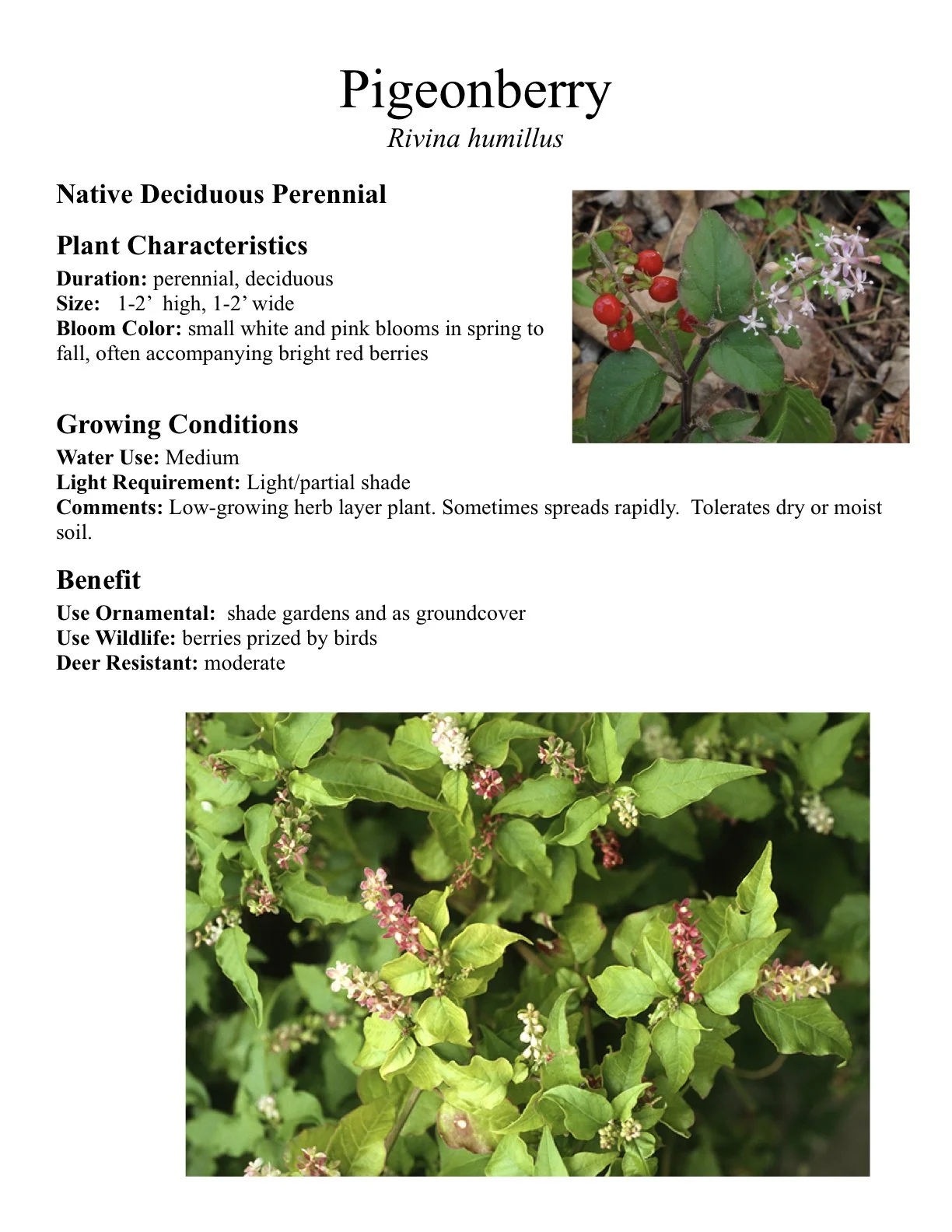
Pigeonberry
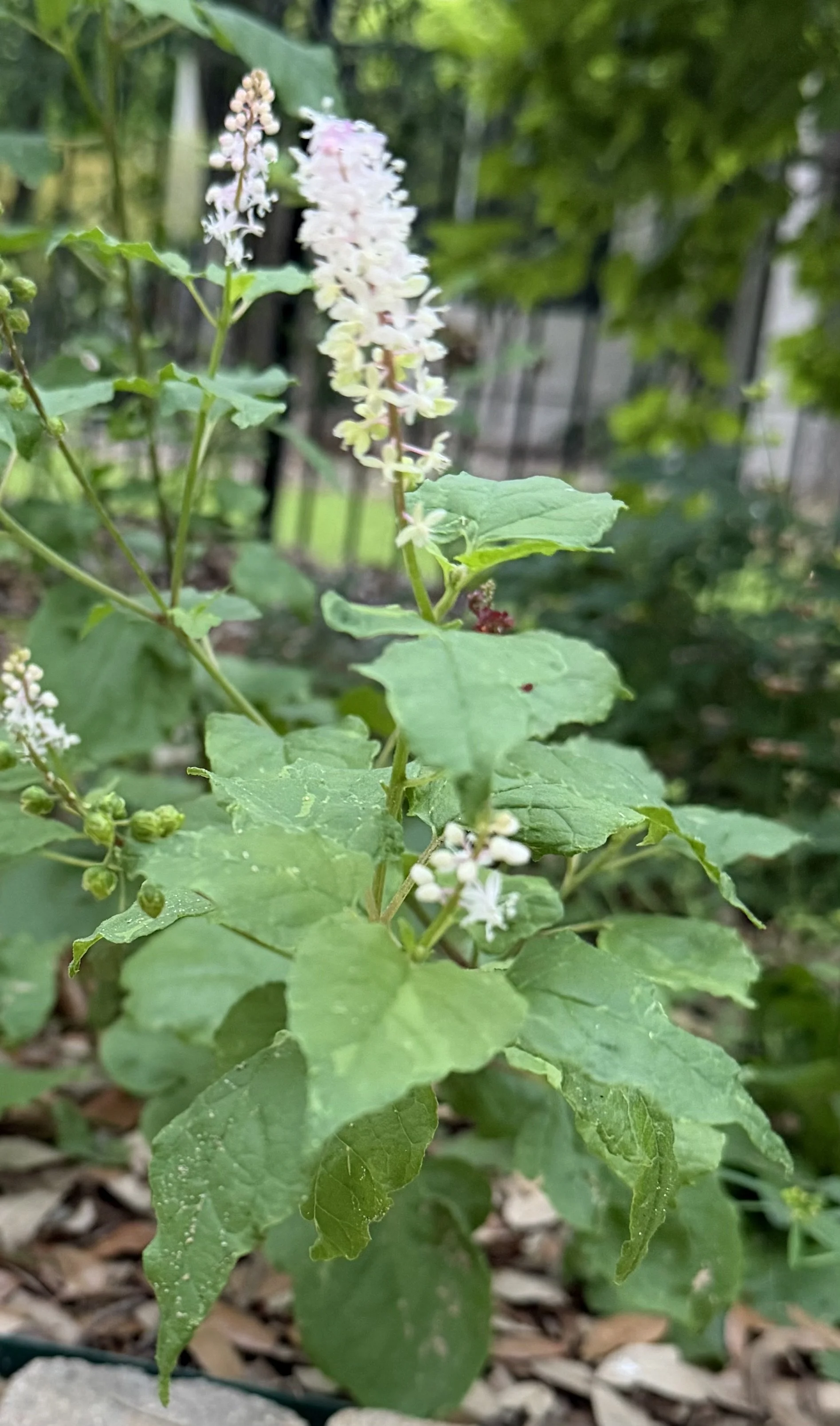
Pigeonberry (Rivina humilis) is a graceful native perennial that thrives in the dappled shade of Central Texas woodlands and gardens. Its delicate white to pinkish flowers are followed by clusters of bright red berries that often persist for months, providing color and interest through much of the year.
Pigeonberry spreads slowly to form an attractive ground cover beneath trees and shrubs, where it helps soften the landscape while supporting wildlife. The flowers attract small pollinators, and the berries are eaten by birds and other wildlife. Its tolerance of shade, drought, and poor soils makes it an excellent choice for naturalistic and bird-friendly gardens.
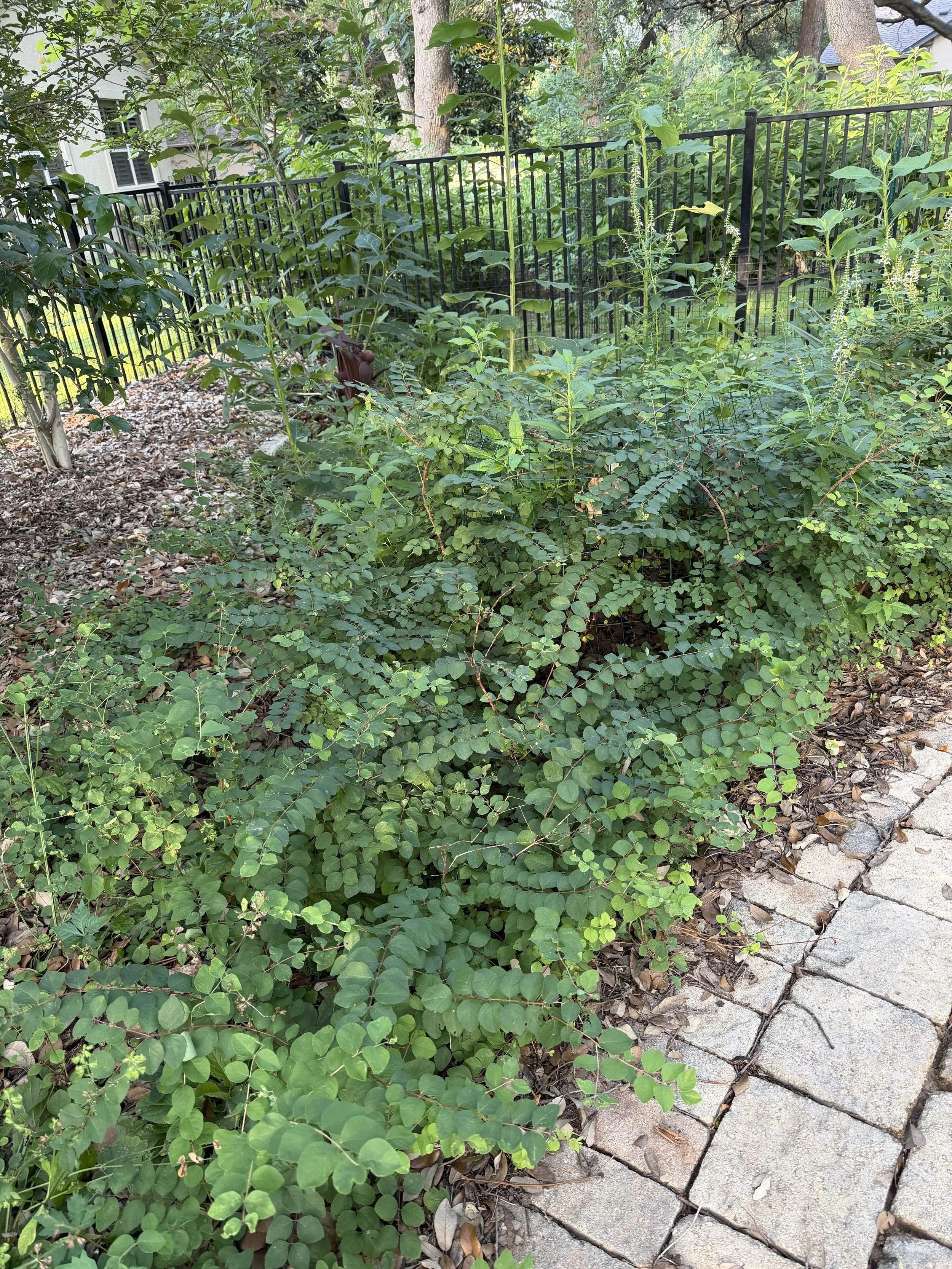
Coralberry
Coralberry (Symphoricarpos orbiculatus) is a tough native understory shrub that produces clusters of bright pink to reddish-purple berries that often persist well into winter. The berries provide food for birds and other wildlife, while the dense branching habit offers valuable cover and nesting sites.
Coralberry grows best in part shade but will tolerate a range of conditions, including dry soils once established. Its modest flowers attract pollinators, and its attractive berries and wildlife value make it an excellent choice for naturalistic, bird-friendly landscapes.
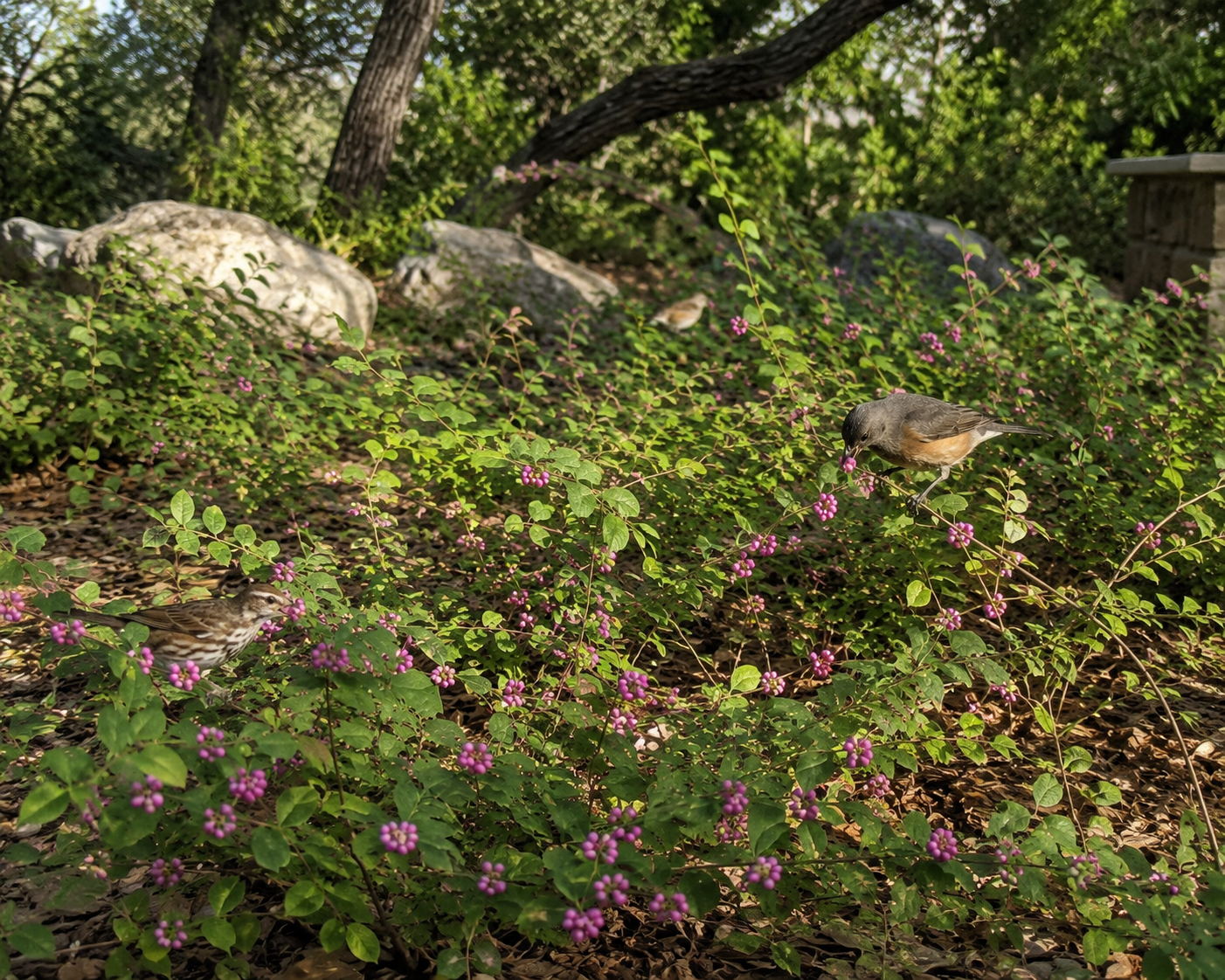
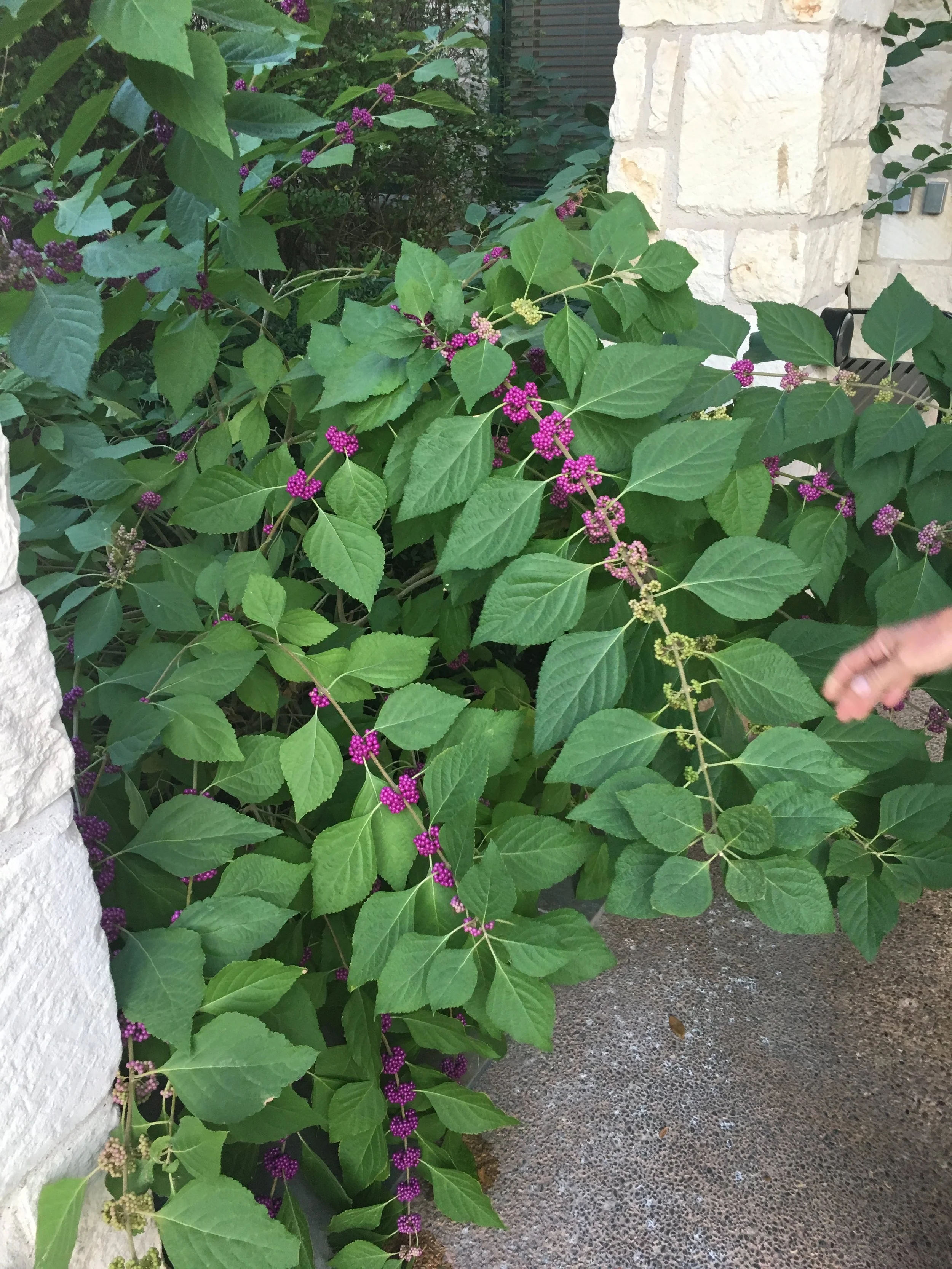
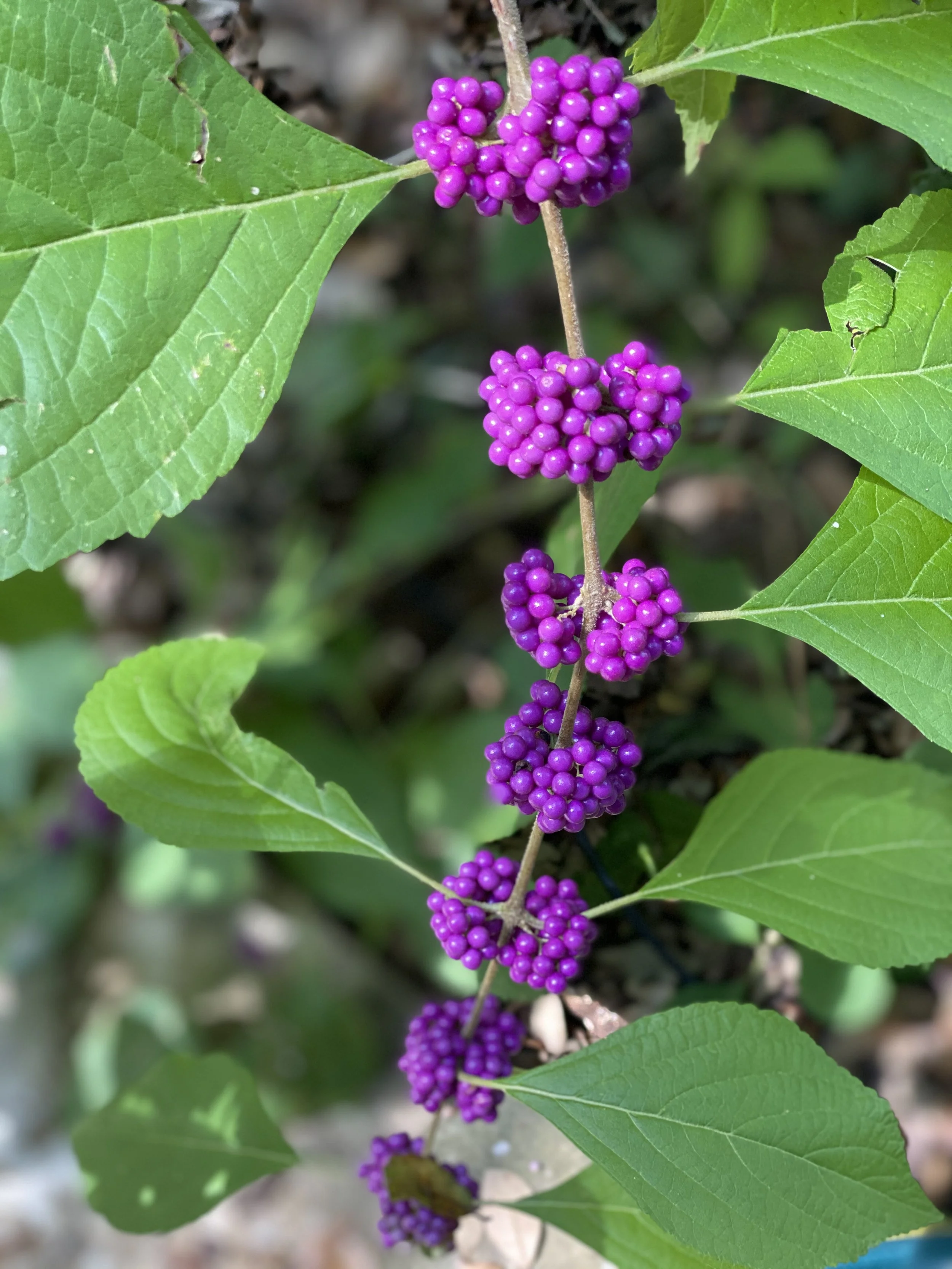
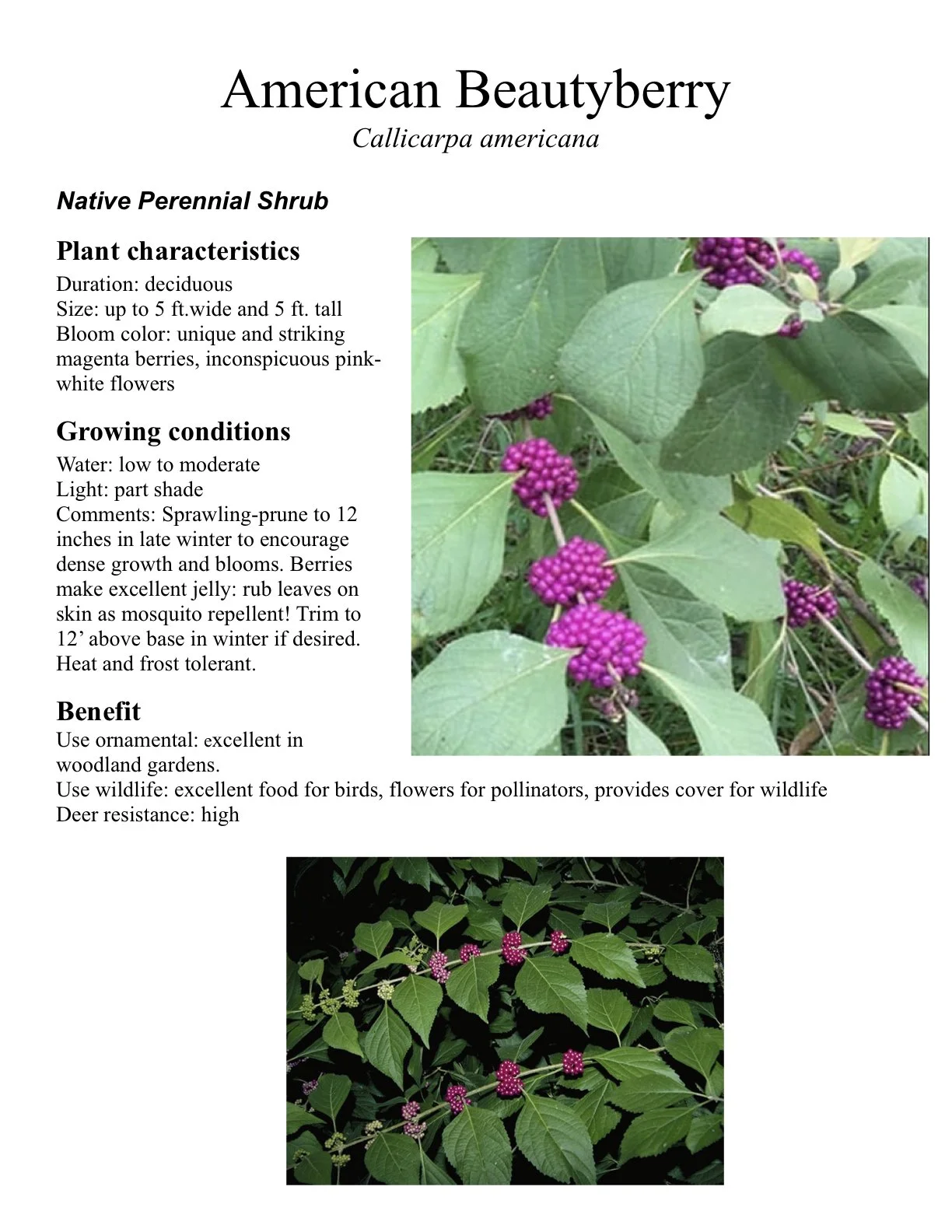
American Beautyberry
American Beautyberry (Callicarpa americana) is one of the most attractive native shrubs for Central Texas shade gardens. Its arching branches produce clusters of vivid purple berries in late summer and fall, creating a striking display and providing an important food source for mockingbirds, thrashers, robins, and many other songbirds.
Beautyberry grows best in part shade to filtered sun and is adaptable to a variety of soils. It is drought tolerant once established, deer resistant, and highly valuable for wildlife, making it an excellent choice for bird-friendly native landscapes.