
Mexican Plum
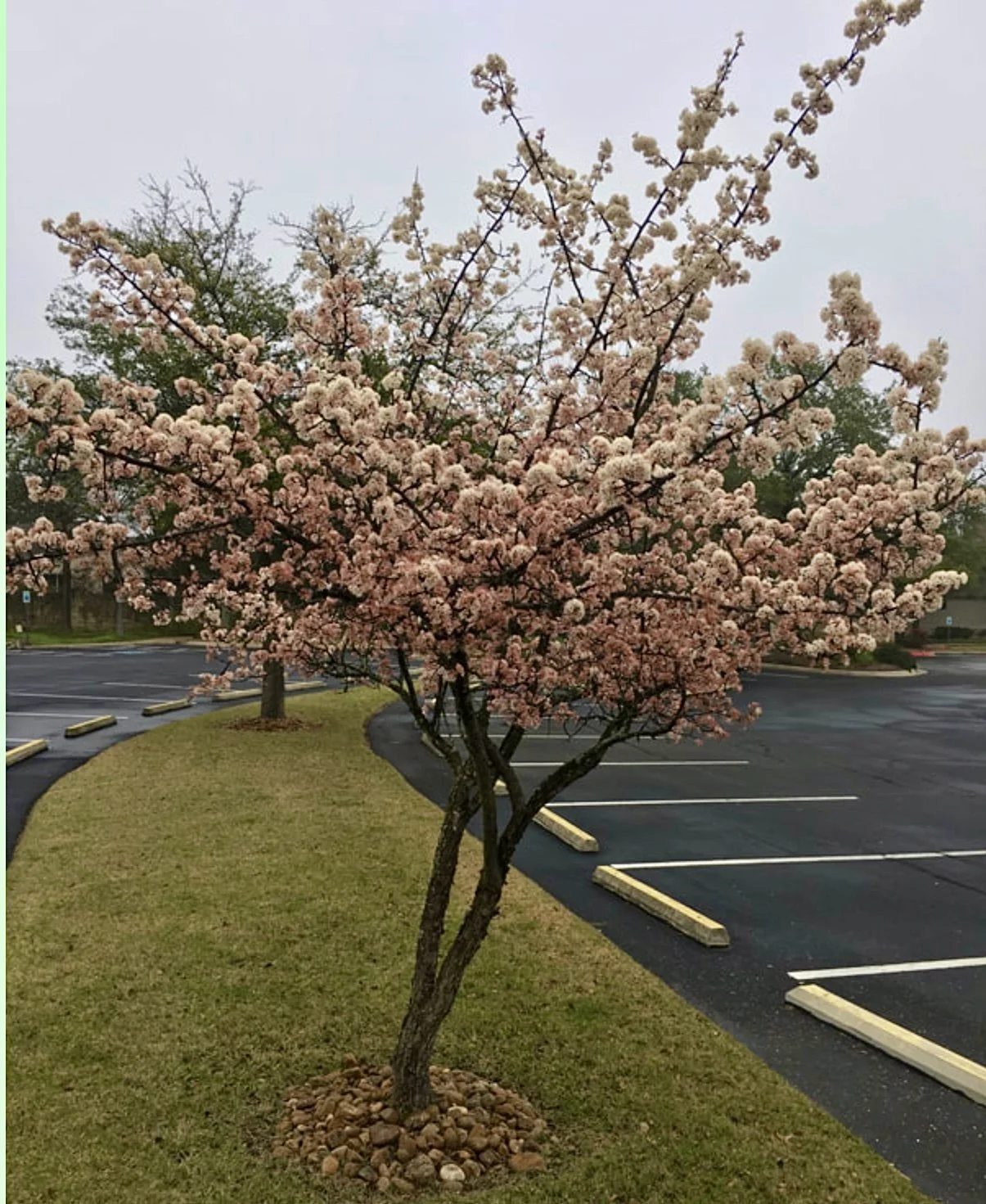
Mexican Plum (Prunus mexicana)
Mexican Plum is a beautiful native small tree that announces the arrival of spring with a spectacular display of fragrant white blossoms before its leaves emerge. The flowers provide an early source of nectar and pollen for bees and other pollinators, while the summer fruit is enjoyed by songbirds and other wildlife. Its attractive bark, glossy green foliage, and vibrant yellow fall color add year-round interest to the landscape. Adaptable and relatively drought tolerant once established, Mexican Plum thrives in full sun to part shade and is well suited to the limestone soils of Central Texas. Its ornamental beauty, wildlife benefits, and seasonal interest make it an excellent choice for residential landscapes and native gardens.
Desert Willow
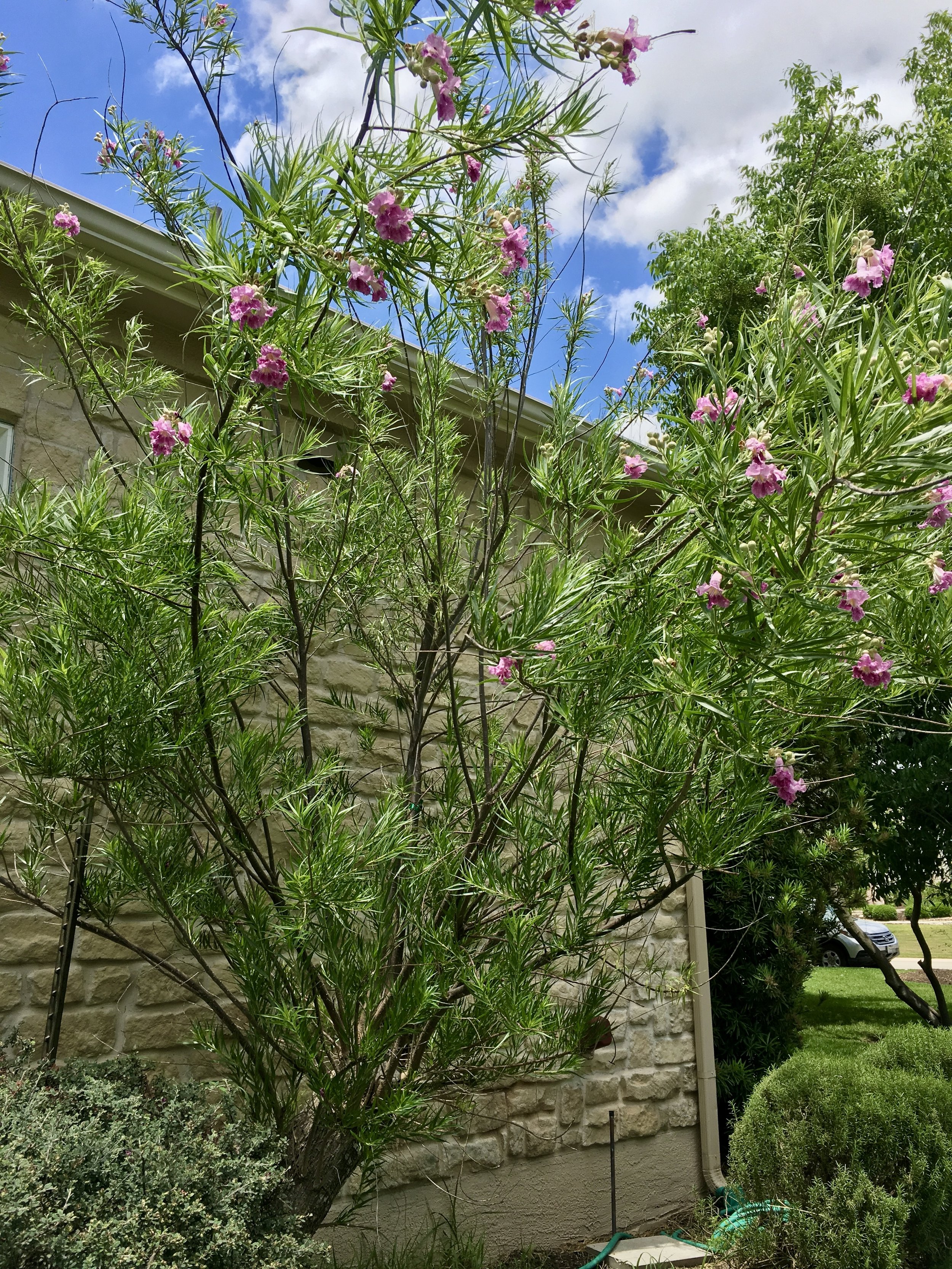
Desert Willow (Chilopsis linearis)
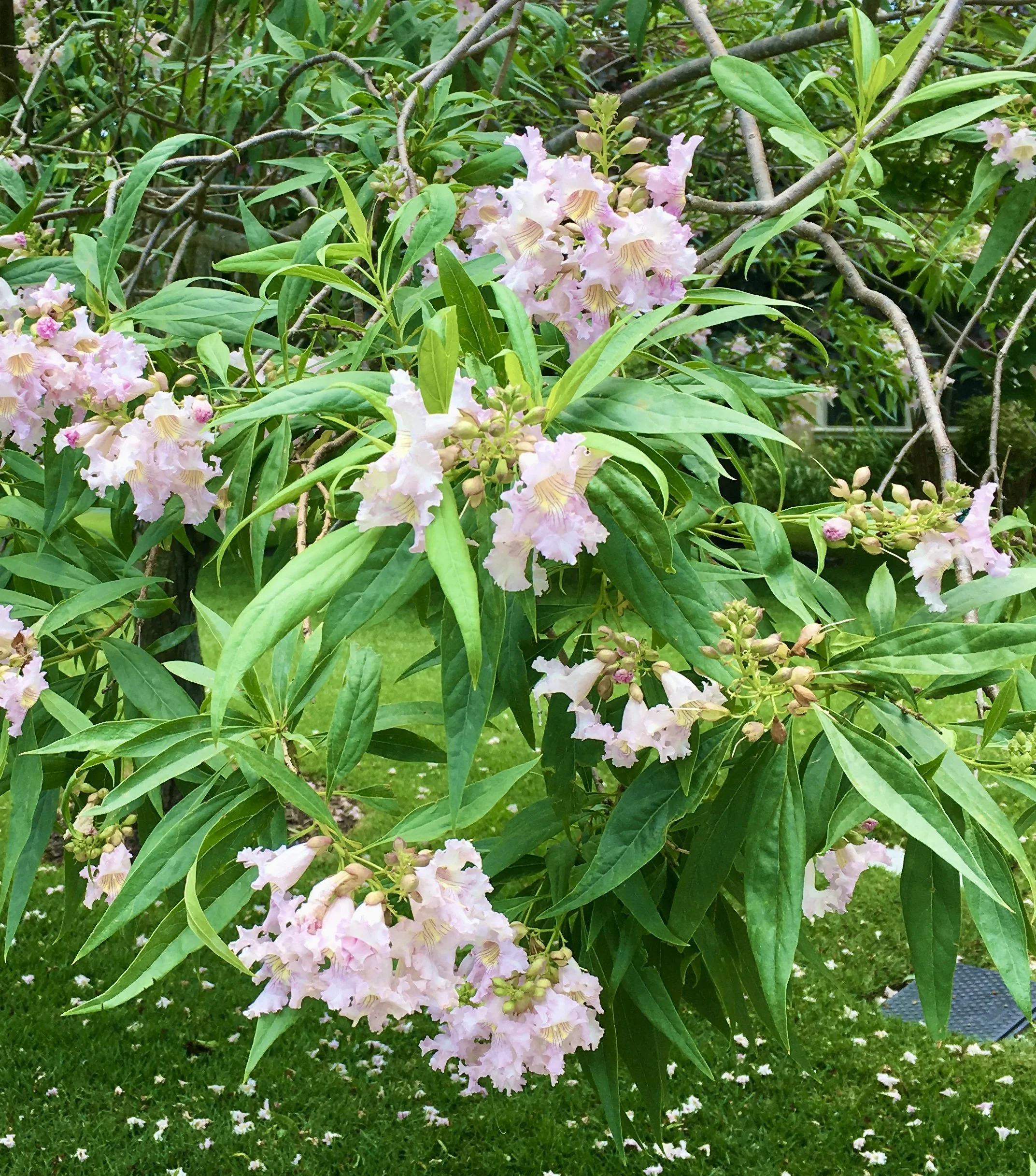
Desert Willow is one of the most beautiful and dependable small native trees for Central Texas landscapes. Despite its name, it is not a true willow but is prized for its graceful, willow-like foliage and abundant trumpet-shaped flowers that bloom from late spring through summer. The blossoms, which range from lavender-pink to deep purple with yellow and white markings, are highly attractive to hummingbirds, bees, and butterflies. Exceptionally heat and drought tolerant once established, Desert Willow thrives in full sun and well-drained soils, making it an outstanding choice for water-wise landscapes. Its long flowering season, airy form, and outstanding wildlife value make it a favorite for both residential gardens and naturalized settings.
Flameleaf Sumac
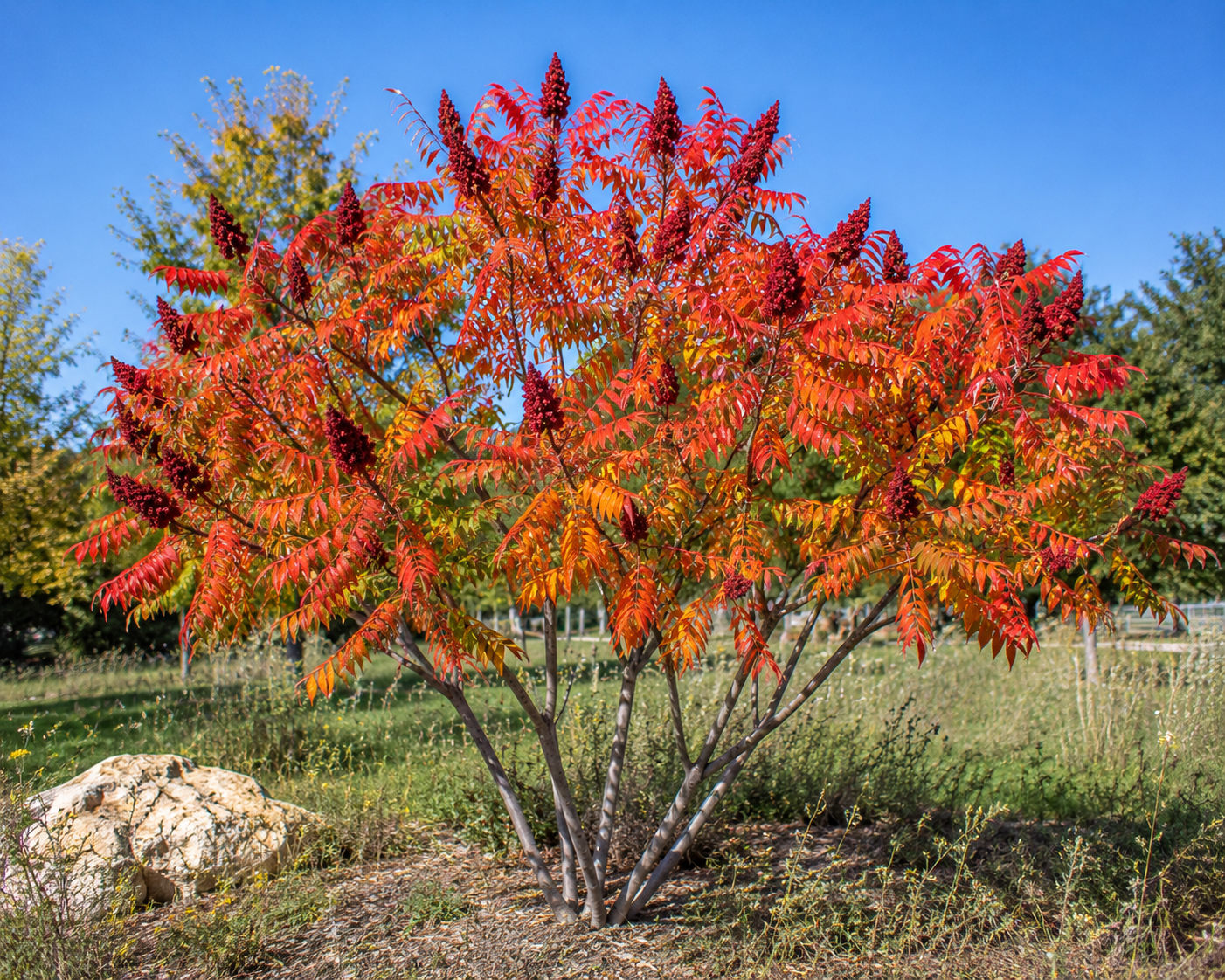
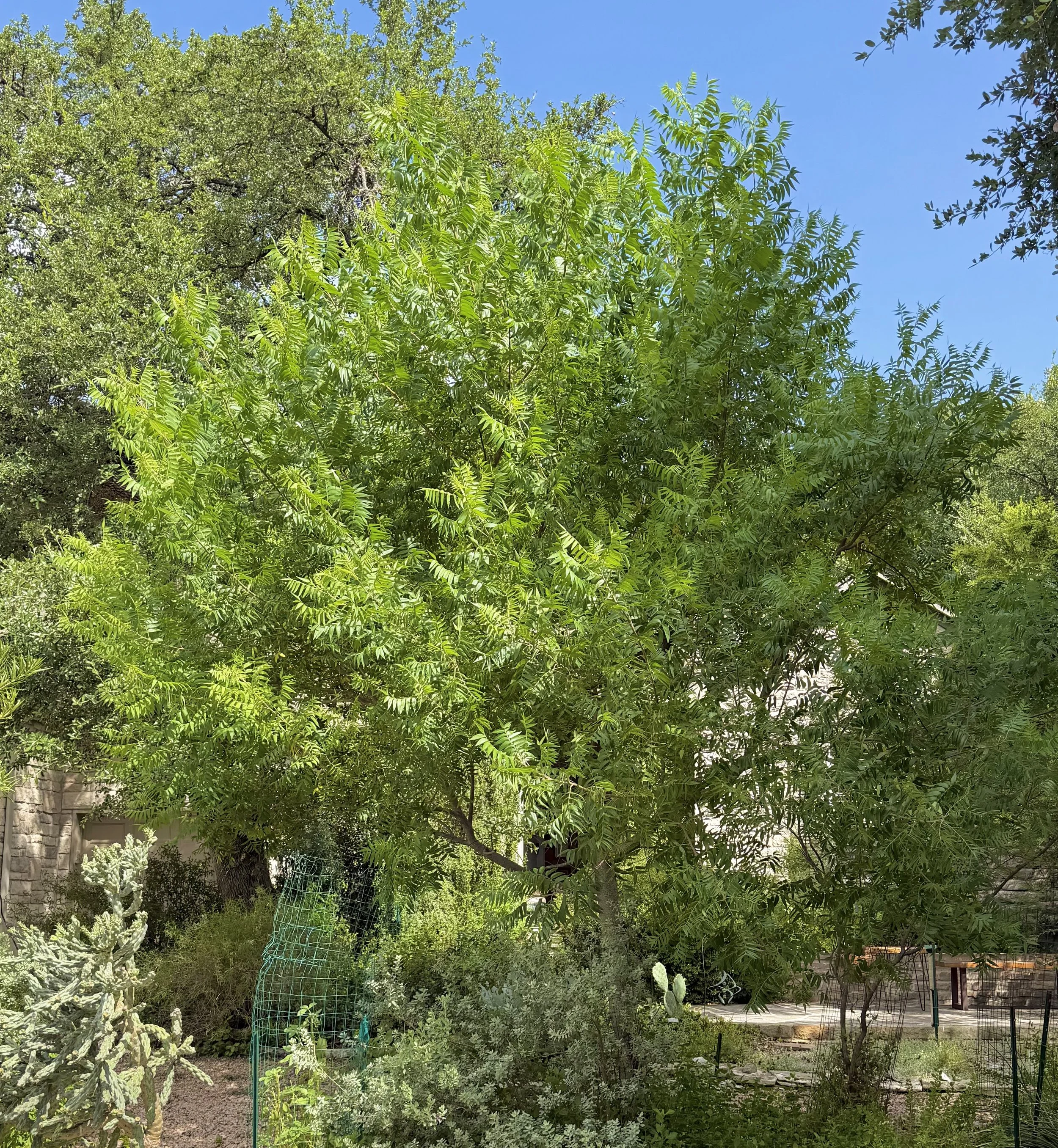
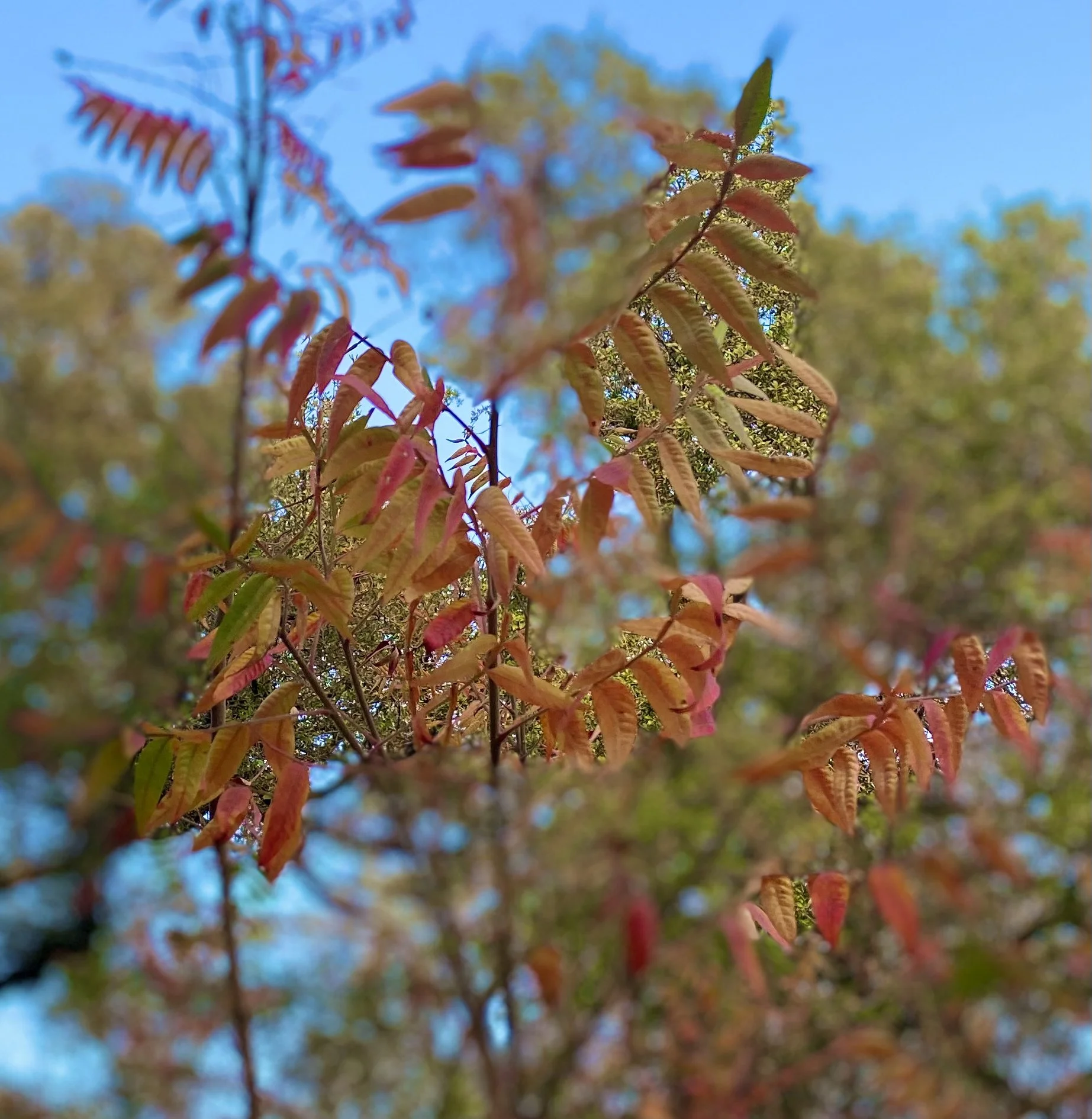
Flameleaf Sumac (Rhus lanceolata) is one of the finest native small trees for adding brilliant fall color to Central Texas landscapes. Its glossy green leaves transform into spectacular shades of orange, red, and scarlet each autumn, creating a striking display rarely matched by other native species. Clusters of creamy white flowers in spring are followed by red berries on female plants that provide food for many species of songbirds. Highly drought tolerant once established, Flameleaf Sumac thrives in full sun and adapts well to the rocky, limestone soils common throughout the Hill Country. Its exceptional seasonal color, wildlife value, and low maintenance make it an outstanding choice for naturalized landscapes, pollinator gardens, and residential yards.
Eve’s Necklace
Eve’s Necklace is a small, graceful Texas native tree prized for its unique seed pods that resemble a string of dark beads. In spring, it produces clusters of fragrant, creamy white flowers that attract bees and other pollinators, followed by the distinctive pods that persist well into winter. Its glossy foliage provides light shade, and its moderate size makes it an excellent choice for smaller landscapes. Drought tolerant once established, Eve’s Necklace grows best in full sun to part shade and is well adapted to the limestone soils common throughout Central Texas. It adds year-round interest while supporting native wildlife and pollinators.
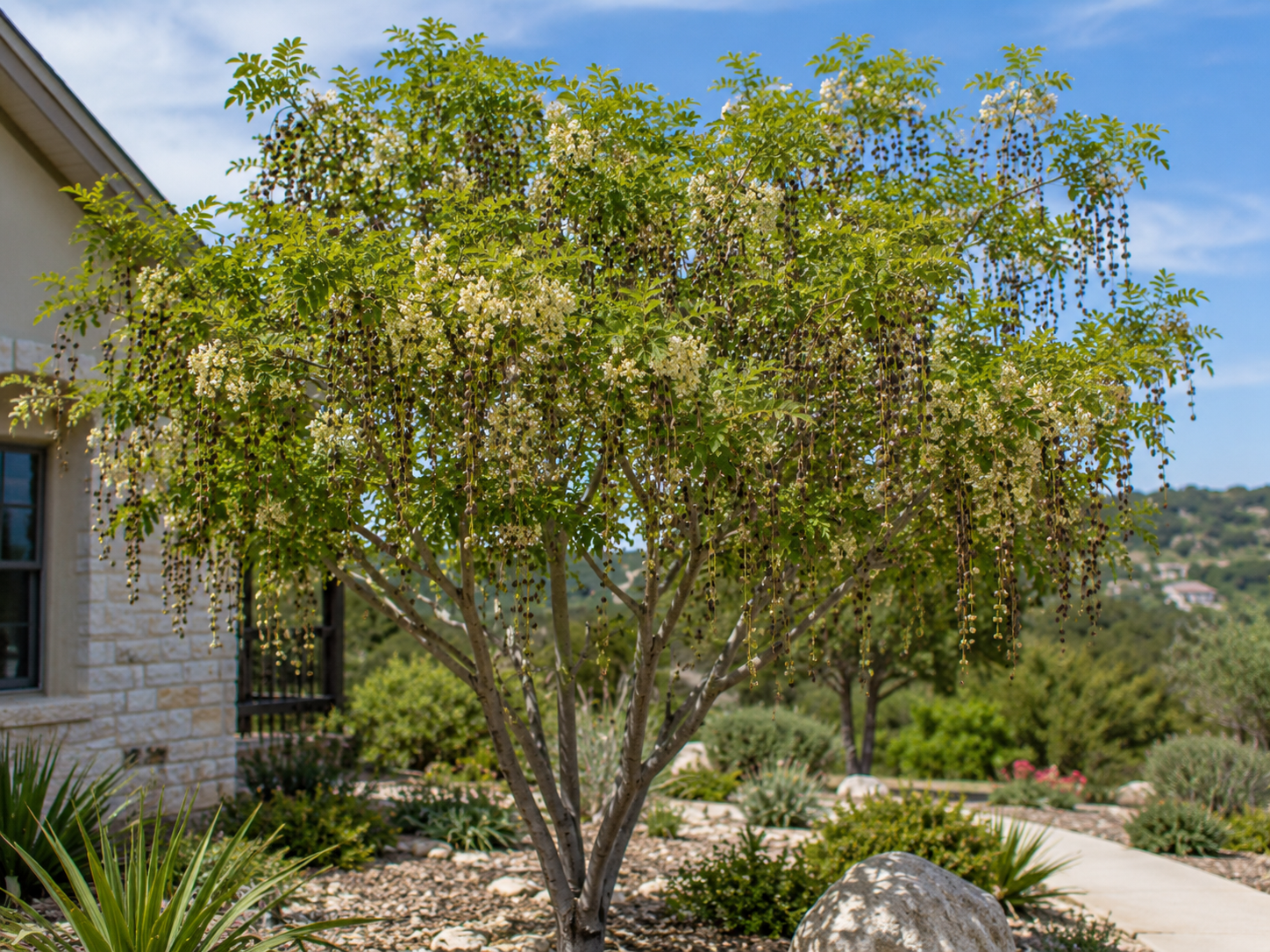
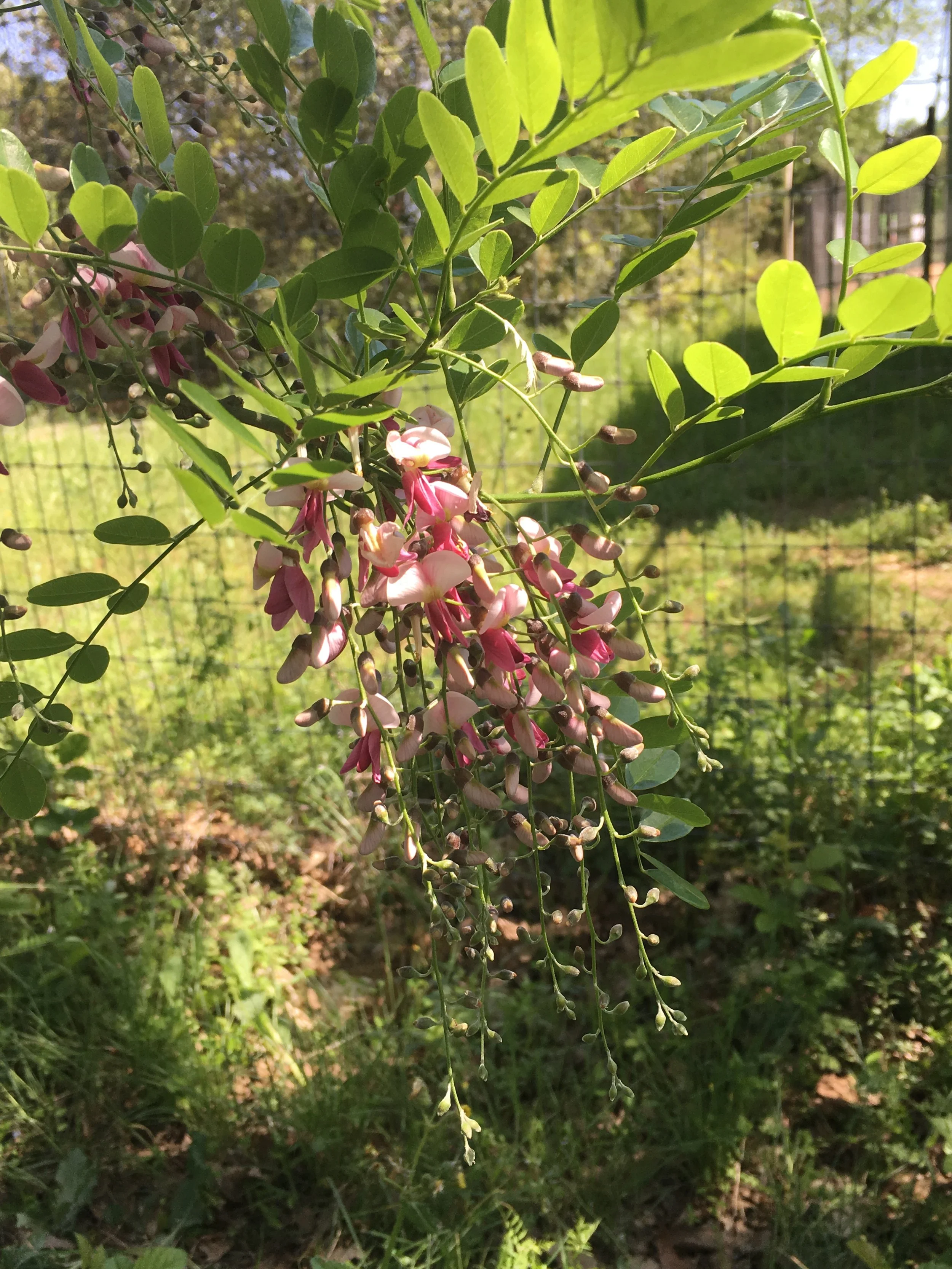
Flowers, later forming “beads”
Texas Mountain Laurel
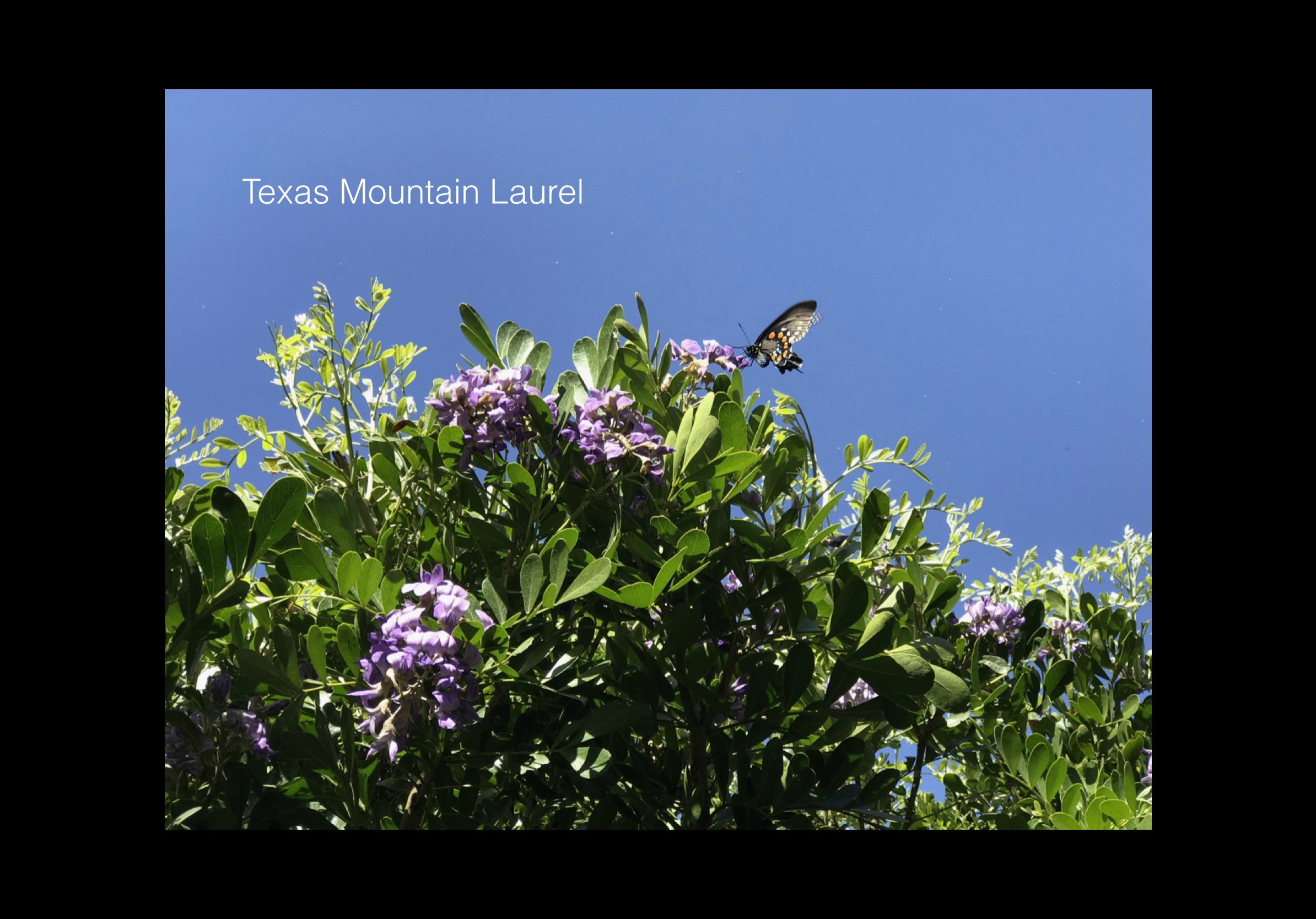
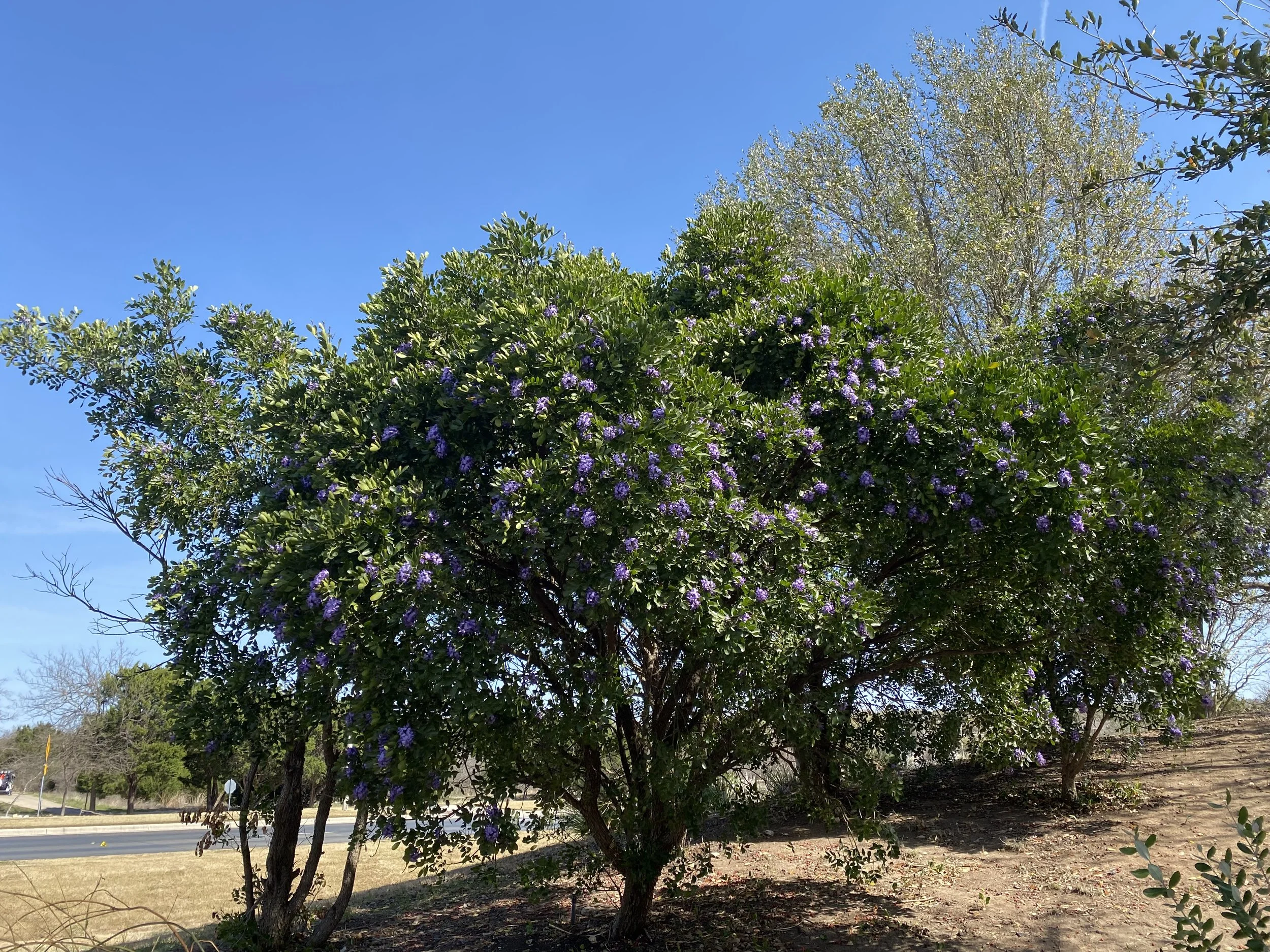
Texas Mountain Laurel (Sophora secundiflora) is one of the most treasured native small trees in Texas, prized for its glossy evergreen foliage and spectacular clusters of fragrant purple flowers. Blooming in early spring, the blossoms fill the air with a sweet grape-like fragrance and attract bees and other pollinators. Its dense, dark green canopy provides year-round beauty and makes an excellent focal point in the landscape.
Texas Mountain Laurel thrives in full sun to part shade and is highly adapted to the heat, drought, and alkaline soils of Central Texas. Slow growing but exceptionally long-lived, it requires little maintenance once established and is one of the finest native trees for residential landscapes.
Mexican Buckeye
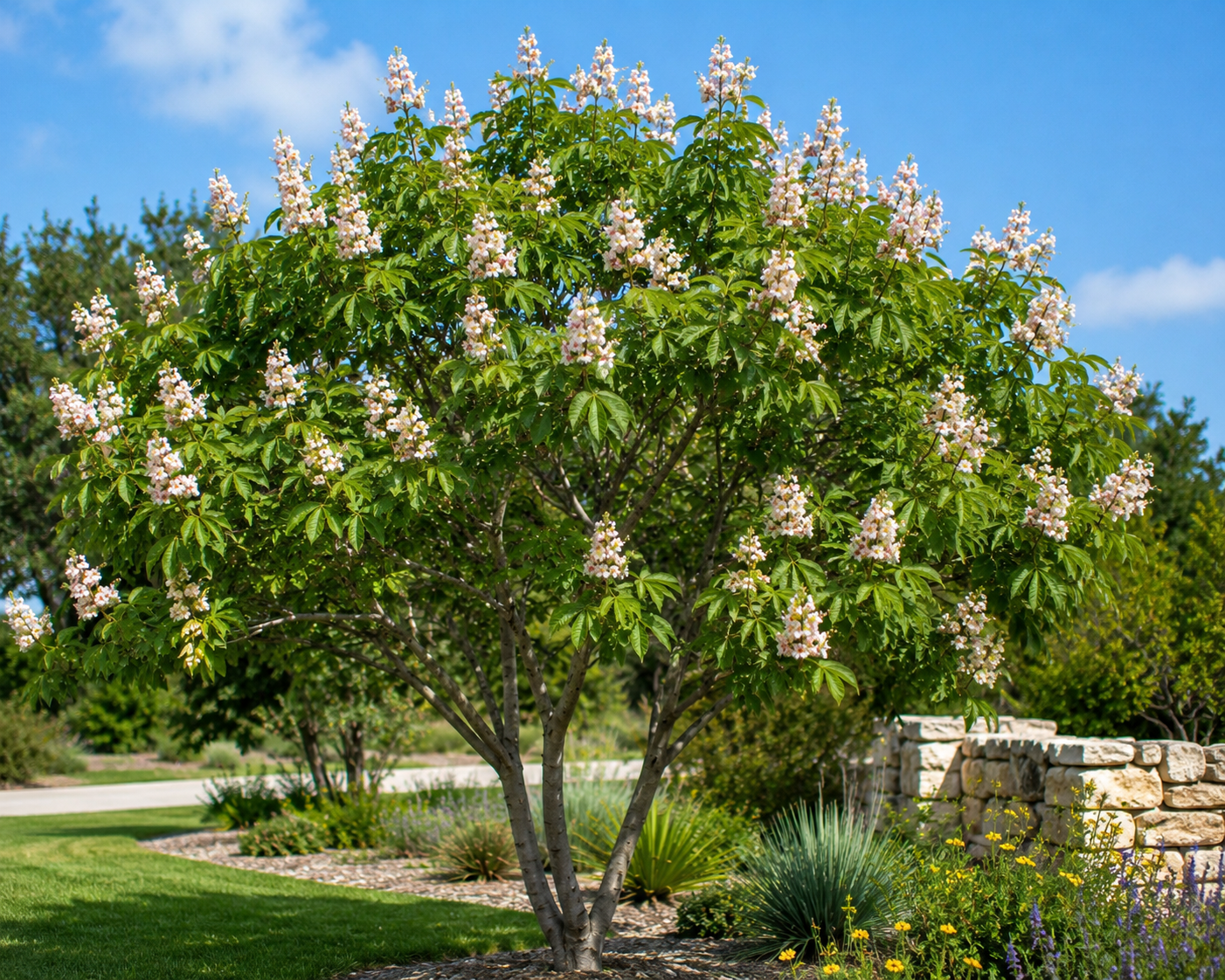
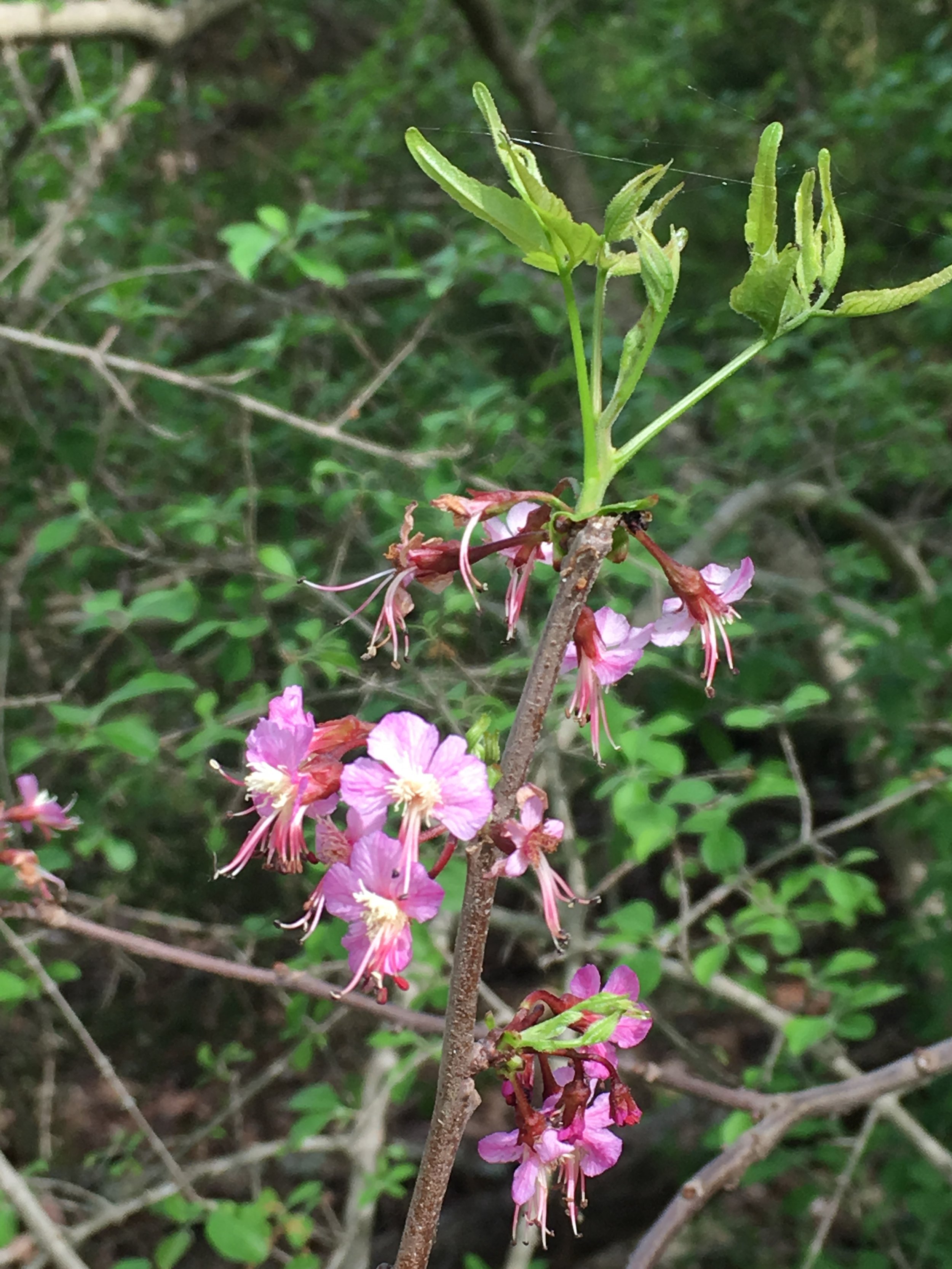
Mexican Buckeye (Ungnadia speciosa) is a beautiful native small tree or large shrub that brings year-round interest to Central Texas landscapes. In spring, its branches are covered with clusters of fragrant pink to lavender flowers that resemble redbud blossoms and attract bees and other pollinators. Glossy green foliage turns shades of yellow and gold in fall, while the distinctive seed capsules add ornamental interest well into winter.
Mexican Buckeye thrives in full sun to part shade and is well adapted to the limestone soils and periodic droughts common throughout Central Texas. Its moderate size, seasonal beauty, and wildlife value make it an excellent choice as a specimen tree, understory tree, or accent plant in native and water-wise landscapes.
Mealy Blue Sage
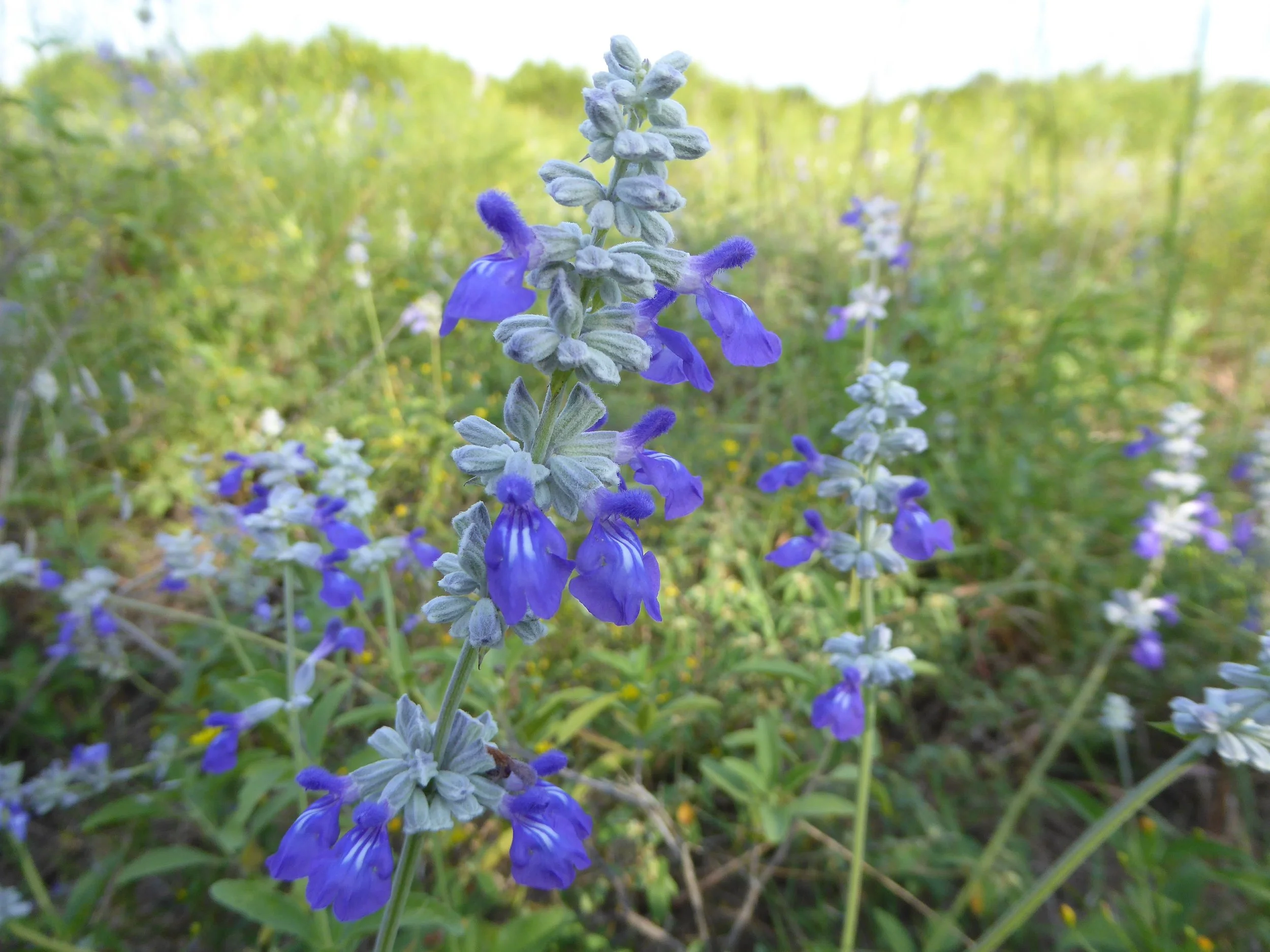
Mealy Blue Sage (Salvia farinacea) is one of the most reliable and longest-blooming native perennials for Central Texas gardens. Its spikes of blue to violet flowers provide months of color from spring through fall and are highly attractive to bees, butterflies, and other pollinators. The cool flower color combines beautifully with yellow, orange, and red flowering natives, making it a valuable addition to mixed garden beds.
Mealy Blue Sage thrives in full sun and is remarkably tolerant of heat, drought, and a variety of soil conditions. Easy to grow and low maintenance, it is an excellent choice for pollinator gardens, native plant landscapes, and water-wise designs.

Skeletonleaf Goldeneye
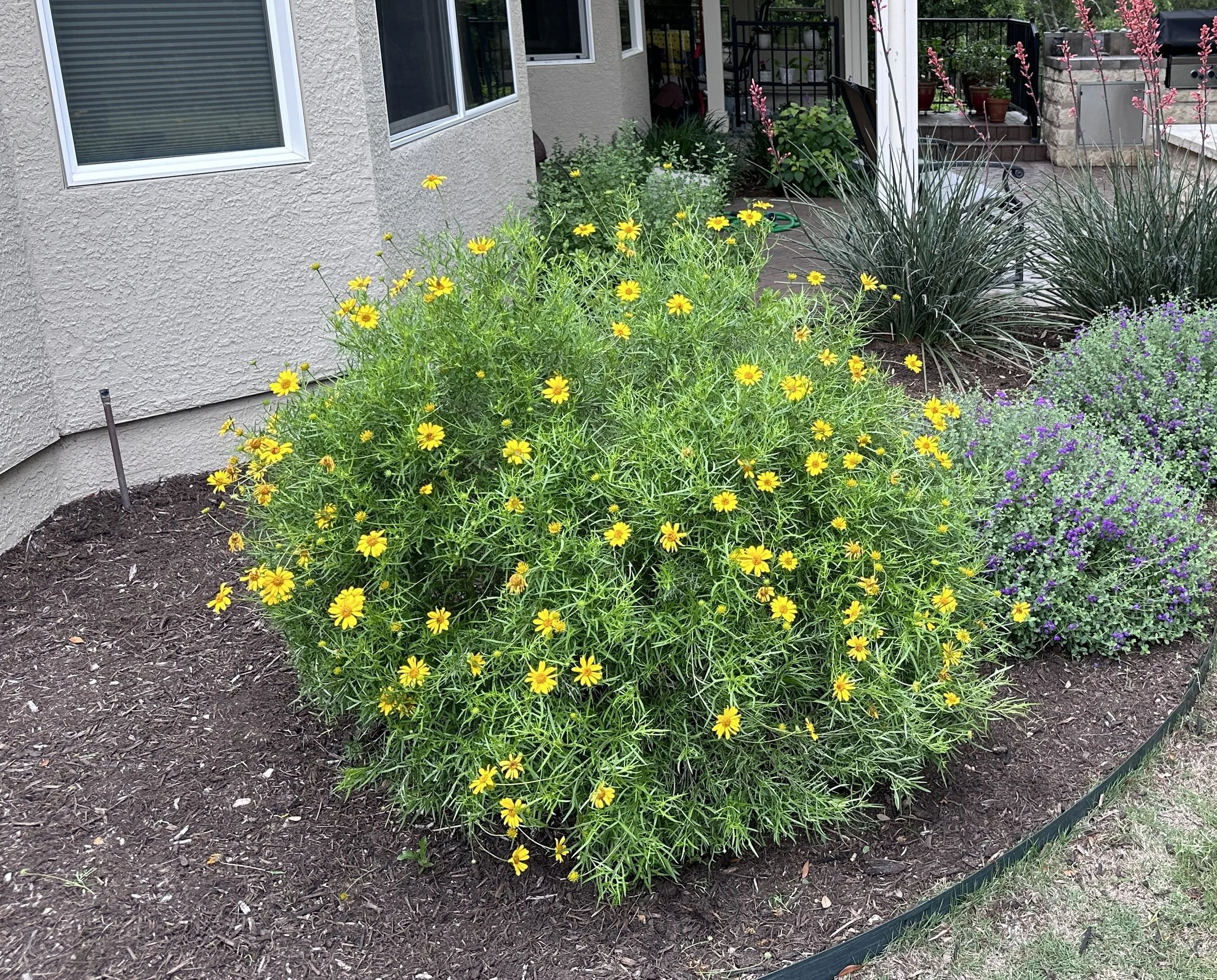
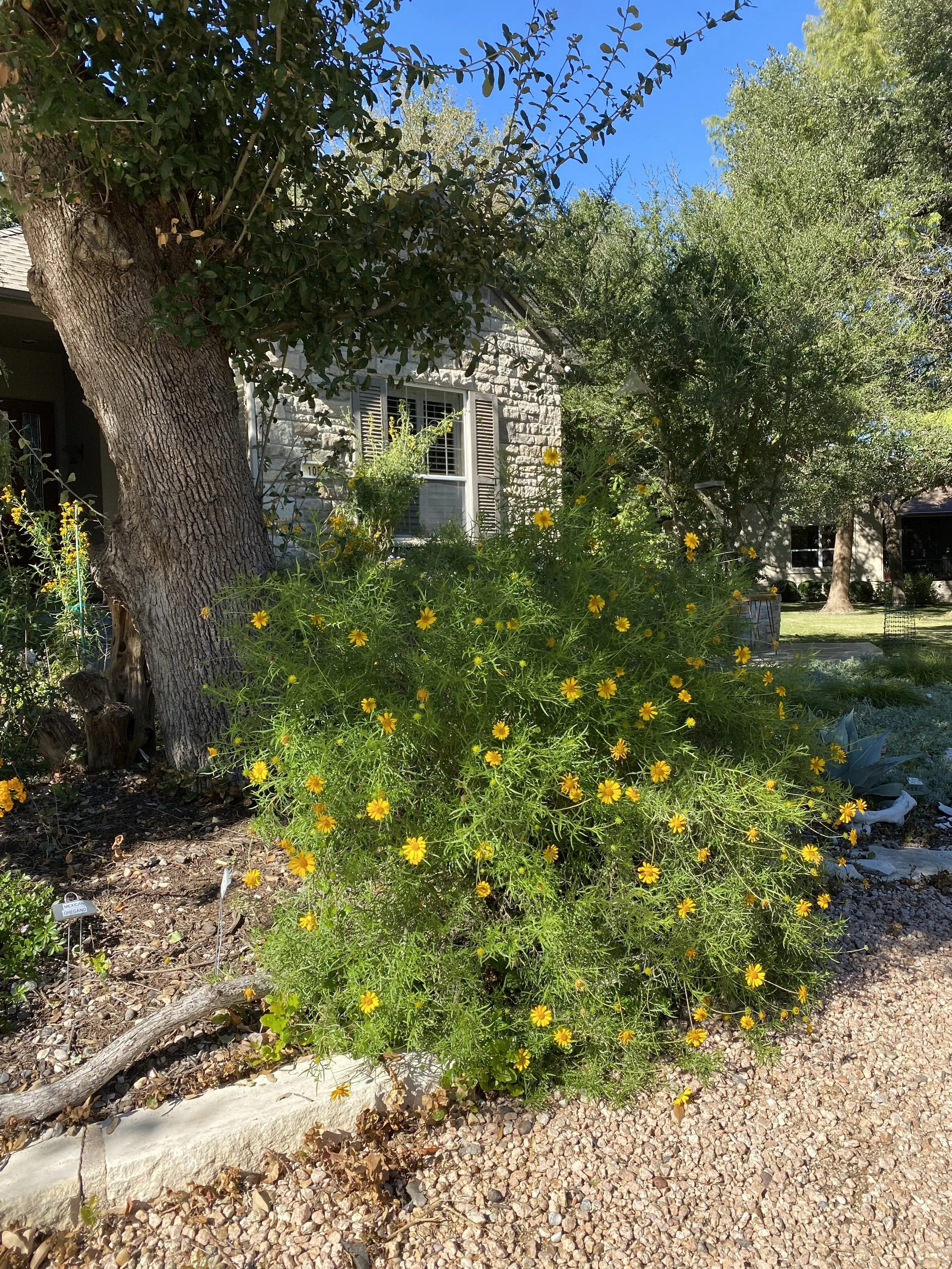
Skeletonleaf Goldeneye (Viguiera stenoloba) is a dependable native perennial that brightens Central Texas gardens with masses of cheerful golden-yellow flowers from late summer through fall. Its long bloom season provides valuable nectar for butterflies, bees, and other pollinators at a time when many flowering plants are beginning to fade.
Skeletonleaf Goldeneye thrives in full sun and is highly tolerant of heat, drought, and poor soils. Its attractive dark green foliage and profusion of blooms make it an excellent choice for pollinator gardens, naturalized landscapes, and low-maintenance native plantings.
Gulf Coast Muhly
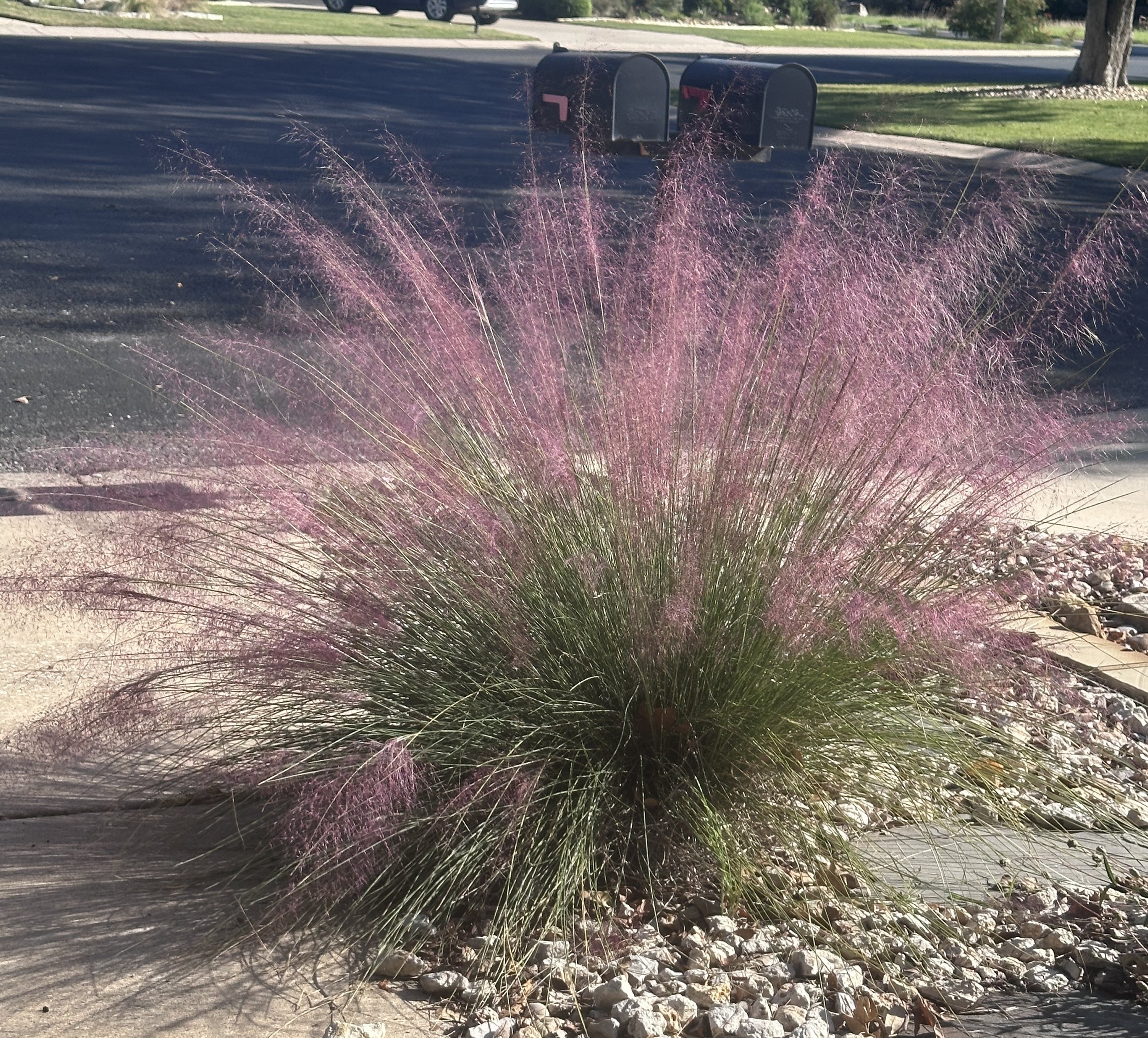
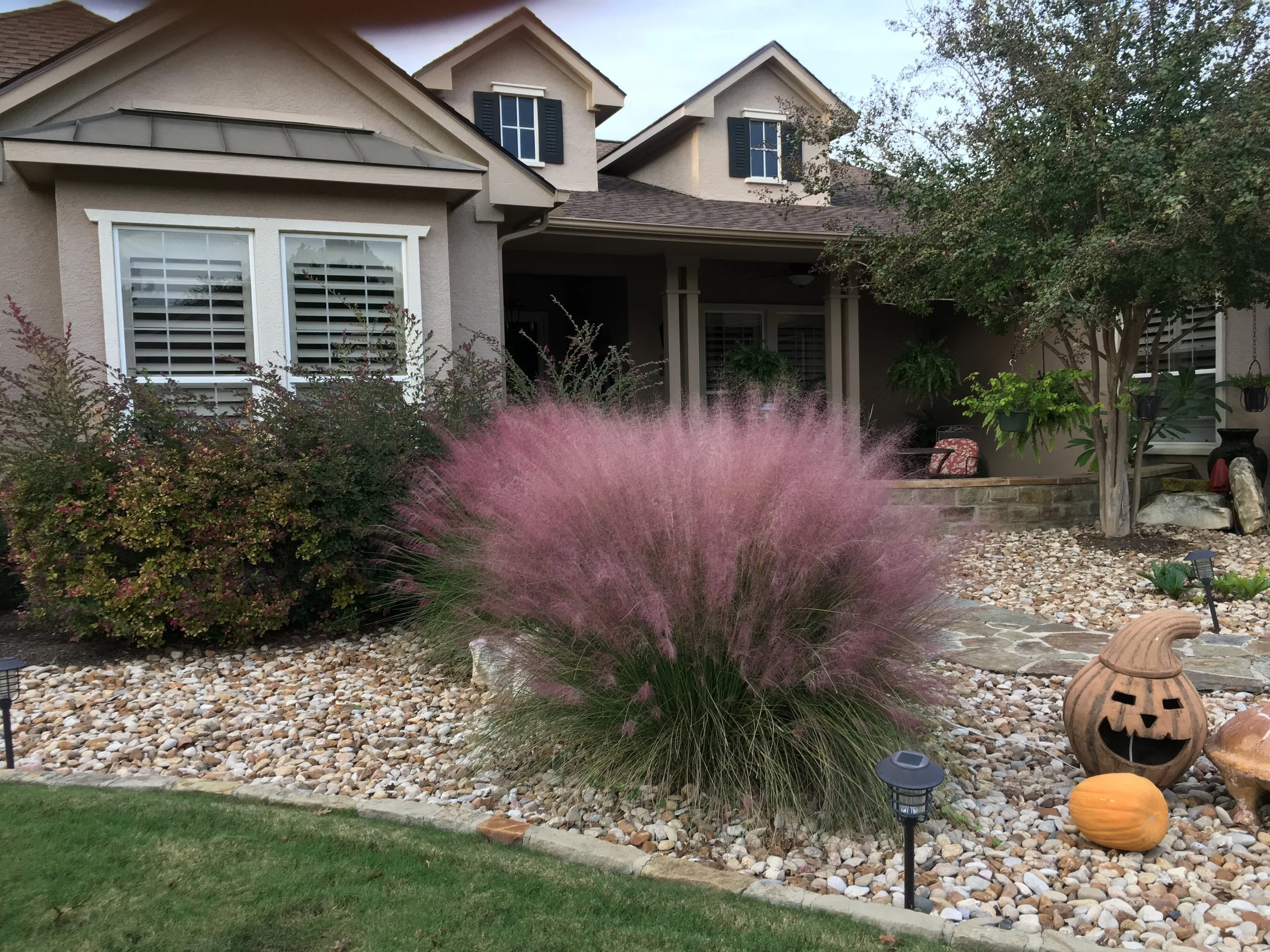
Gulf Coast Muhly (Muhlenbergia capillaris) is one of the most spectacular native ornamental grasses for Texas landscapes. In fall, airy clouds of pink to lavender flower stalks rise above the foliage, creating a soft, colorful display that glows in morning and evening light. The fine-textured foliage provides year-round interest and movement, adding beauty and contrast to gardens of all styles.
Gulf Coast Muhly thrives in full sun and adapts to a wide range of soils, including clay and occasionally moist conditions. It is drought tolerant once established, highly resistant to deer, and provides cover and nesting material for birds and other wildlife. Its low-maintenance nature and stunning fall color make it one of the finest ornamental grasses for Central Texas landscapes.
Gregg’s Mistflower
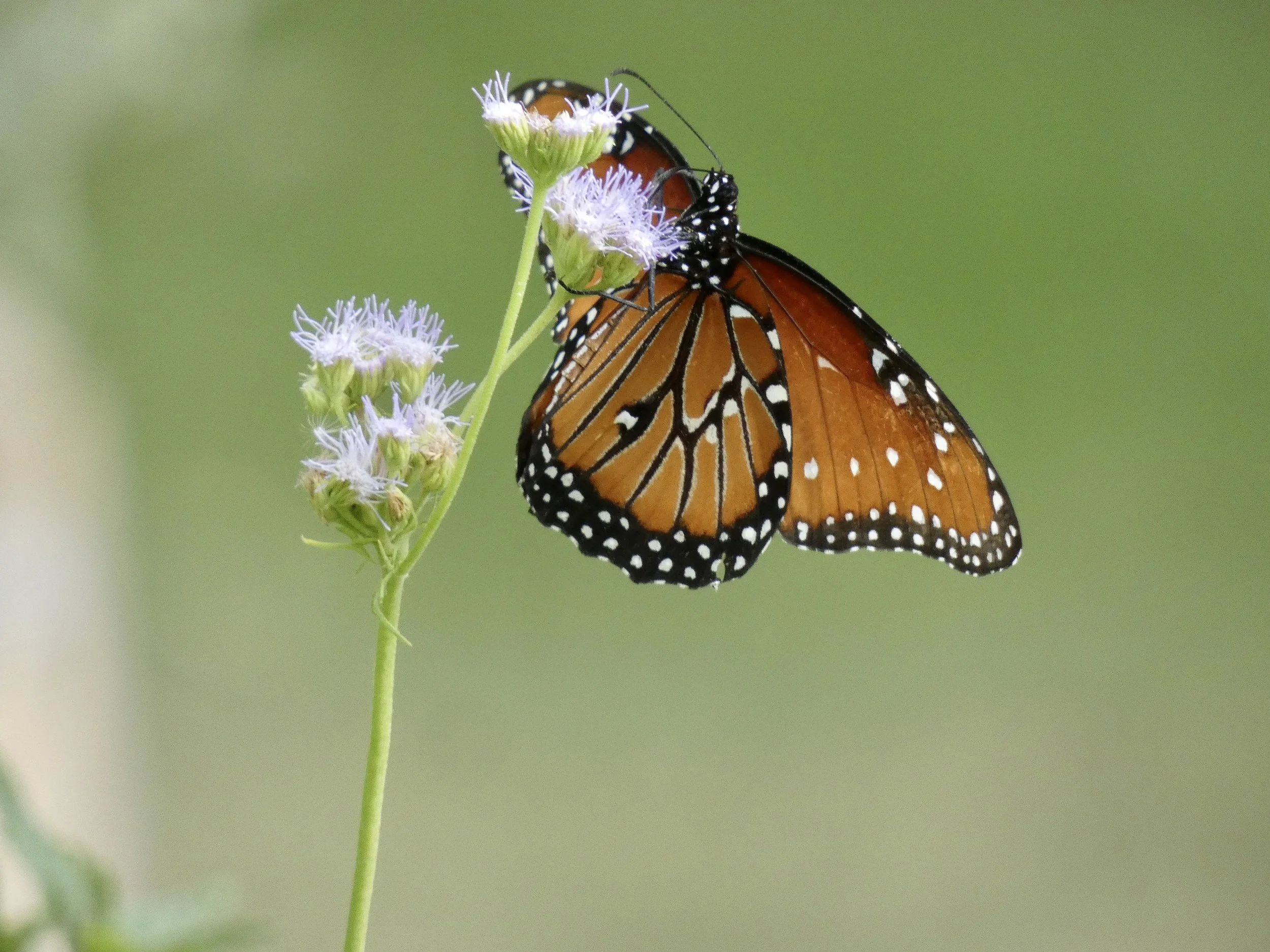
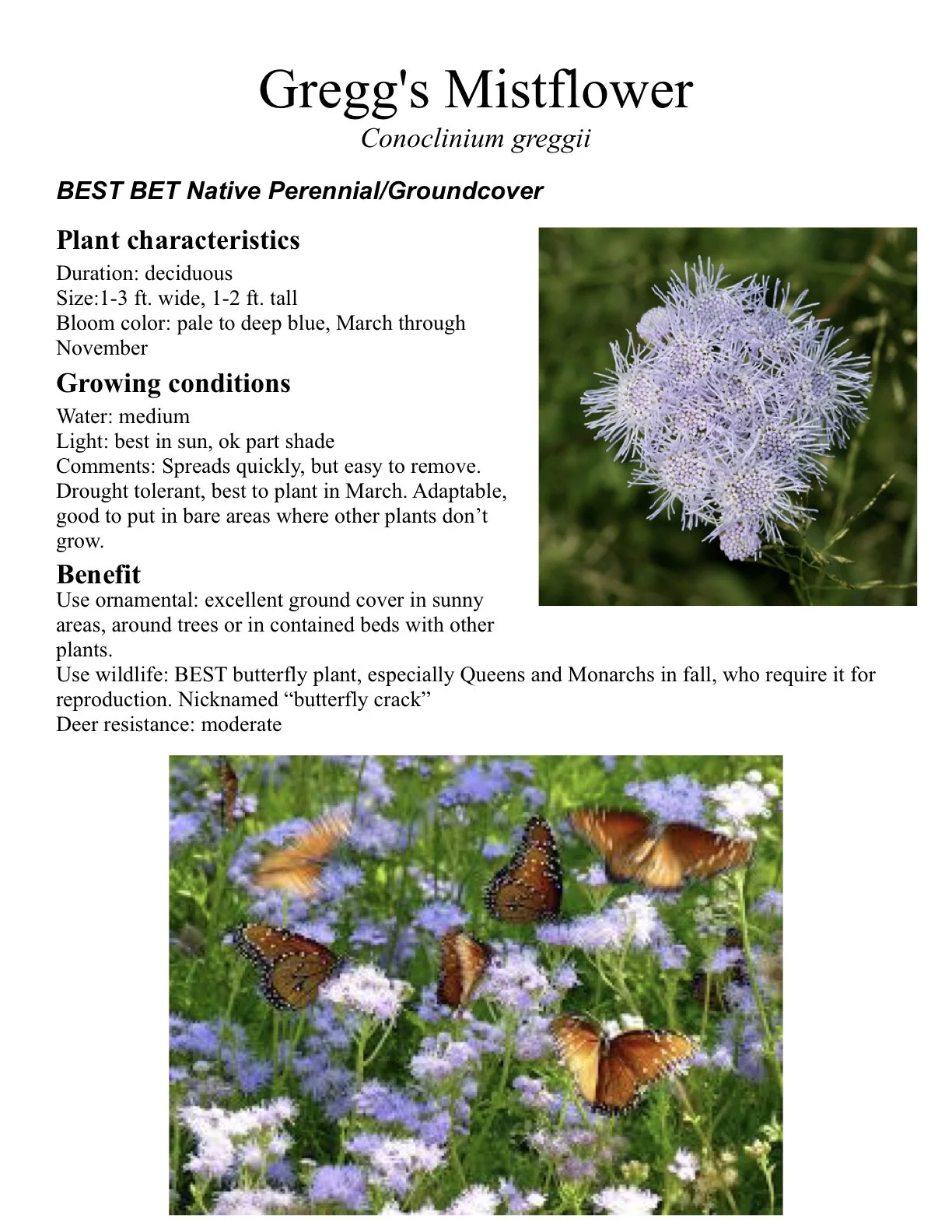
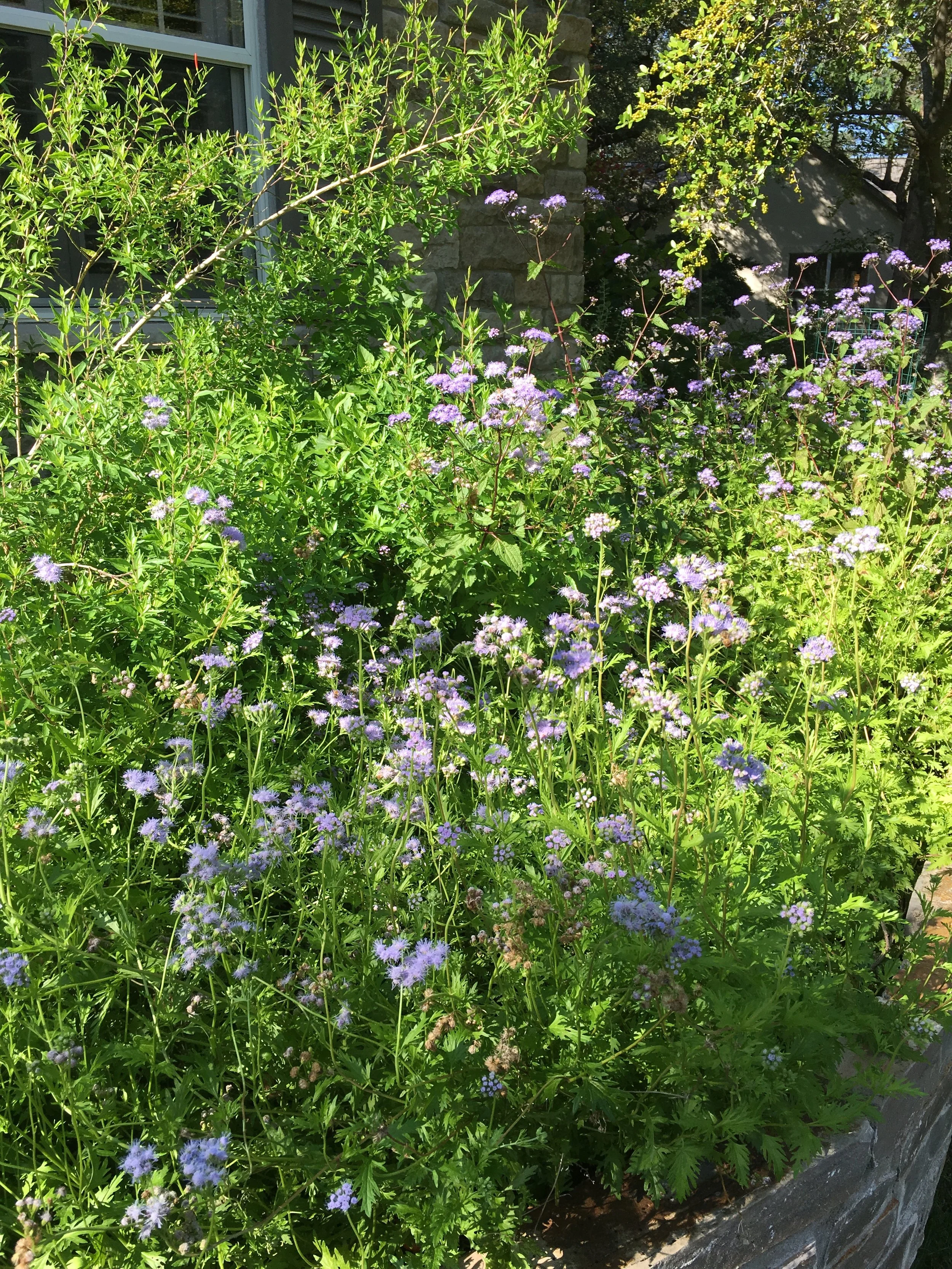
Gregg’s Mistflower (Conoclinium greggii) is one of the finest native plants for attracting butterflies to Central Texas gardens. Its clusters of soft lavender-blue flowers bloom from late summer through fall, often covering the plant with color when many other perennials have finished flowering. Butterflies, bees, and other pollinators are drawn to the abundant nectar produced by its blooms.
Gregg’s Mistflower thrives in full to part shade and is remarkably drought tolerant once established. It spreads gradually to form attractive colonies, making it an excellent choice for naturalized areas, pollinator gardens, and wildlife-friendly landscapes.
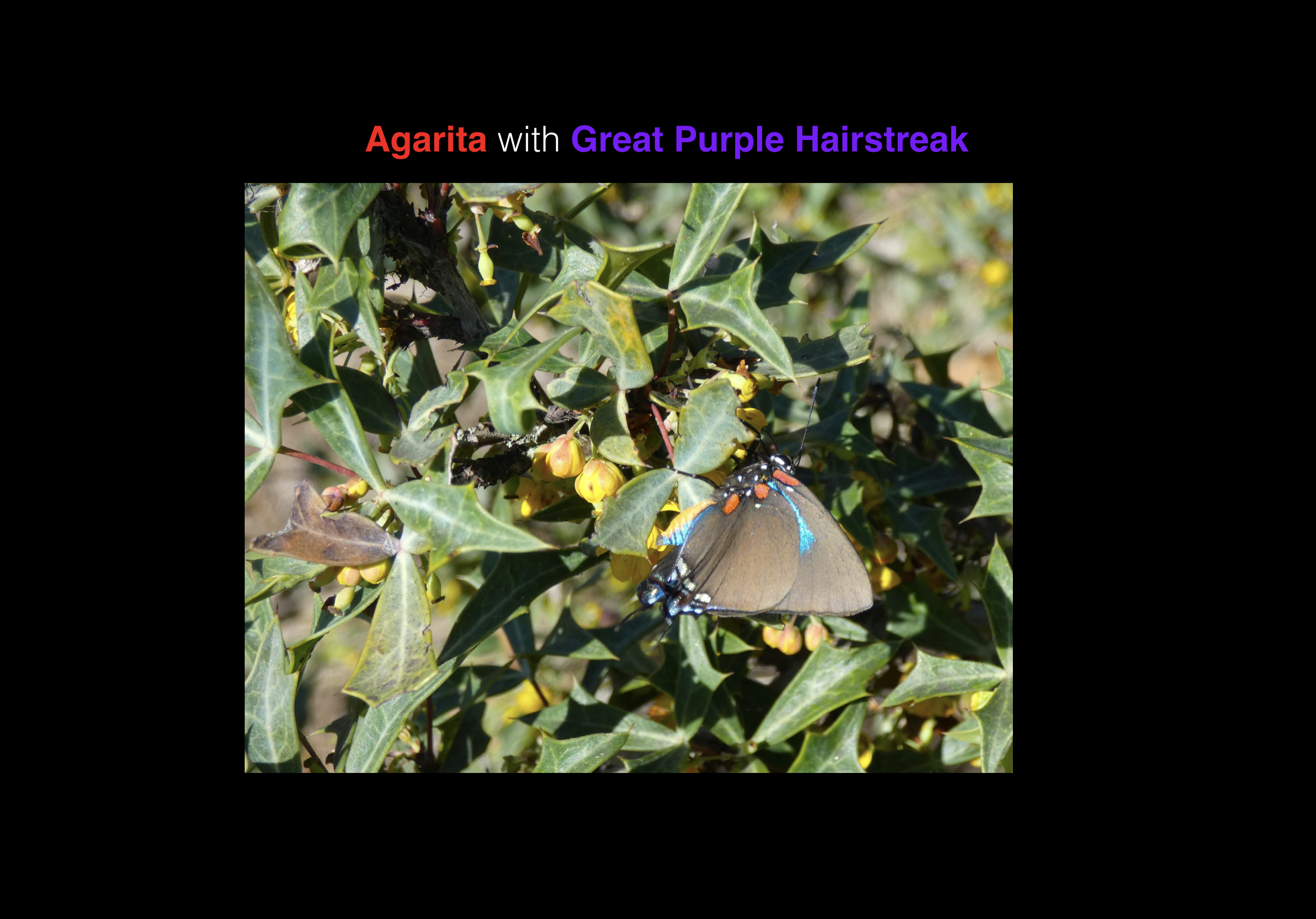
Agarita
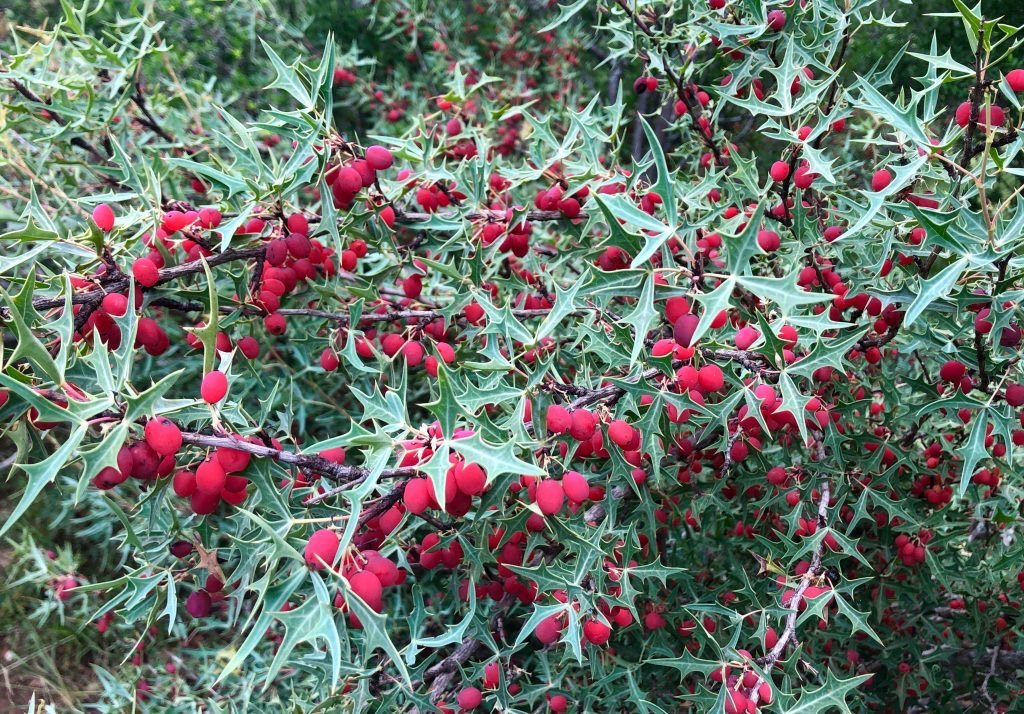
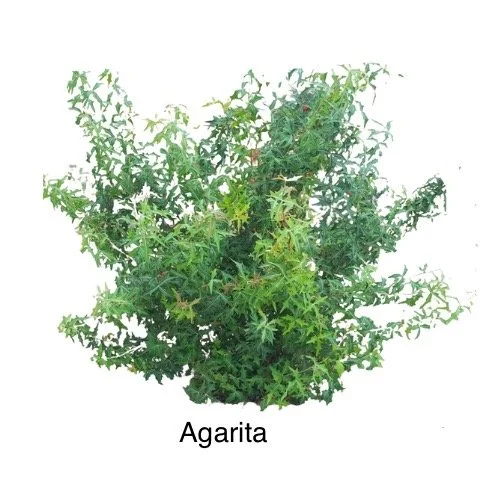
Agarita (Mahonia trifoliolata) is a tough, evergreen native shrub prized for its holly-like foliage, fragrant yellow flowers, and bright red berries. Blooming in late winter and early spring, it provides an important nectar source for early pollinators, while the tart berries are enjoyed by birds and other wildlife.
Agarita thrives in full sun to part shade and is exceptionally drought tolerant once established. Its dense, thorny branches make it an excellent choice for wildlife cover, natural hedges, security plantings, and low-maintenance landscapes adapted to Central Texas conditions.
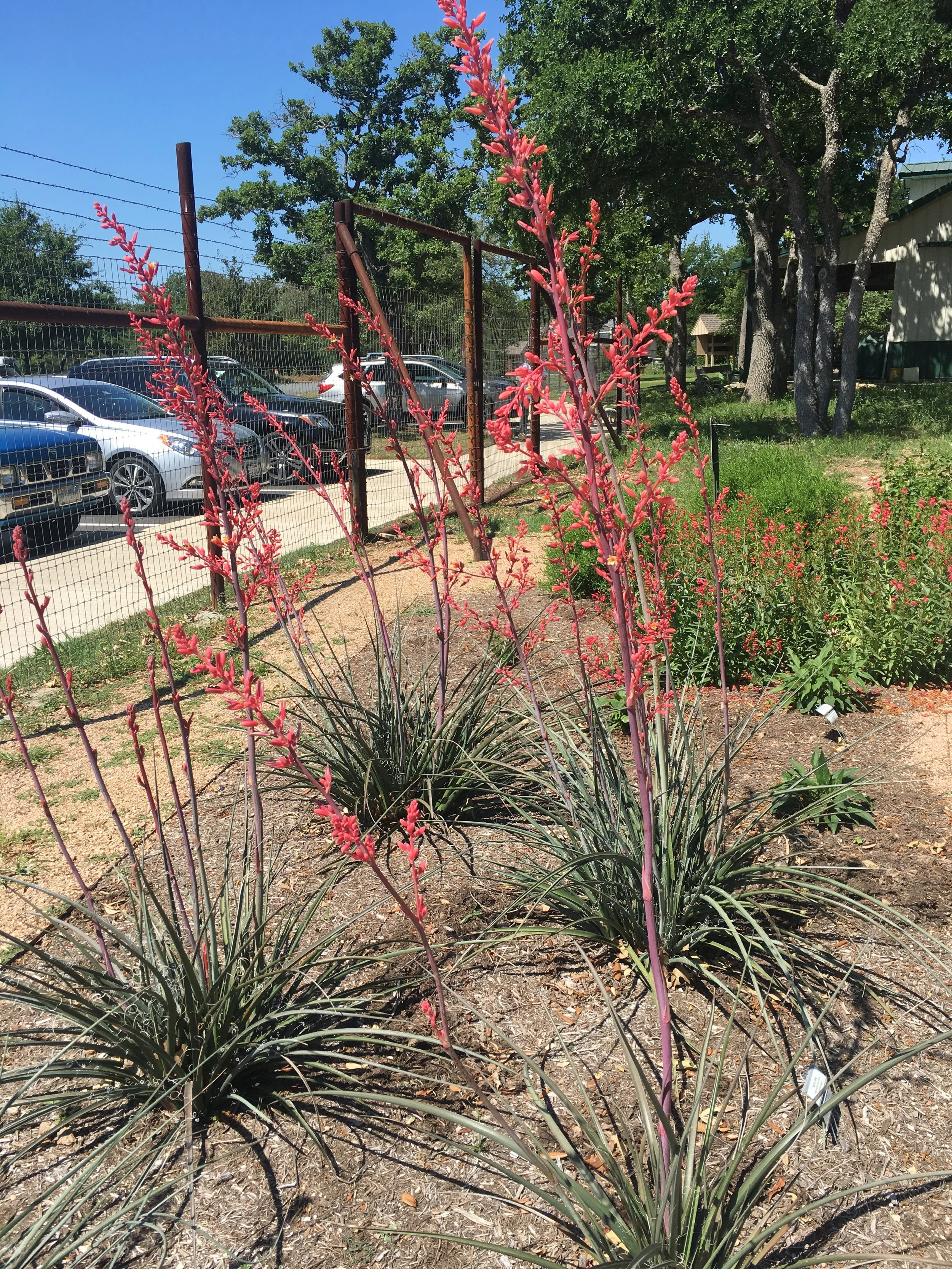
Red Yucca
Red Yucca (Hesperaloe parviflora) is one of the most reliable and widely used native plants for Central Texas landscapes. Its graceful, arching flower stalks produce coral-red blooms from spring through fall, attracting hummingbirds and other pollinators for months at a time. Unfortunately deer eat the blooms, so caging during blooming is recommended if you want to feed hummingbirds. The evergreen, grass-like foliage provides year-round structure and beauty while thriving in heat, drought, and poor soils.
Red Yucca performs best in full sun and requires very little maintenance once established. Its exceptional drought tolerance, deer resistance, and long bloom period make it an outstanding choice for water-wise gardens, rock gardens, and wildlife-friendly landscapes.
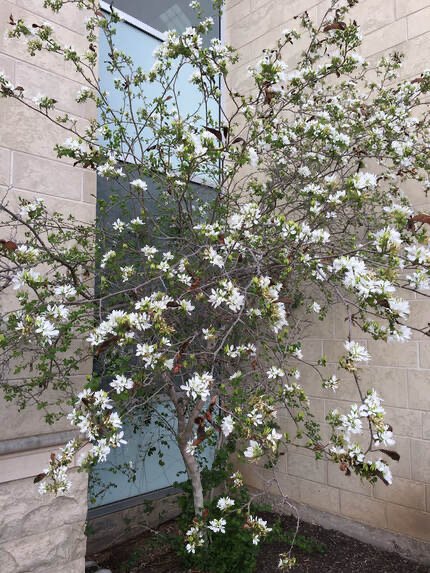
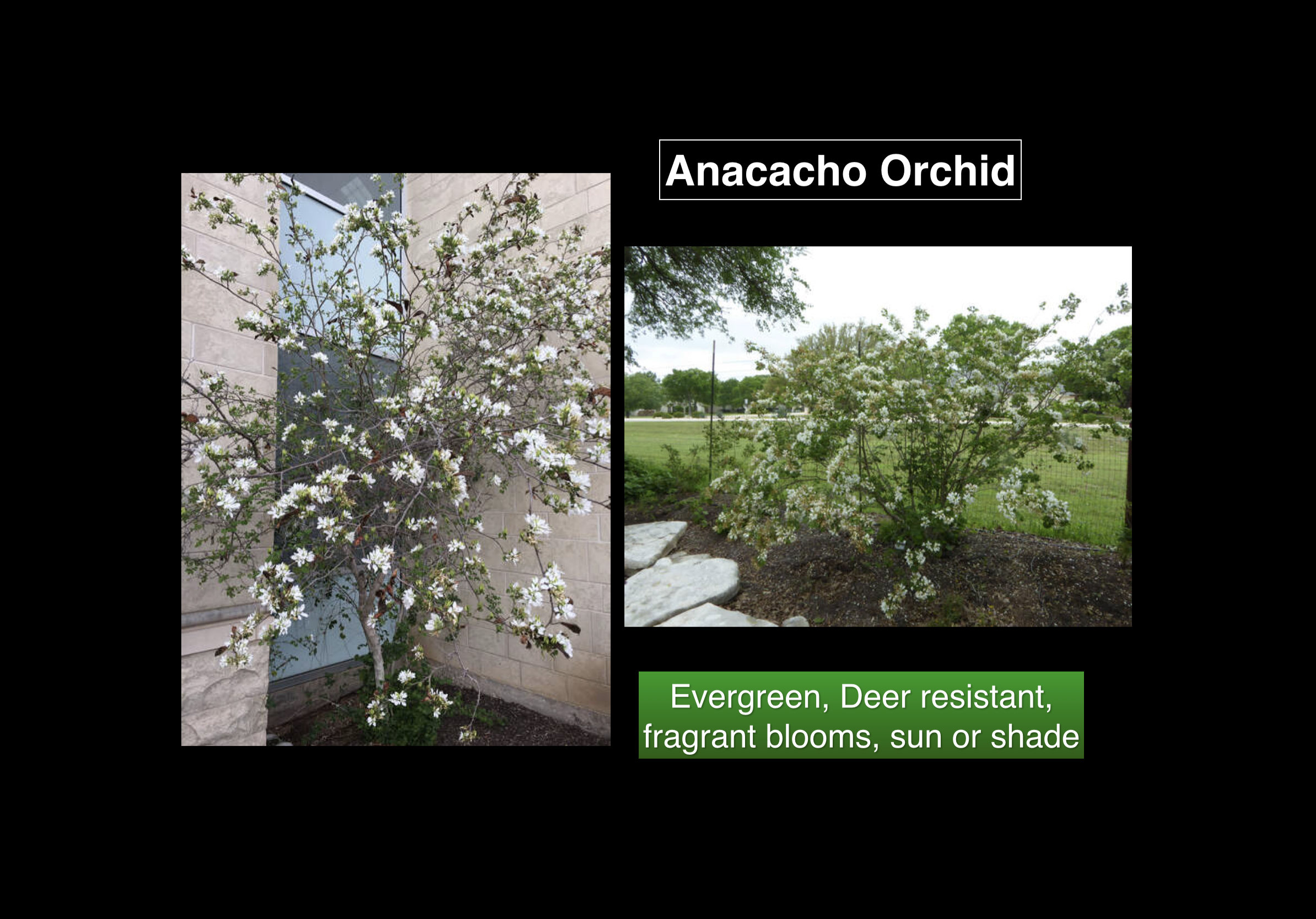
Anacacho Orchid
Anacacho Orchid Tree (Bauhinia lunarioides) is one of the most beautiful small native trees in Texas. In spring it produces a spectacular display of fragrant white, orchid-like flowers that often cover the tree before the leaves emerge, creating a striking focal point in the landscape. The distinctive two-lobed leaves add ornamental interest throughout the growing season.
Native to the limestone canyons of Southwest Texas, the Anacacho Orchid Tree thrives in well-drained soils and full sun to light shade. Once established, it is highly drought tolerant and well suited to water-wise landscapes. Its flowers attract bees and other pollinators, while its small size makes it ideal for courtyards, patios, and residential gardens.
Pigeonberry
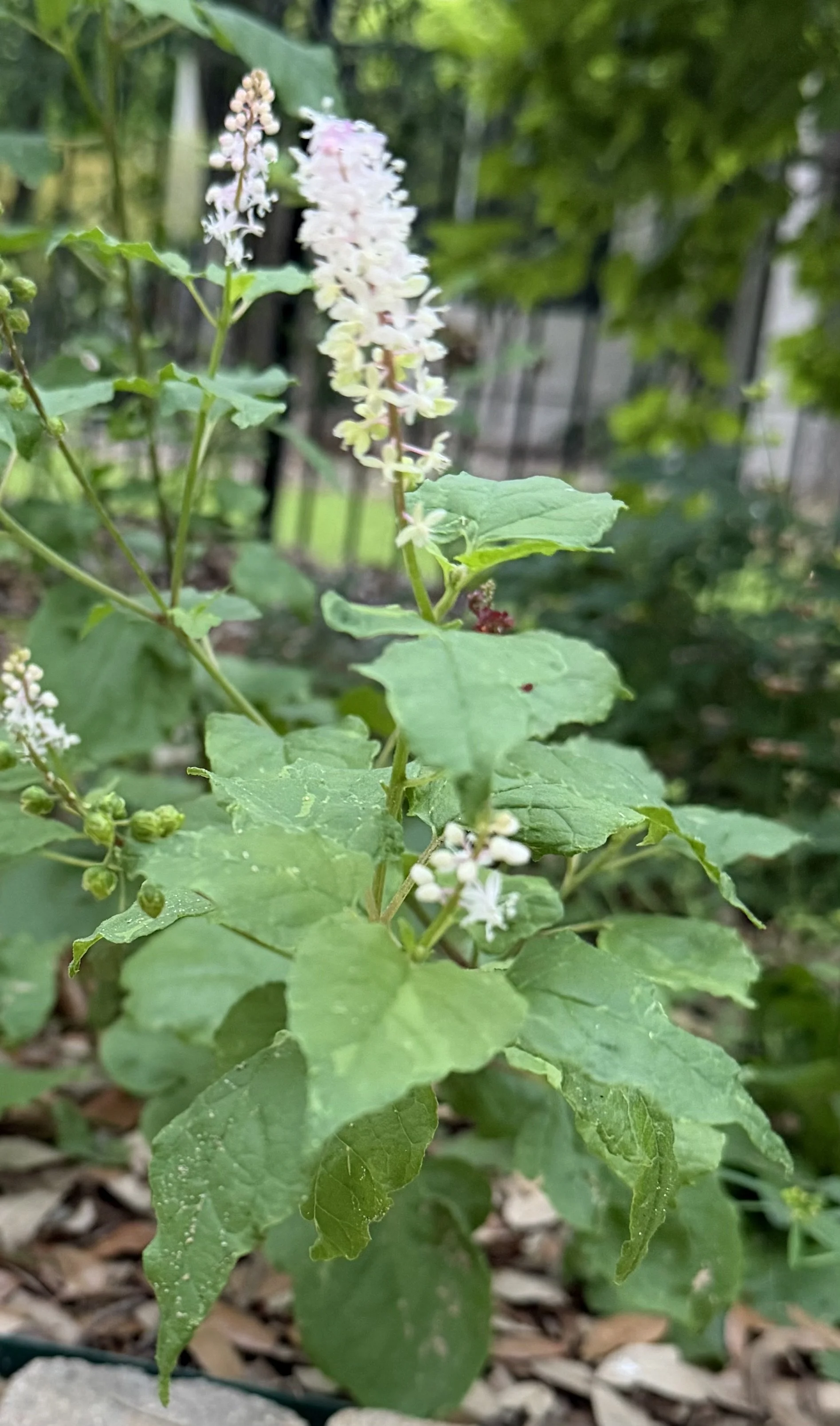
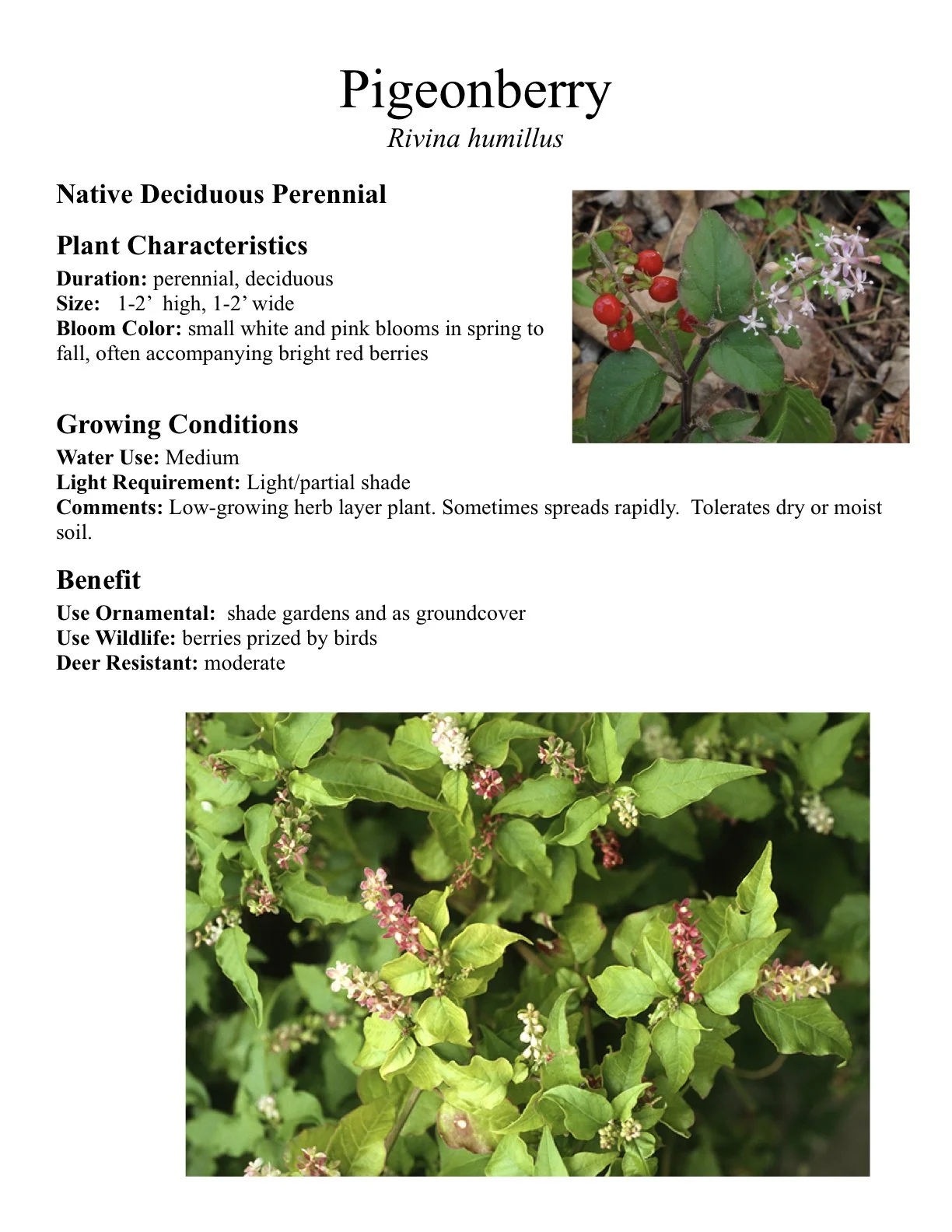
Pigeonberry (Rivina humilis) is a graceful native perennial that thrives in the dappled shade of Central Texas woodlands and gardens. Its delicate white to pinkish flowers are followed by clusters of bright red berries that often persist for months, providing color and interest through much of the year.
Pigeonberry spreads slowly to form an attractive ground cover beneath trees and shrubs, where it helps soften the landscape while supporting wildlife. The flowers attract small pollinators, and the berries are eaten by birds and other wildlife. Its tolerance of shade, drought, and poor soils makes it an excellent choice for naturalistic and bird-friendly gardens.
Coralberry
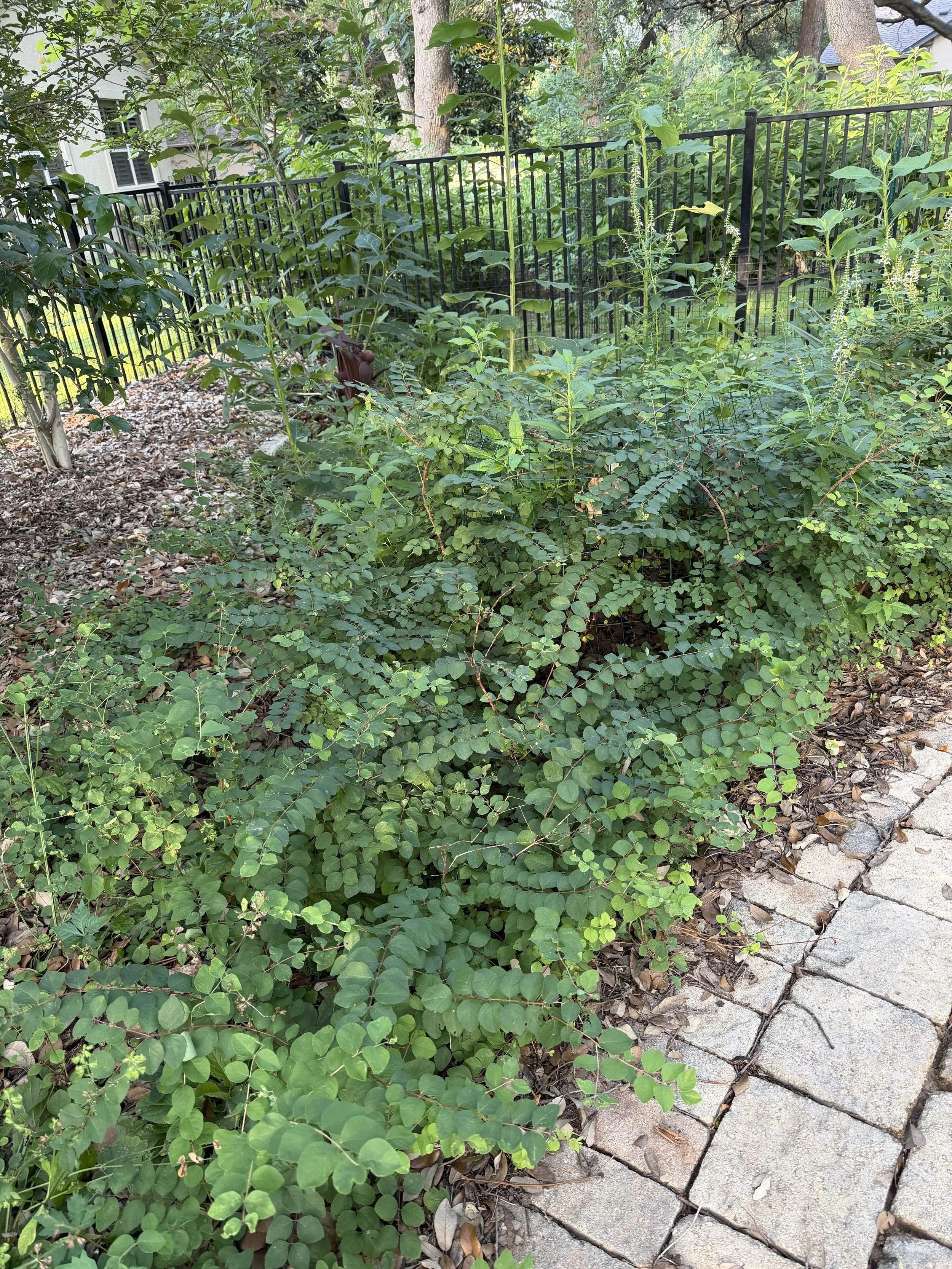
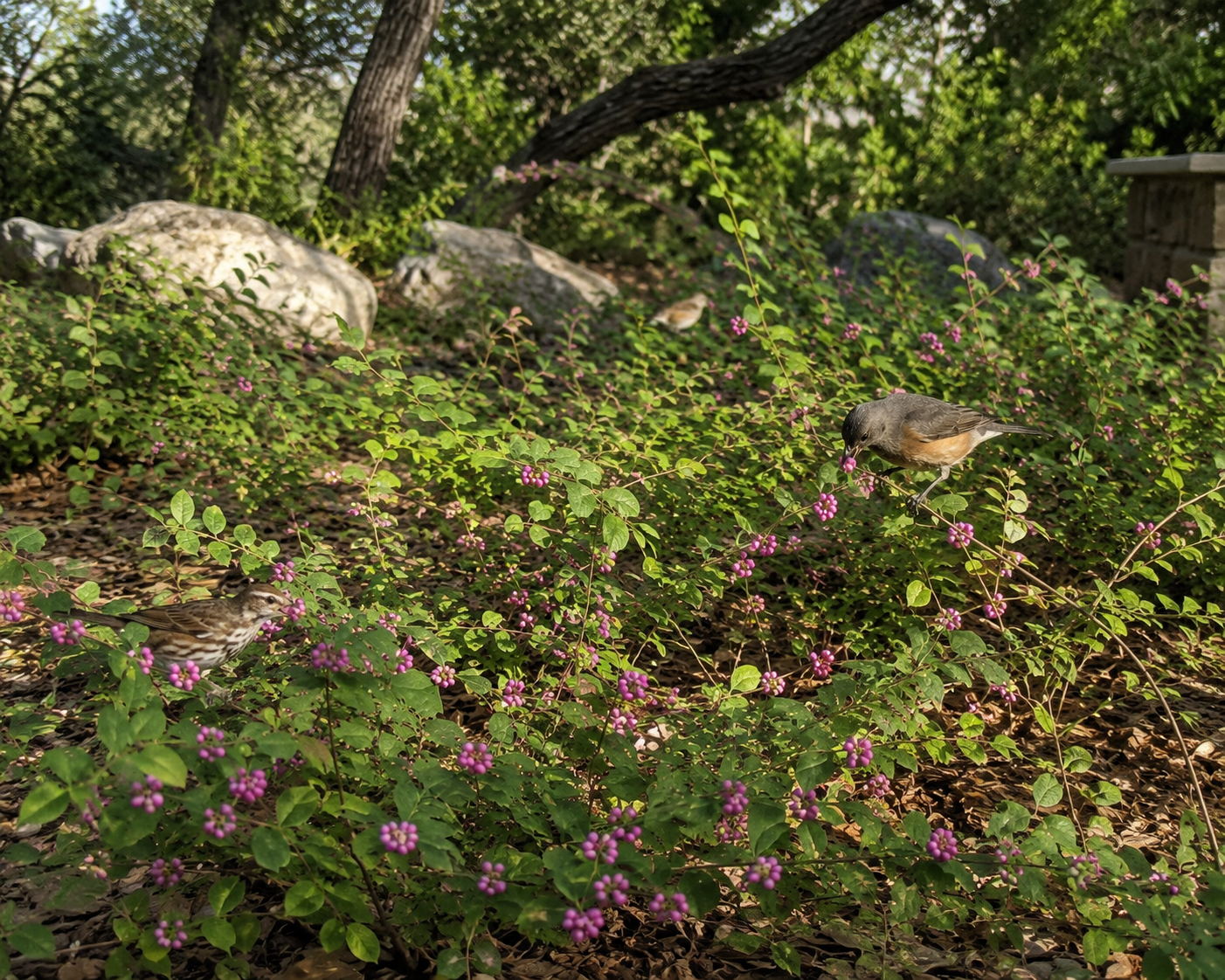
Coralberry (Symphoricarpos orbiculatus) is a tough native understory shrub that produces clusters of bright pink to reddish-purple berries that often persist well into winter. The berries provide food for birds and other wildlife, while the dense branching habit offers valuable cover and nesting sites.
Coralberry grows best in part shade but will tolerate a range of conditions, including dry soils once established. Its modest flowers attract pollinators, and its attractive berries and wildlife value make it an excellent choice for naturalistic, bird-friendly landscapes.
Possumhaw Holly
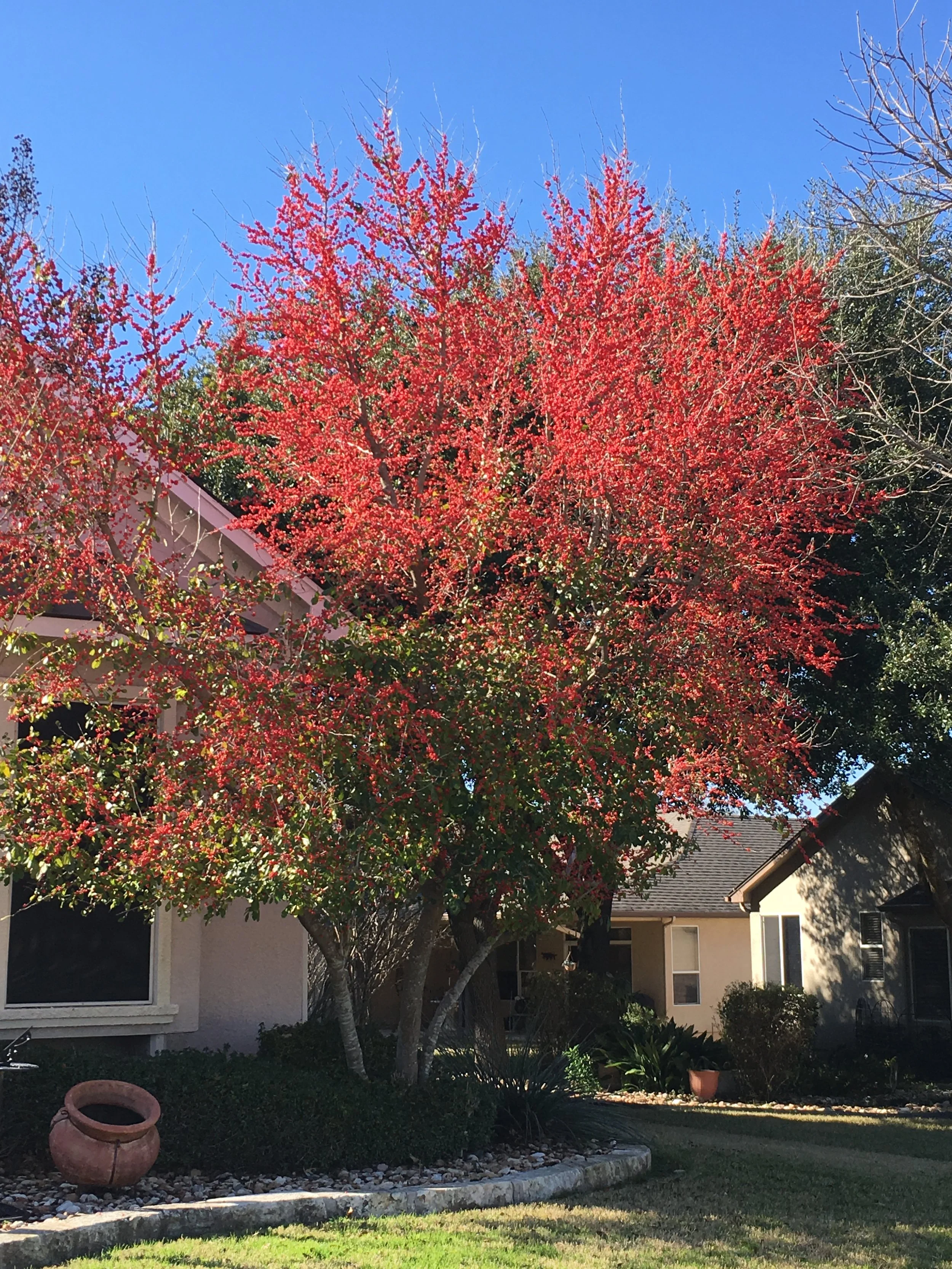
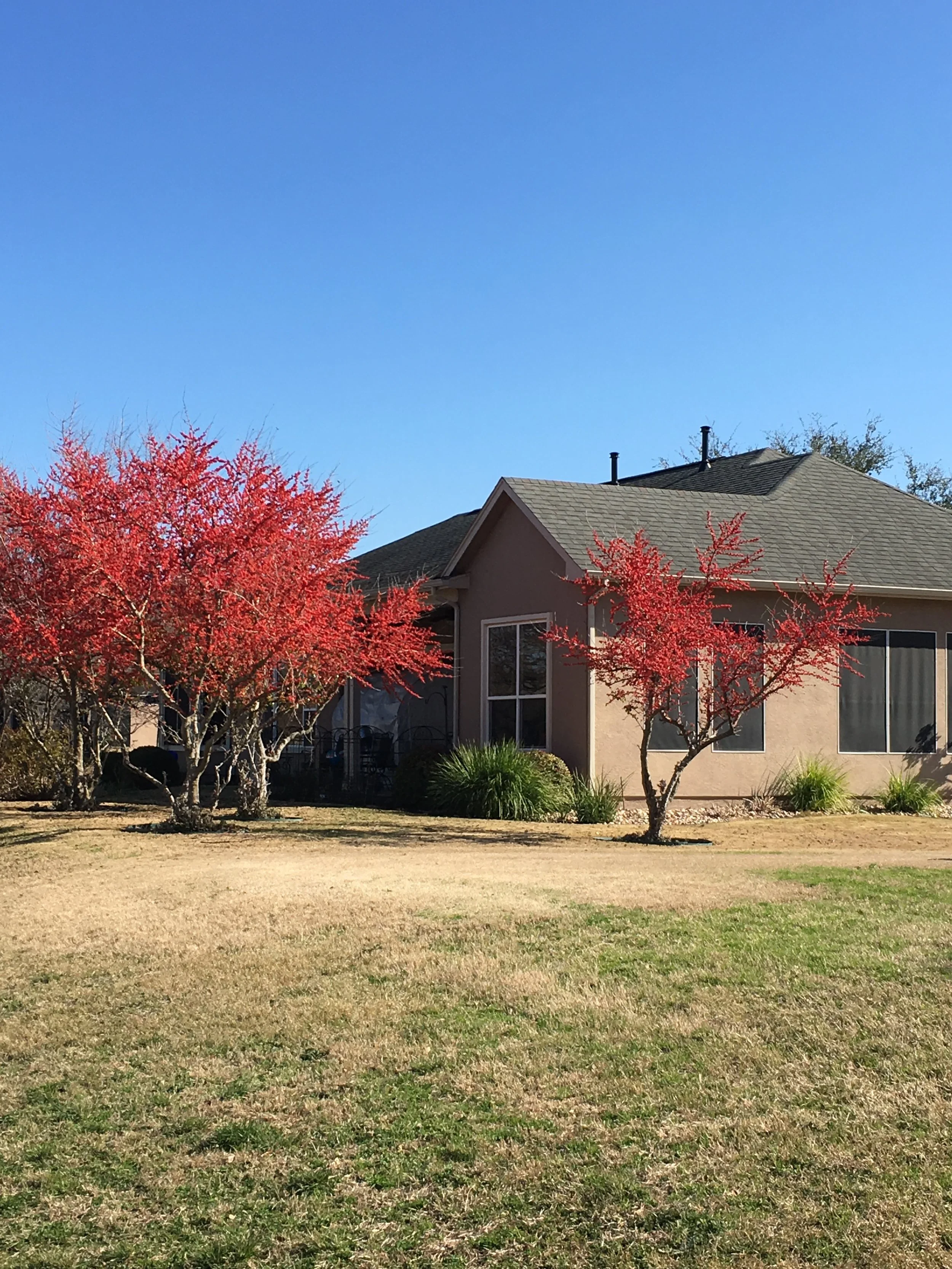
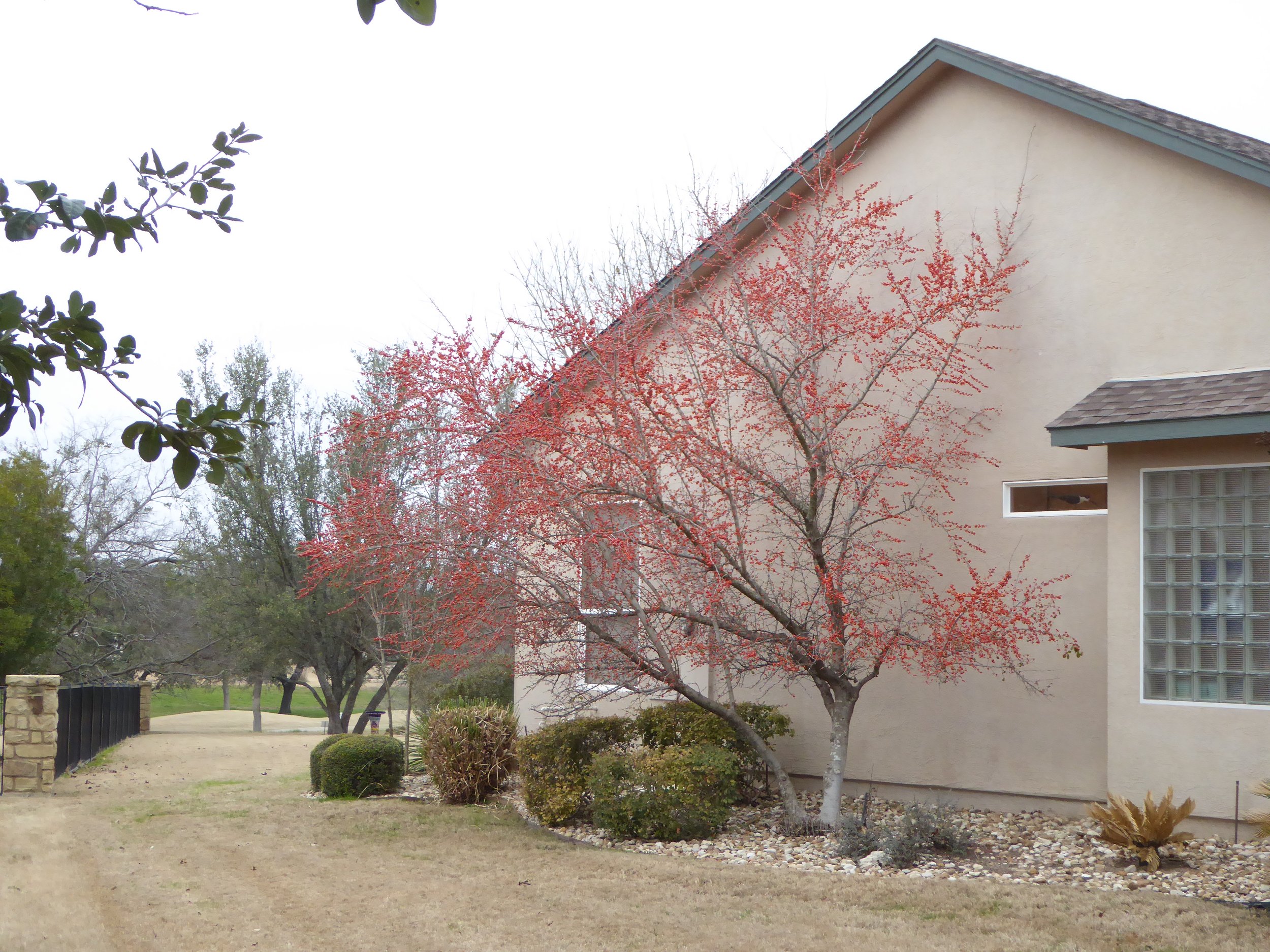
Possumhaw Holly (Ilex decidua) is a hardy Texas native shrub or small tree valued for its brilliant display of red berries in fall and winter. After the leaves drop, the colorful berries remain on the bare branches, providing striking winter interest and an important food source for cedar waxwings, robins, mockingbirds, and many other birds.
Possumhaw grows in sun or part shade and tolerates a wide range of soil conditions, including periodic flooding. Female plants produce the berries, so a male plant must be nearby for pollination. Its wildlife value, seasonal beauty, and adaptability make it an excellent choice for naturalized landscapes and bird-friendly gardens.
American Beautyberry
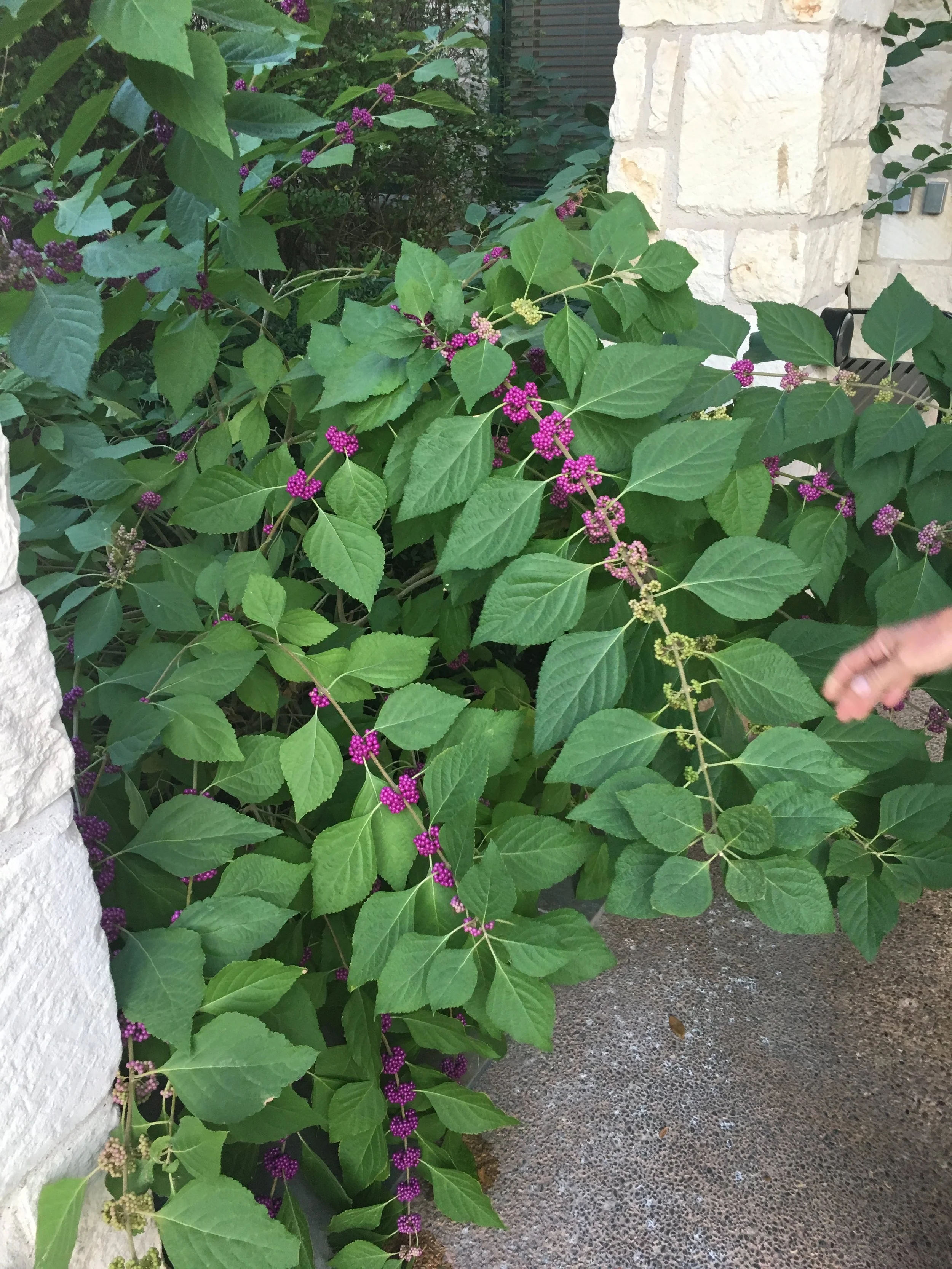
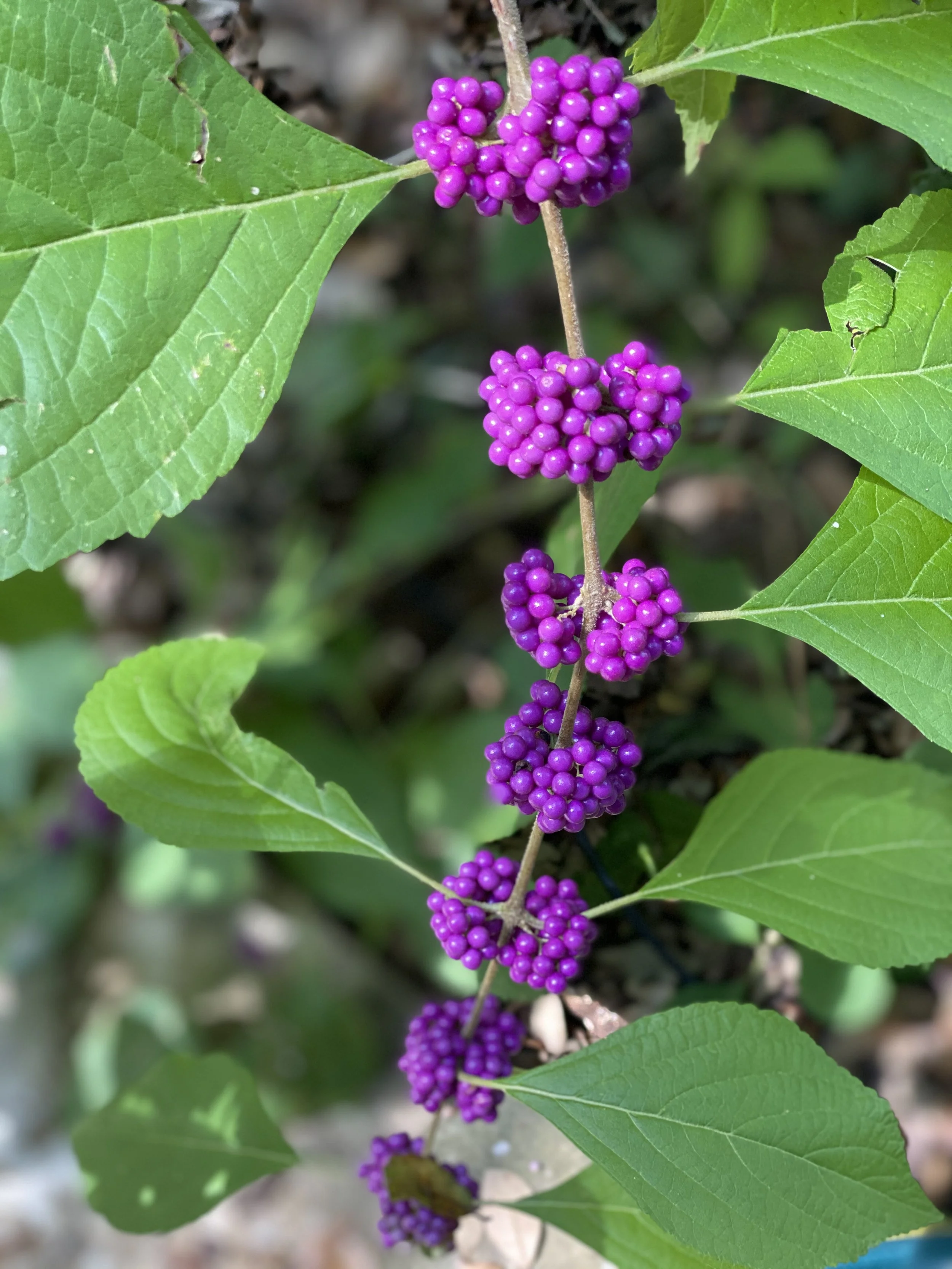
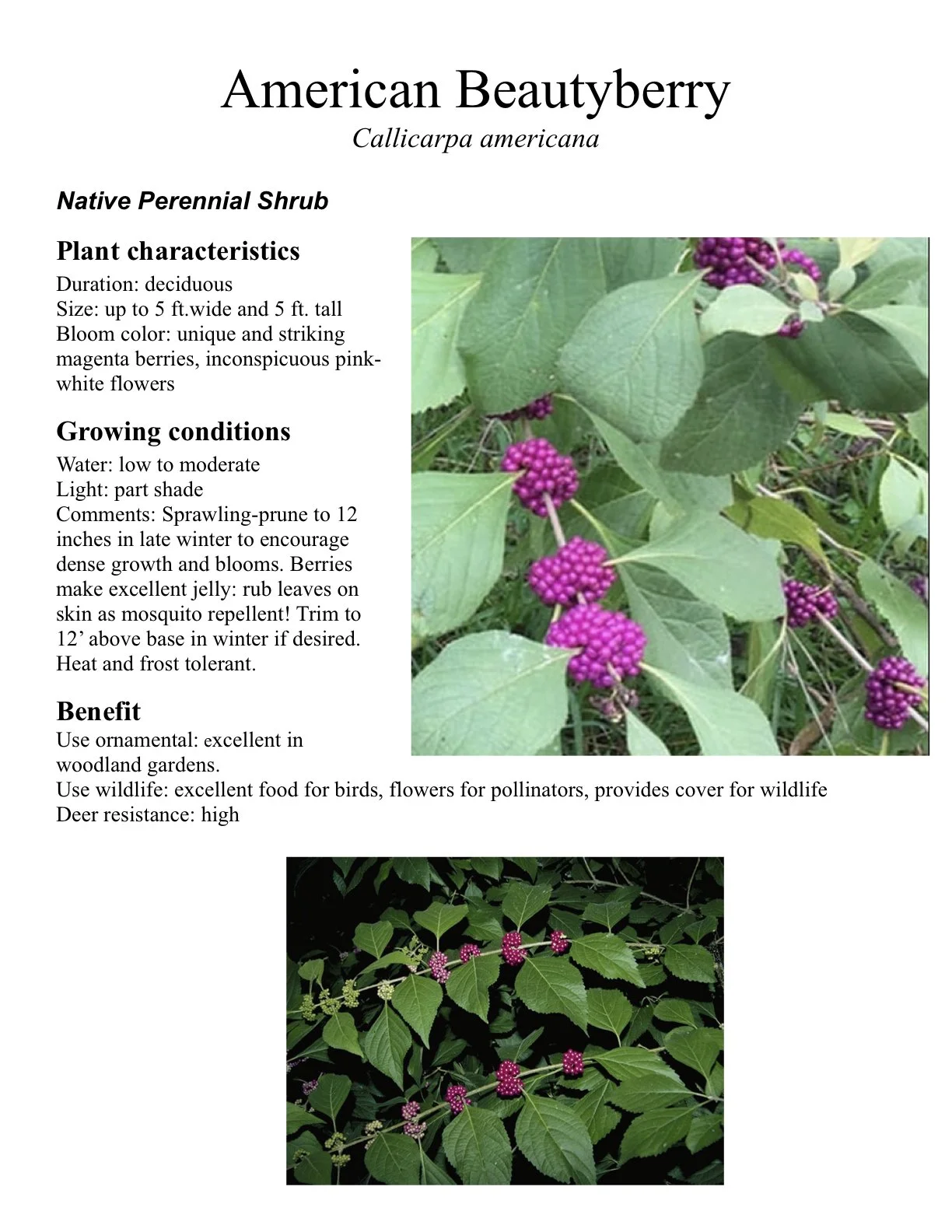
American Beautyberry (Callicarpa americana) is one of the most attractive native shrubs for Central Texas shade gardens. Its arching branches produce clusters of vivid purple berries in late summer and fall, creating a striking display and providing an important food source for mockingbirds, thrashers, robins, and many other songbirds.
Beautyberry grows best in part shade to filtered sun and is adaptable to a variety of soils. It is drought tolerant once established, deer resistant, and highly valuable for wildlife, making it an excellent choice for bird-friendly native landscapes.
Yaupon Holly
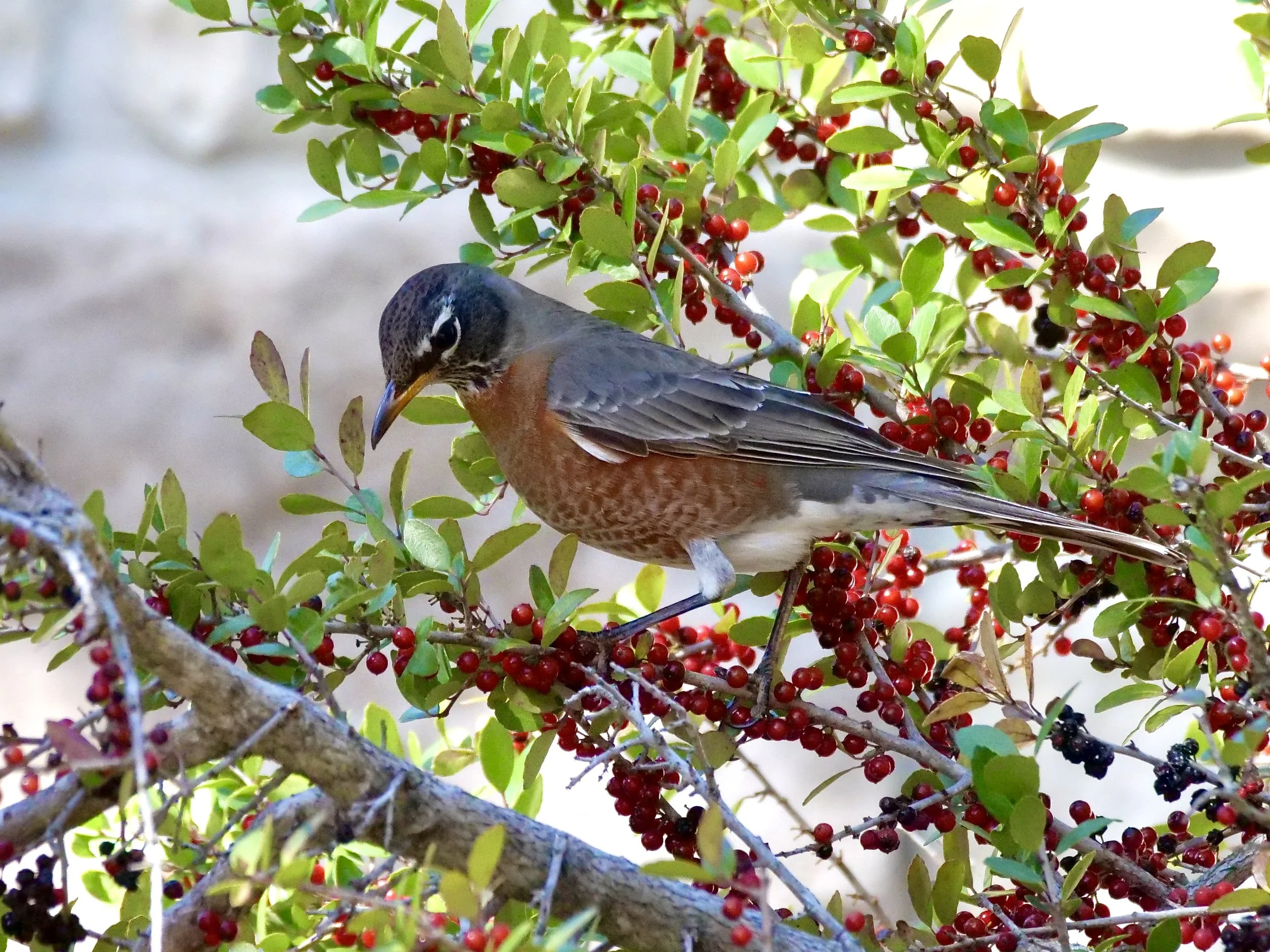
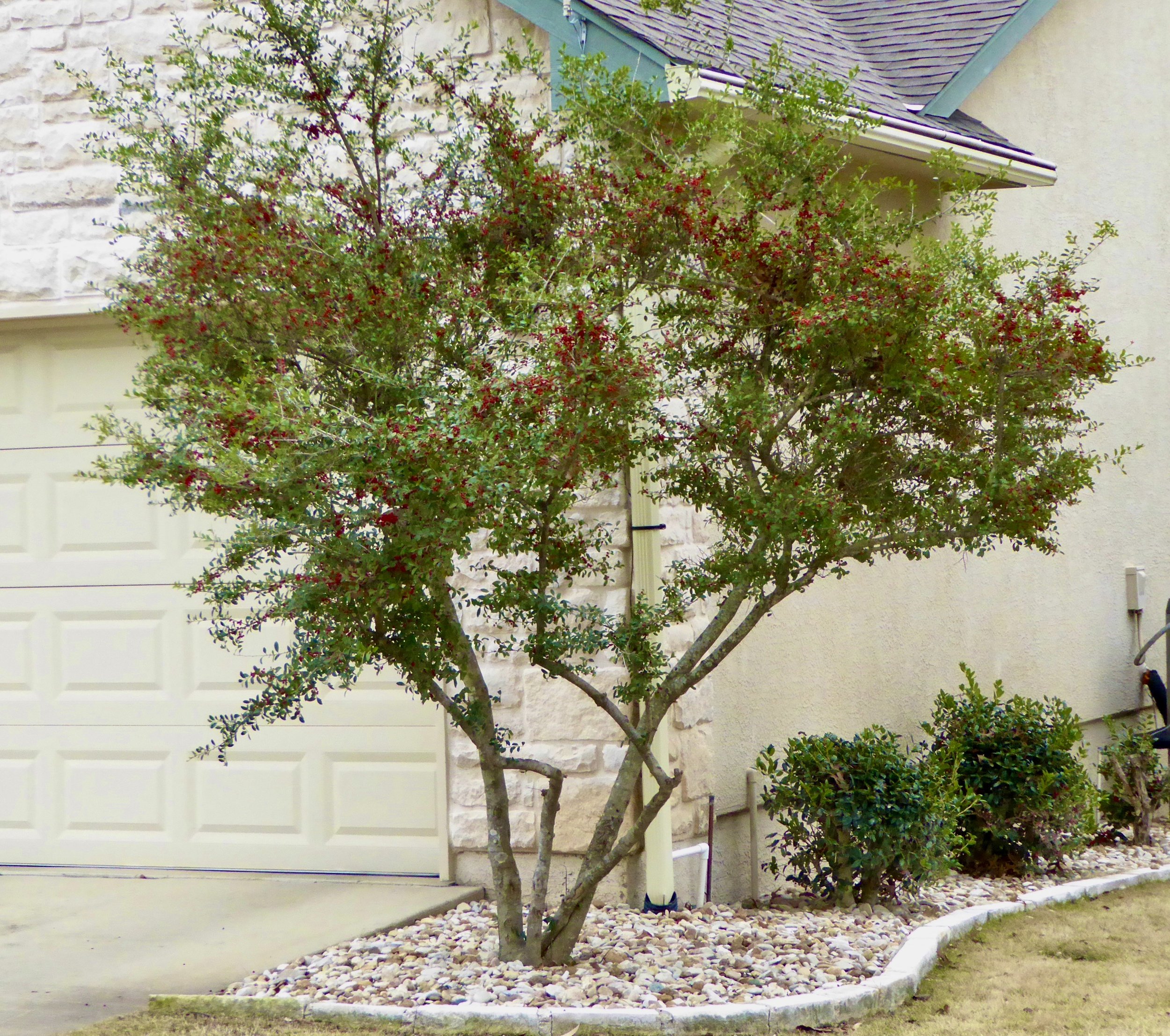
Yaupon Holly (Ilex vomitoria) is one of the most versatile and valuable native shrubs or small trees for Central Texas landscapes. Its dense evergreen foliage provides year-round beauty, nesting cover, and shelter for birds, while female plants produce bright red berries that are an important winter food source for many species. Yaupon Holly thrives in sun or shade, tolerates drought once established, and can be used as a screening plant, hedge, accent shrub, or small tree.
Texas Lantana
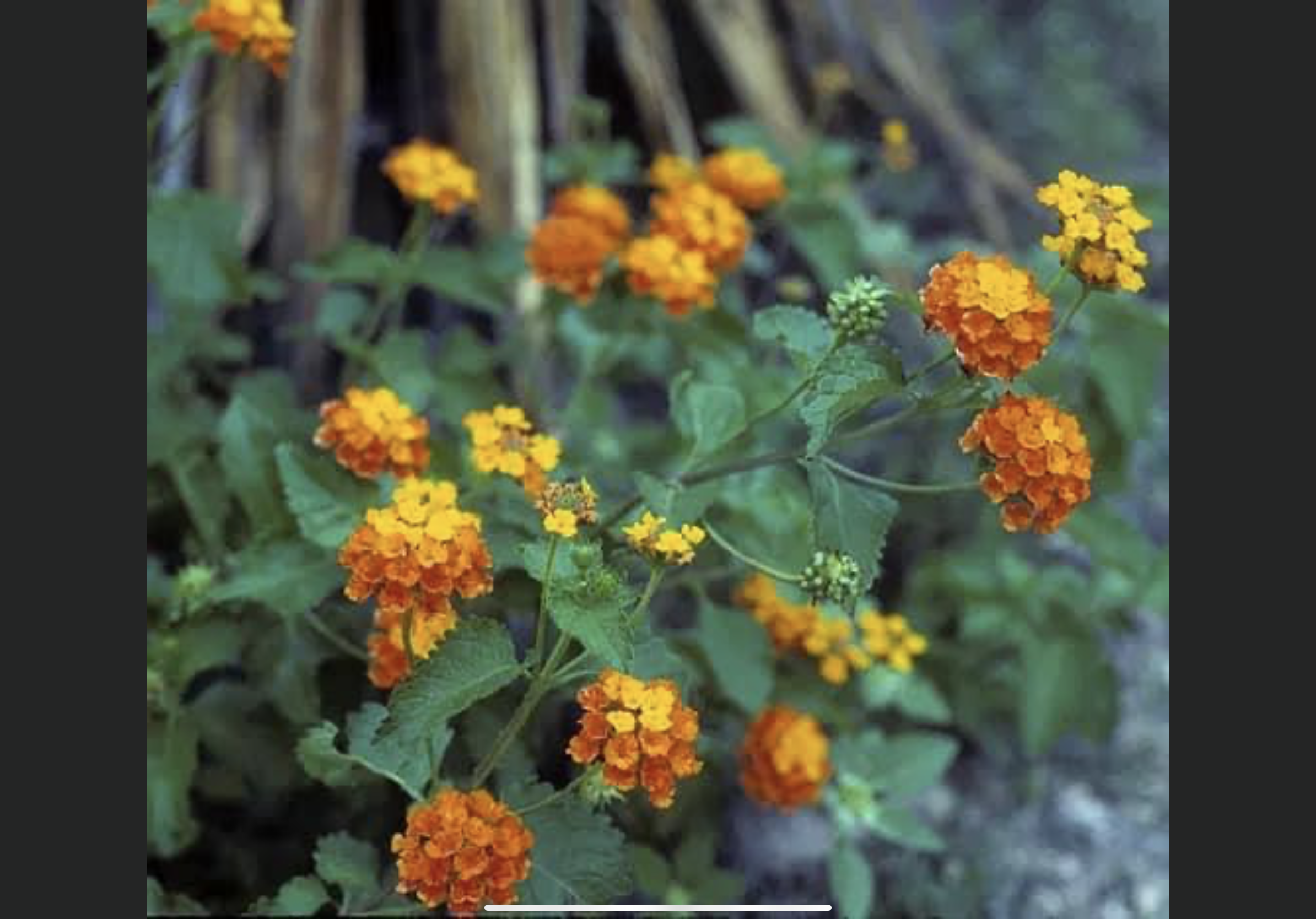
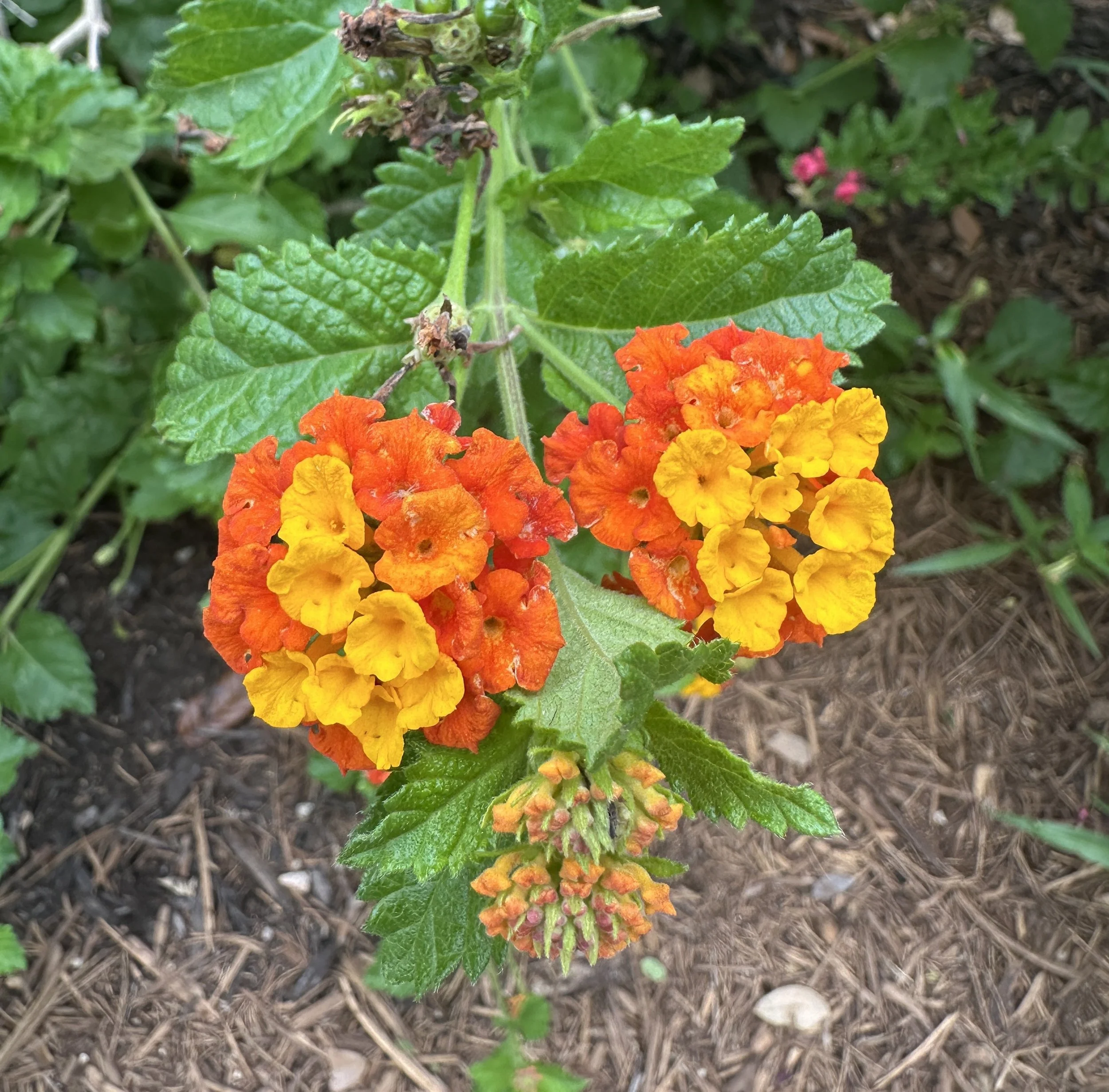
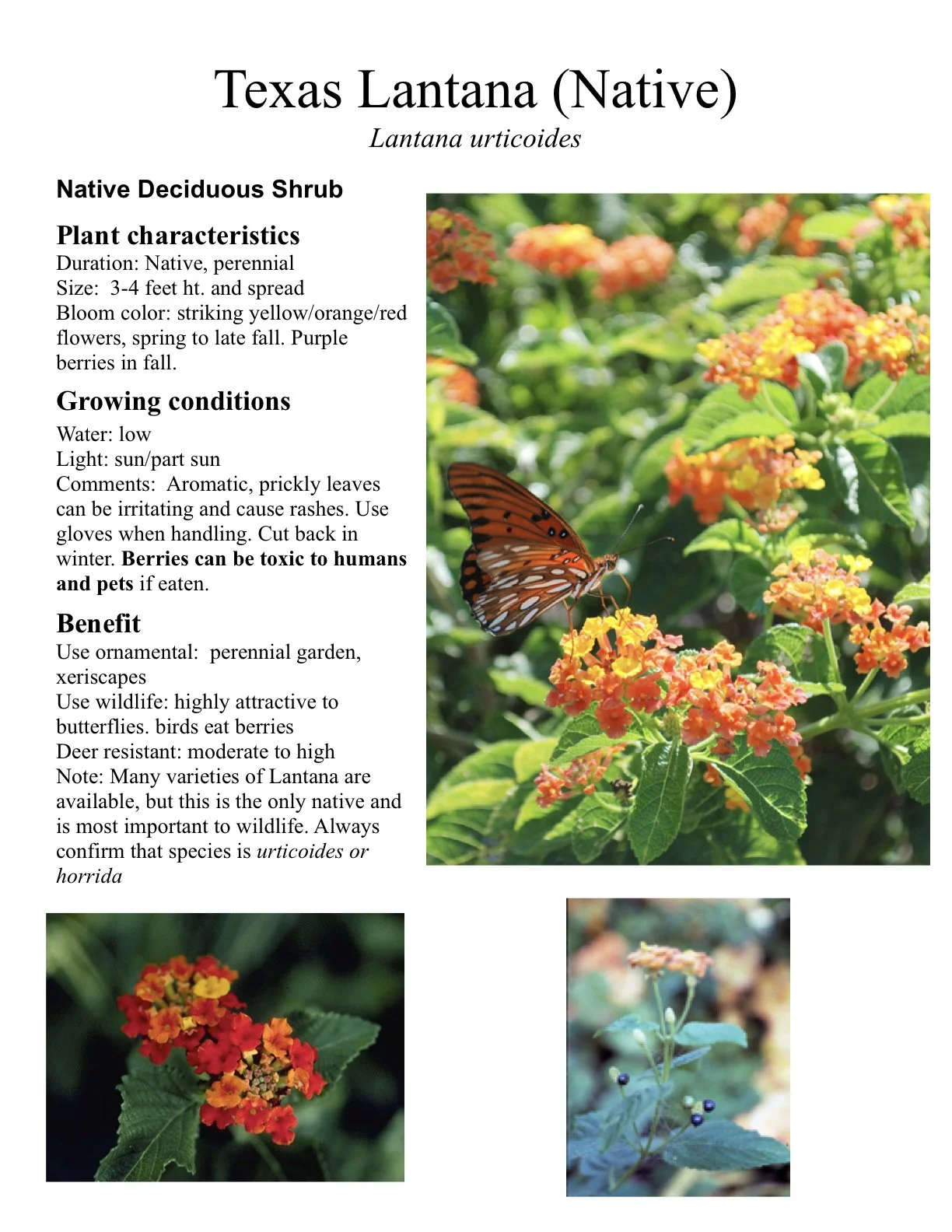
Texas Lantana (Lantana urticoides) is one of the toughest and most colorful native perennials for Central Texas landscapes. Its clusters of bright orange and yellow flowers bloom from spring until frost, attracting butterflies, bees, and other pollinators throughout the growing season. Texas Lantana thrives in full sun, tolerates heat, drought, and poor soils, and is highly resistant to deer, making it an excellent choice for low-maintenance, wildlife-friendly gardens.
Gardeners should take care not to confuse Texas Lantana with the many non-native lantana hybrids commonly sold in nurseries. While some cultivated lantanas are excellent landscape plants, others can be invasive, short-lived, or less beneficial to wildlife. For the greatest ecological value and reliability, I generally recommend the native Texas species whenever possible.
Esperanza/ Yellow Bells
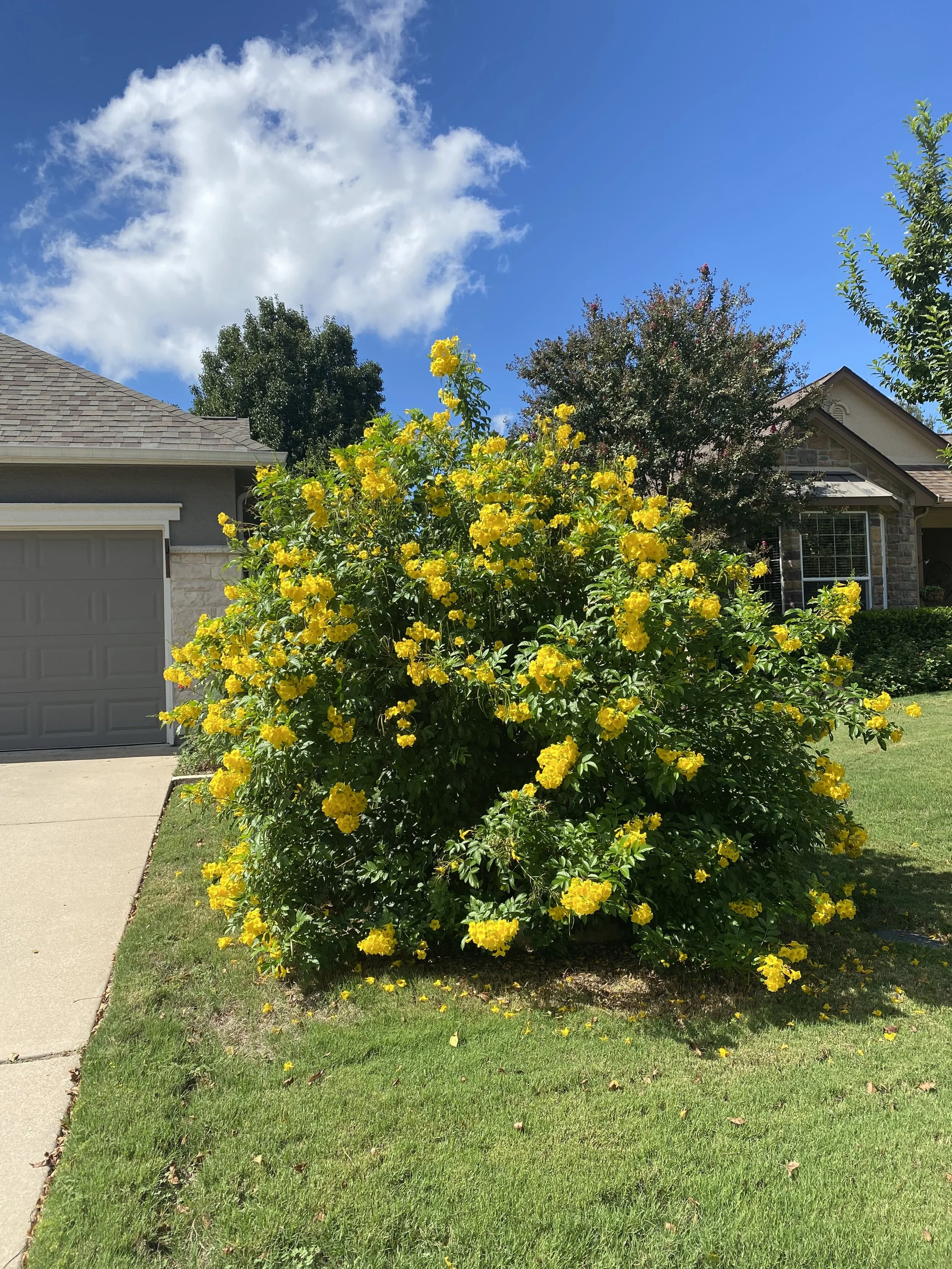
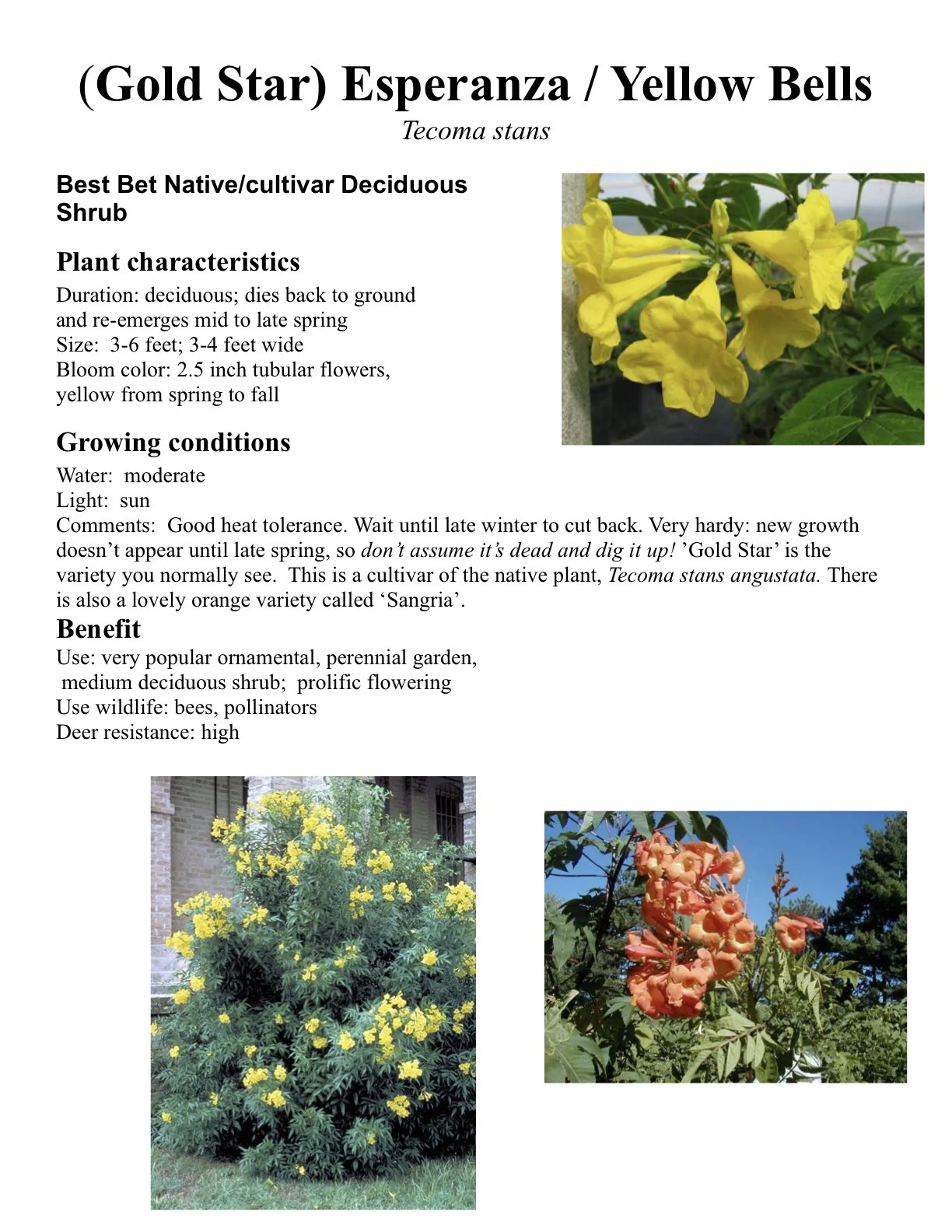
Esperanza (Yellowbells) (Tecoma stans) is a fast-growing native shrub that produces brilliant golden-yellow trumpet-shaped flowers from late spring through fall. Its long blooming season makes it one of the best plants for adding continuous color to Central Texas landscapes while attracting hummingbirds, butterflies, and other pollinators. Esperanza thrives in full sun, tolerates heat and drought once established, and can be grown as a large shrub or small ornamental tree.