
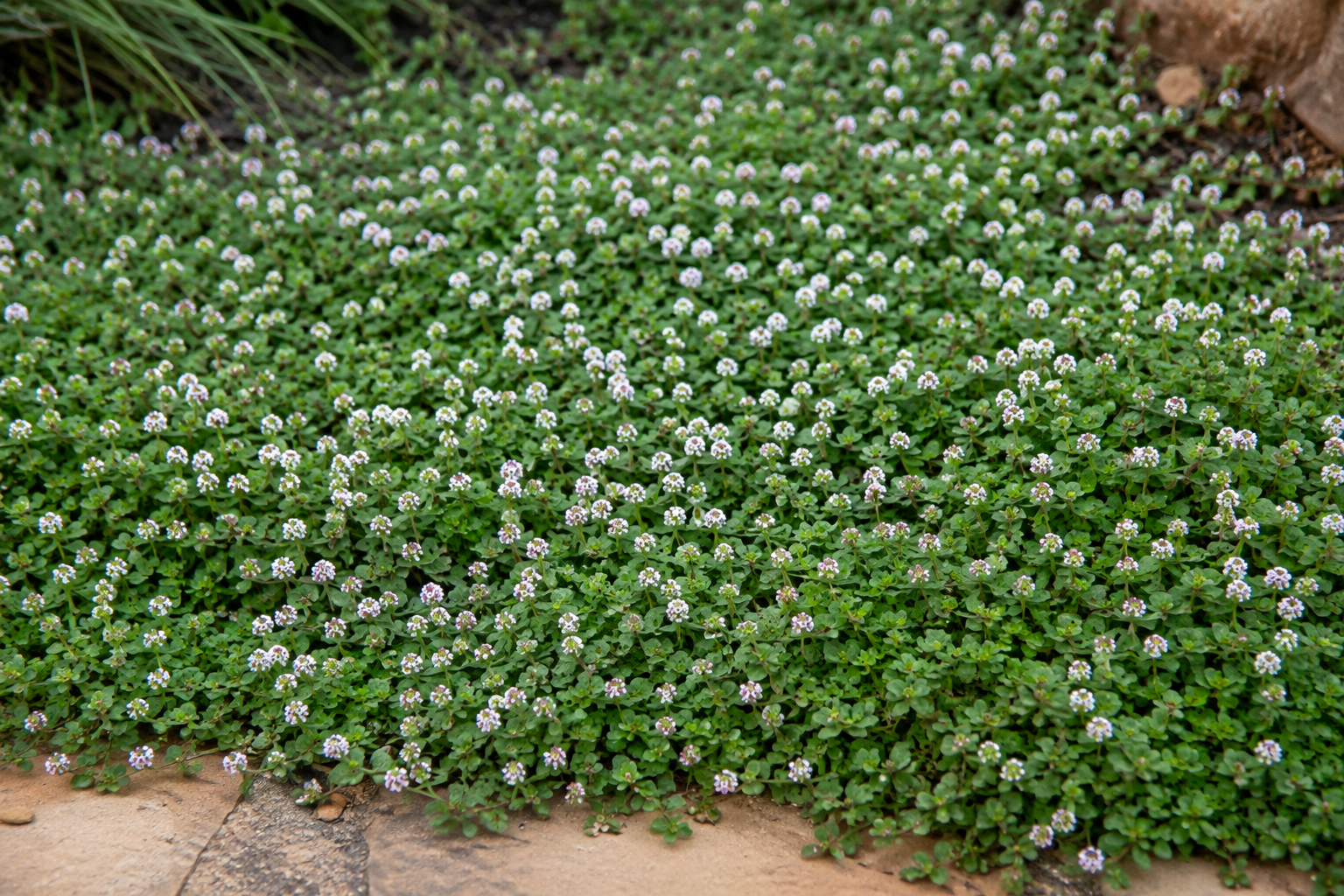
Frogfruit
Frogfruit Phyla nodiflora
Frogfruit is a tough, low-growing Texas native groundcover that spreads to form a dense green mat, making it an excellent alternative to traditional lawn in sunny or partly shaded areas. Tiny white-and-purple flowers appear for much of the warm season and are remarkably valuable to pollinators. Frogfruit is a host plant for several butterflies, including Phaon Crescent, White Peacock, and Common Buckeye, while its flowers attract numerous small native bees and other beneficial insects. It tolerates heat, drought, foot traffic, and a range of soils, although it looks its best with occasional moisture. It can spread enthusiastically where conditions suit it, which makes it especially useful between stepping stones, along pathways, as a living mulch, or where a low, wildlife-friendly groundcover is wanted.
Prairie Coneflower
Prairie Coneflower (Ratibida columnifera) is a cheerful, long-blooming native Texas wildflower that produces distinctive yellow petals surrounding a tall, reddish-brown central cone. Blooming from late spring through fall, it provides an abundant nectar source for butterflies, native bees, and other pollinators while its seeds feed songbirds later in the season. Exceptionally heat- and drought-tolerant, Prairie Coneflower thrives in full sun and poor, well-drained soils, making it an excellent choice for wildflower meadows, pollinator gardens, and water-wise landscapes. Its carefree nature and extended bloom season make it one of the easiest and most rewarding Texas natives to grow.
Frostweed
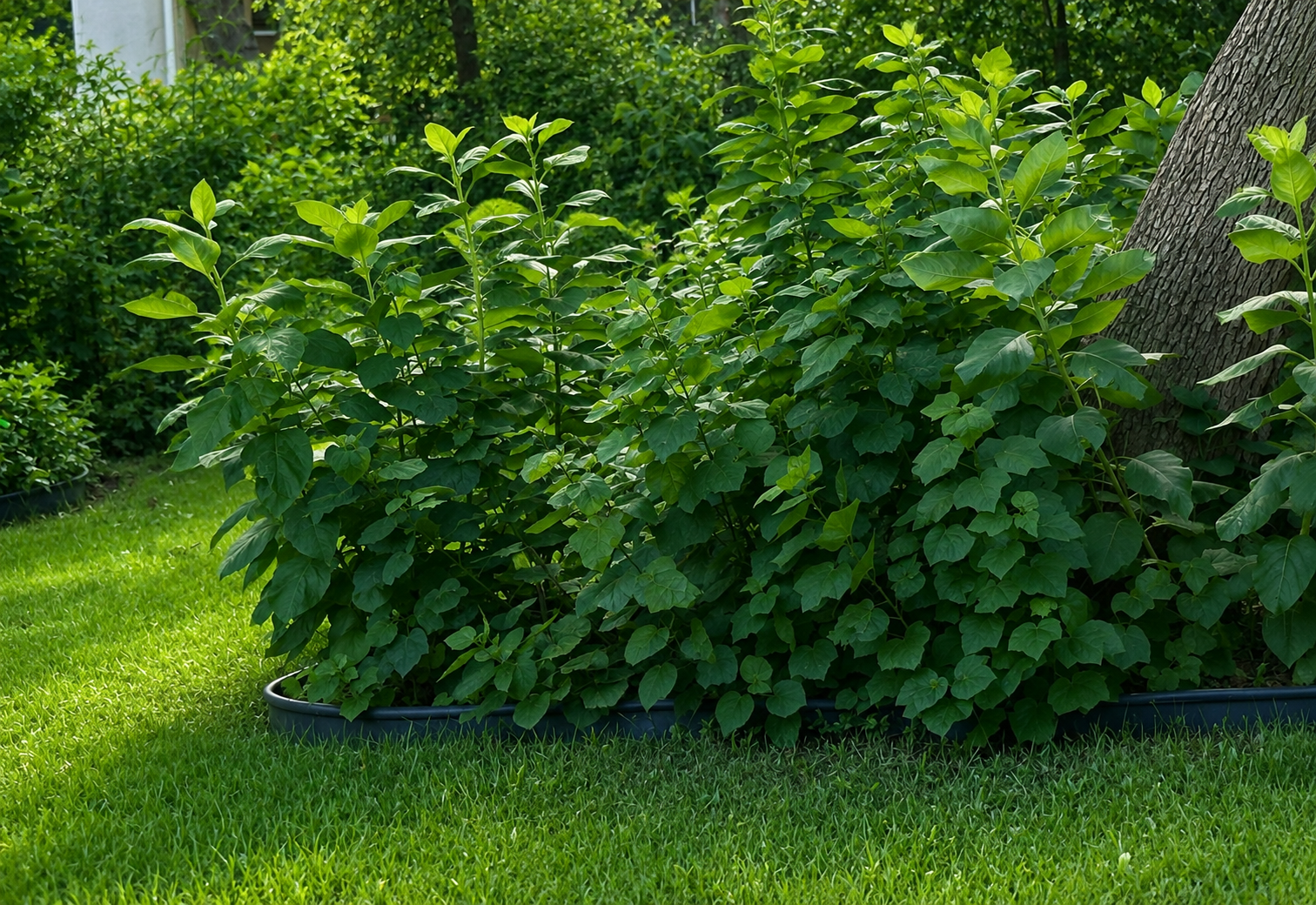
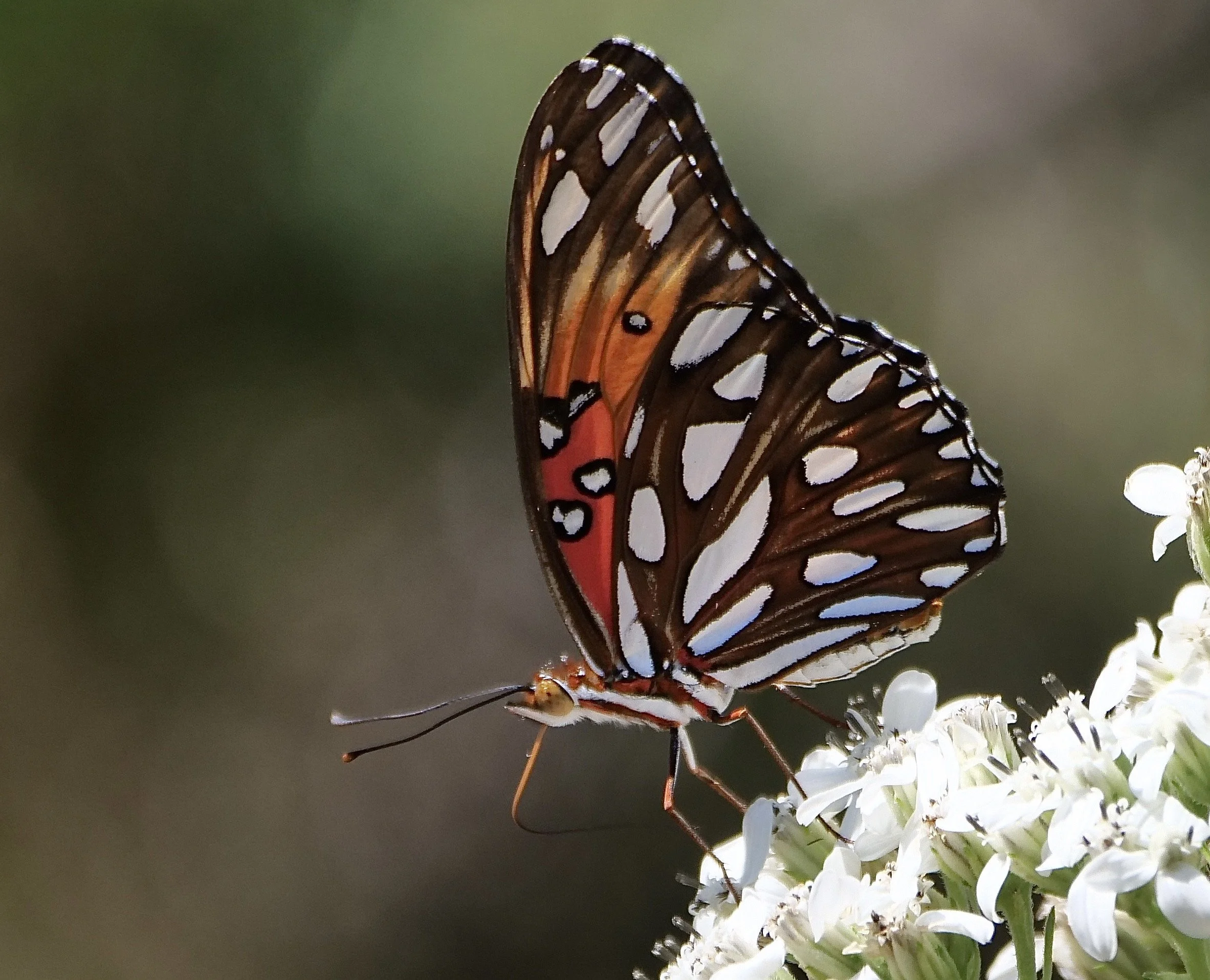
Frostweed (Verbesina virginica) is a striking native Texas perennial that brightens woodland edges and shaded gardens with large clusters of brilliant white flowers from late summer through fall. It is a favorite of butterflies, bees, and many other pollinators, providing an important late-season nectar source. Frostweed is especially famous for the beautiful ribbons of ice that form around its stems on the first freezing mornings of autumn—a rare natural phenomenon that gives the plant its common name. Thriving in part shade to full sun with average to moist soils, it adds both seasonal beauty and fascinating winter interest to native landscapes.
Cedar Sage
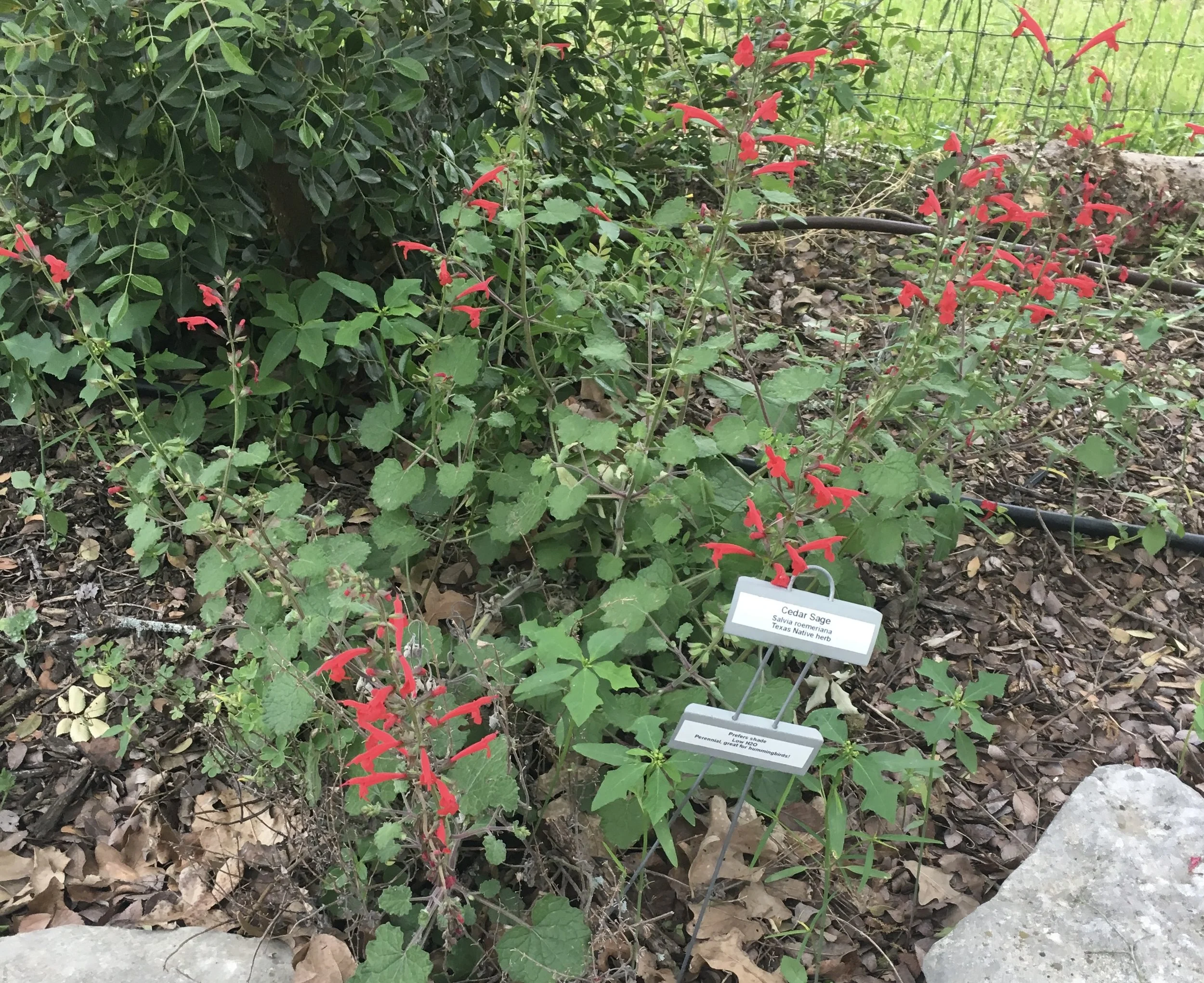
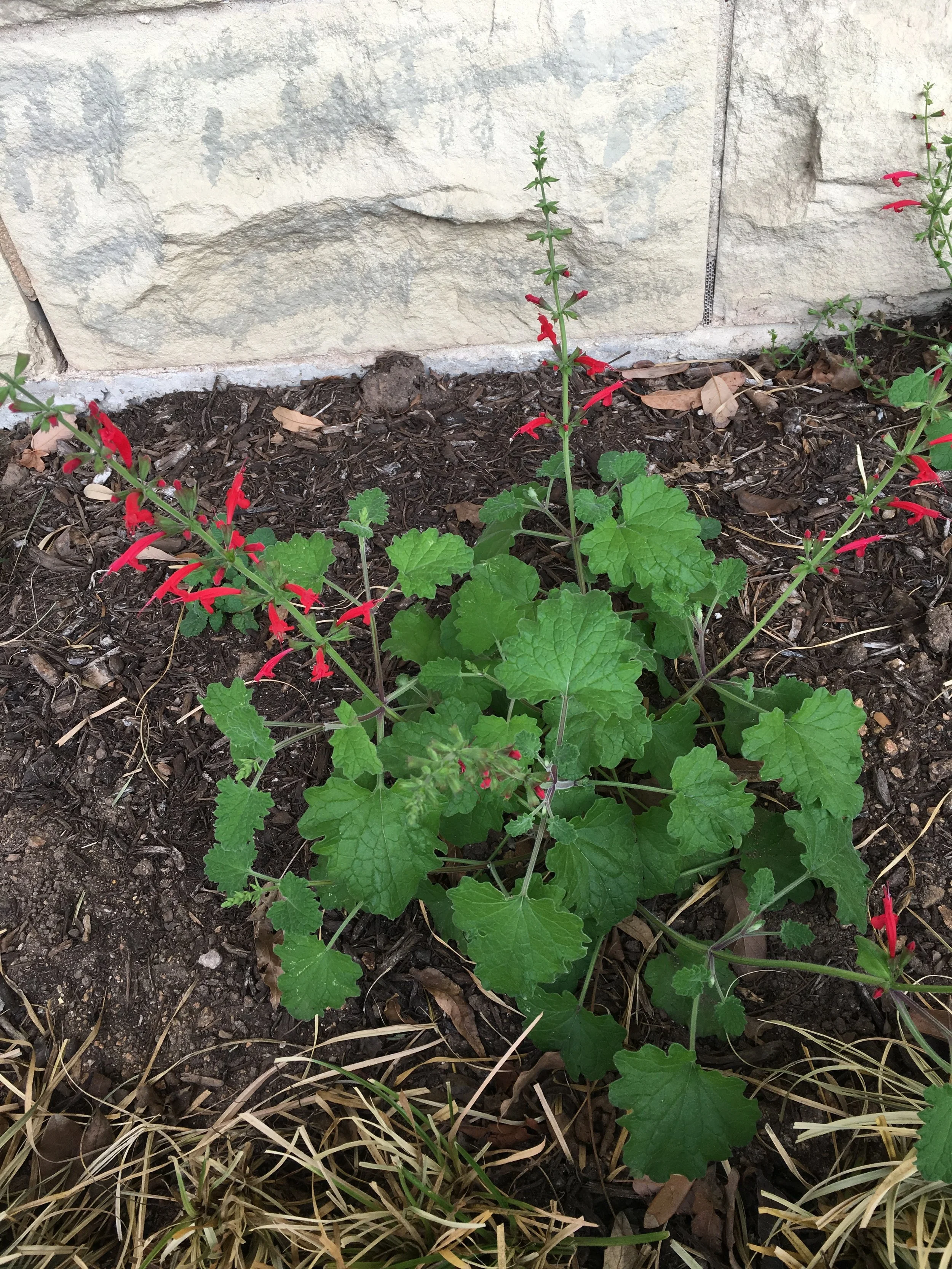
Cedar Sage (Salvia roemeriana) is a beautiful native Texas perennial that brings brilliant red flowers to shady gardens from spring through early summer, with occasional reblooming after rains. One of the best hummingbird plants for Central Texas, it also attracts butterflies and native bees while thriving beneath trees and in limestone soils where many flowering plants struggle. Its lush green foliage forms an attractive mound, making it an excellent choice for woodland gardens, shaded borders, and naturalized landscapes. Once established, Cedar Sage is easy to grow, deer resistant, and a dependable source of color and wildlife value.
Mexican Oregano
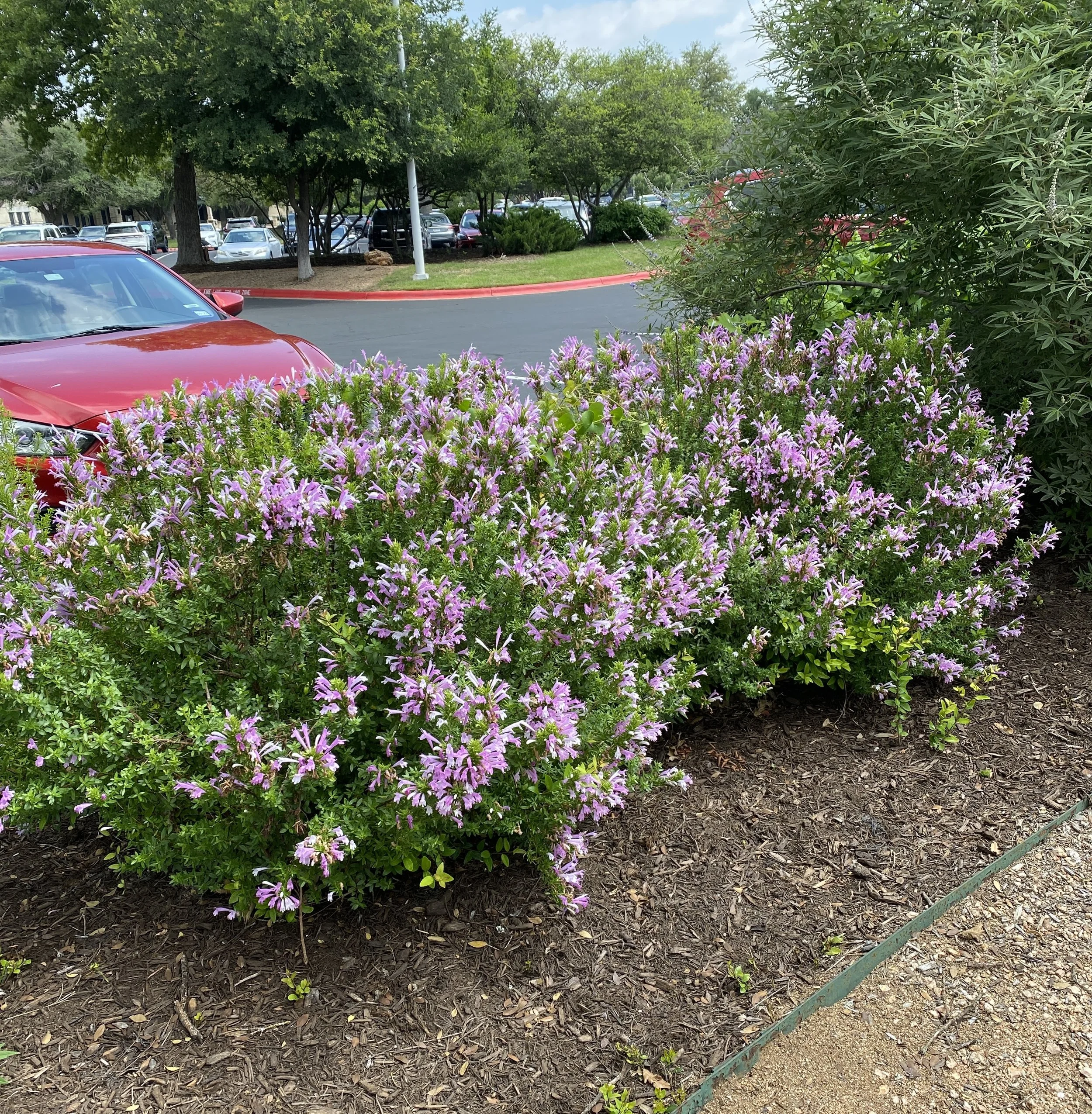
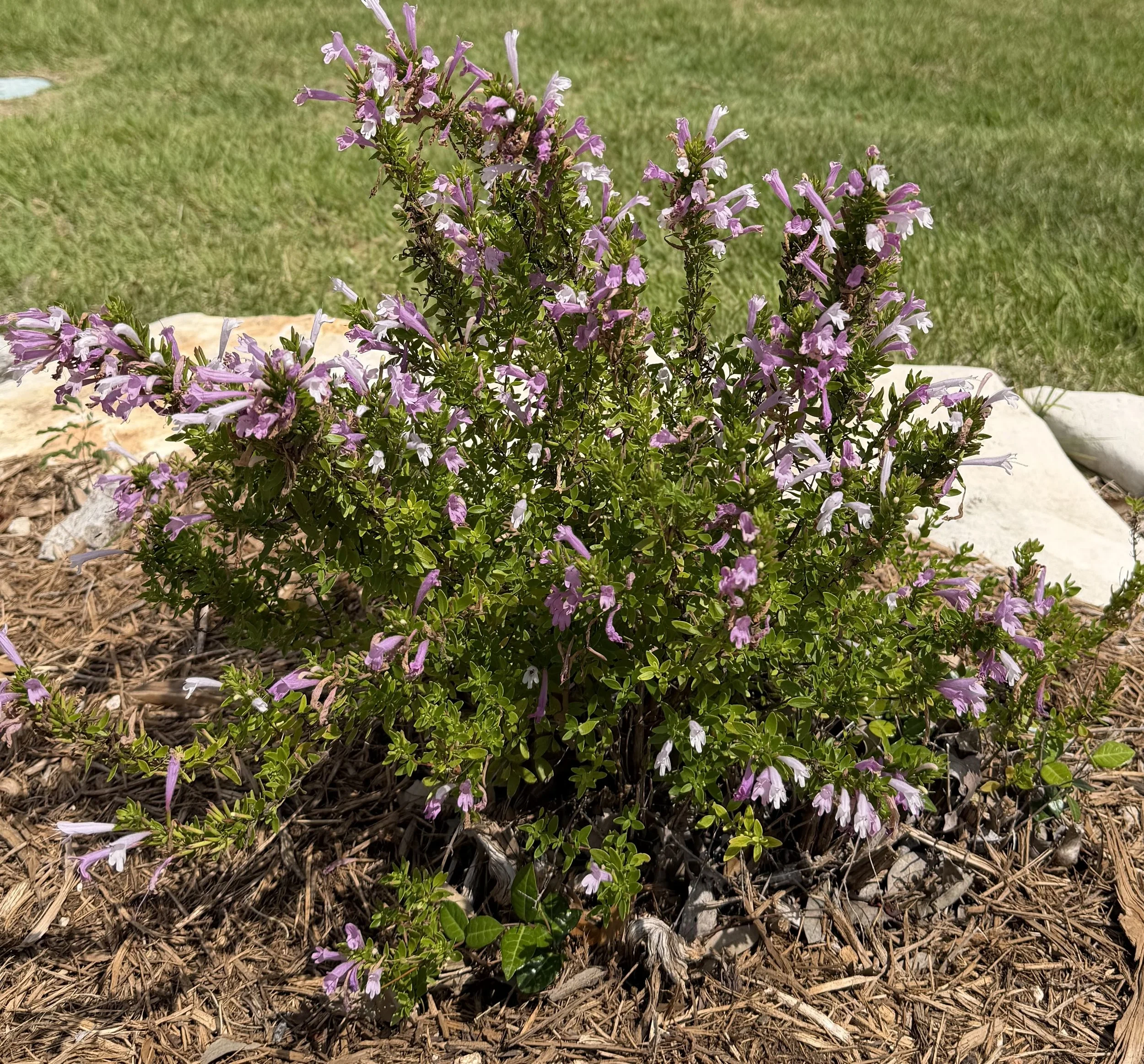
Mexican Oregano (Poliomintha longiflora) is an outstanding evergreen Texas native shrub prized for its fragrant foliage, abundant lavender flowers, and exceptional value to pollinators. Blooming from spring through fall, it attracts hummingbirds, butterflies, and native bees while thriving in full sun and well-drained soils. Its aromatic leaves can be harvested fresh or dried for culinary use, offering a flavor similar to oregano with hints of citrus and mint. Heat, drought, and deer resistant once established, Mexican Oregano is one of the most dependable and attractive shrubs for Central Texas landscapes.
Texas Star Hibiscus
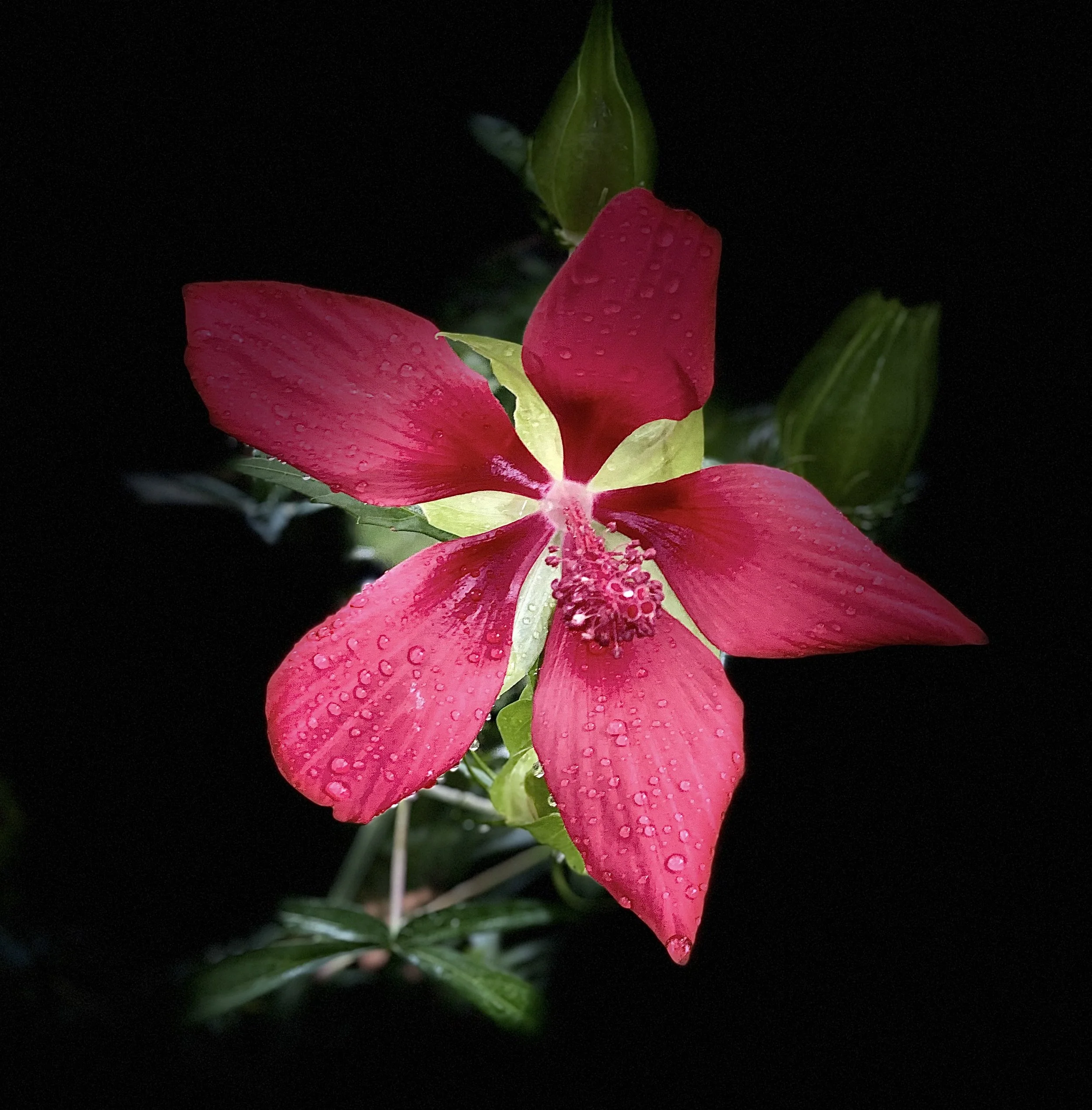
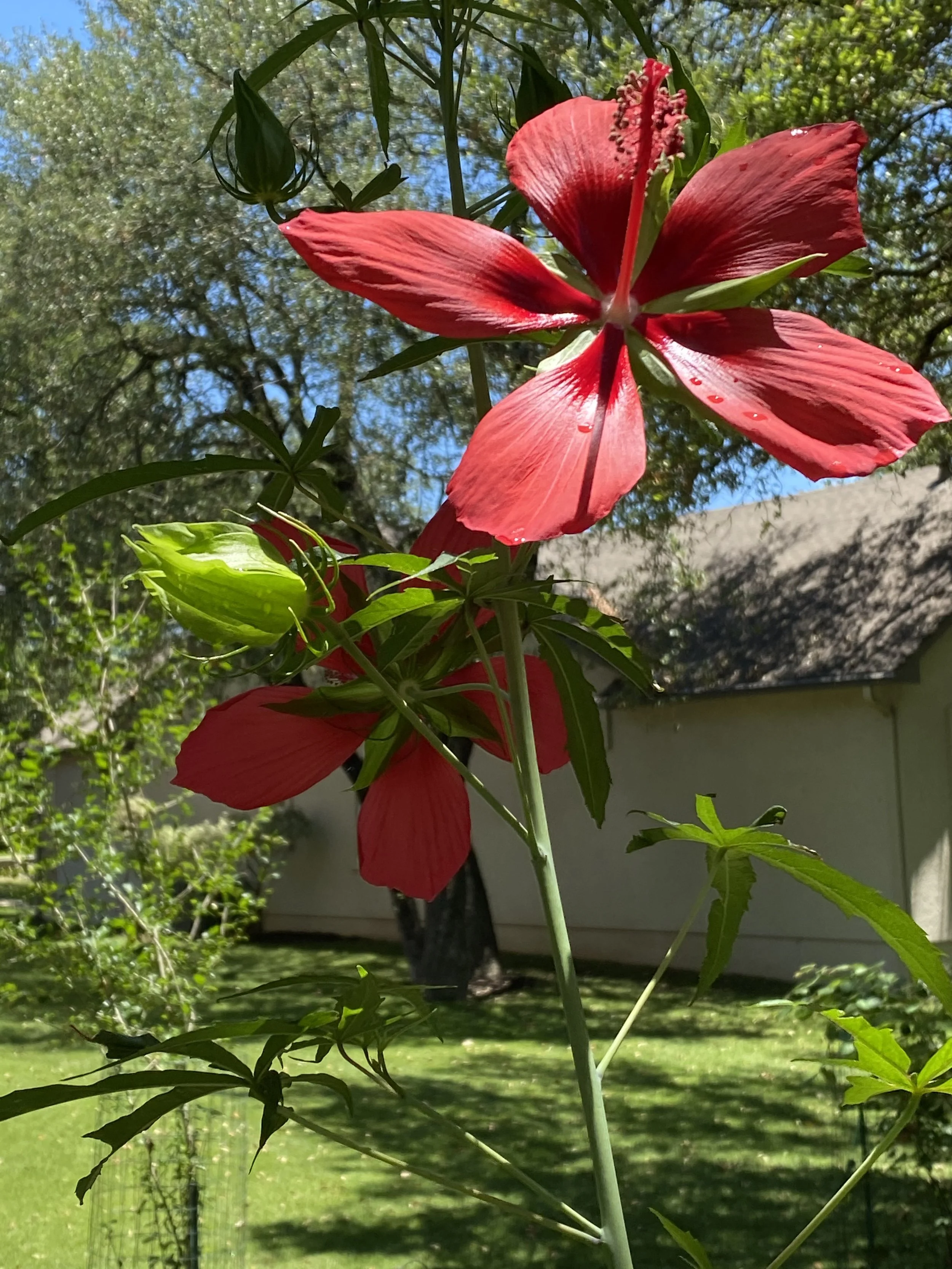
Texas Star Hibiscus (Hibiscus coccineus) is a spectacular native perennial that makes a dramatic statement with its enormous, brilliant scarlet flowers and distinctive star-shaped foliage. Blooming from midsummer into early fall, it attracts hummingbirds, butterflies, and other pollinators while adding a bold tropical look to ponds, rain gardens, and moist landscape beds. Although it thrives in consistently moist soils, Texas Star Hibiscus is surprisingly easy to grow and returns reliably each year. Its striking blooms and architectural form make it one of the most eye-catching native wildflowers for Central Texas gardens where supplemental water is available.
Fragrant Mistflower/ White Boneset
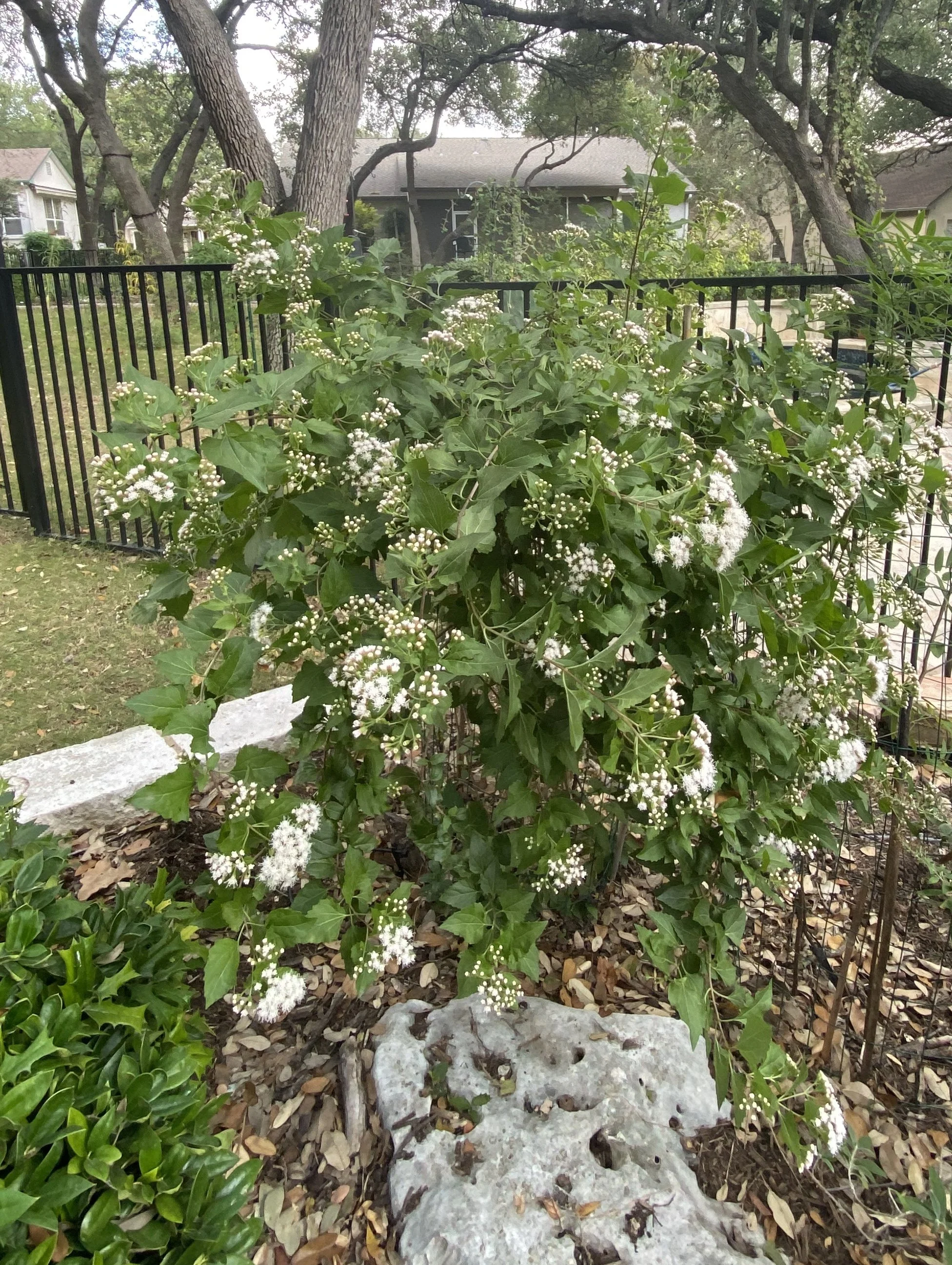
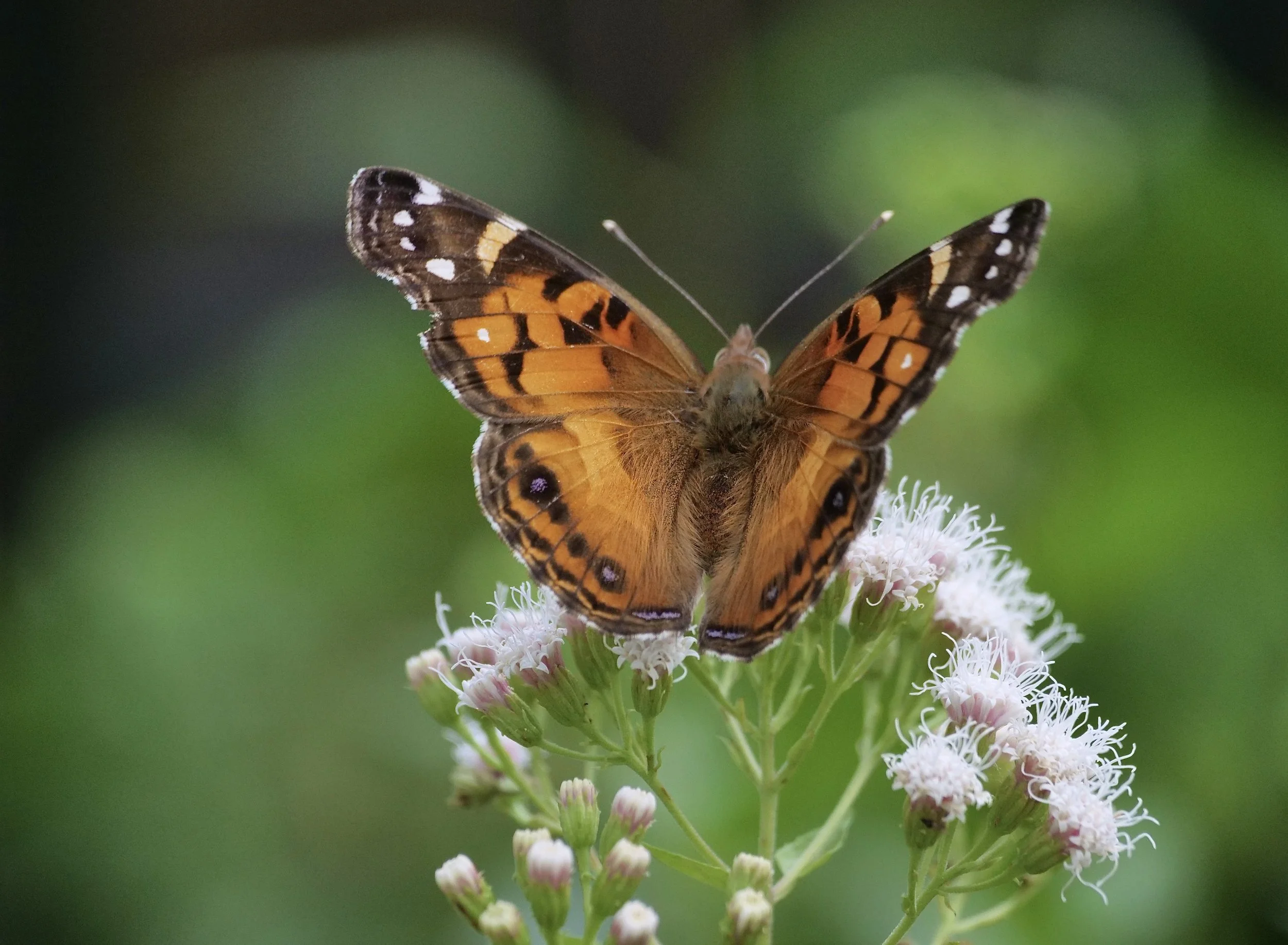
Fragrant Mistflower / White Boneset (Ageratina havanensis) is a graceful native Texas perennial that produces airy clusters of fragrant white flowers from late summer through fall, just when many other garden plants are winding down. A magnet for butterflies, bees, and other pollinators, it thrives in full sun to part shade and tolerates drought once established. Its soft, billowy blooms brighten native gardens, woodland edges, and limestone landscapes, making it an outstanding choice for adding late-season beauty and wildlife value to Central Texas landscapes.
Mexican Mint Marigold
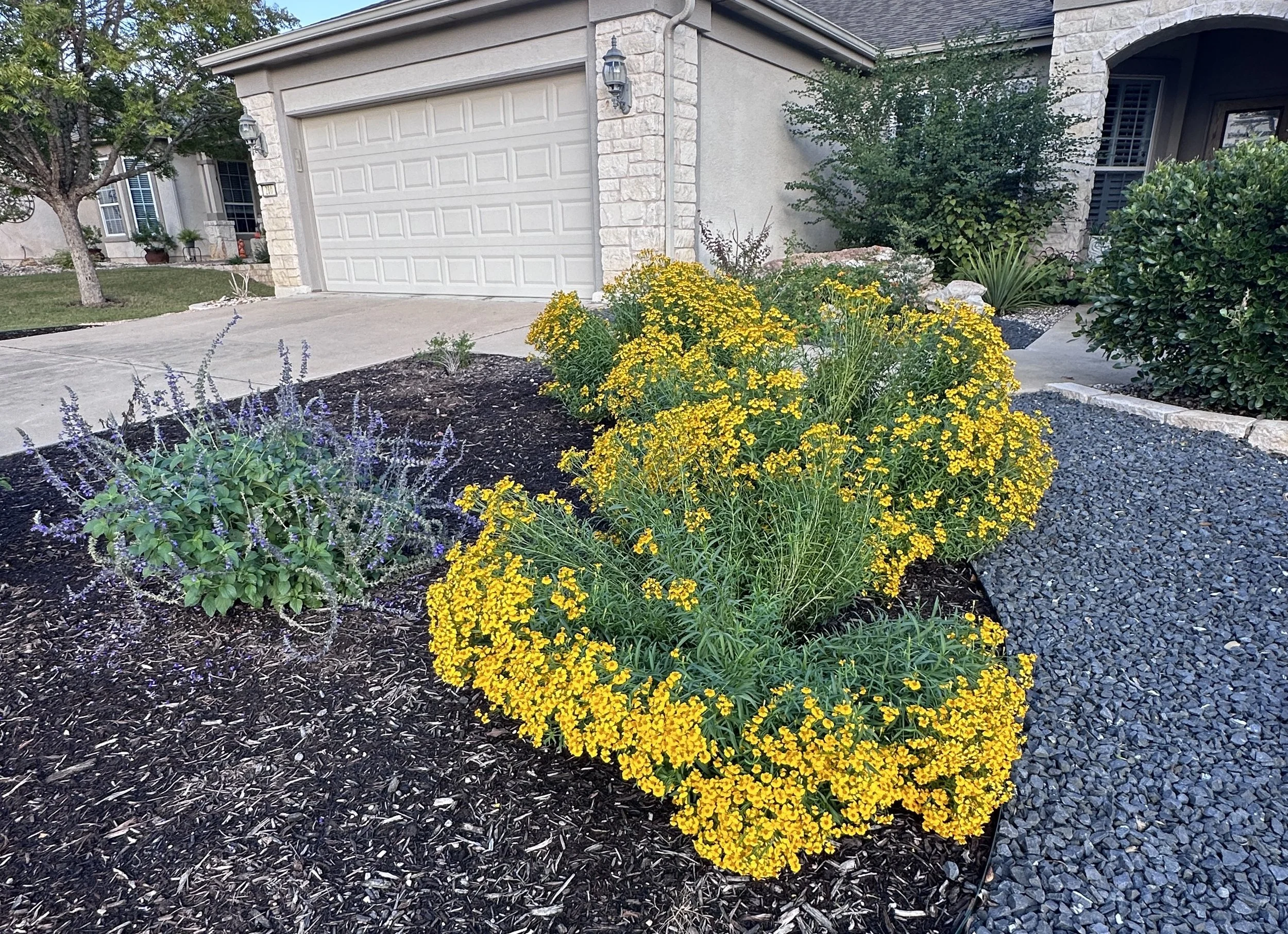
Mexican Mint Marigold (Tagetes lucida) is one of the finest fall-blooming native plants for Central Texas, prized for its clouds of golden-yellow flowers and sweet anise-scented foliage. This drought-tolerant perennial thrives in full sun to part shade, attracts bees, butterflies, and other pollinators, and is generally ignored by deer. Its aromatic leaves can even be used as a culinary substitute for French tarragon, making it as useful as it is beautiful. Blooming from late summer into fall, Mexican Mint Marigold adds brilliant color to native landscapes when many other plants are fading.
Sangria Esperanza
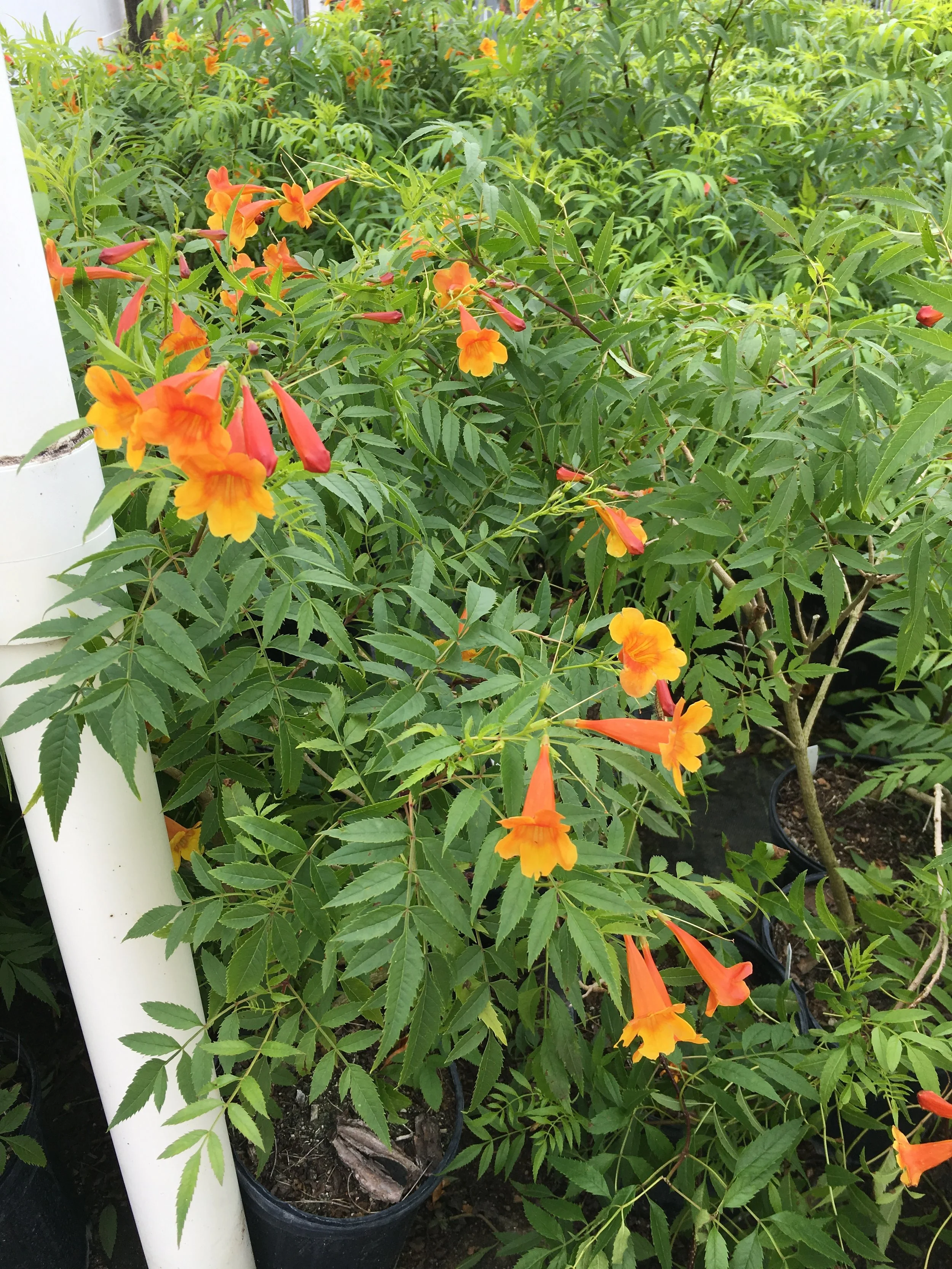
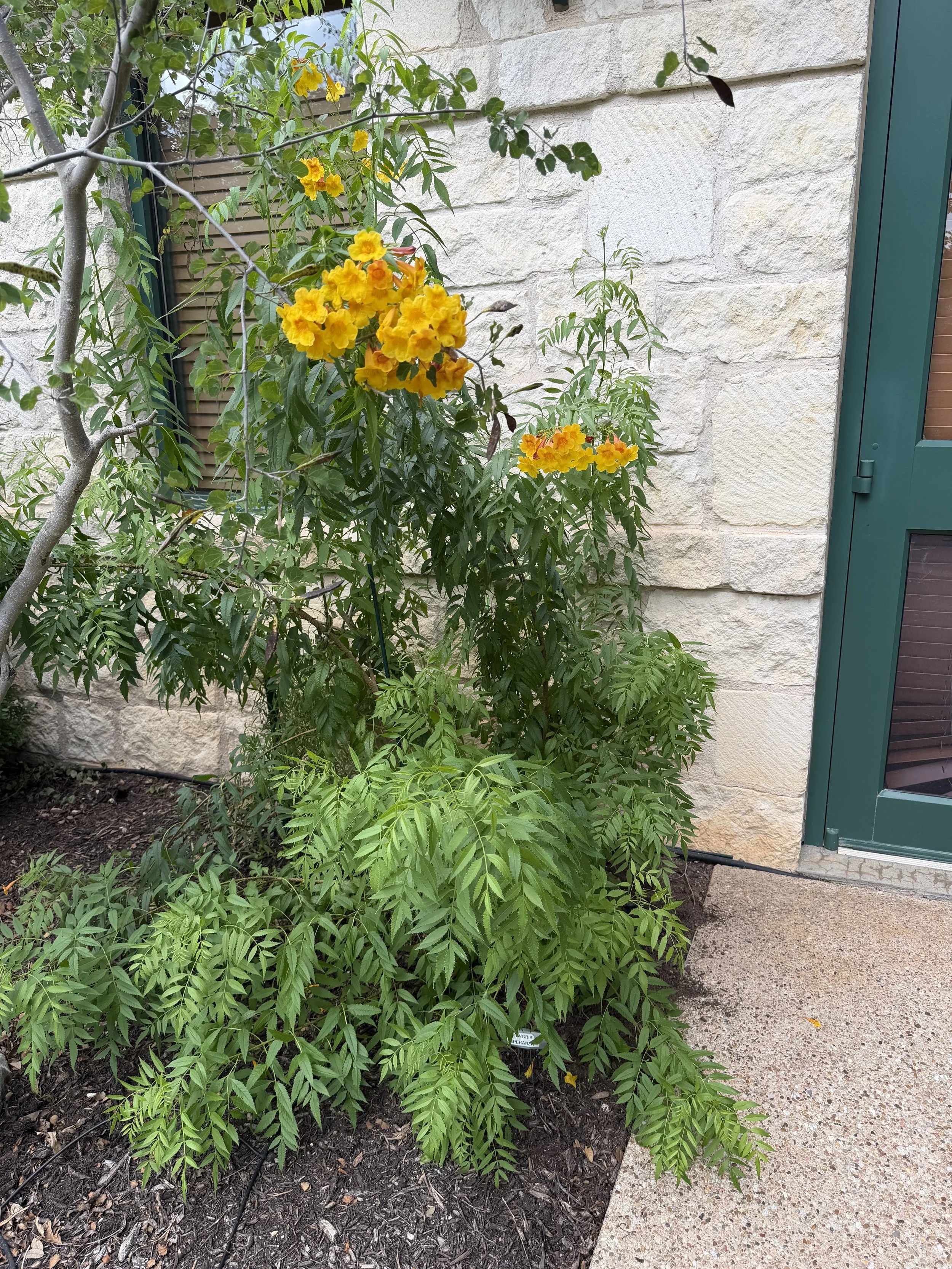
Sangria Esperanza Tecoma ‘Sangria’ is a compact selection of Yellow Bells prized for its rich reddish-orange buds that open to deep reddish- golden-yellow trumpet-shaped flowers from late spring until frost. It thrives in full sun and handles Central Texas heat, drought, and alkaline soils with ease once established. Its colorful blooms are a favorite of hummingbirds, butterflies, and native bees, providing months of nectar when many other plants slow down during summer. More compact and densely branched than standard Yellow Bells, Sangria Esperanza fits well in smaller landscapes while delivering continuous color with minimal maintenance. It may freeze back after hard winters but reliably returns from the roots each spring.
Yellow Bells
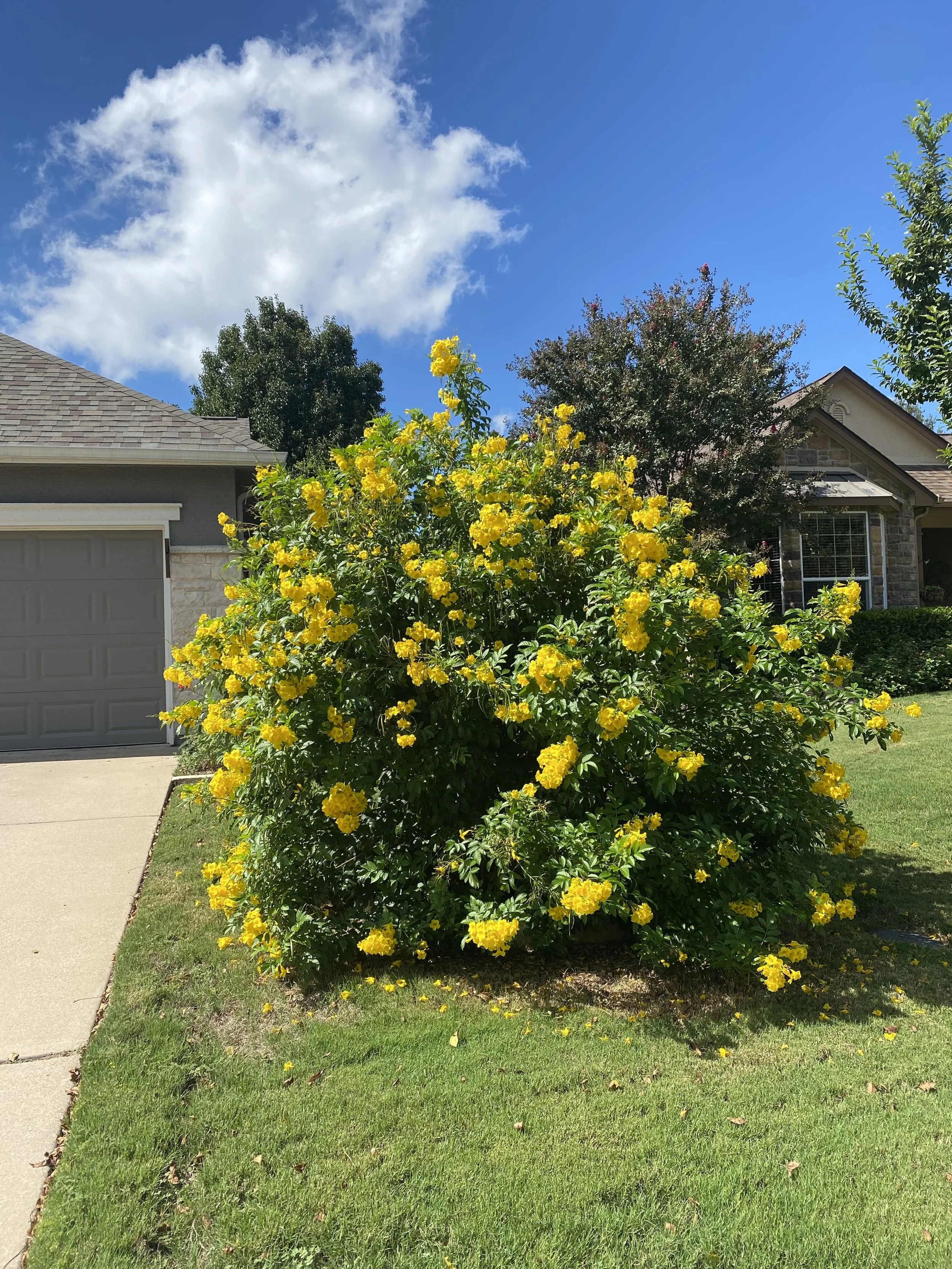
Yellow Bells Tecoma stans is a fast-growing shrub or small tree that produces clusters of brilliant golden-yellow, trumpet-shaped flowers from late spring until frost. It thrives in full sun, tolerates heat, drought, and a variety of soils once established, making it an excellent choice for Central Texas landscapes. Its nectar-rich blooms are especially attractive to hummingbirds, butterflies, and native bees, providing color and wildlife value through the hottest months of the year. Although it may freeze back during unusually cold winters, established plants usually recover quickly from the roots. With its long bloom season, ease of care, and vibrant display, Yellow Bells is an outstanding focal point or background shrub for water-wise gardens.
Pride of Barbados
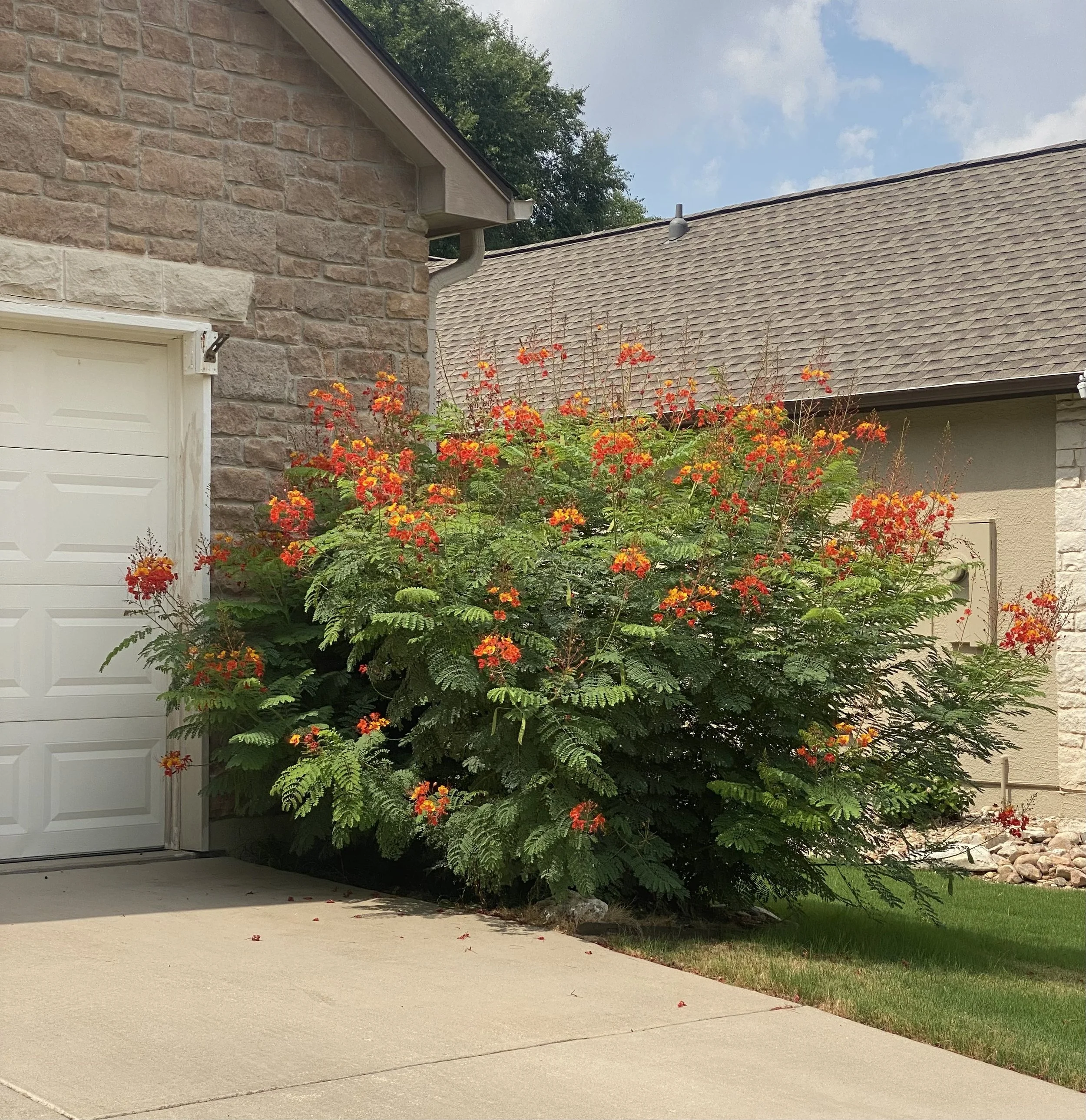
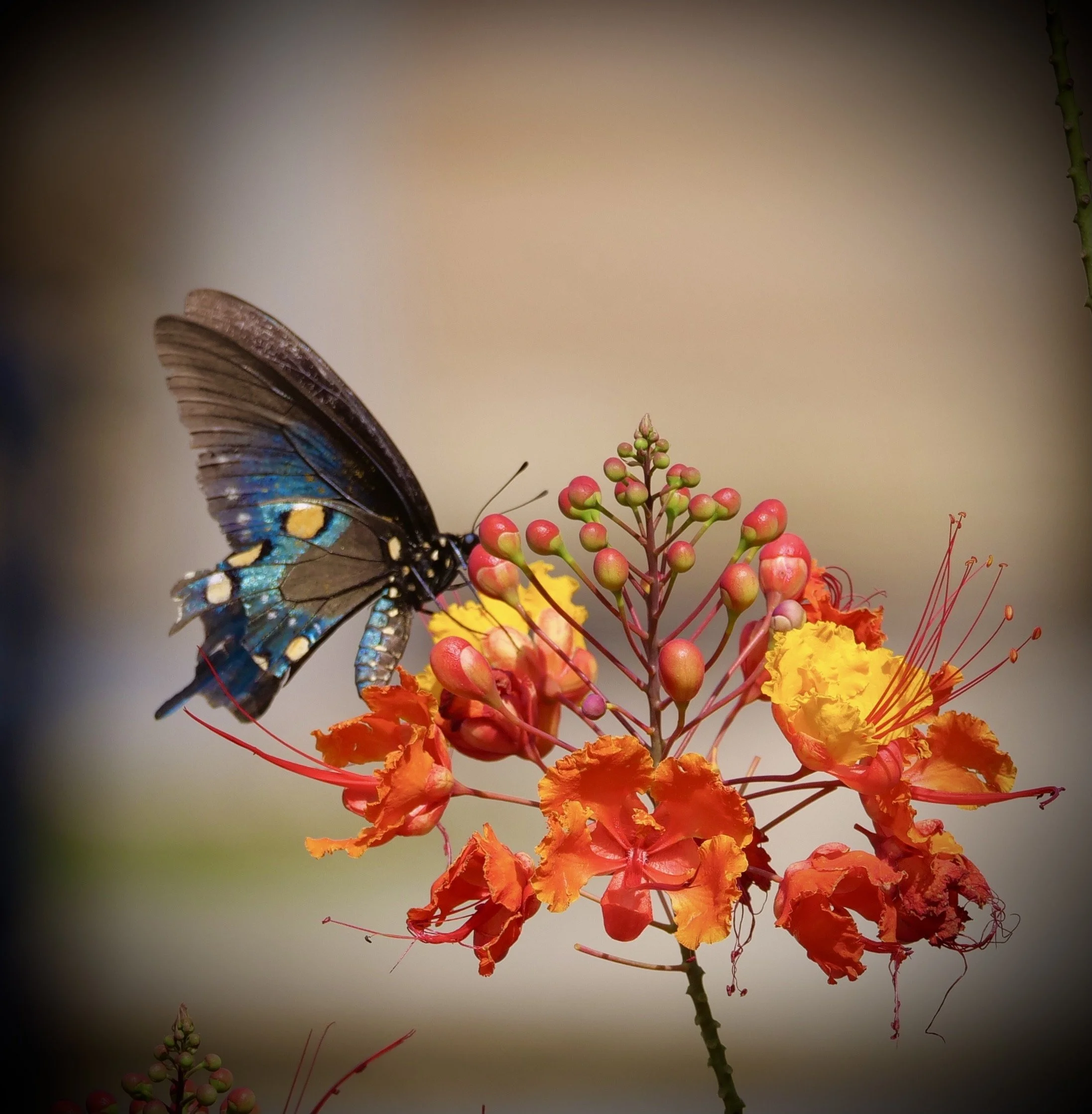
Pride of Barbados Caesalpinia pulcherrima is a spectacular tropical shrub known for its brilliant orange, red, and yellow flowers that bloom from late spring until frost. It thrives in full sun and tolerates heat, drought, and alkaline soils once established. Although it freezes to the ground during most Central Texas winters, it quickly returns in spring and often reaches 5–8 feet tall in a single growing season. It is highly attractive to butterflies, bees, and hummingbirds, providing abundant nectar during the hottest months when many other plants have stopped blooming. While I generally recommend native plants whenever possible, Pride of Barbados is one of the few non-native species I consistently endorse because it is exceptionally well adapted to our climate, is not considered invasive, requires very little supplemental water once established, and offers outstanding value to pollinators and hummingbirds. For gardeners seeking dramatic summer color with relatively little maintenance, it is an excellent choice.
Button Bush
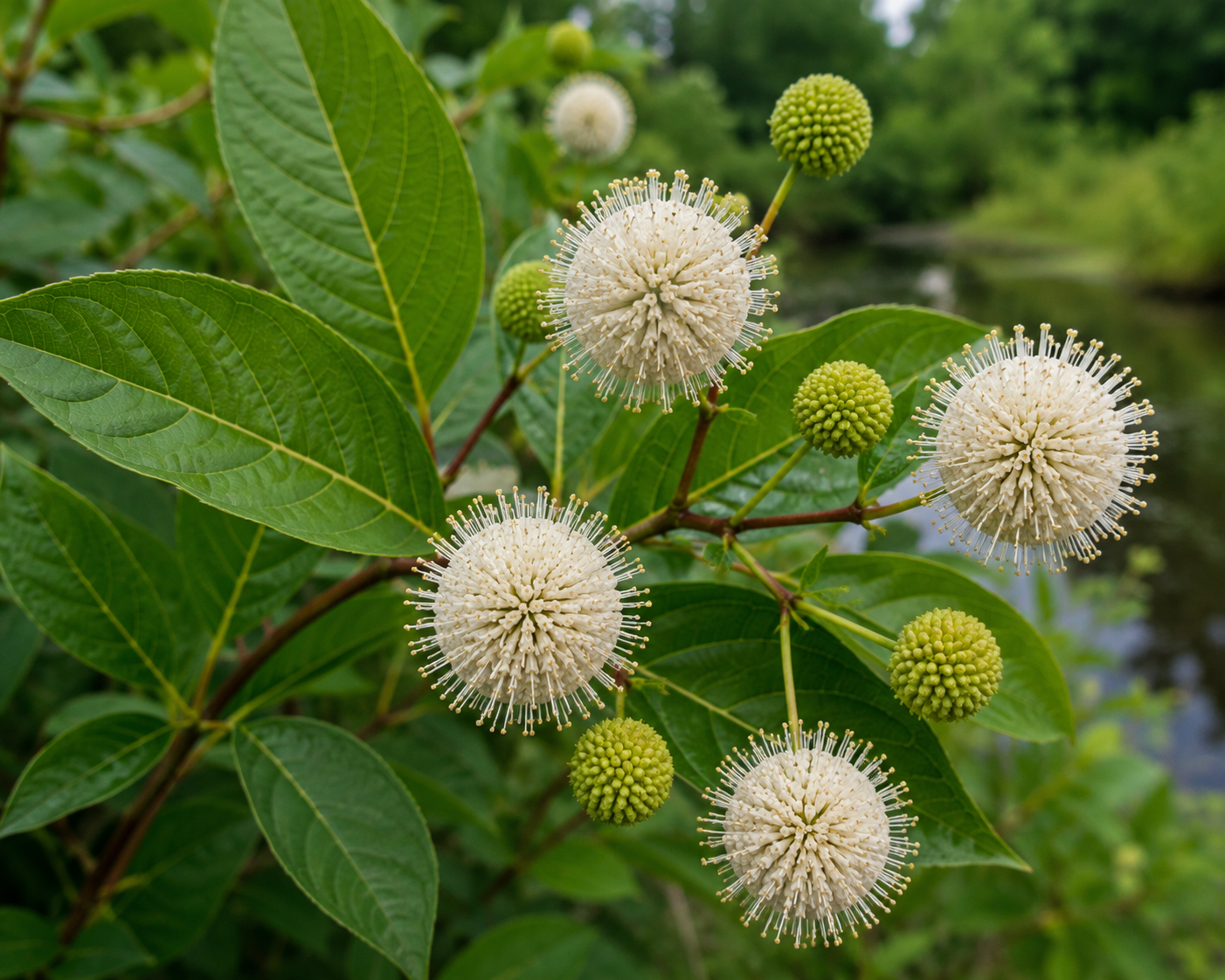
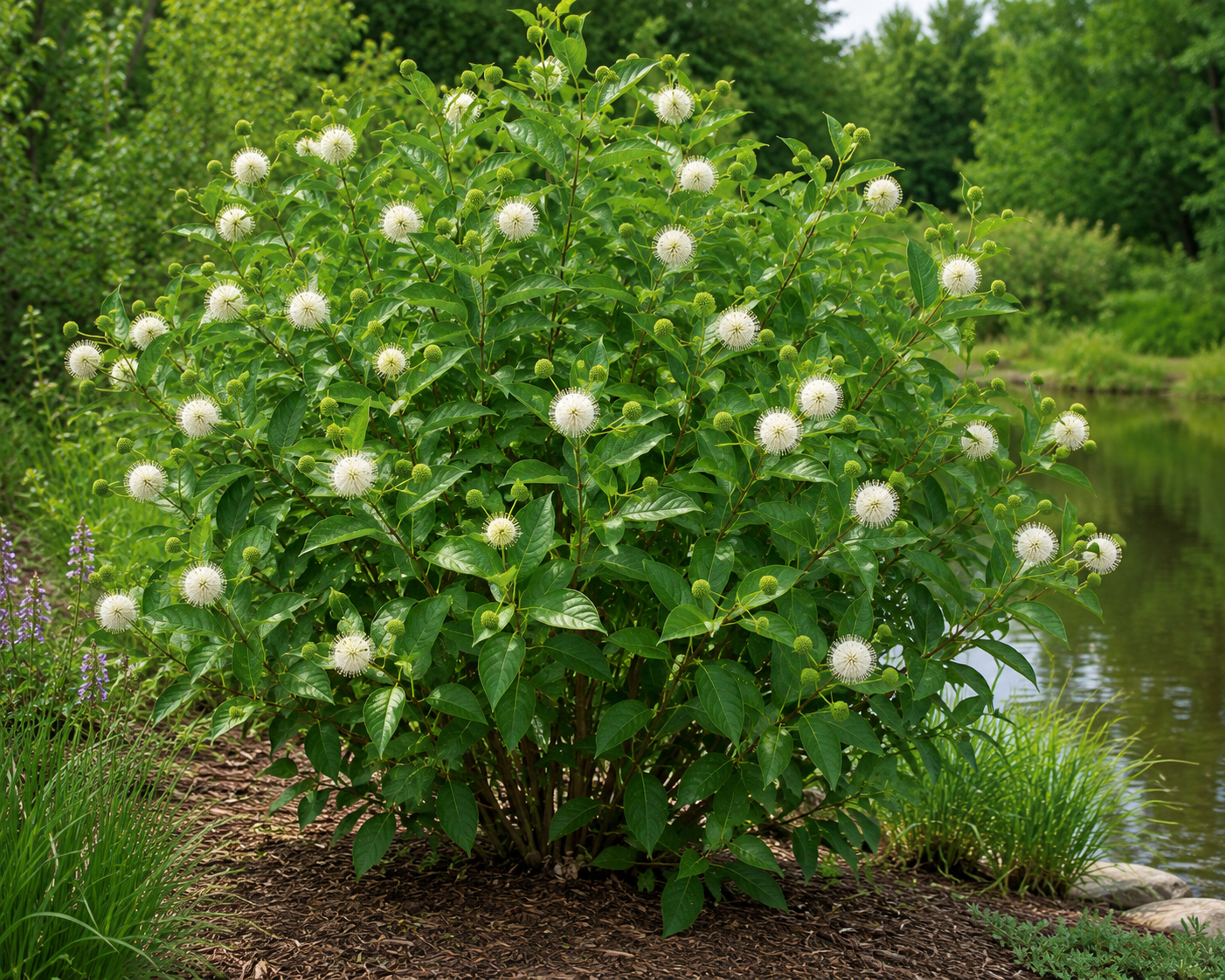
Buttonbush (Cephalanthus occidentalis) is one of the best native shrubs for supporting wildlife in moist areas. Its unique, spherical white flowers resemble pincushions and bloom in summer, attracting a remarkable variety of butterflies, native bees, hummingbirds, and other pollinators. The flowers are followed by decorative seed heads that provide food for ducks and other birds, while the dense branching offers excellent cover for wildlife. Buttonbush thrives in consistently moist soils and even tolerates standing water, making it an outstanding choice for rain gardens, pond edges, low spots, or streambanks. Although it naturally prefers wet conditions, it can adapt to average garden soils with supplemental watering during dry periods.
Fall Aster
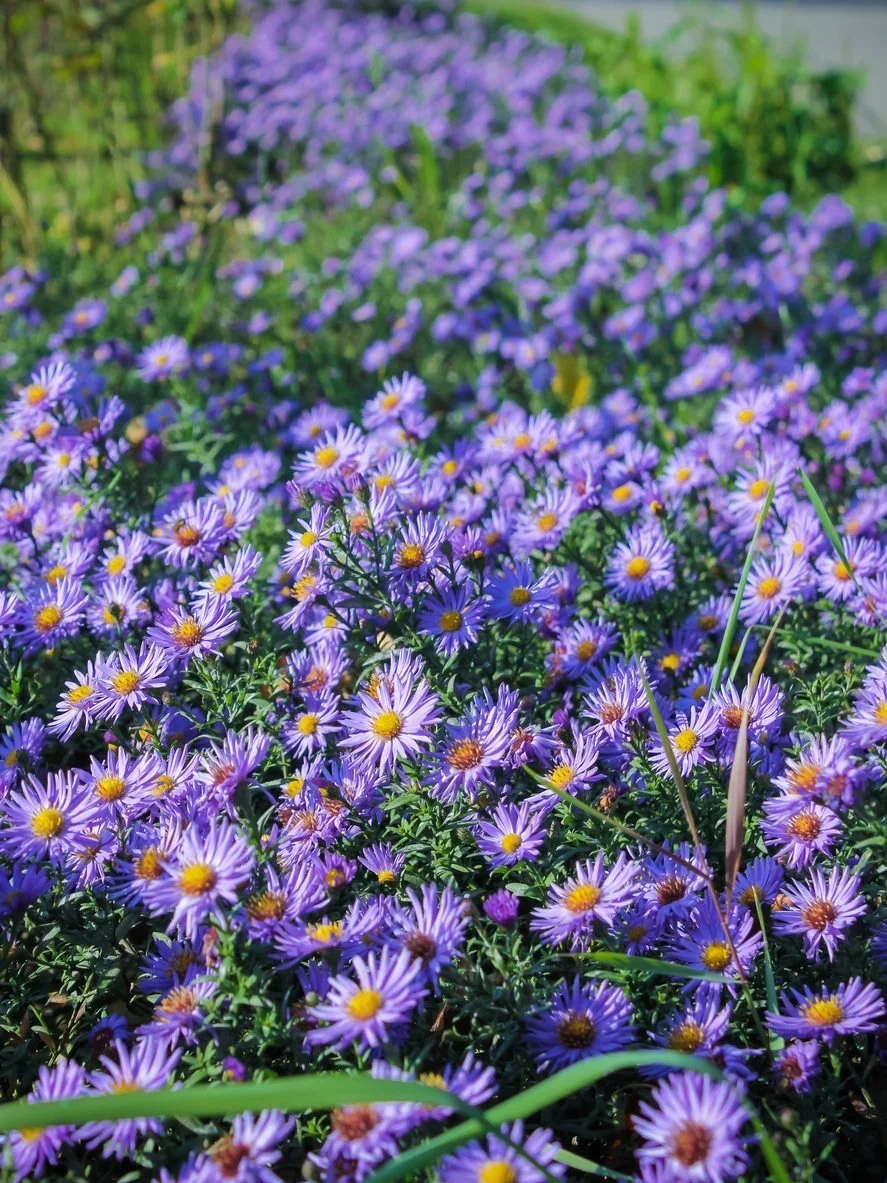
Fall Aster (Symphyotrichum oblongifolium) is one of the stars of the autumn garden, producing masses of lavender to violet, daisy-like flowers with bright yellow centers just as many other plants are finishing their bloom season. This hardy Texas native perennial forms a dense, rounded mound of aromatic foliage and thrives in the heat, drought, and limestone soils of Central Texas. Its late-season flowers are an invaluable source of nectar for native bees, butterflies, and migrating monarchs, making it one of the most important pollinator plants for fall. Easy to grow and long-lived, Fall Aster adds a spectacular splash of color to native gardens, borders, meadows, and wildlife landscapes.
Brazos (Gulf Coast) Penstemon
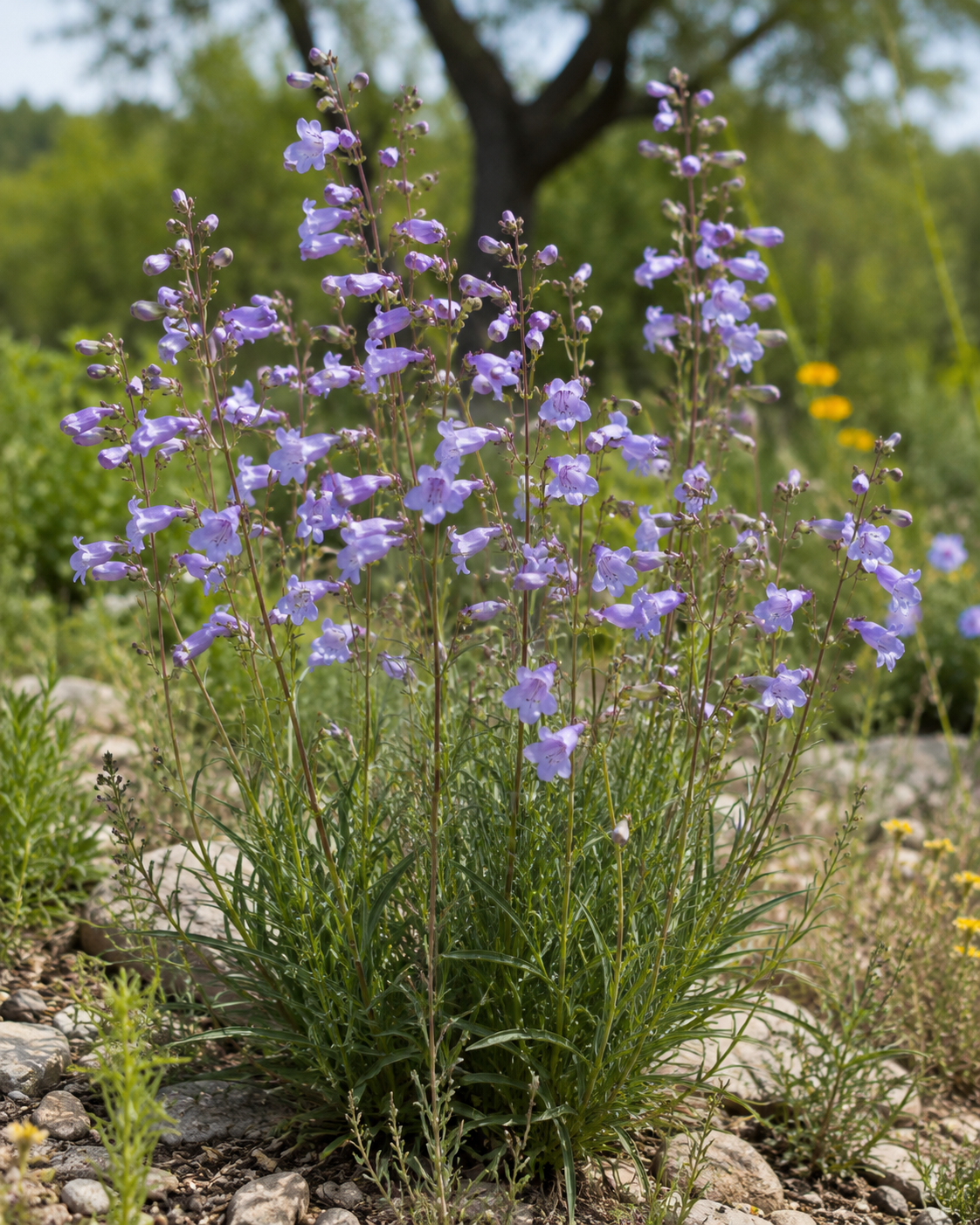
Brazos Penstemon (Penstemon tenuis) is an elegant Texas native perennial prized for its tall spikes of soft lavender to pale purple, tubular flowers that bloom in spring. A favorite of hummingbirds, native bees, and butterflies, it adds height and graceful movement to sunny or lightly shaded gardens while thriving in the clay and limestone soils common across Central Texas. Once established, Brazos Penstemon is both drought tolerant and easy to grow, making it an excellent choice for native plant gardens, pollinator habitats, and naturalized landscapes. Its delicate blooms and upright form pair beautifully with grasses, salvias, and other native wildflowers.
Orange Zexmenia
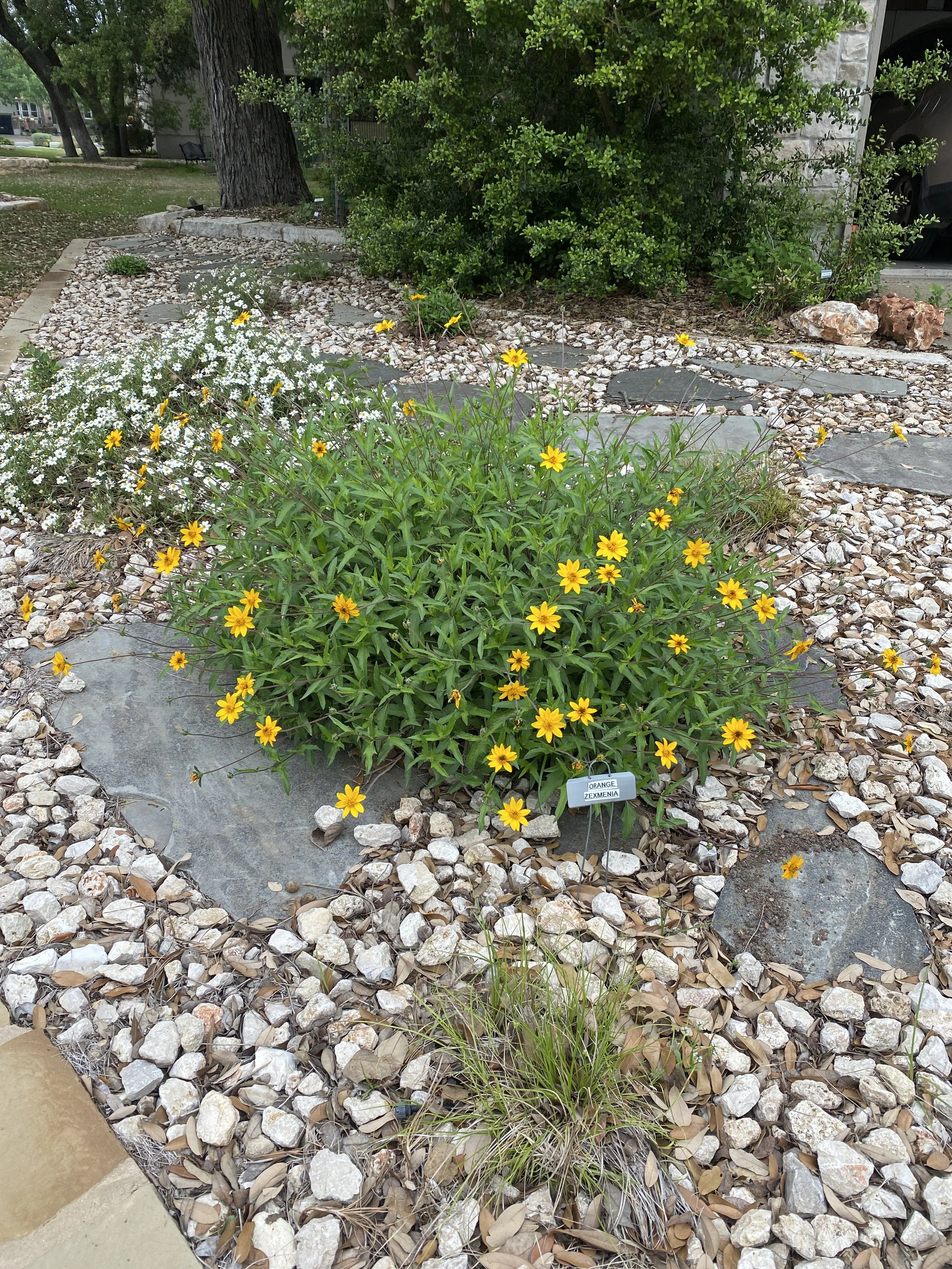
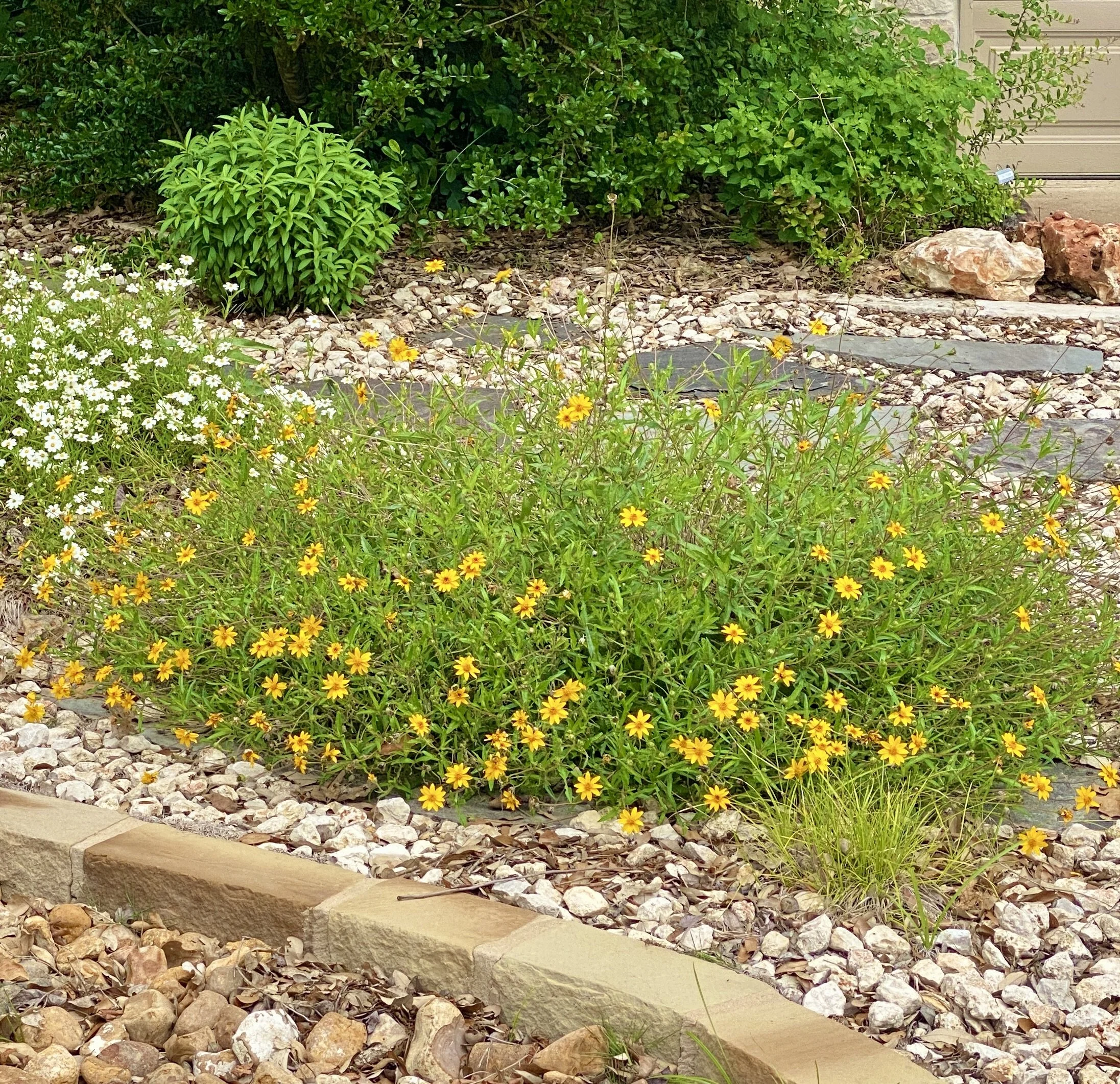
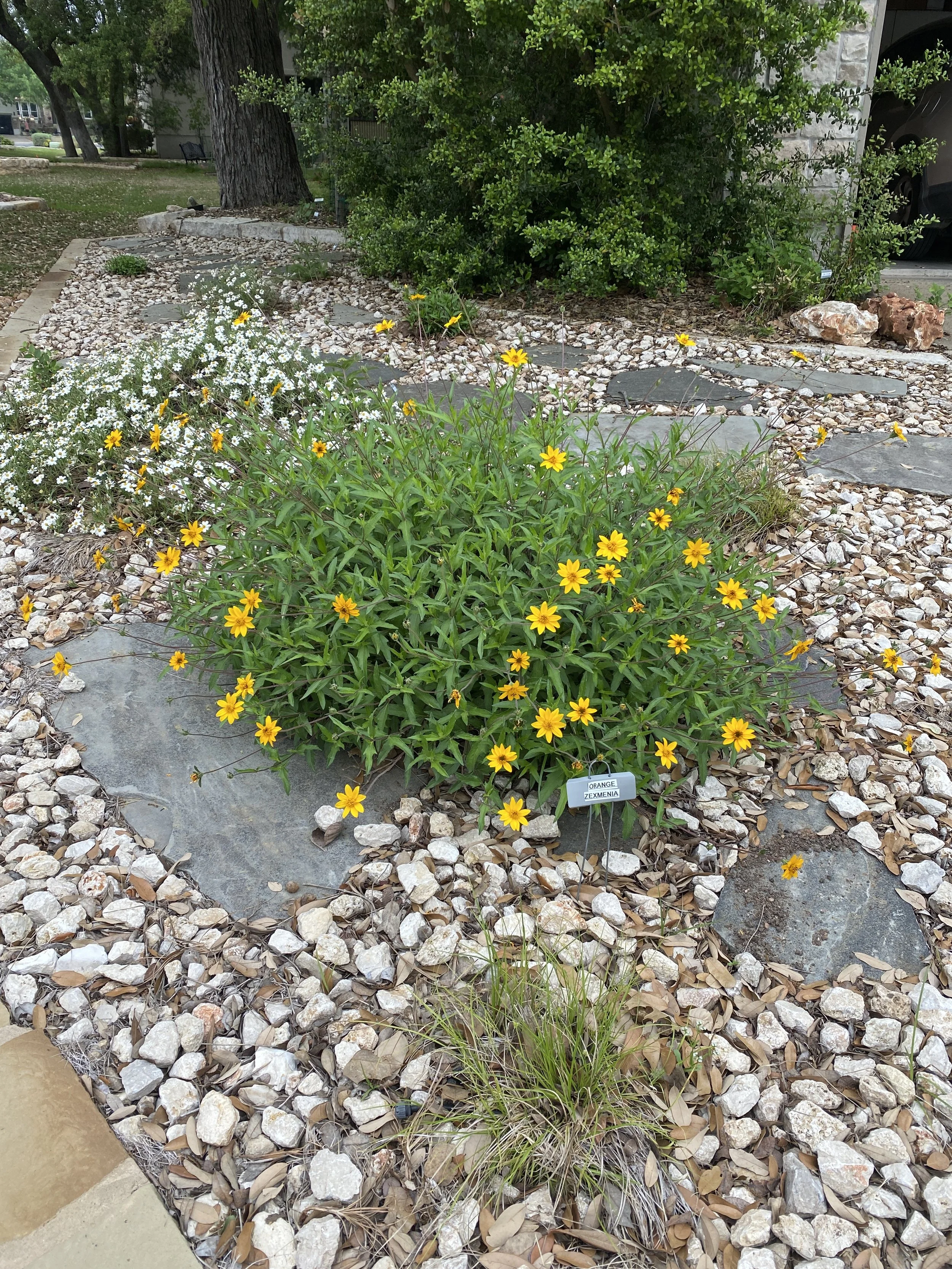
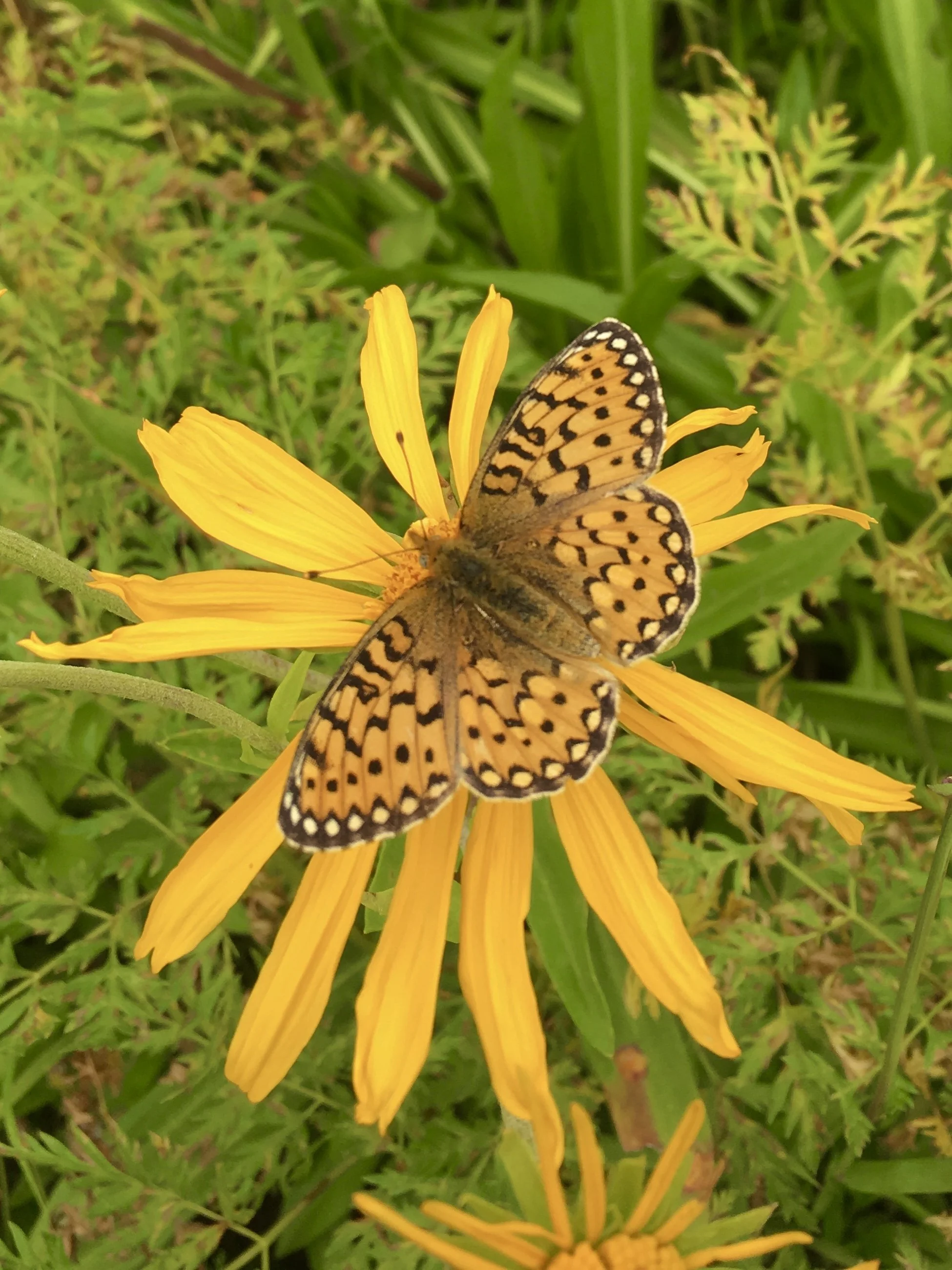
Orange Zexmenia (Wedelia acapulcensis var. hispida) is a tough, long-blooming Texas native perennial that lights up the garden with cheerful golden-orange, daisy-like flowers from spring through fall. Adapted to the heat, drought, and limestone soils of Central Texas, it thrives in full sun and asks for very little care once established. Its bright blooms attract a wide variety of native bees, butterflies, and other pollinators, while its spreading habit makes it an excellent choice for naturalized plantings, meadows, slopes, and informal borders. Orange Zexmenia combines exceptional resilience with months of color, making it one of the most dependable native wildflowers for water-wise landscapes.
Inland Sea Oats
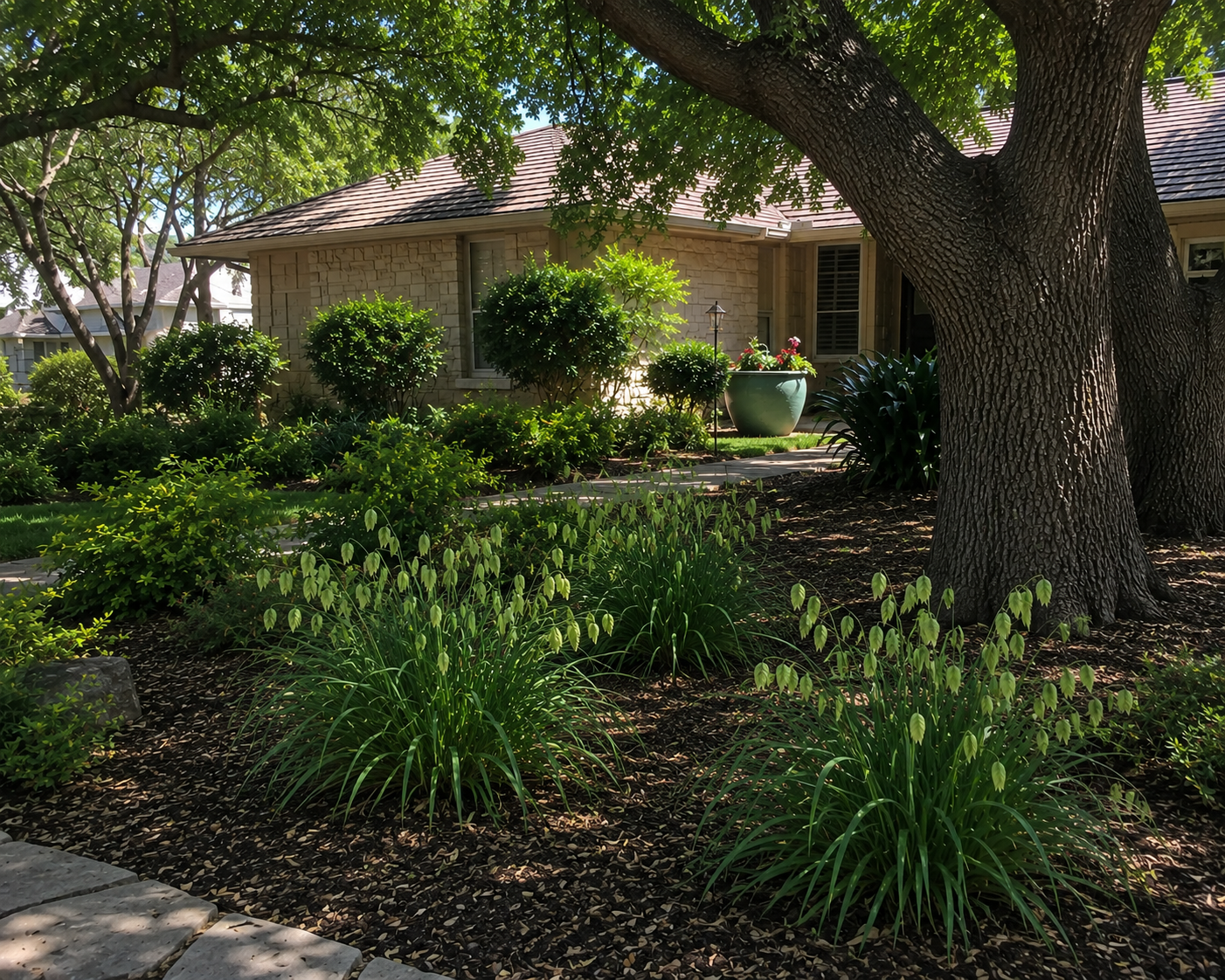
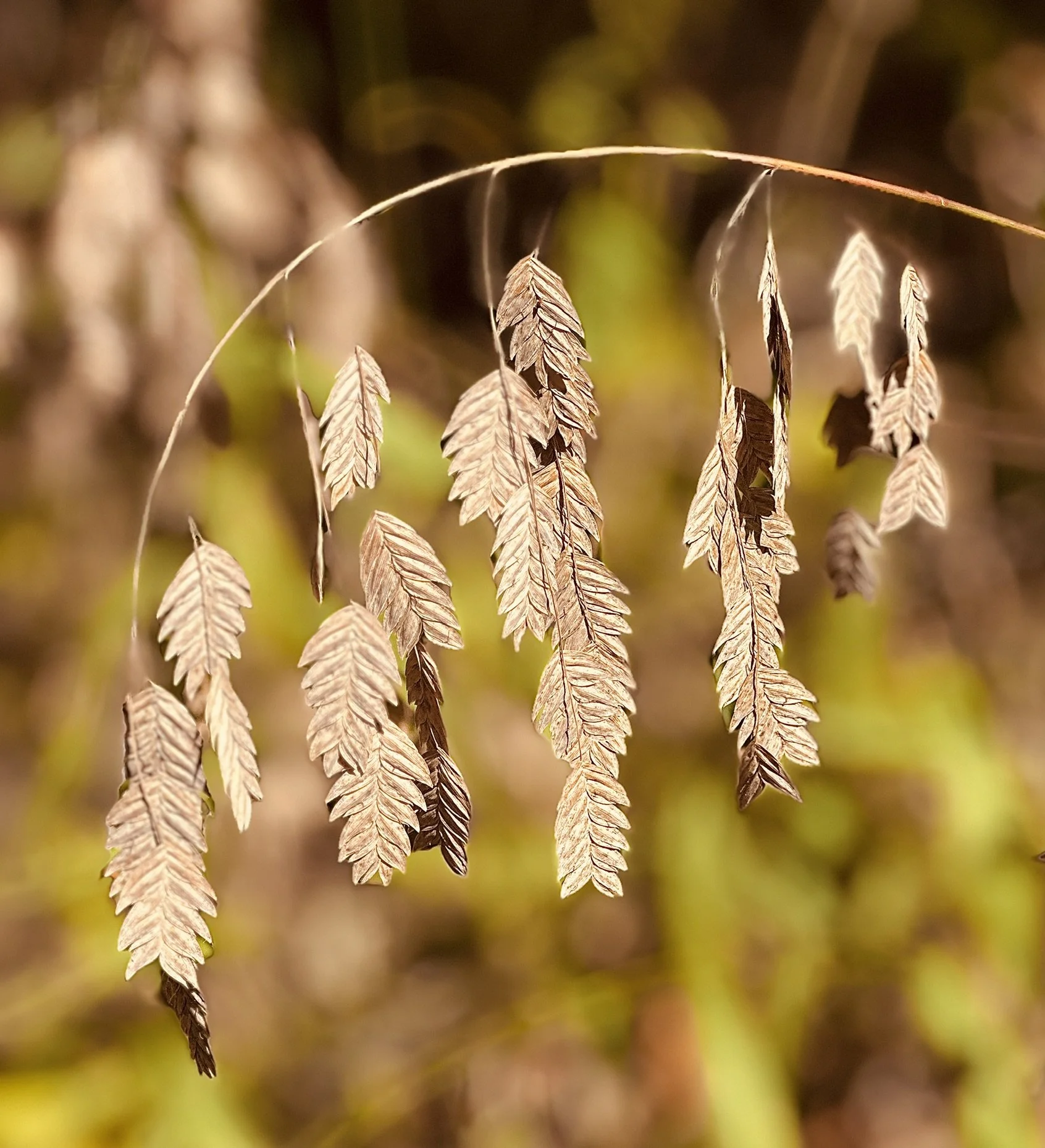
Inland Sea Oats Chasmanthium latifolium is one of the finest native ornamental grasses for shaded Texas landscapes. Its graceful, arching foliage and distinctive dangling seed heads add texture and movement from summer through winter, while the seeds provide food for songbirds and cover for wildlife. Inland Sea Oats spreads slowly to form attractive colonies, making it an excellent choice beneath trees, along woodland edges, or in naturalized gardens where it thrives in shade or part sun.
Rock Rose
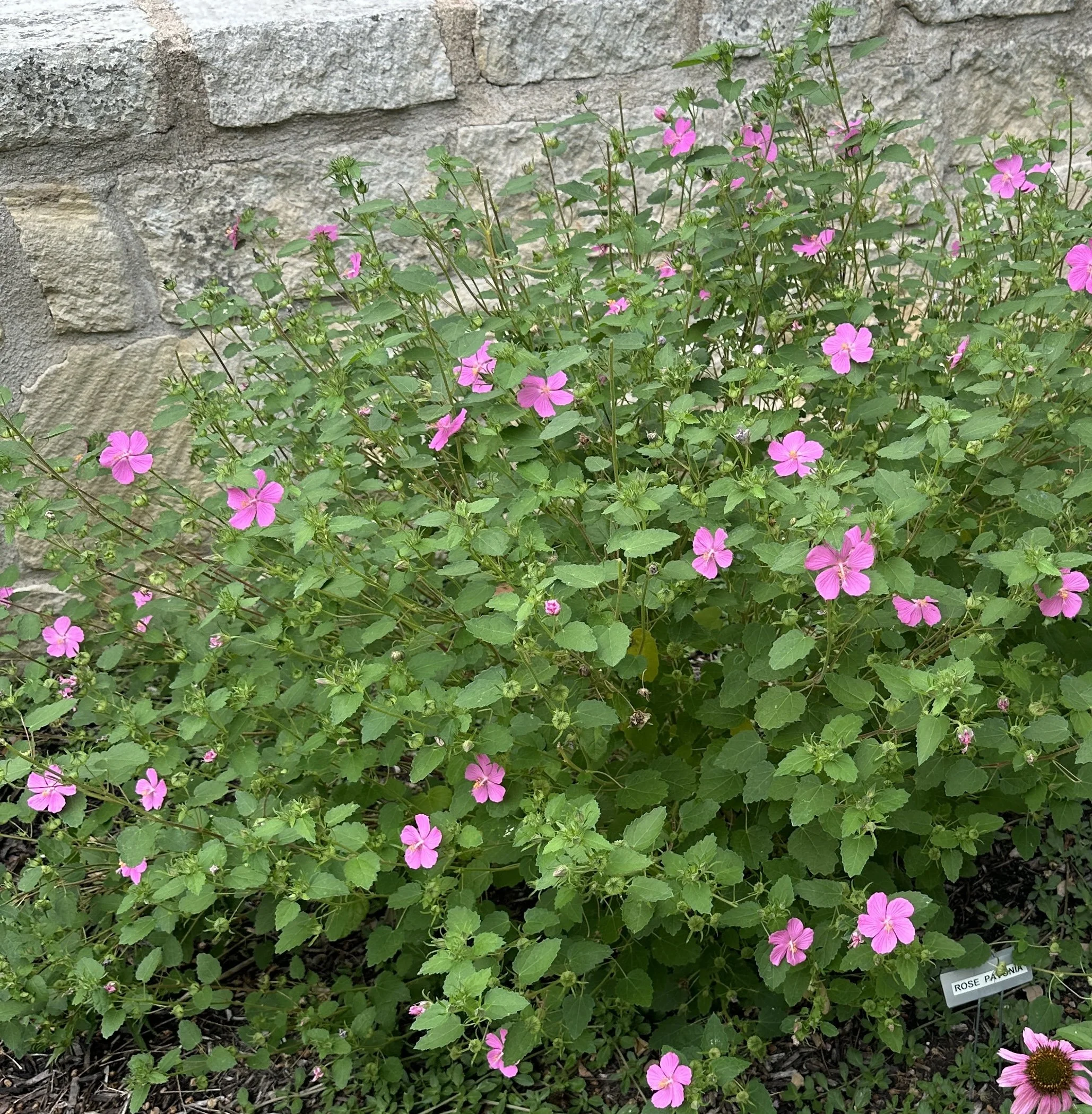
Rock Rose Pavonia lasiopetala is a charming Texas native perennial that produces an abundance of delicate, hibiscus-like pink flowers from spring through fall. Its long bloom season provides a dependable source of nectar for native bees, butterflies, and other pollinators, while its compact size makes it ideal for borders, cottage gardens, and naturalized landscapes. Rock Rose thrives in the heat of Central Texas and tolerates drought once established, performing best in well-drained soils with full sun to partial shade.
Texas Prickly Pear
Texas Prickly Pear
Opuntia engelmannii
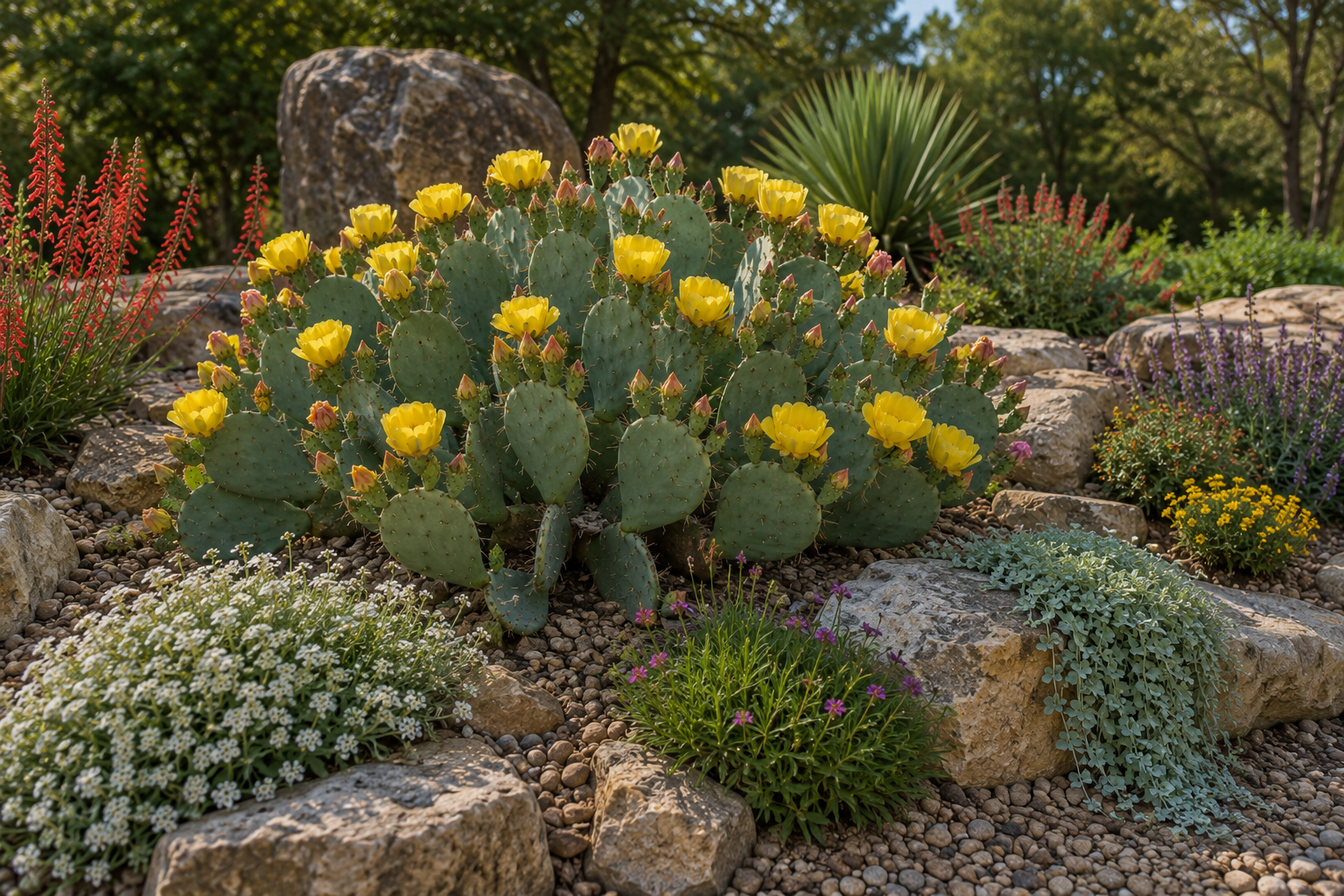
Texas Prickly Pear is an iconic native cactus that adds bold texture, year-round interest, and outstanding drought tolerance to Central Texas landscapes. Its broad blue-green pads are topped in spring with large, cheerful yellow flowers that often develop orange centers as they mature, followed by colorful reddish-purple fruits that provide food for birds and other wildlife. Thriving in full sun and well-drained soils, Texas Prickly Pear is an excellent choice for rock gardens, xeriscapes, wildlife gardens, and natural landscapes where its striking form creates a dramatic focal point.
Damianita
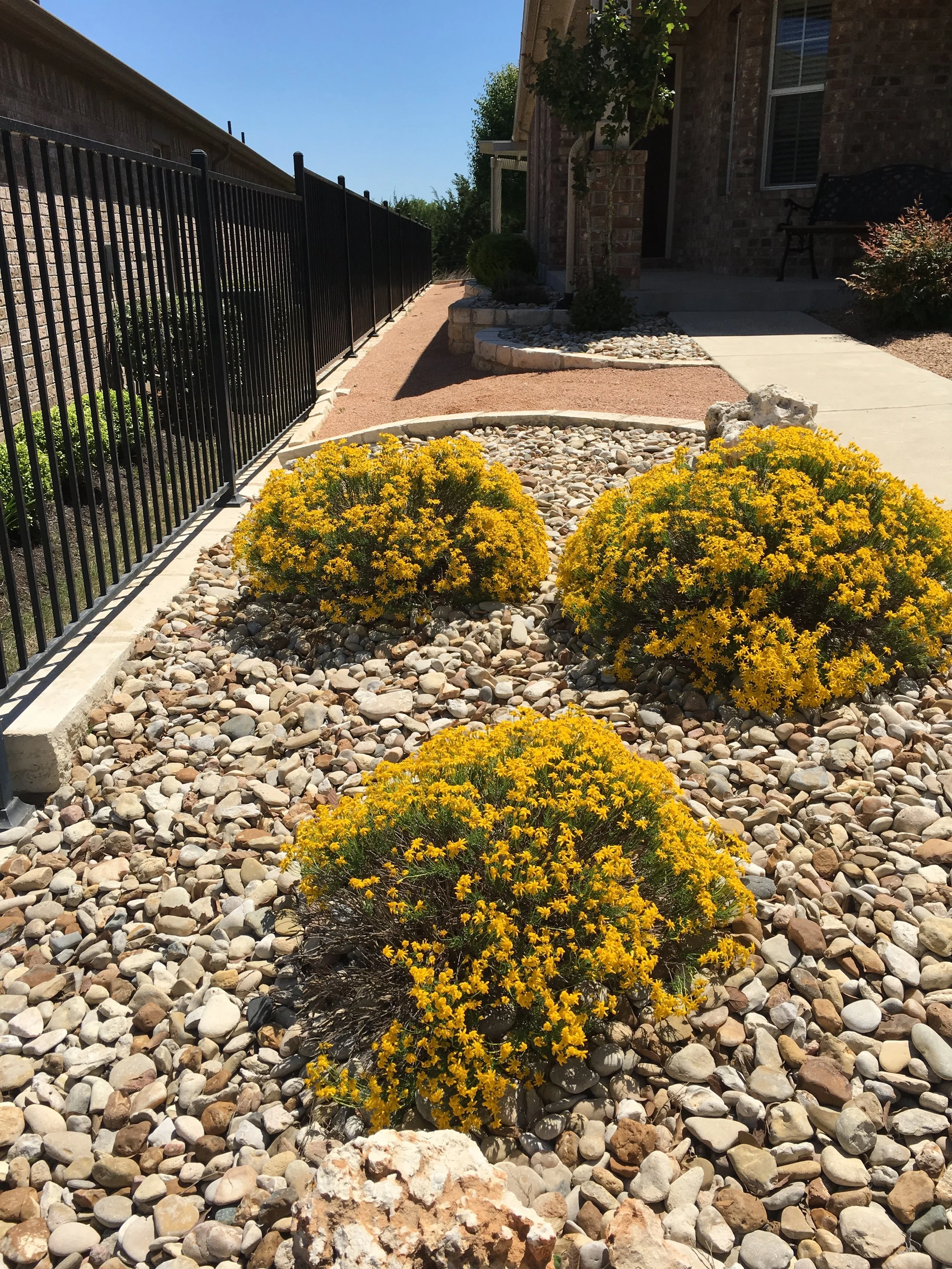
Damianita ( Chrysactinia mexicana) is one of the brightest little native shrubs for Central Texas landscapes. This compact evergreen forms a tidy mound covered with cheerful golden-yellow daisy-like flowers from spring through fall, often blooming after rains. Its fine, aromatic foliage stays attractive year-round, and once established it thrives in hot, dry conditions with very little maintenance. Damianita is an excellent choice for rock gardens, borders, pathways, and pollinator gardens where its long bloom season provides nectar for native bees and butterflies. It performs best in full sun and well-drained limestone soils and is highly deer resistant.
Coral Honeysuckle
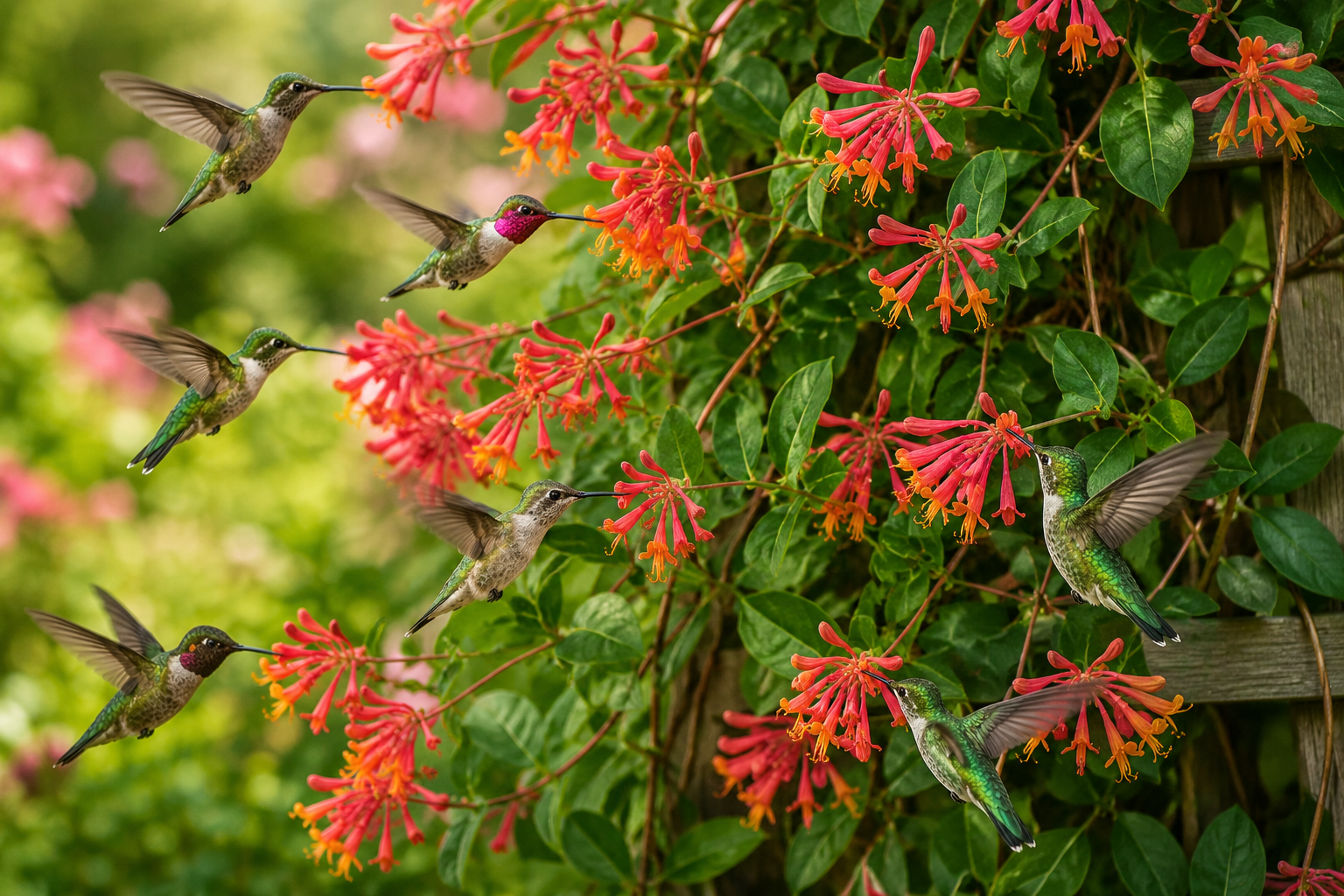
Coral Honeysuckle (Lonicera sempervirens) is one of the finest native vines for Central Texas, producing clusters of brilliant red tubular flowers from spring through fall that are irresistible to hummingbirds, butterflies, and other pollinators. This vigorous but well-behaved vine thrives in full sun to part shade, tolerates drought once established, and is perfect for covering fences, arbors, pergolas, and trellises while adding beauty and wildlife value to the landscape.