
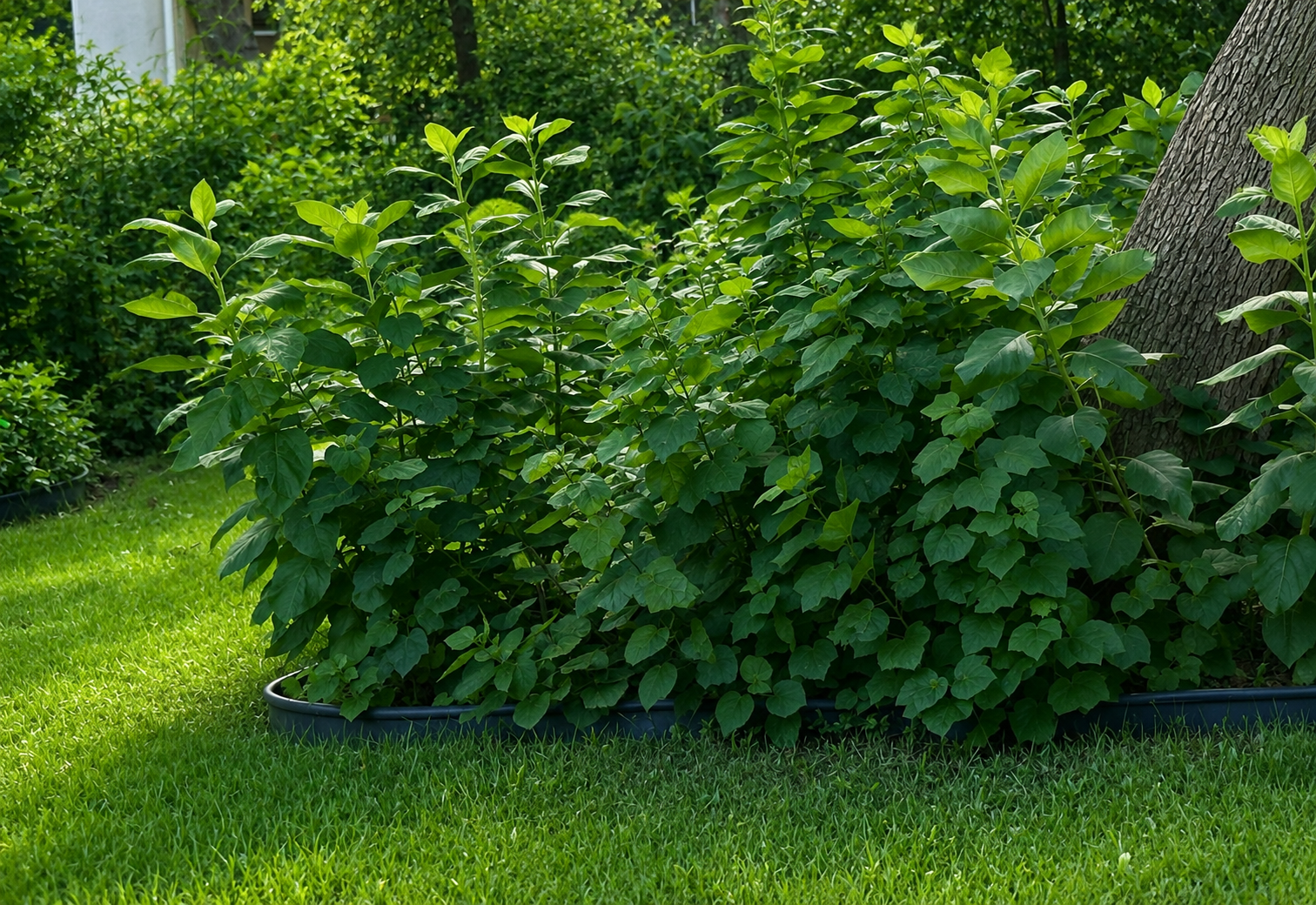
Frostweed
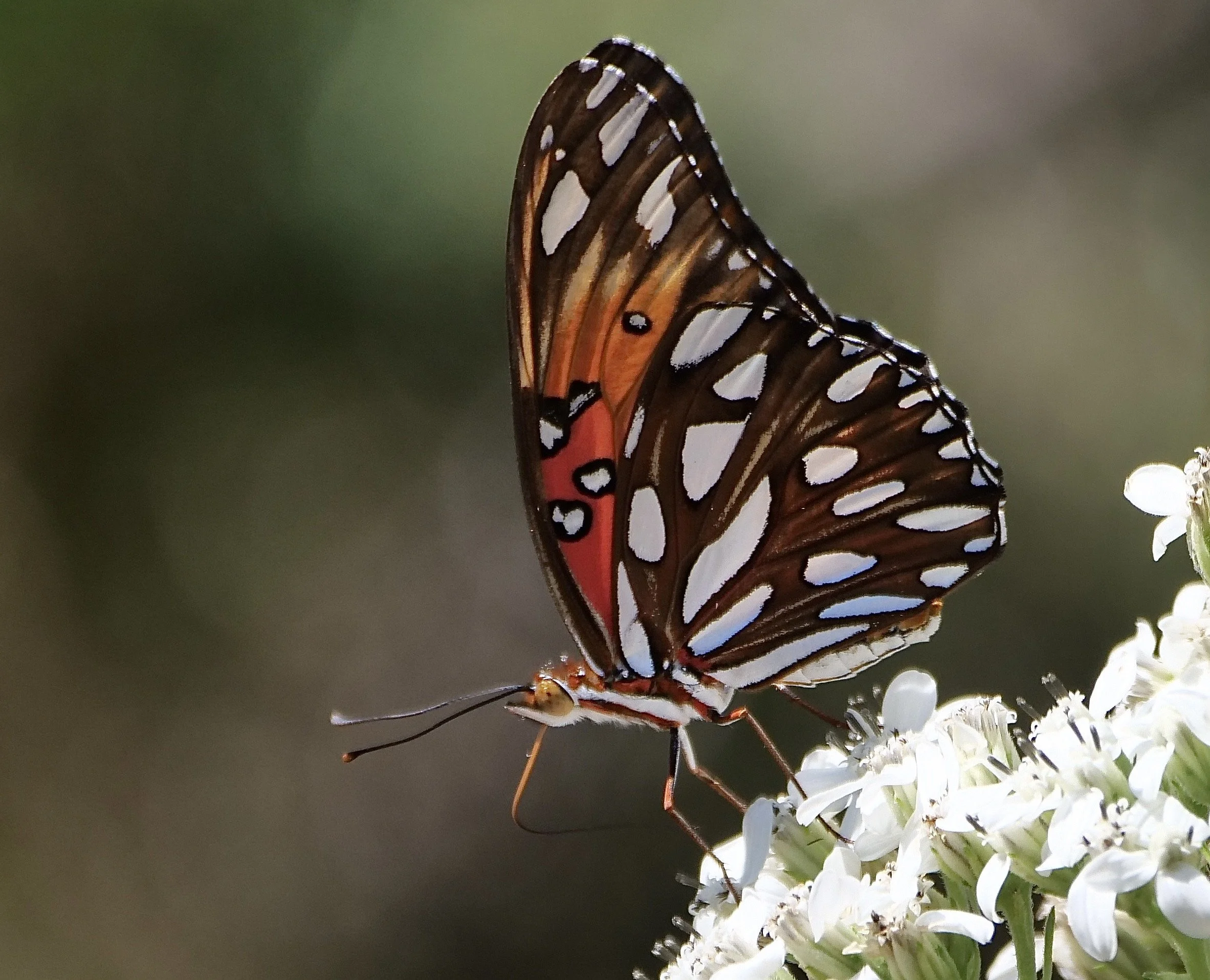
Frostweed (Verbesina virginica) is a striking native Texas perennial that brightens woodland edges and shaded gardens with large clusters of brilliant white flowers from late summer through fall. It is a favorite of butterflies, bees, and many other pollinators, providing an important late-season nectar source. Frostweed is especially famous for the beautiful ribbons of ice that form around its stems on the first freezing mornings of autumn—a rare natural phenomenon that gives the plant its common name. Thriving in part shade to full sun with average to moist soils, it adds both seasonal beauty and fascinating winter interest to native landscapes.
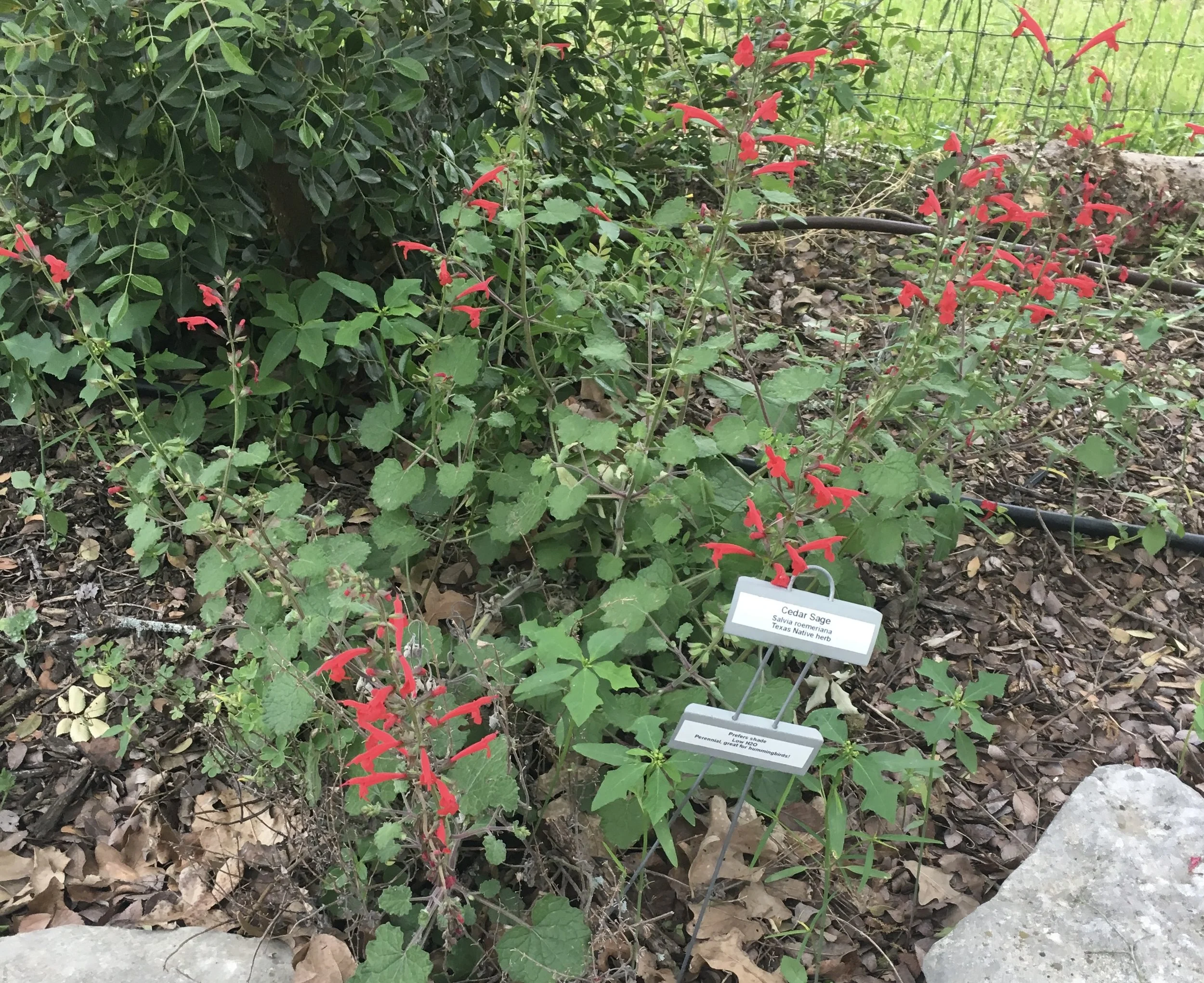
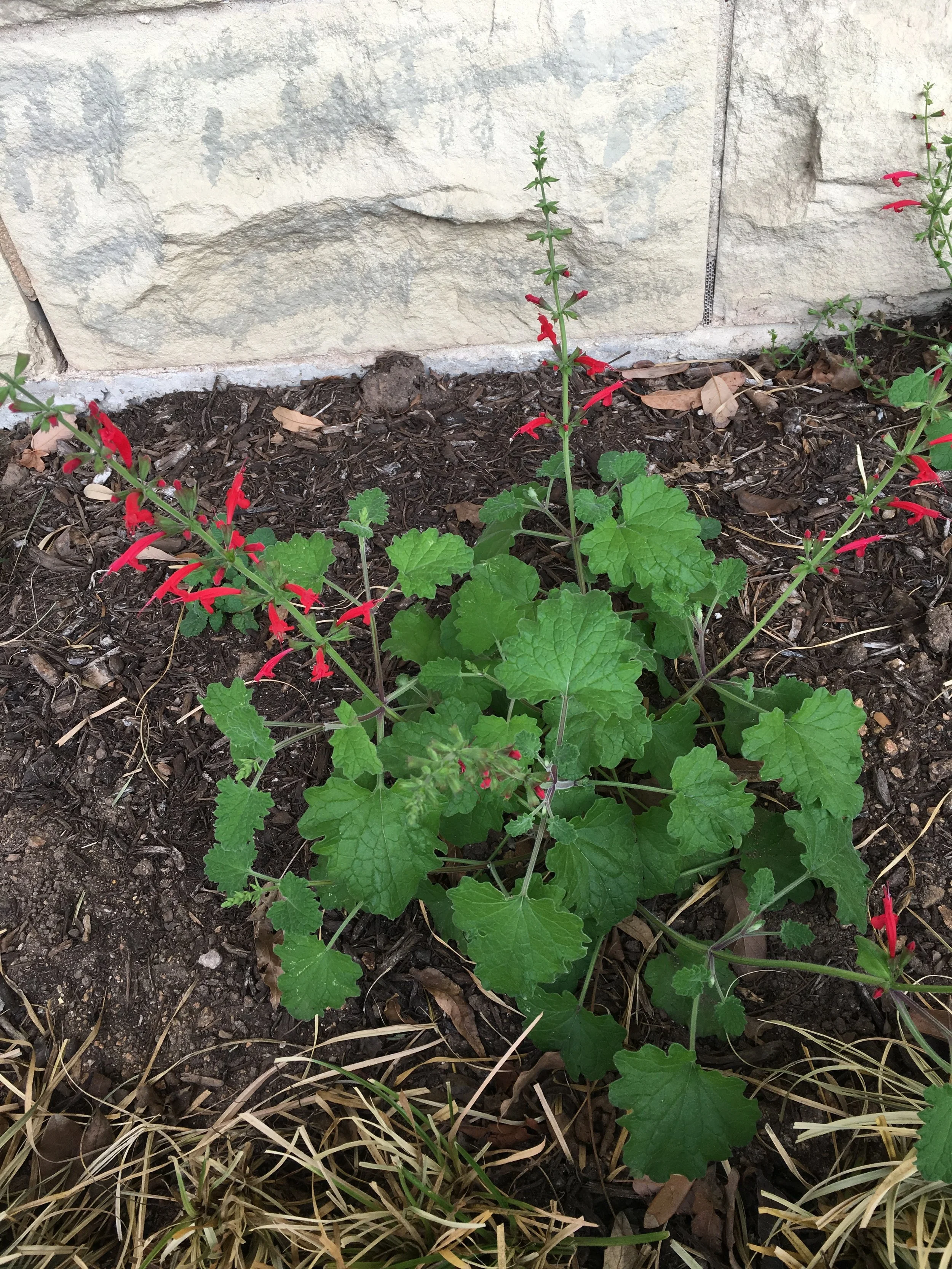
Cedar Sage
Cedar Sage (Salvia roemeriana) is a beautiful native Texas perennial that brings brilliant red flowers to shady gardens from spring through early summer, with occasional reblooming after rains. One of the best hummingbird plants for Central Texas, it also attracts butterflies and native bees while thriving beneath trees and in limestone soils where many flowering plants struggle. Its lush green foliage forms an attractive mound, making it an excellent choice for woodland gardens, shaded borders, and naturalized landscapes. Once established, Cedar Sage is easy to grow, deer resistant, and a dependable source of color and wildlife value.
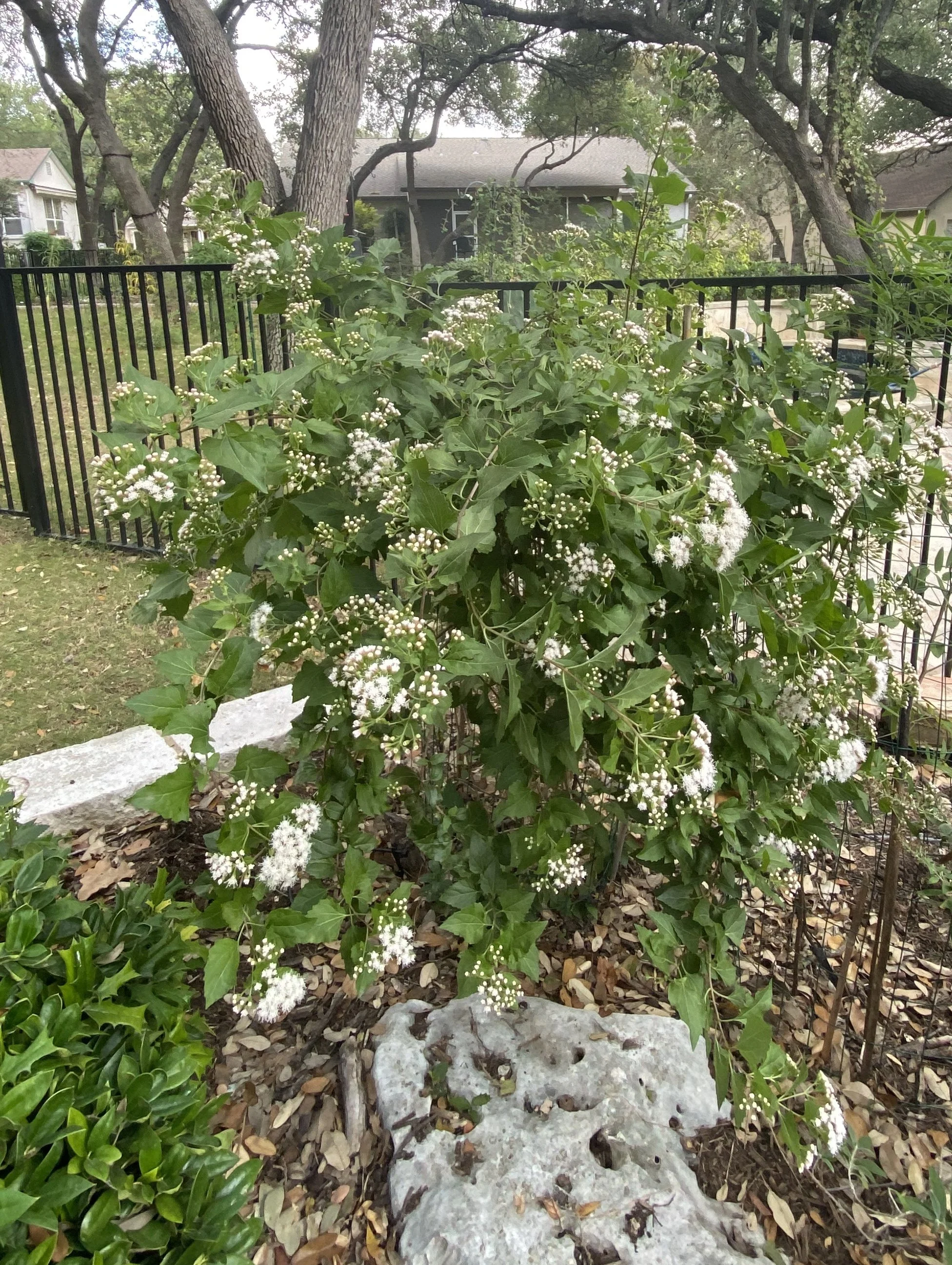
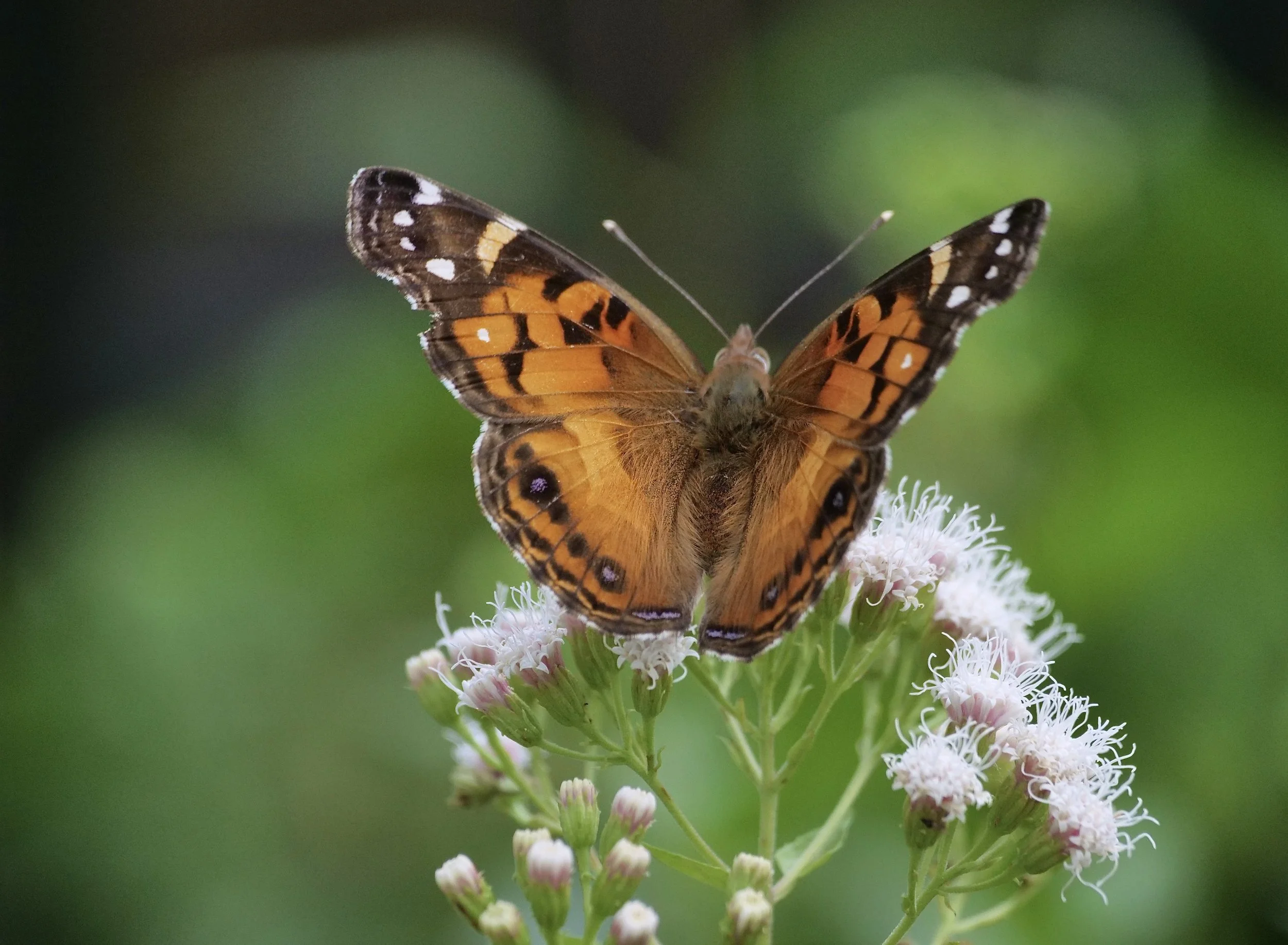
Fragrant Mistflower/ White Boneset
Fragrant Mistflower / White Boneset (Ageratina havanensis) is a graceful native Texas perennial that produces airy clusters of fragrant white flowers from late summer through fall, just when many other garden plants are winding down. A magnet for butterflies, bees, and other pollinators, it thrives in full sun to part shade and tolerates drought once established. Its soft, billowy blooms brighten native gardens, woodland edges, and limestone landscapes, making it an outstanding choice for adding late-season beauty and wildlife value to Central Texas landscapes.
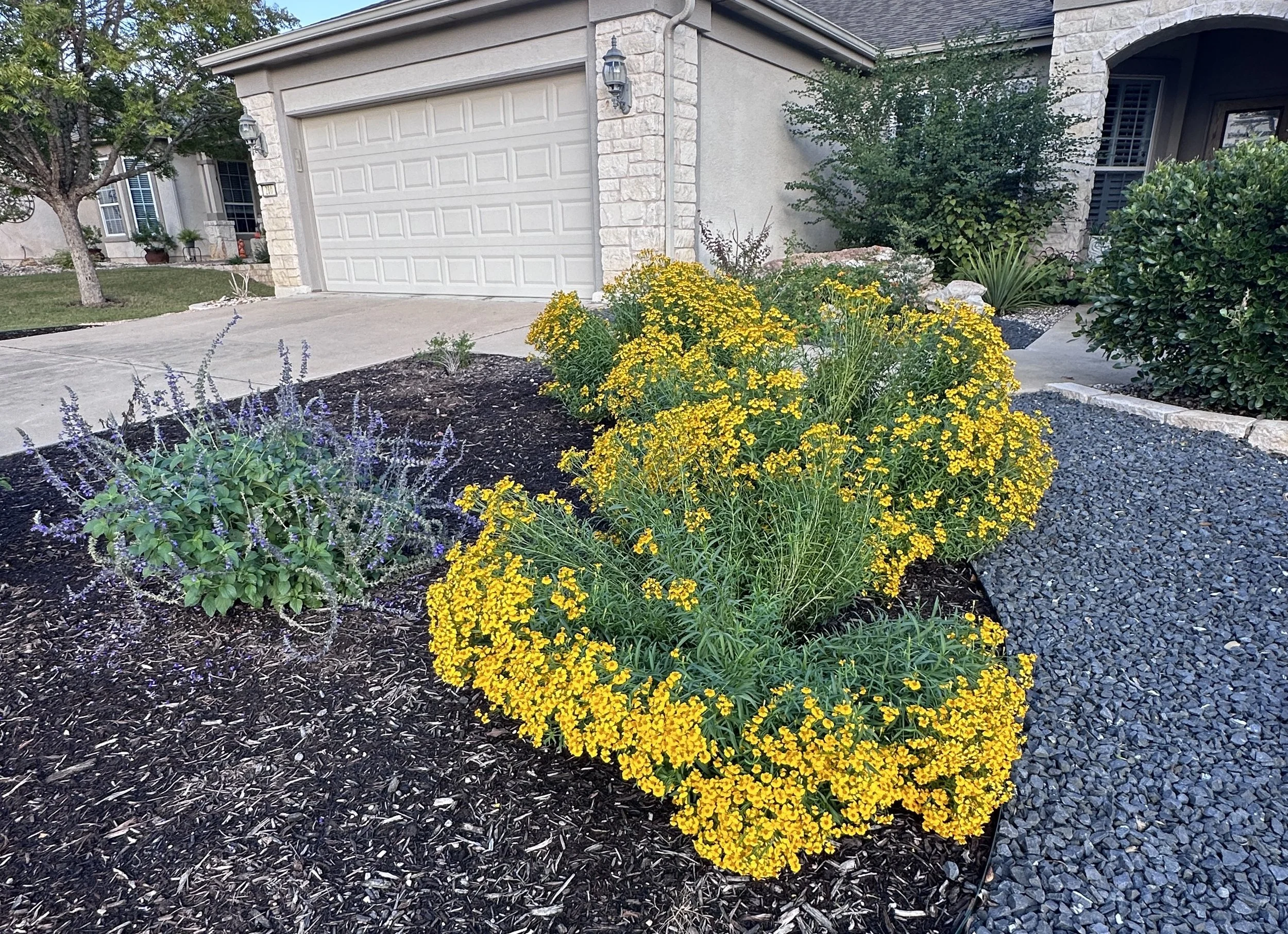
Mexican Mint Marigold
Mexican Mint Marigold (Tagetes lucida) is one of the finest fall-blooming native plants for Central Texas, prized for its clouds of golden-yellow flowers and sweet anise-scented foliage. This drought-tolerant perennial thrives in full sun to part shade, attracts bees, butterflies, and other pollinators, and is generally ignored by deer. Its aromatic leaves can even be used as a culinary substitute for French tarragon, making it as useful as it is beautiful. Blooming from late summer into fall, Mexican Mint Marigold adds brilliant color to native landscapes when many other plants are fading.
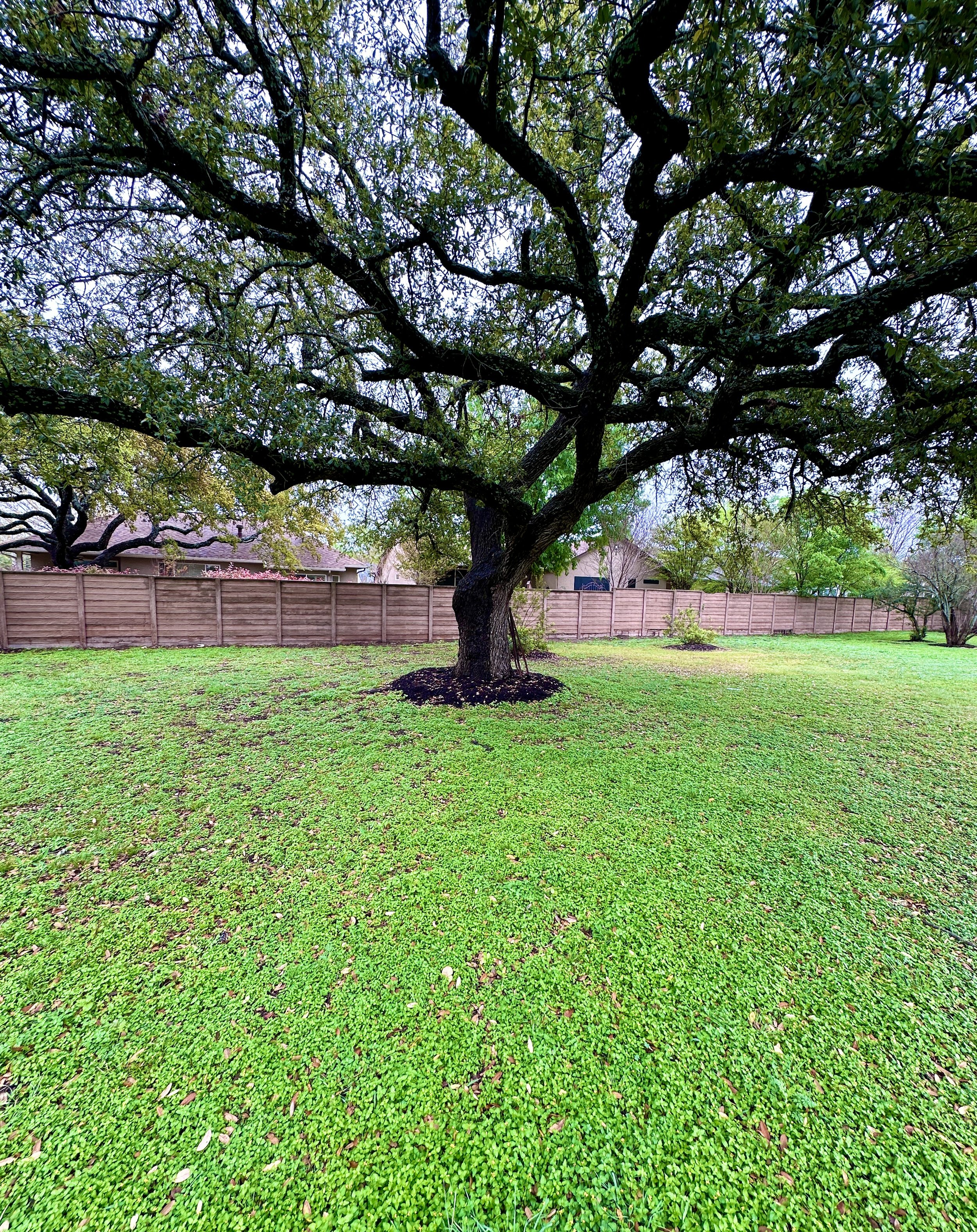
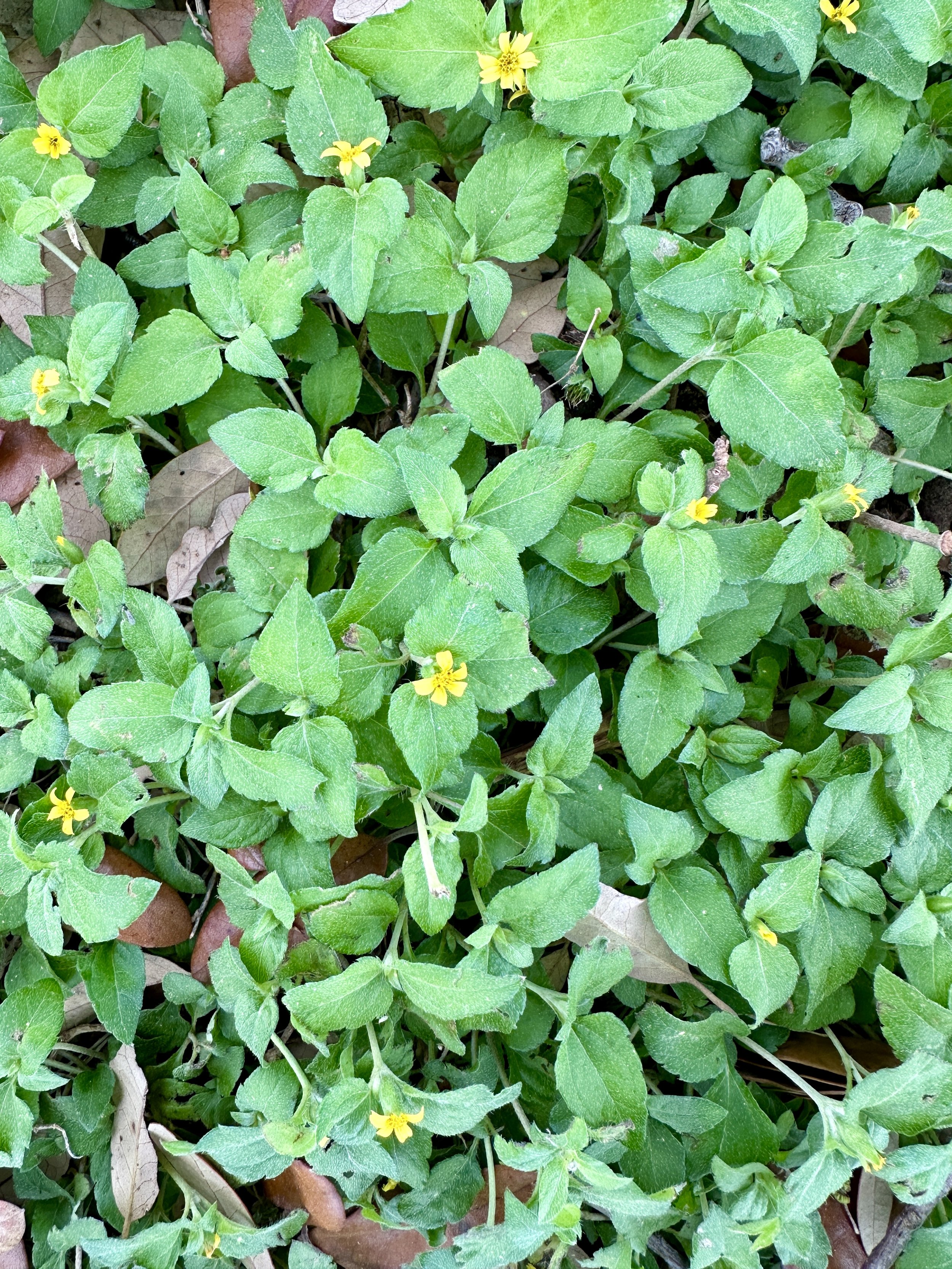
Horseherb/ Straggler Daisy
Horseherb (Straggler Daisy) (Calyptocarpus vialis) is a tough, low-growing native groundcover that thrives in the dappled shade and partial sun common beneath Central Texas trees. Its cheerful yellow daisy-like flowers appear from spring through fall, providing nectar for small pollinators while its dense green foliage helps suppress weeds and reduce erosion. Exceptionally drought tolerant once established and able to handle light foot traffic, Horseherb spreads naturally to create a lush, low-maintenance living carpet that’s perfect for replacing patches of turf in native landscapes.
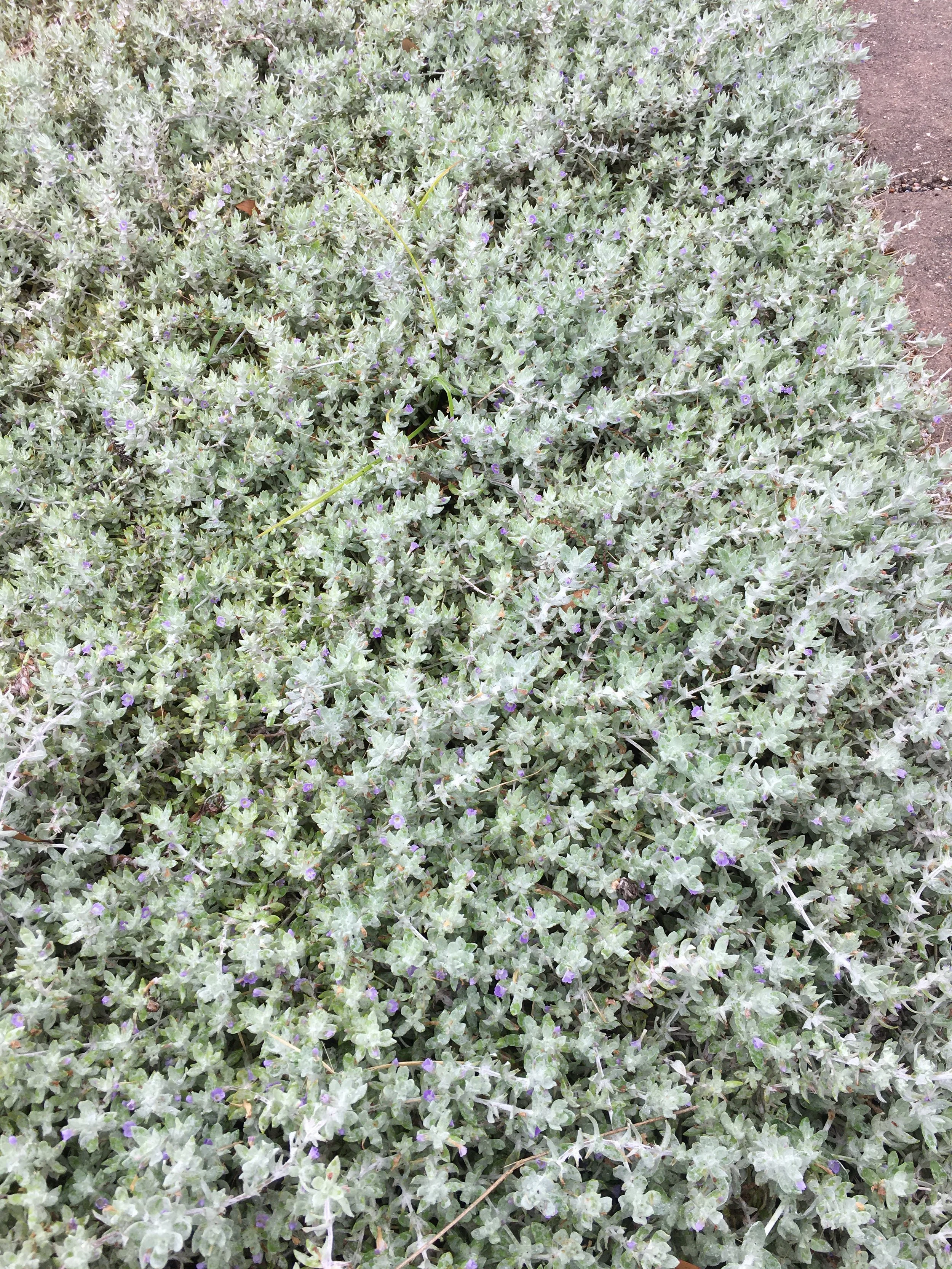
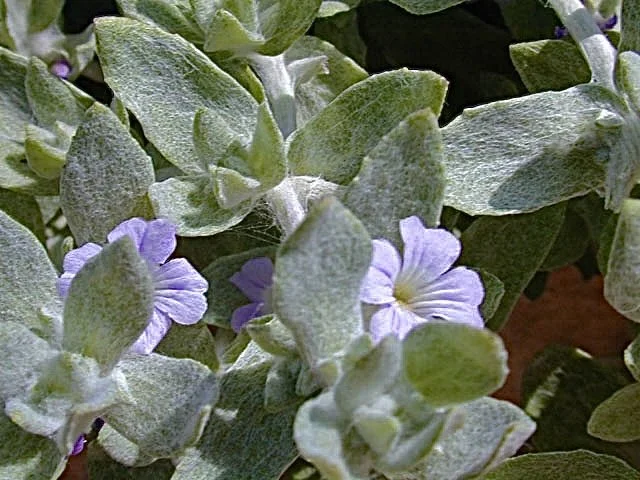
Woolly Stemodia
Woolly Stemodia (Stemodia lanata) is a charming, low-growing Texas native perennial prized for its soft, woolly silver-gray foliage and delicate lavender flowers. Blooming from spring through fall, it attracts native bees and other pollinators while thriving in full sun, heat, drought, and rocky limestone soils. Its compact habit and attractive texture make it an excellent choice for rock gardens, edging pathways, and the front of native plant beds, where it provides year-round interest with very little maintenance.
Blue Agave/ Century Plant
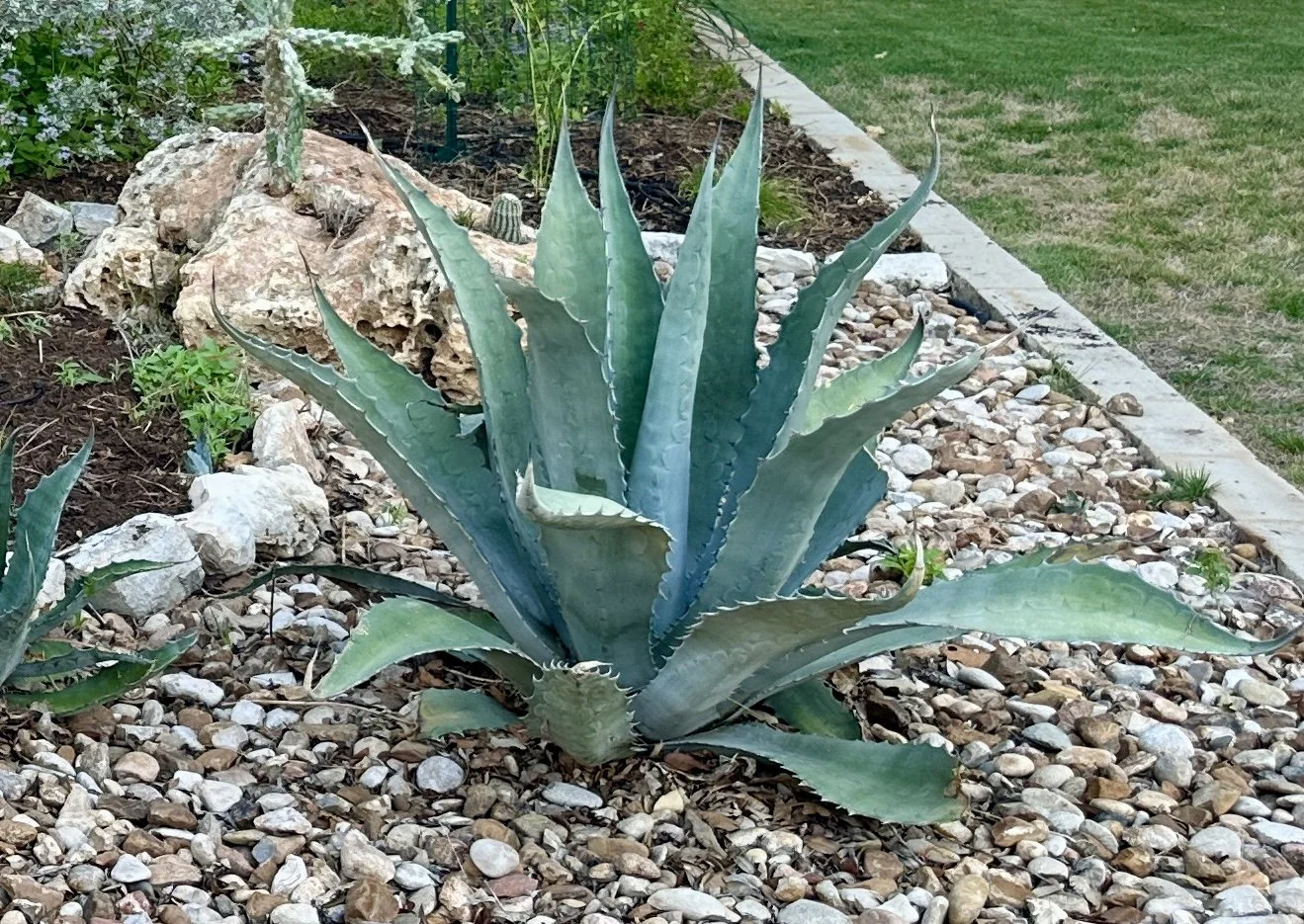
Blue Agave
Agave americana ‘Mediopicta’
Blue Agave is a bold, architectural succulent prized for its broad blue-gray leaves that form a dramatic, symmetrical rosette. Its striking color and sculptural form make it an outstanding focal point in xeriscapes, rock gardens, and Southwestern landscapes. Once established, Blue Agave is exceptionally drought tolerant and thrives in full sun with excellent drainage. Mature plants eventually produce a spectacular flowering stalk before completing their life cycle, while offsets continue the colony.
Texas Green Sotol
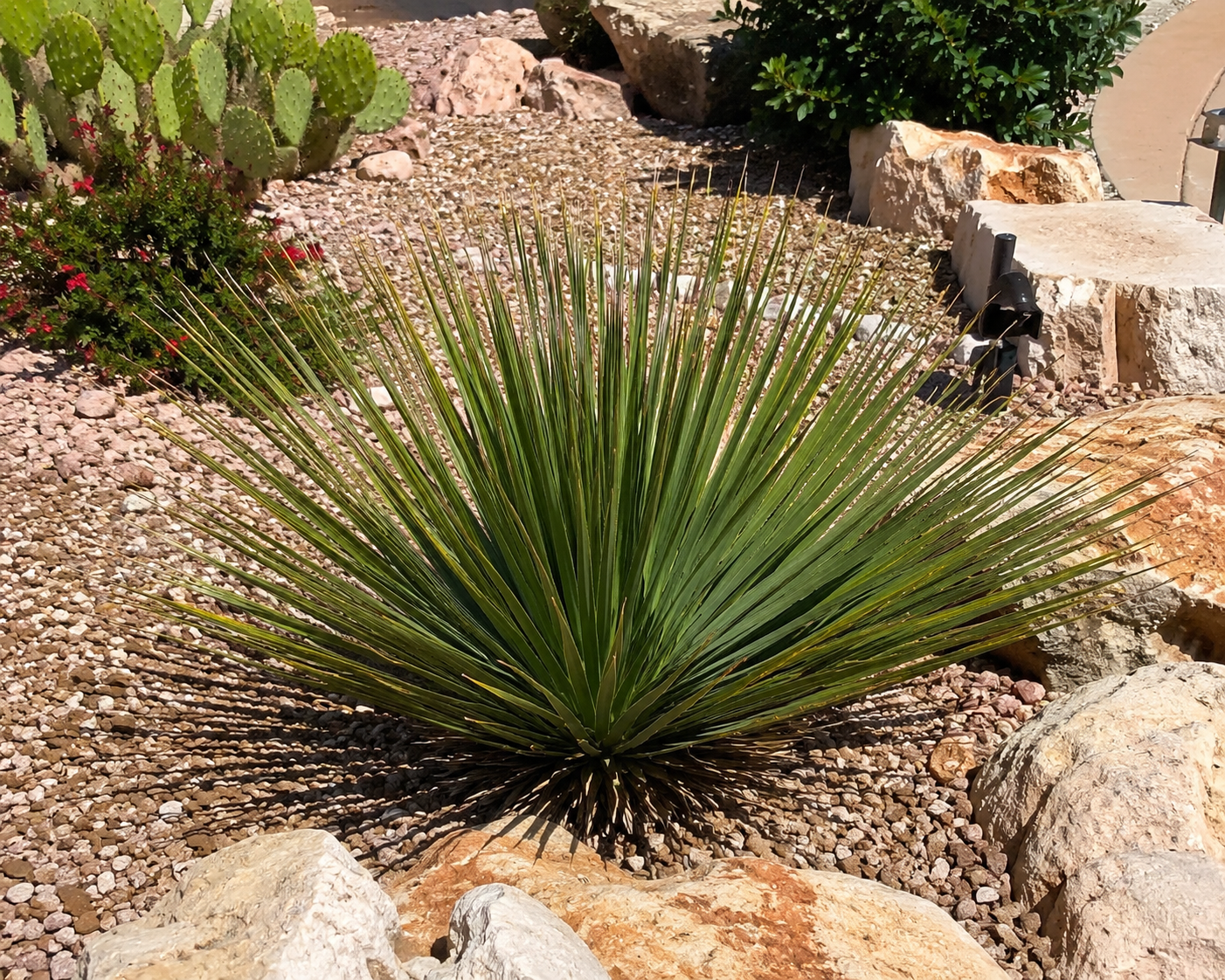
Texas Green Sotol
Dasylirion texanum
Texas Green Sotol is a rugged, evergreen native of Central and South Texas that forms a bold, symmetrical rosette of narrow green leaves. Its architectural shape provides year-round interest and serves as a striking focal point in rock gardens, xeriscapes, and native landscapes. Mature plants may produce an impressive flowering stalk that rises well above the foliage, attracting bees and other pollinators. Exceptionally heat and drought tolerant, Texas Green Sotol thrives in full sun and well-drained soils with very little maintenance.
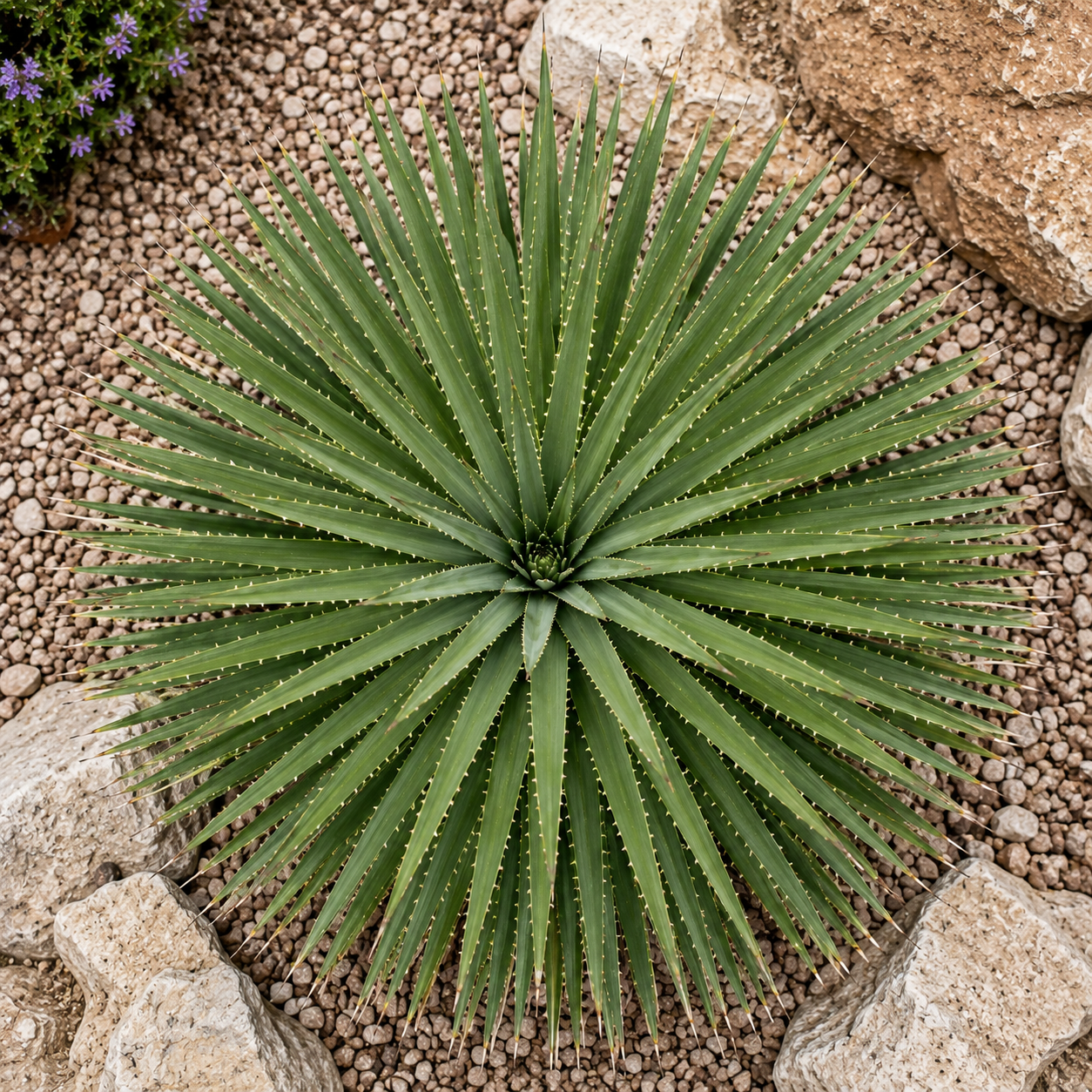
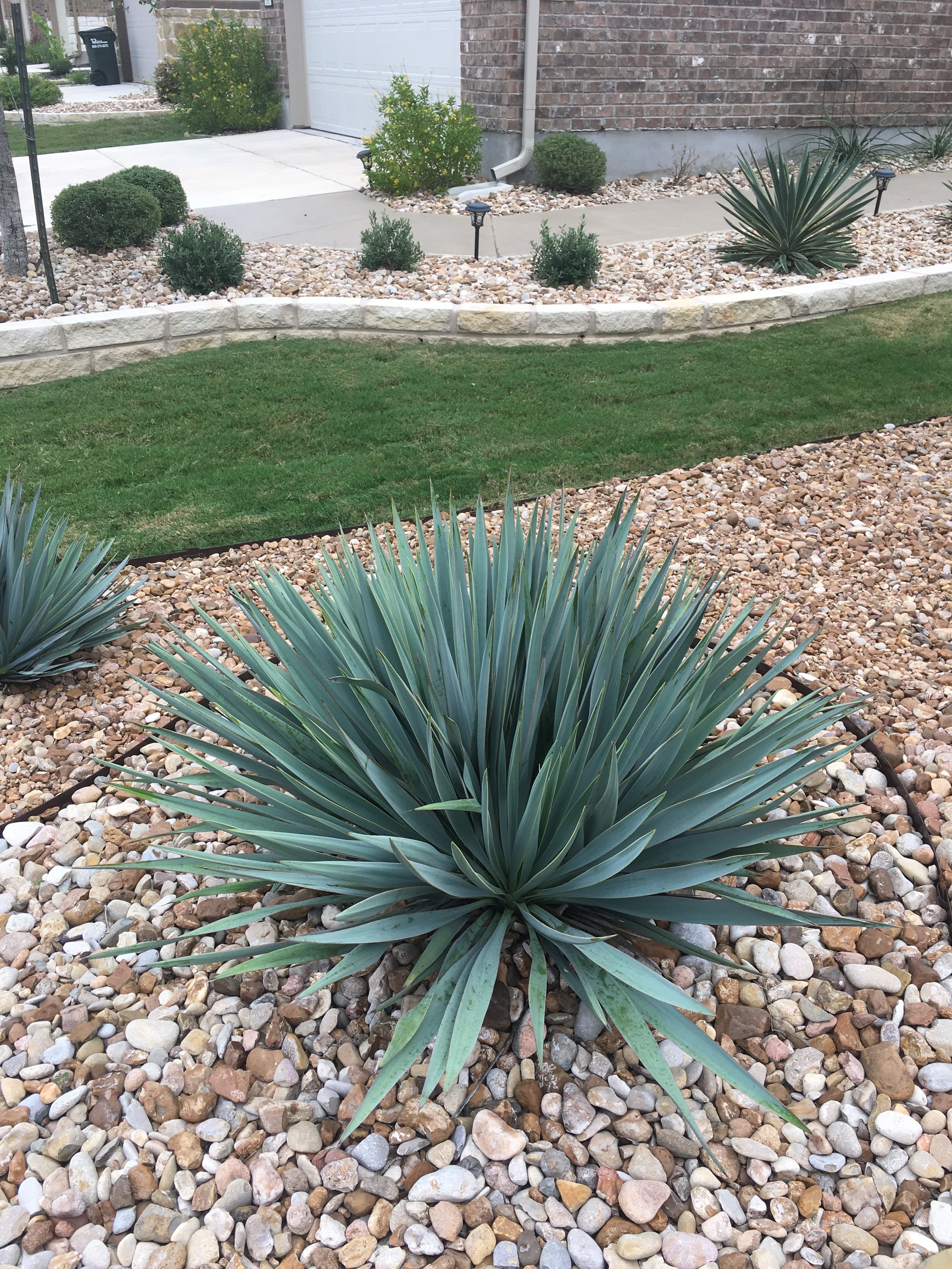
Blue Twist-Leaf Yucca
Blue Twist Yucca
Yucca ‘Blue Twist’ (Y. rupicola × Y. pallida)
Blue Twist Yucca is a striking hybrid that combines the graceful, twisting foliage of Yucca rupicola with the powdery blue coloration of Yucca pallida. It forms a compact, evergreen rosette of soft, blue-gray leaves that add year-round texture and color to the landscape. In late spring, tall flower stalks emerge with creamy white, bell-shaped blooms that attract pollinators. Exceptionally heat and drought tolerant once established, Blue Twist is an outstanding choice for xeriscapes, rock gardens, and water-wise gardens with well-drained soils.
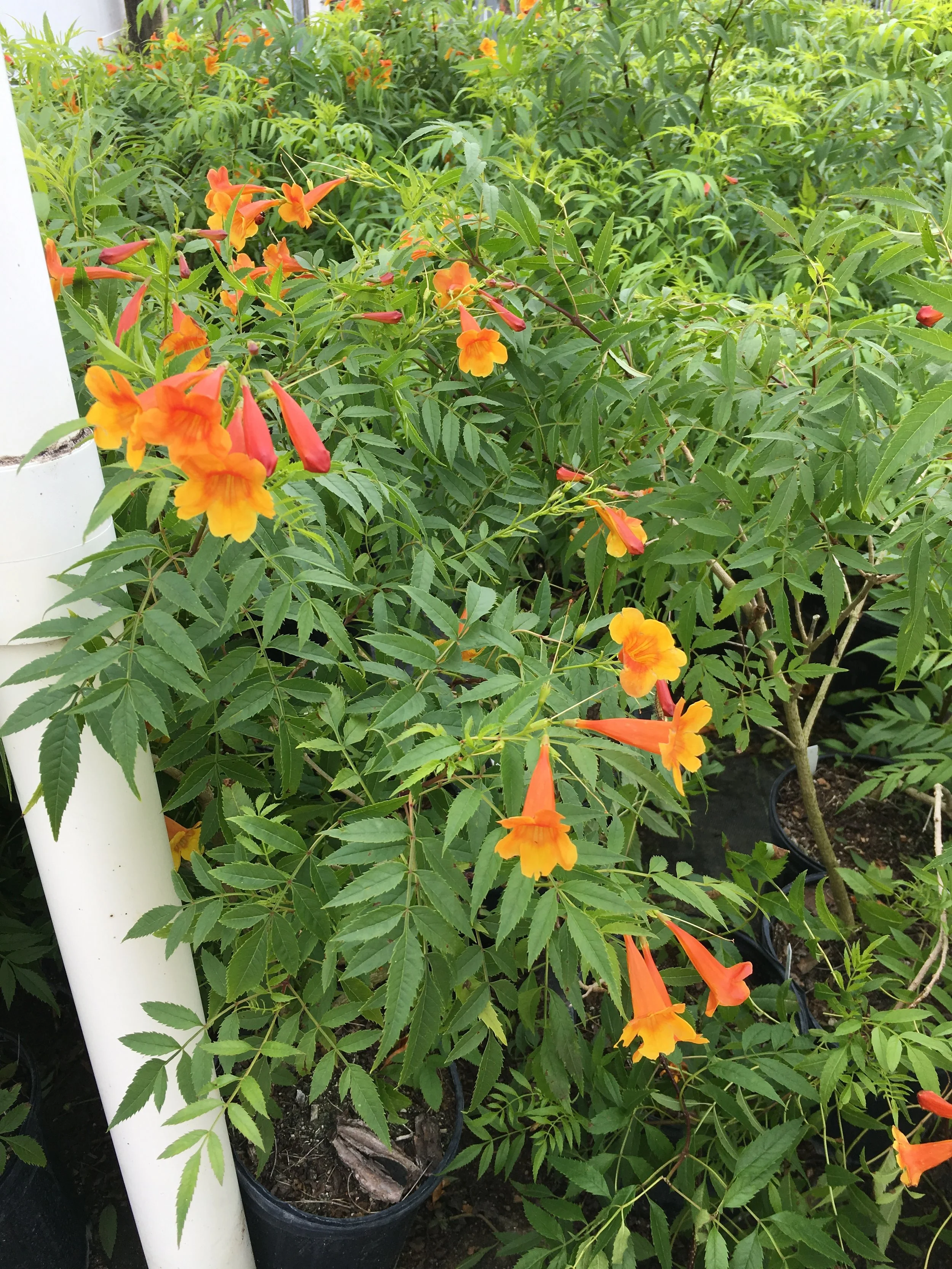
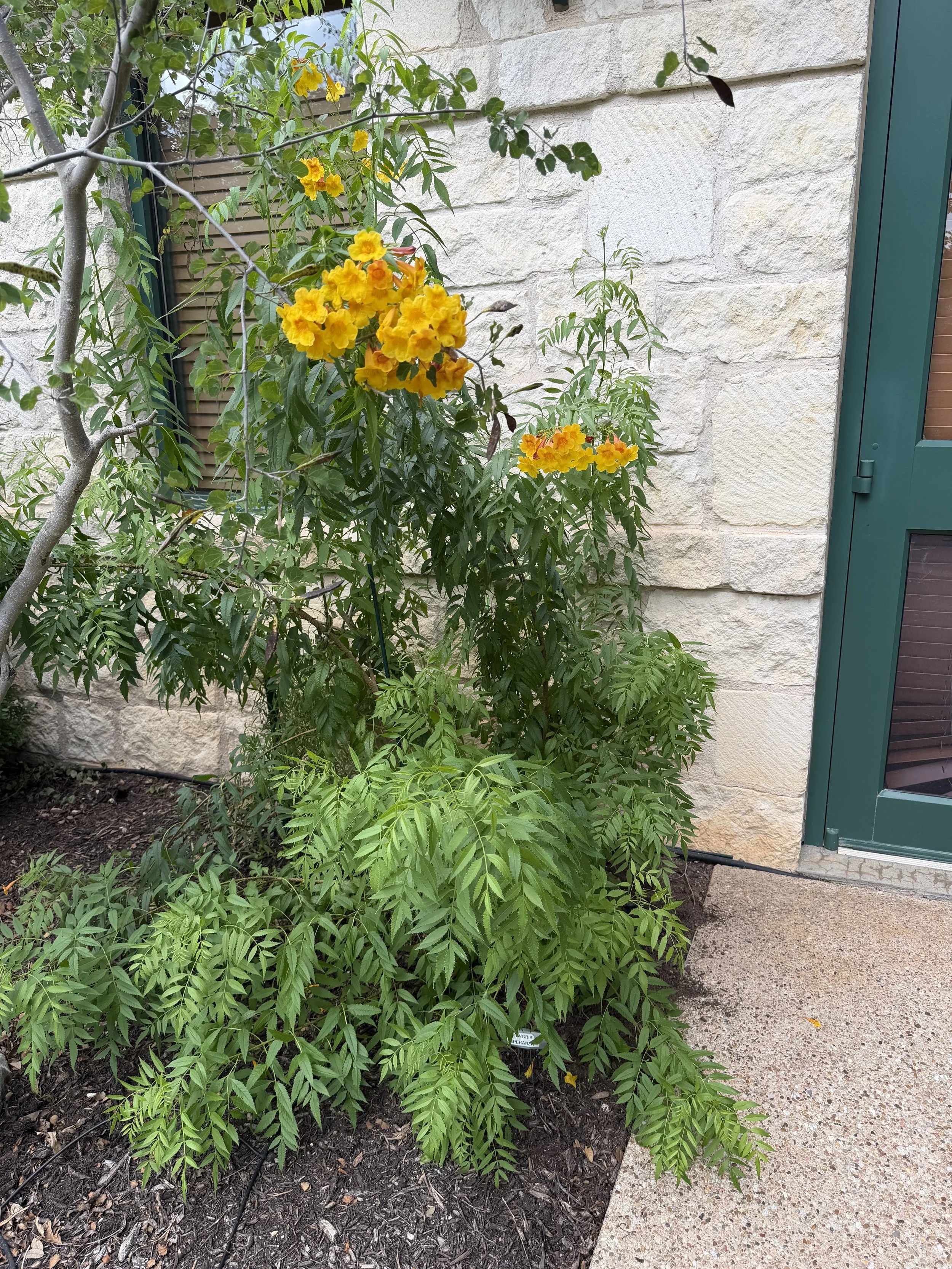
Sangria Esperanza
Sangria Esperanza Tecoma ‘Sangria’ is a compact selection of Yellow Bells prized for its rich reddish-orange buds that open to deep reddish- golden-yellow trumpet-shaped flowers from late spring until frost. It thrives in full sun and handles Central Texas heat, drought, and alkaline soils with ease once established. Its colorful blooms are a favorite of hummingbirds, butterflies, and native bees, providing months of nectar when many other plants slow down during summer. More compact and densely branched than standard Yellow Bells, Sangria Esperanza fits well in smaller landscapes while delivering continuous color with minimal maintenance. It may freeze back after hard winters but reliably returns from the roots each spring.
Pride of Barbados
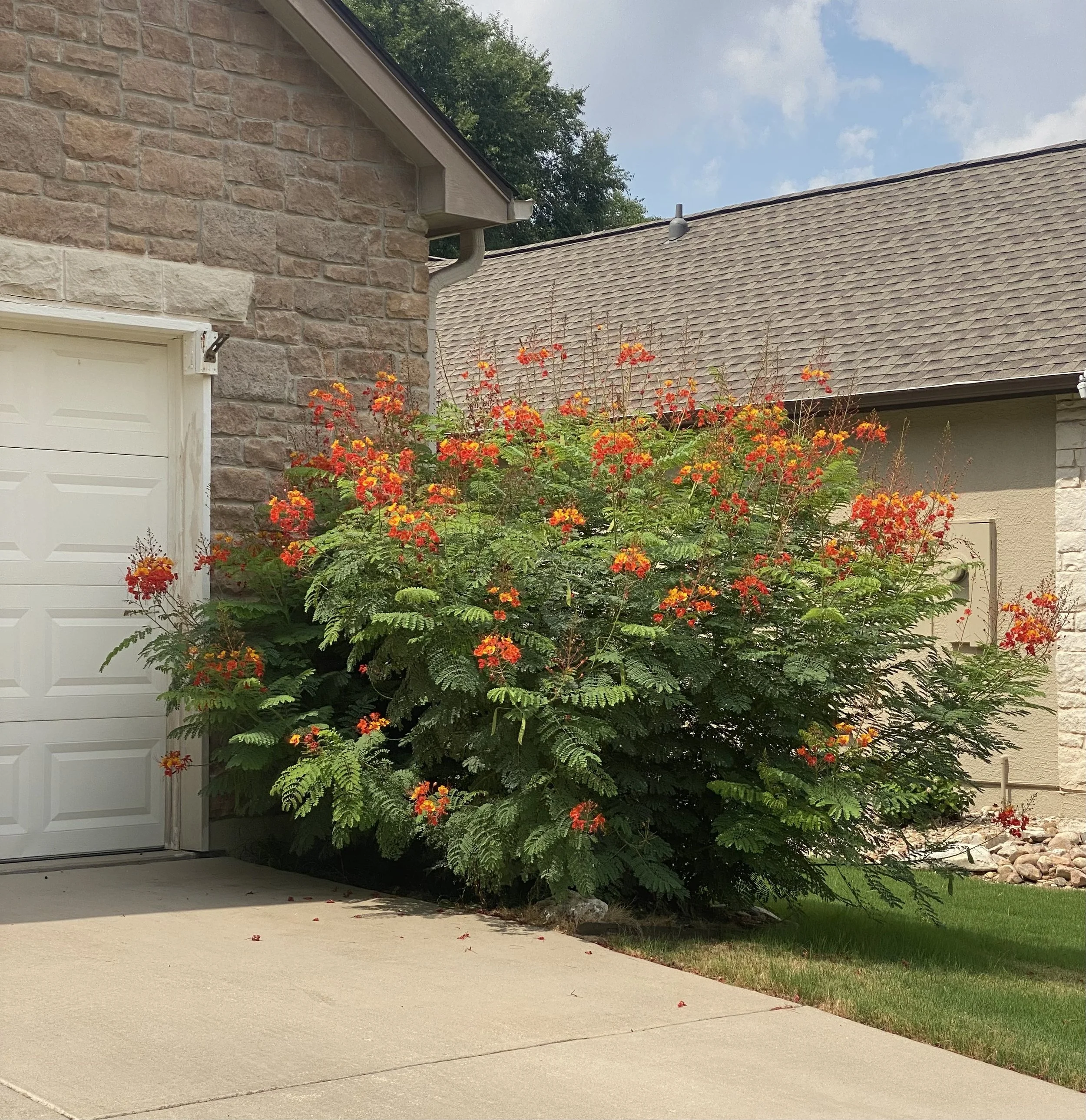
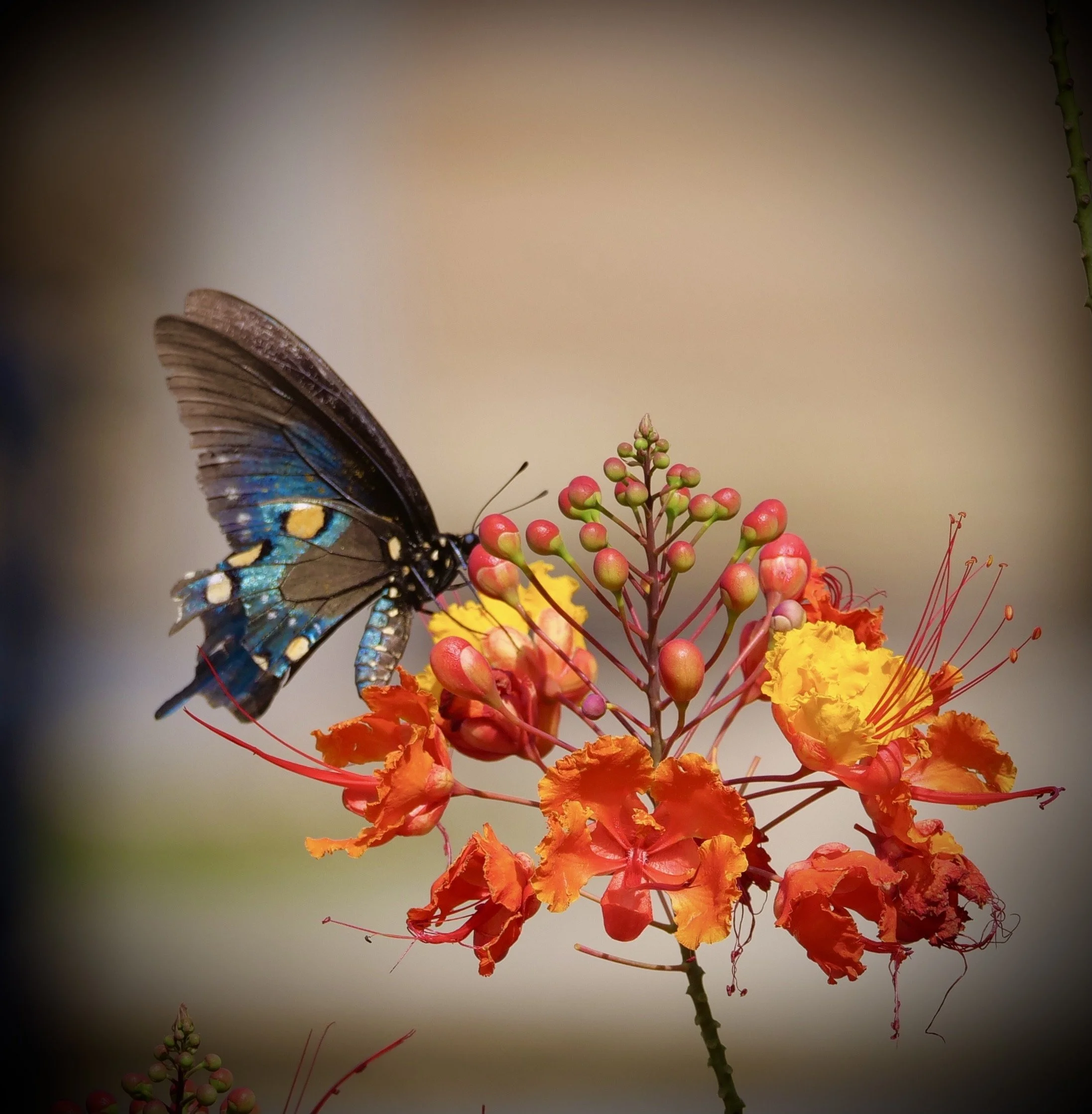
Pride of Barbados Caesalpinia pulcherrima is a spectacular tropical shrub known for its brilliant orange, red, and yellow flowers that bloom from late spring until frost. It thrives in full sun and tolerates heat, drought, and alkaline soils once established. Although it freezes to the ground during most Central Texas winters, it quickly returns in spring and often reaches 5–8 feet tall in a single growing season. It is highly attractive to butterflies, bees, and hummingbirds, providing abundant nectar during the hottest months when many other plants have stopped blooming. While I generally recommend native plants whenever possible, Pride of Barbados is one of the few non-native species I consistently endorse because it is exceptionally well adapted to our climate, is not considered invasive, requires very little supplemental water once established, and offers outstanding value to pollinators and hummingbirds. For gardeners seeking dramatic summer color with relatively little maintenance, it is an excellent choice.
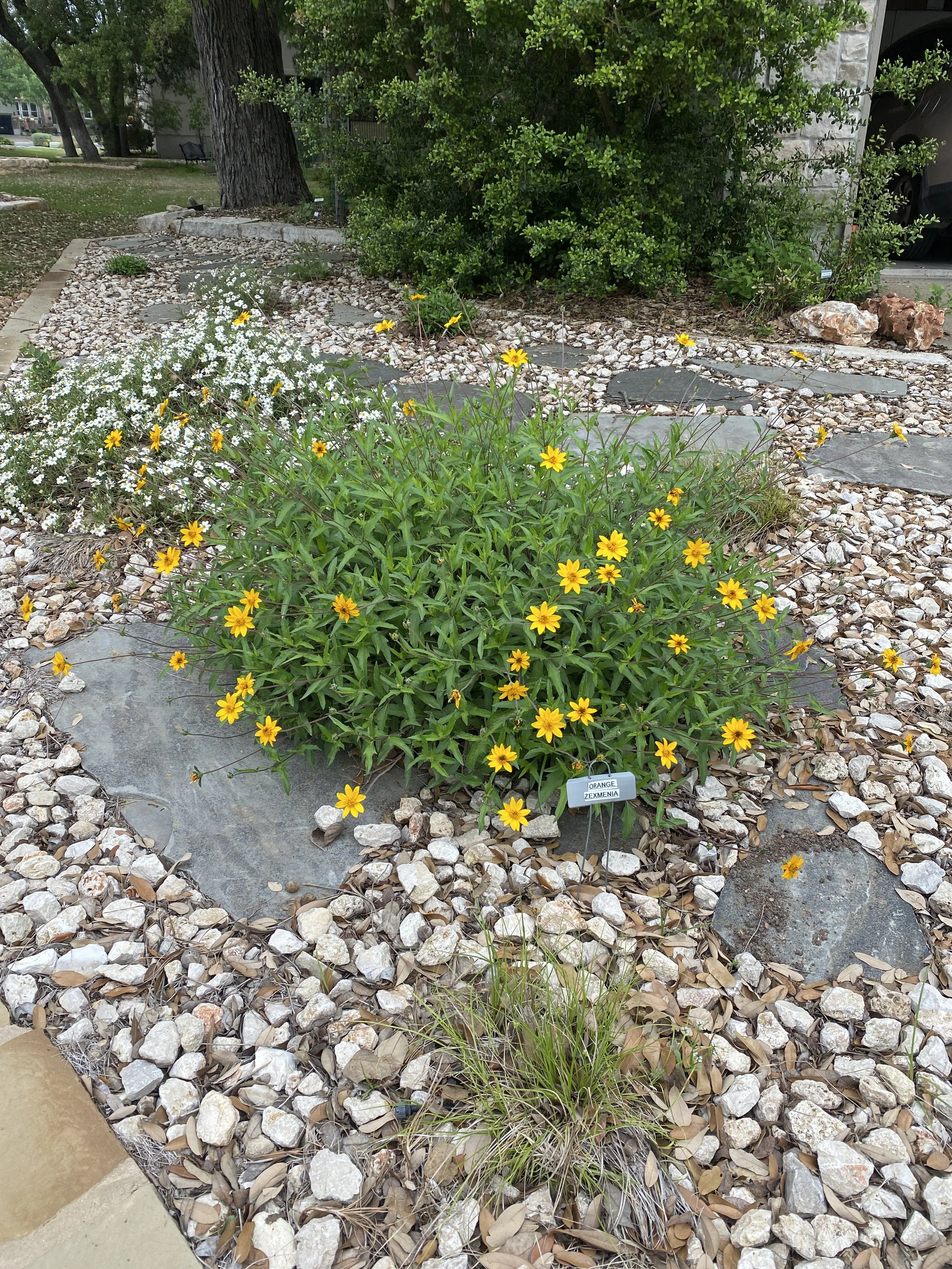
Orange Zexmenia
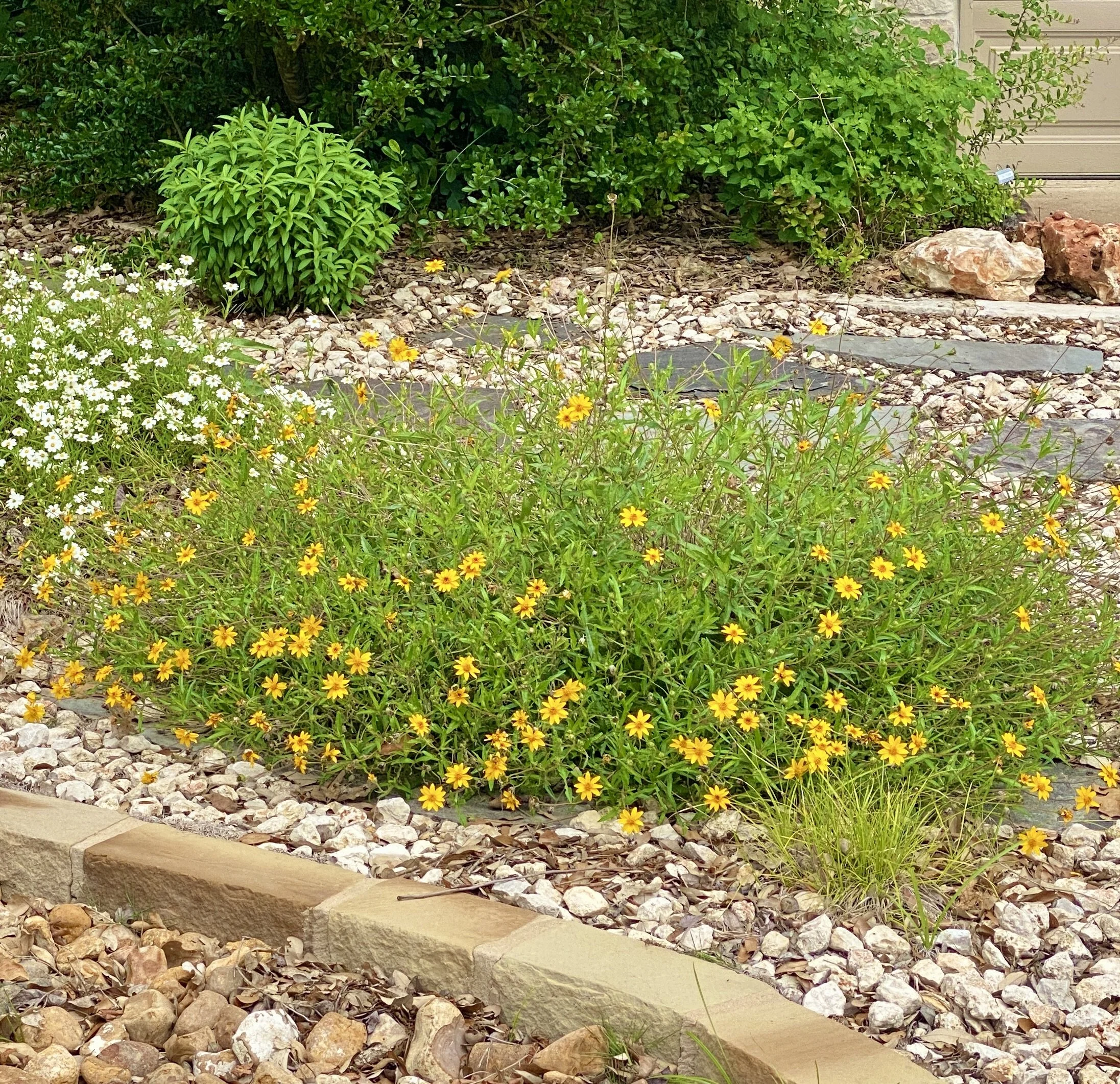
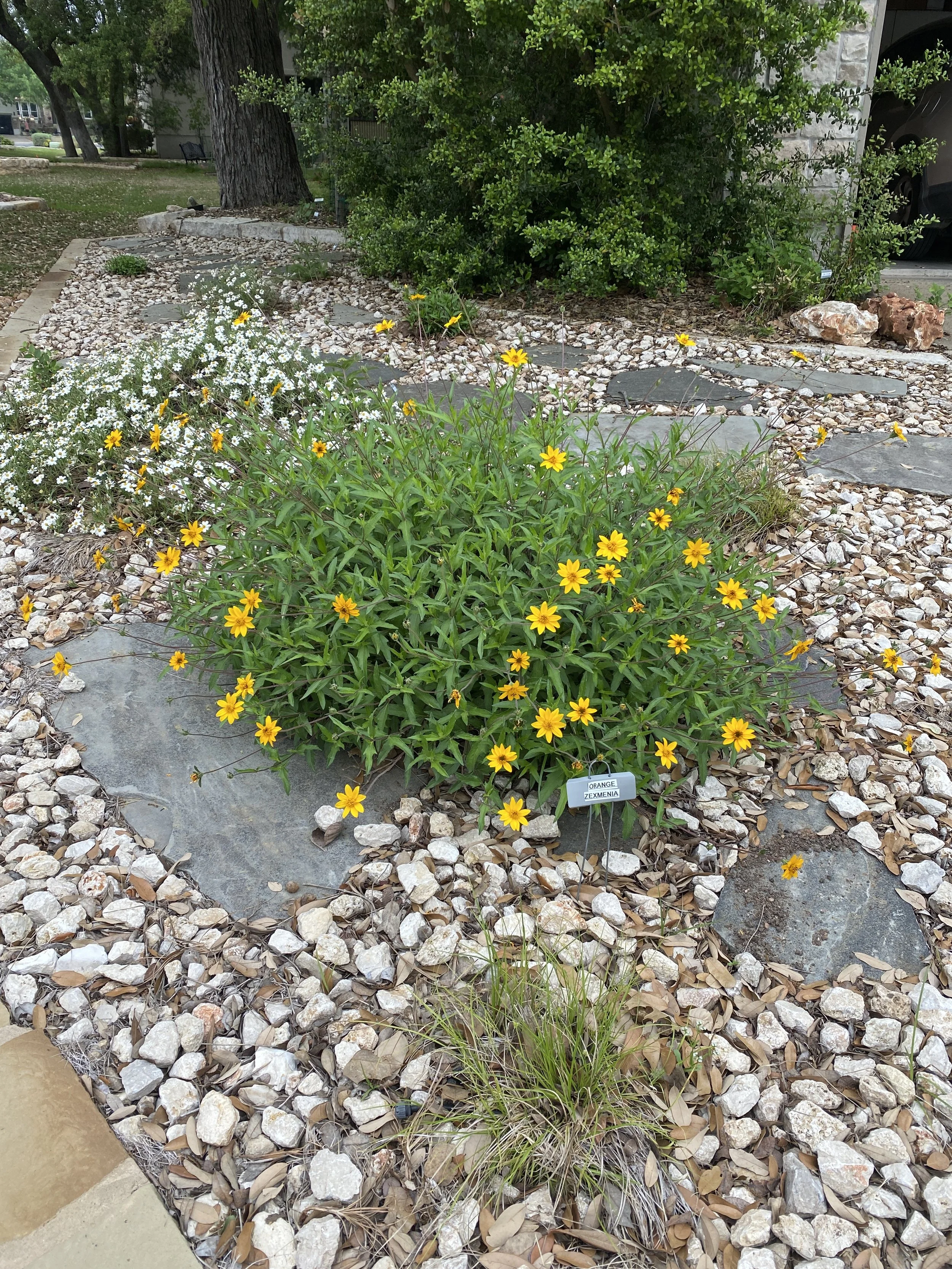
Orange Zexmenia (Wedelia acapulcensis var. hispida) is a tough, long-blooming Texas native perennial that lights up the garden with cheerful golden-orange, daisy-like flowers from spring through fall. Adapted to the heat, drought, and limestone soils of Central Texas, it thrives in full sun and asks for very little care once established. Its bright blooms attract a wide variety of native bees, butterflies, and other pollinators, while its spreading habit makes it an excellent choice for naturalized plantings, meadows, slopes, and informal borders. Orange Zexmenia combines exceptional resilience with months of color, making it one of the most dependable native wildflowers for water-wise landscapes.
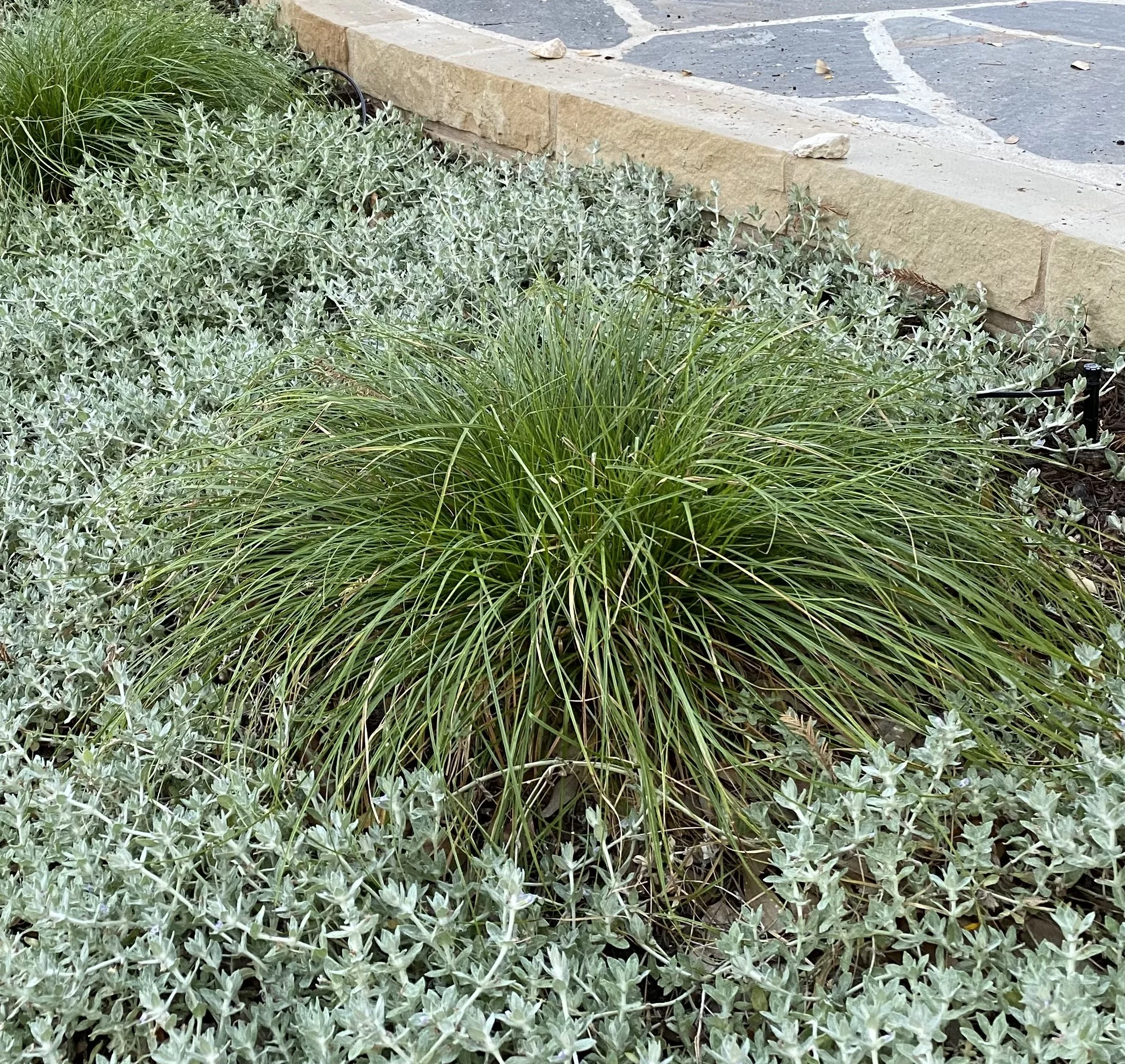
Webberville Sedge
Webberville Sedge (Carex perdentata) is a graceful, clump-forming native sedge that thrives in the shaded woodlands and limestone soils of Central Texas. Its fine-textured, arching foliage creates a soft, natural groundcover that blends beautifully beneath trees, along woodland paths, or in shaded garden beds. Highly drought tolerant once established, Webberville Sedge requires little maintenance and helps suppress weeds while providing habitat for beneficial insects and shelter for small wildlife. It is an excellent lawn alternative for dry shade and pairs well with ferns, inland sea oats, woodland phlox, and Turk’s cap for a naturalistic Texas landscape.
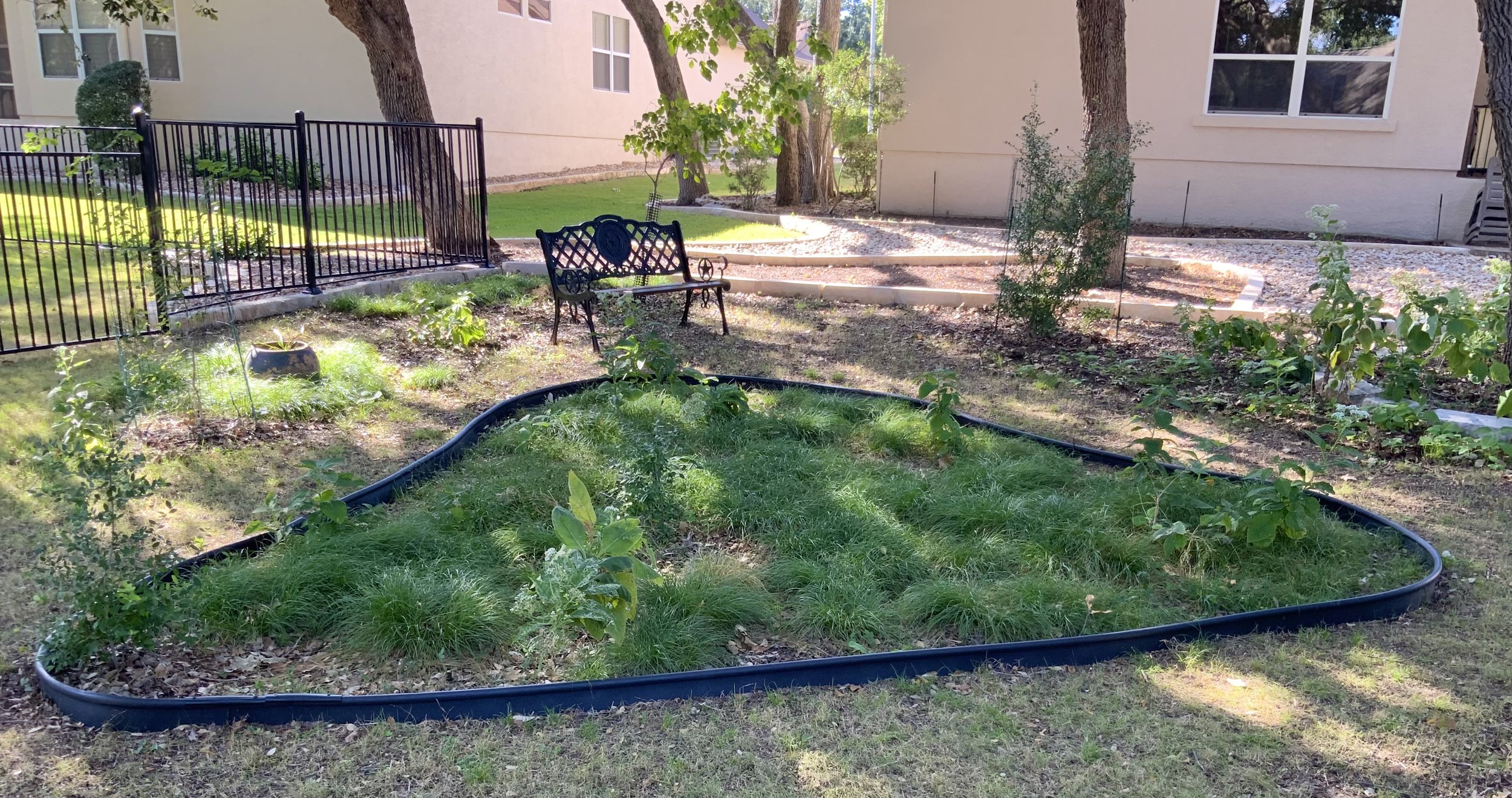
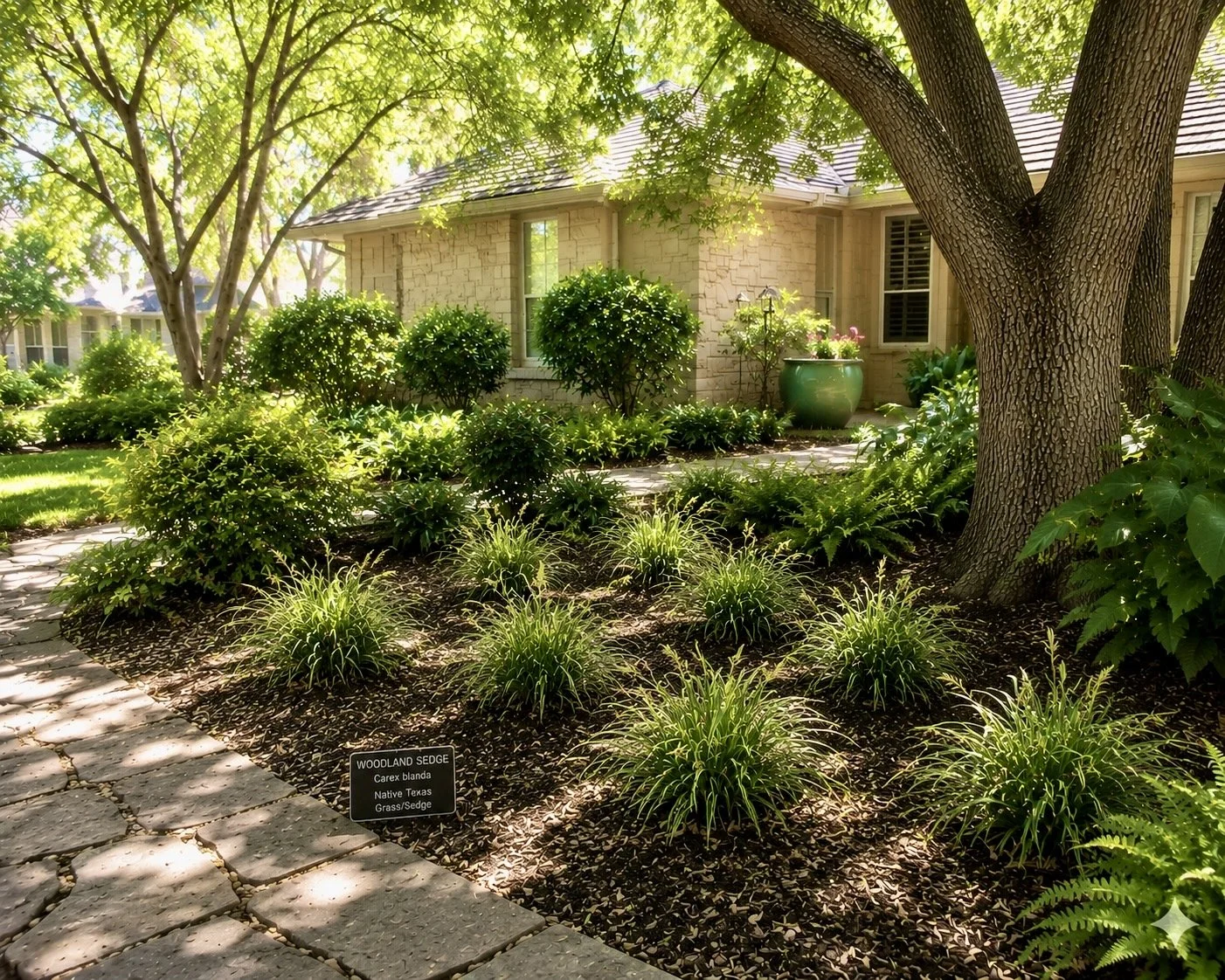
Woodland Sedge
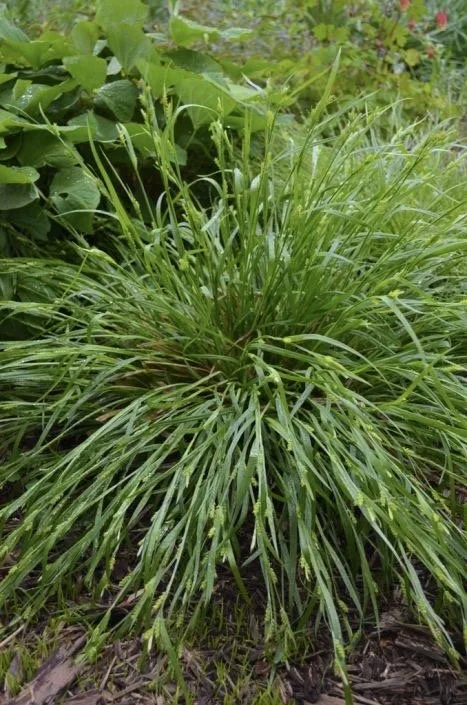
Woodland Sedge Carex blanda is a graceful Texas native sedge that thrives in the dappled shade of woodlands, beneath mature trees, and in other low-light garden settings. Its fine-textured, arching green foliage forms soft, attractive clumps that provide year-round interest while helping suppress weeds and stabilize soil. Woodland Sedge is an excellent low-maintenance alternative to traditional groundcovers or turf in shaded landscapes and provides valuable habitat for beneficial insects and other small wildlife. It tolerates a variety of soils, including the limestone soils common in Central Texas, and becomes moderately drought tolerant once established.
Inland Sea Oats
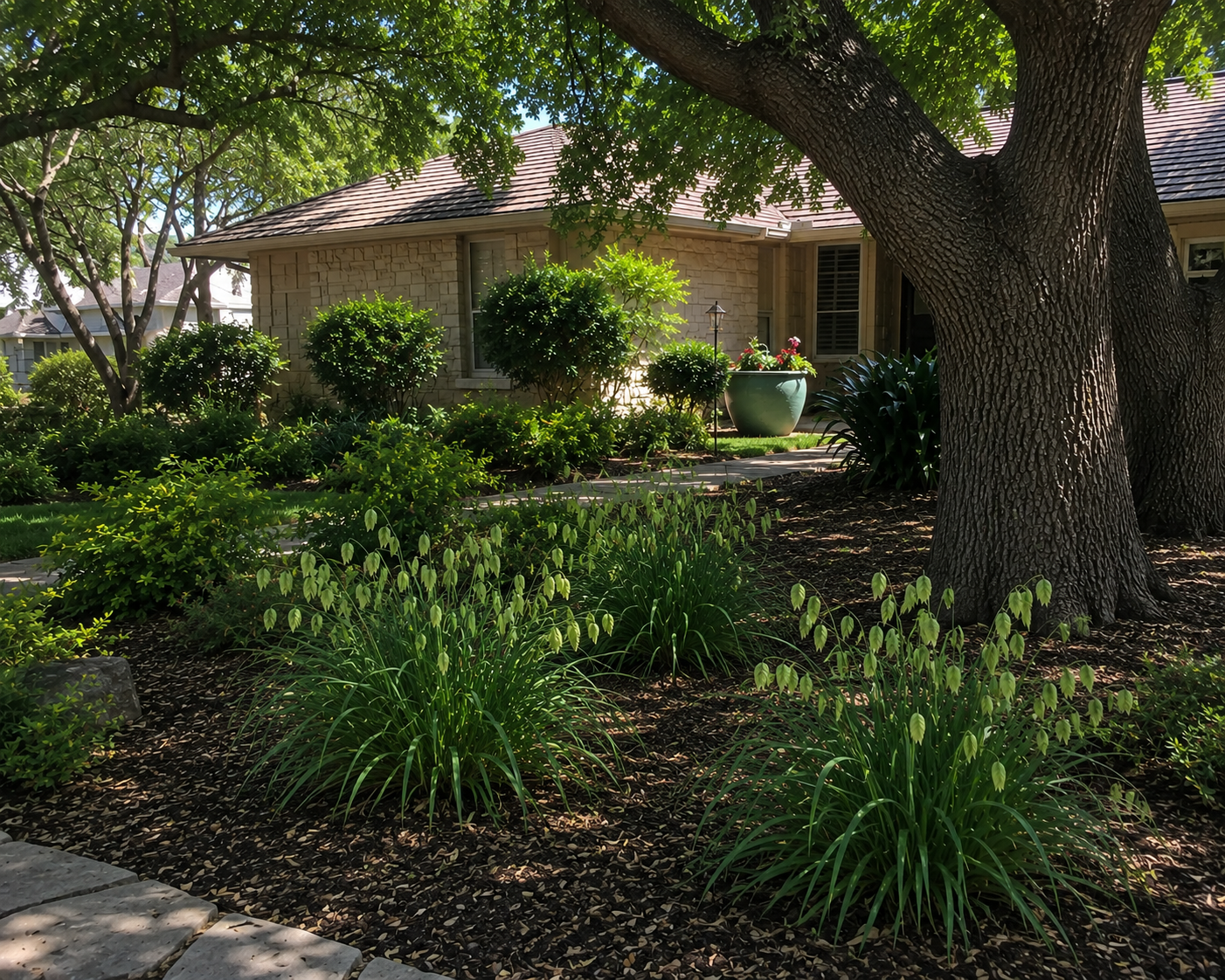
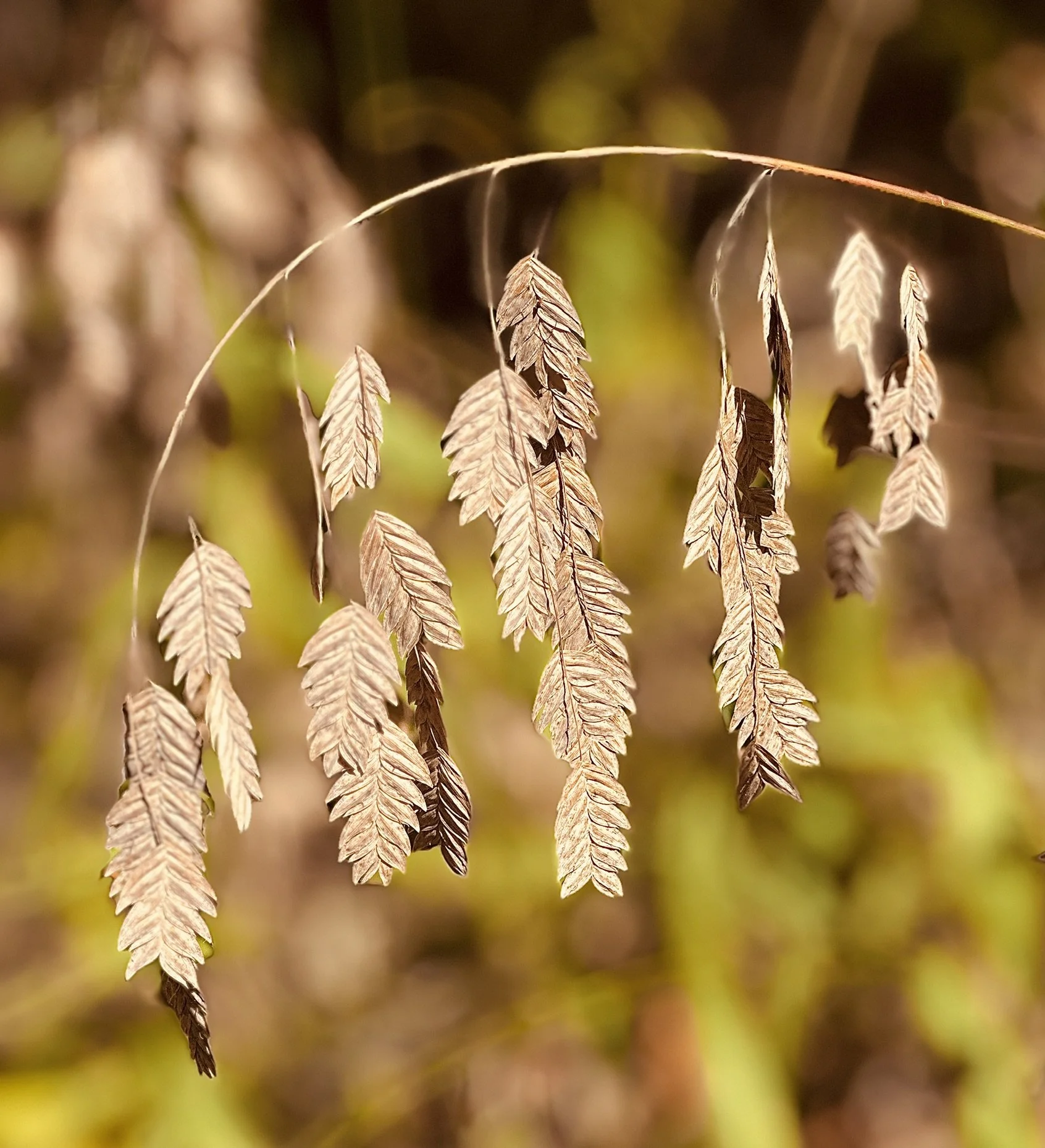
Inland Sea Oats Chasmanthium latifolium is one of the finest native ornamental grasses for shaded Texas landscapes. Its graceful, arching foliage and distinctive dangling seed heads add texture and movement from summer through winter, while the seeds provide food for songbirds and cover for wildlife. Inland Sea Oats spreads slowly to form attractive colonies, making it an excellent choice beneath trees, along woodland edges, or in naturalized gardens where it thrives in shade or part sun.
Datura
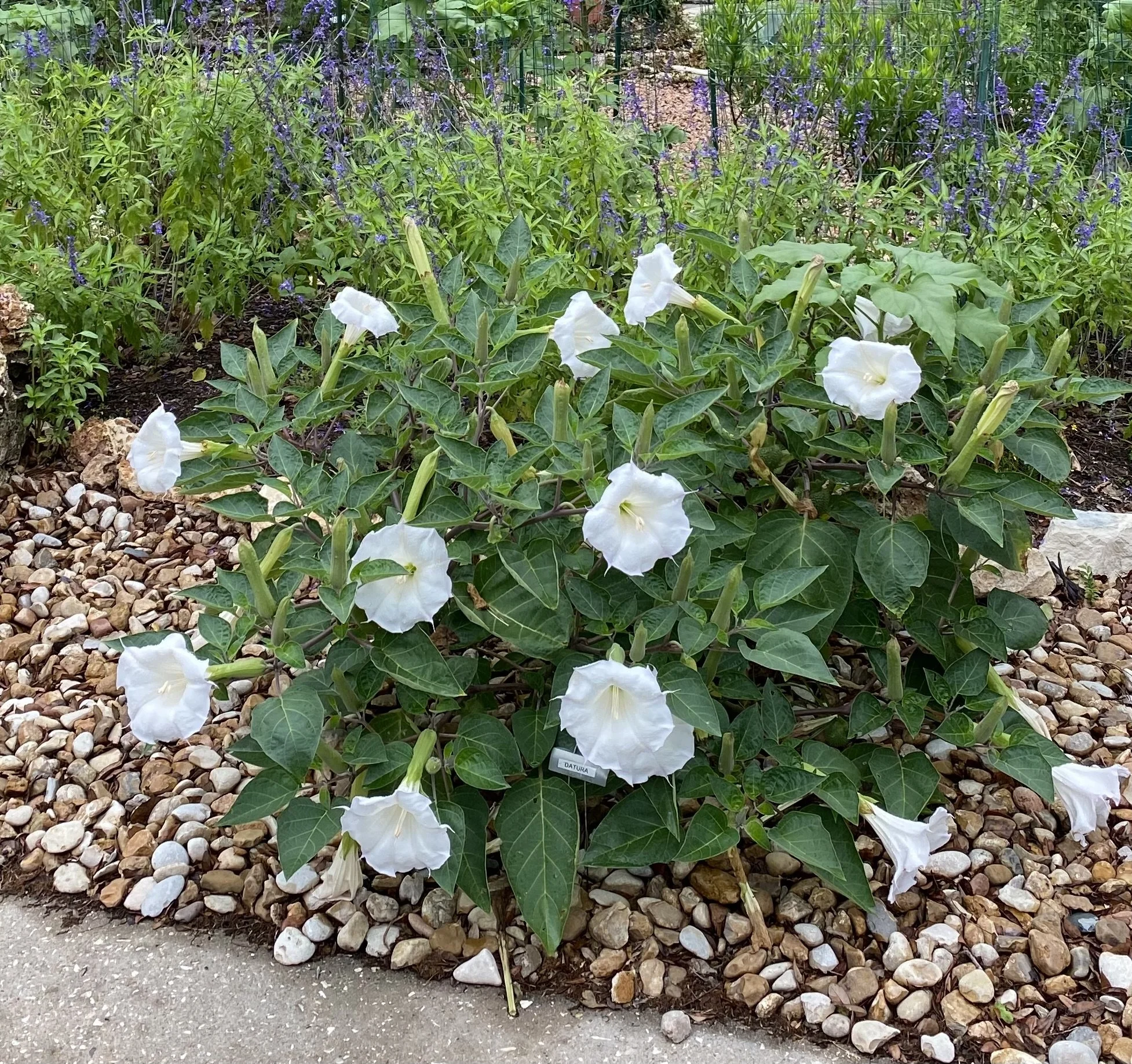
TEXAS Datura Datura wrightii is one of Texas’ most striking native wildflowers, producing large, fragrant, trumpet-shaped white flowers that open in the evening and attract sphinx moths and other nighttime pollinators. Its bold gray-green foliage and spectacular blooms make it a dramatic addition to naturalistic landscapes, moon gardens, and wildlife-friendly plantings. Once established, it is highly drought tolerant and thrives in the hot, sunny conditions of Central Texas. Caution: All parts of the plant are highly toxic if ingested by people, pets, or livestock.
Texas Prickly Pear
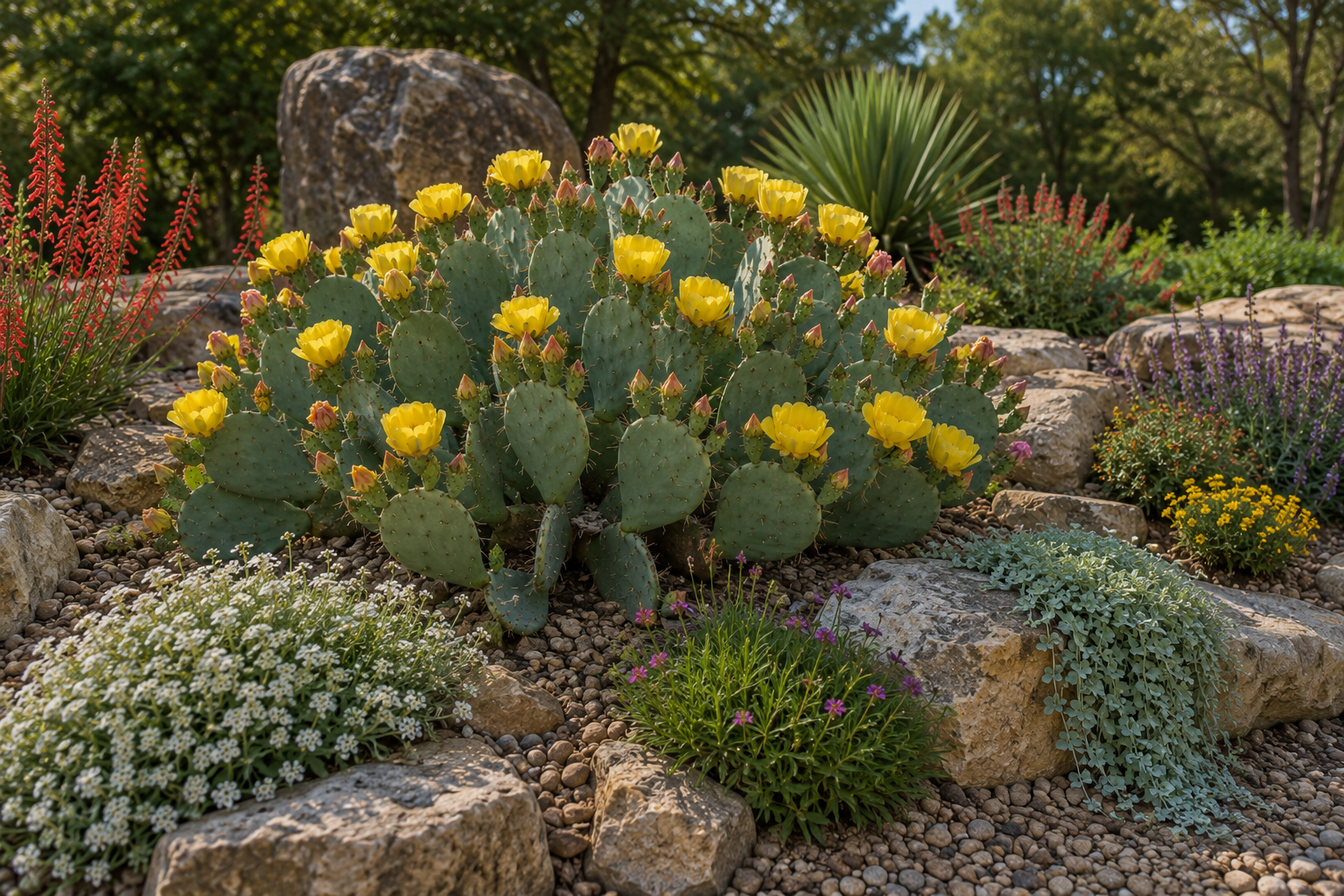
Texas Prickly Pear
Opuntia engelmannii
Texas Prickly Pear is an iconic native cactus that adds bold texture, year-round interest, and outstanding drought tolerance to Central Texas landscapes. Its broad blue-green pads are topped in spring with large, cheerful yellow flowers that often develop orange centers as they mature, followed by colorful reddish-purple fruits that provide food for birds and other wildlife. Thriving in full sun and well-drained soils, Texas Prickly Pear is an excellent choice for rock gardens, xeriscapes, wildlife gardens, and natural landscapes where its striking form creates a dramatic focal point.
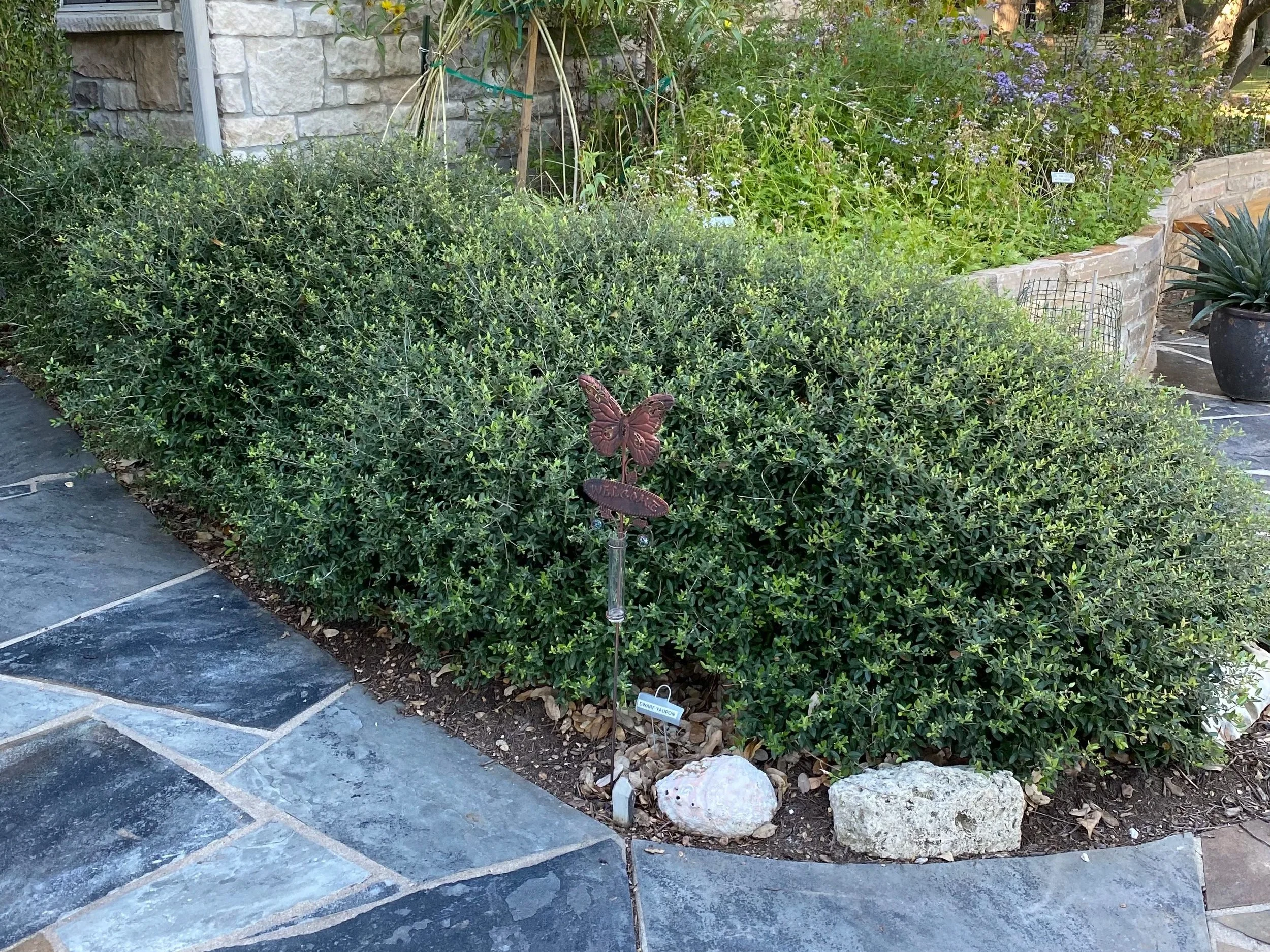
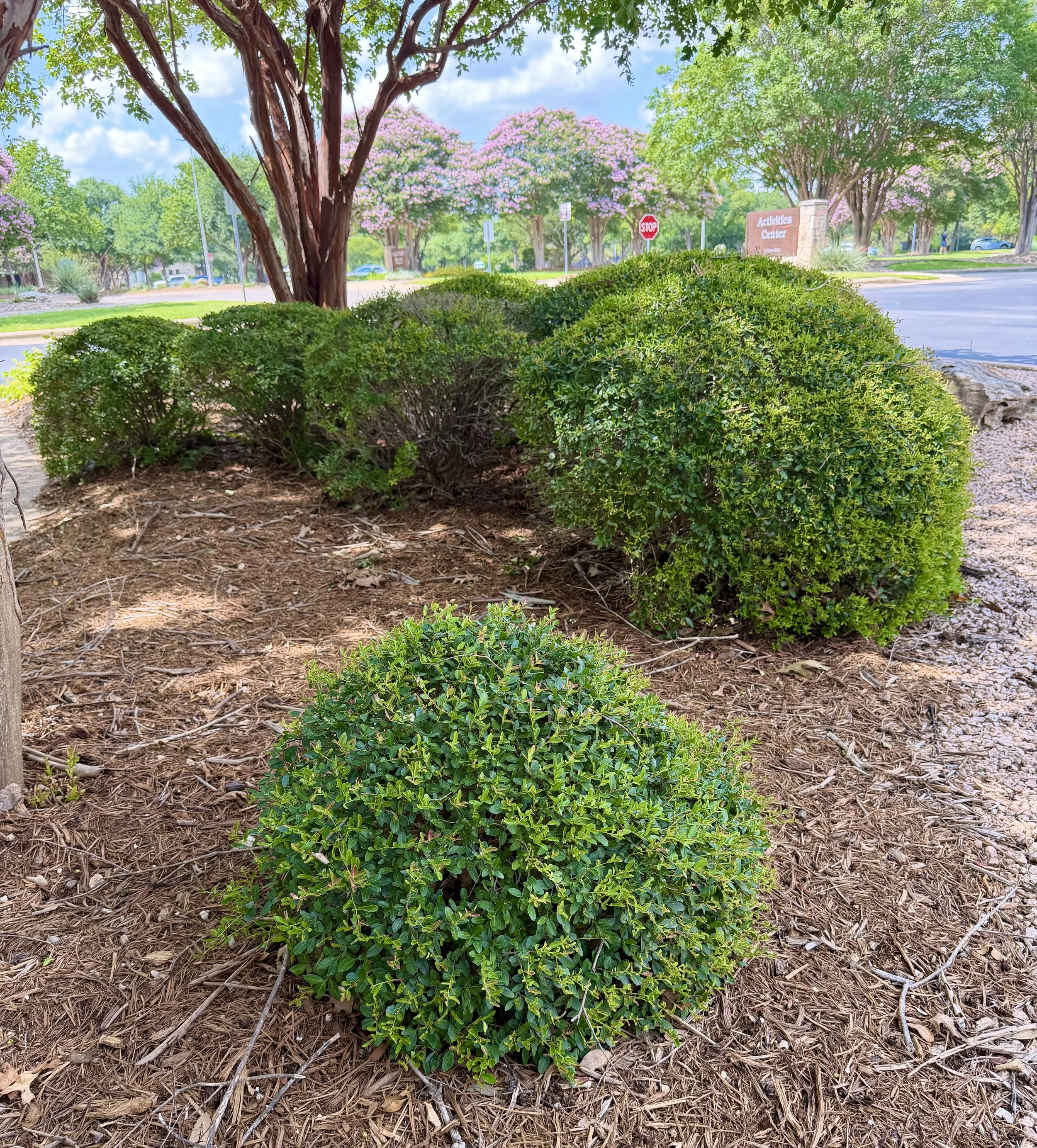
Dwarf Yaupon Holly
Dwarf Yaupon Holly is a compact evergreen Texas native shrub that forms a dense, rounded mound of attractive small green leaves with very little pruning. It thrives in full sun to part shade, tolerates drought once established, and performs well in a wide variety of soils, including the limestone soils common in Central Texas. Its neat appearance makes it an excellent choice for foundation plantings, borders, low hedges, mass plantings, and formal or natural landscapes. While this dwarf cultivar rarely produces berries, it provides excellent evergreen texture and year-round structure in the garden.
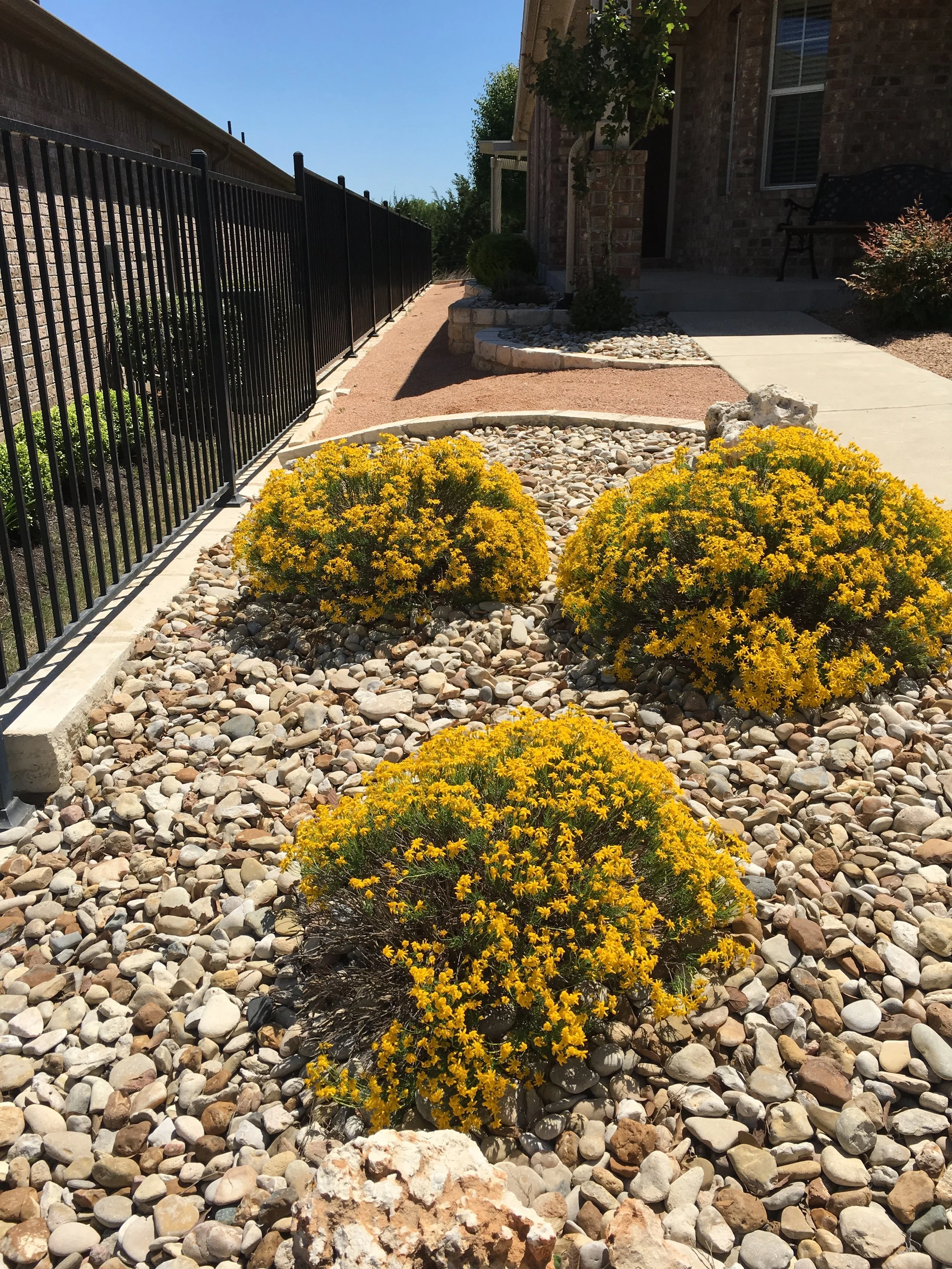
Damianita
Damianita ( Chrysactinia mexicana) is one of the brightest little native shrubs for Central Texas landscapes. This compact evergreen forms a tidy mound covered with cheerful golden-yellow daisy-like flowers from spring through fall, often blooming after rains. Its fine, aromatic foliage stays attractive year-round, and once established it thrives in hot, dry conditions with very little maintenance. Damianita is an excellent choice for rock gardens, borders, pathways, and pollinator gardens where its long bloom season provides nectar for native bees and butterflies. It performs best in full sun and well-drained limestone soils and is highly deer resistant.
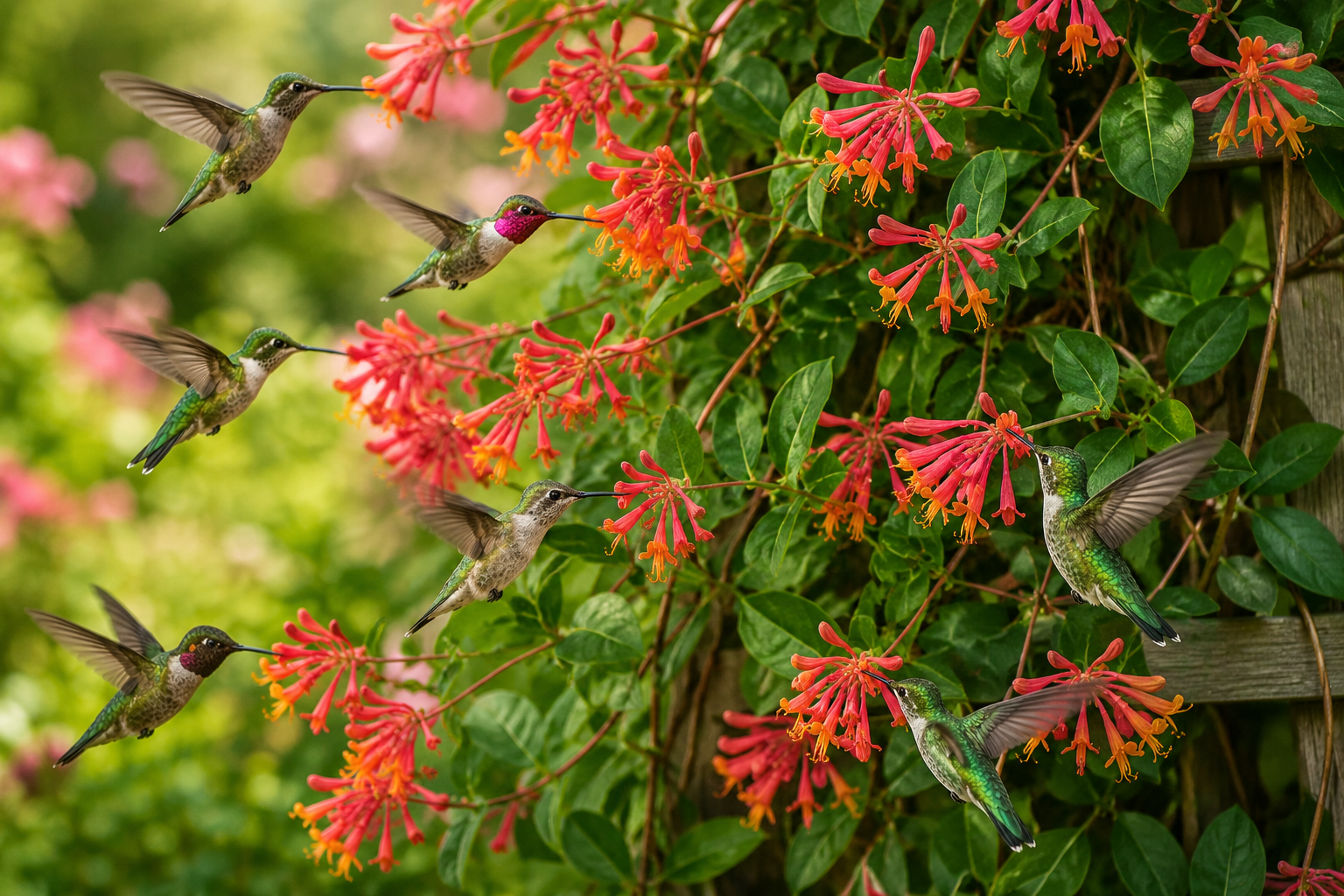
Coral Honeysuckle
Coral Honeysuckle (Lonicera sempervirens) is one of the finest native vines for Central Texas, producing clusters of brilliant red tubular flowers from spring through fall that are irresistible to hummingbirds, butterflies, and other pollinators. This vigorous but well-behaved vine thrives in full sun to part shade, tolerates drought once established, and is perfect for covering fences, arbors, pergolas, and trellises while adding beauty and wildlife value to the landscape.