
Sangria Esperanza
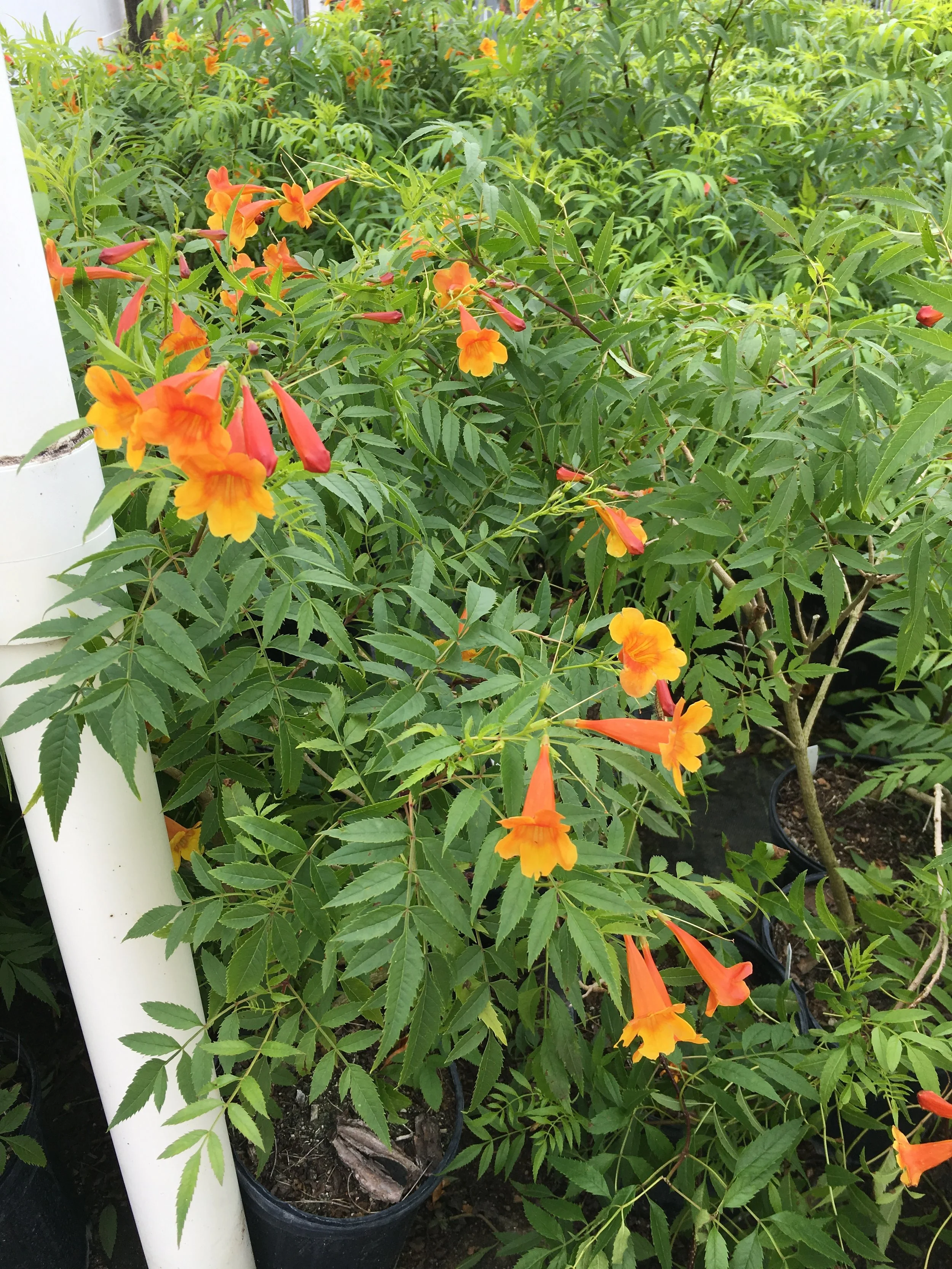
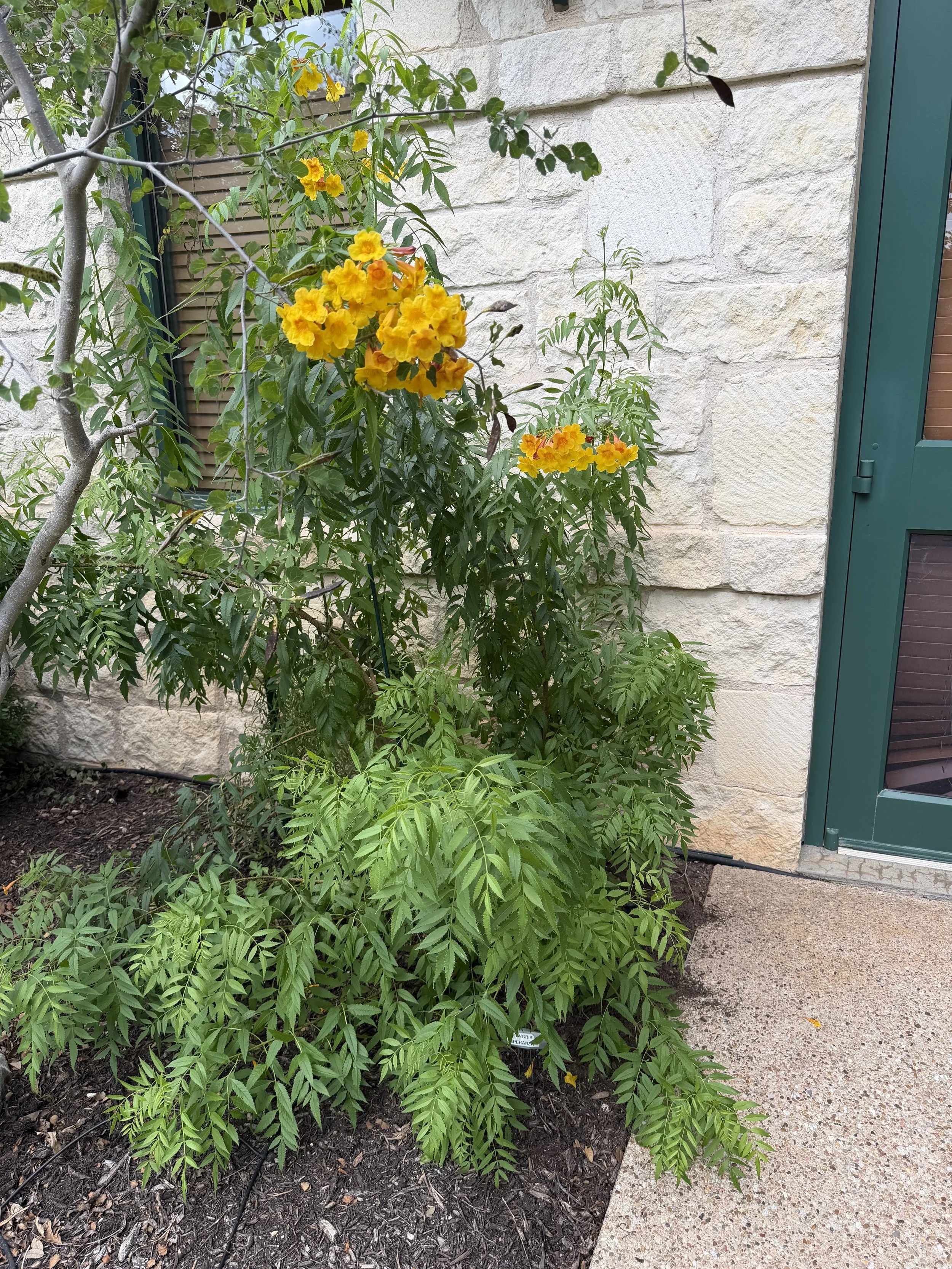
Sangria Esperanza Tecoma ‘Sangria’ is a compact selection of Yellow Bells prized for its rich reddish-orange buds that open to deep reddish- golden-yellow trumpet-shaped flowers from late spring until frost. It thrives in full sun and handles Central Texas heat, drought, and alkaline soils with ease once established. Its colorful blooms are a favorite of hummingbirds, butterflies, and native bees, providing months of nectar when many other plants slow down during summer. More compact and densely branched than standard Yellow Bells, Sangria Esperanza fits well in smaller landscapes while delivering continuous color with minimal maintenance. It may freeze back after hard winters but reliably returns from the roots each spring.
Pride of Barbados
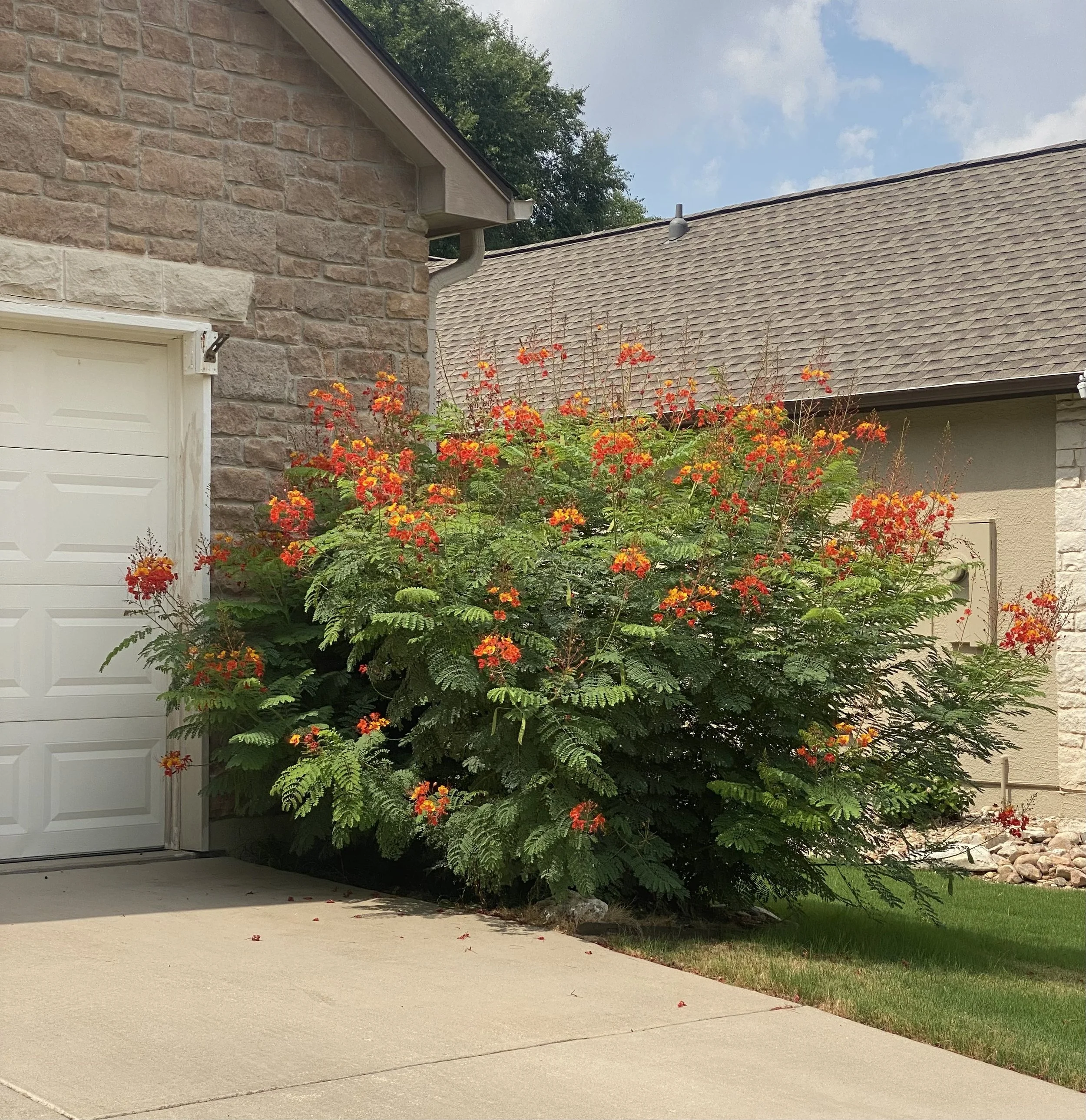
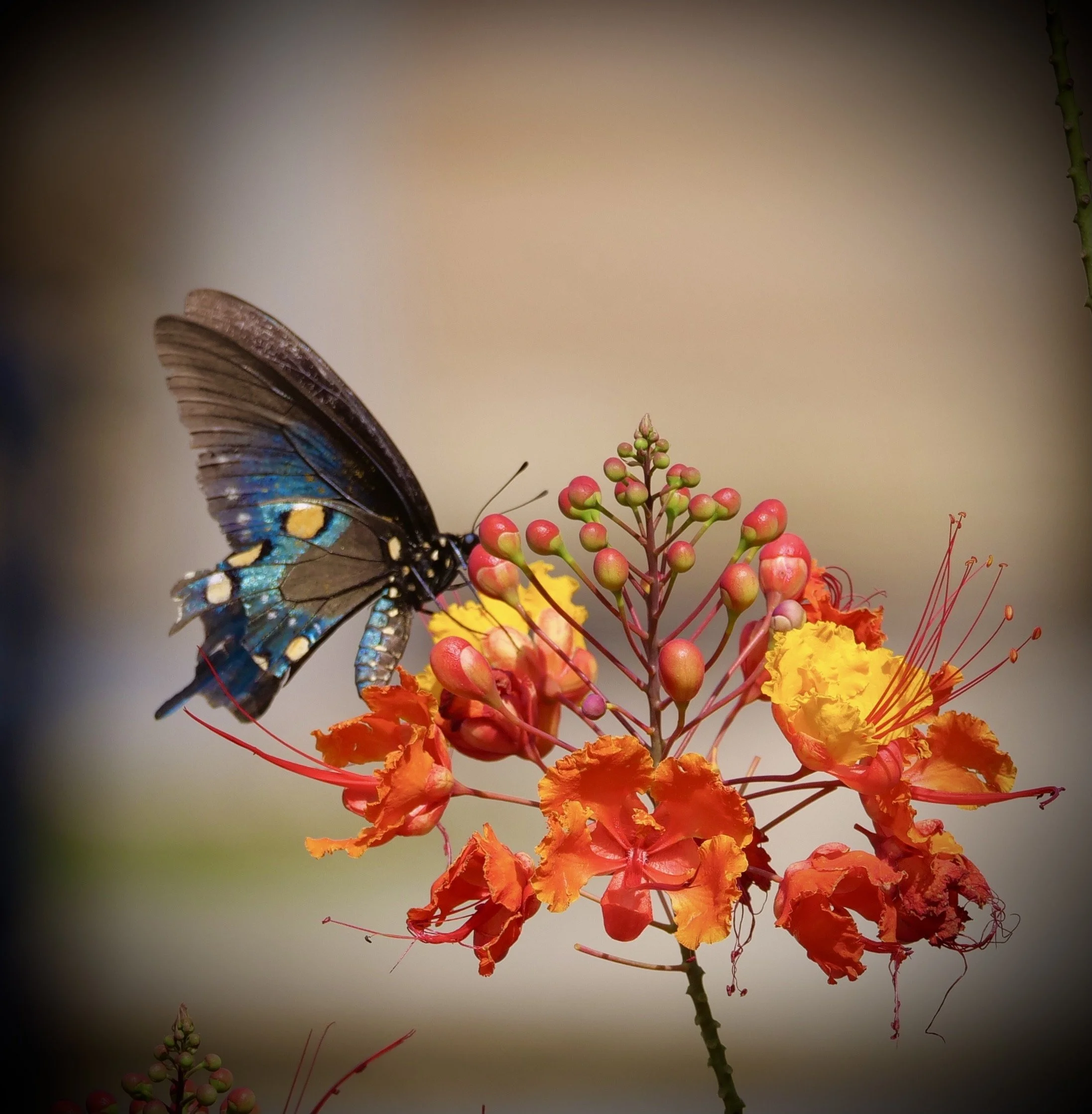
Pride of Barbados Caesalpinia pulcherrima is a spectacular tropical shrub known for its brilliant orange, red, and yellow flowers that bloom from late spring until frost. It thrives in full sun and tolerates heat, drought, and alkaline soils once established. Although it freezes to the ground during most Central Texas winters, it quickly returns in spring and often reaches 5–8 feet tall in a single growing season. It is highly attractive to butterflies, bees, and hummingbirds, providing abundant nectar during the hottest months when many other plants have stopped blooming. While I generally recommend native plants whenever possible, Pride of Barbados is one of the few non-native species I consistently endorse because it is exceptionally well adapted to our climate, is not considered invasive, requires very little supplemental water once established, and offers outstanding value to pollinators and hummingbirds. For gardeners seeking dramatic summer color with relatively little maintenance, it is an excellent choice.
Orange Zexmenia
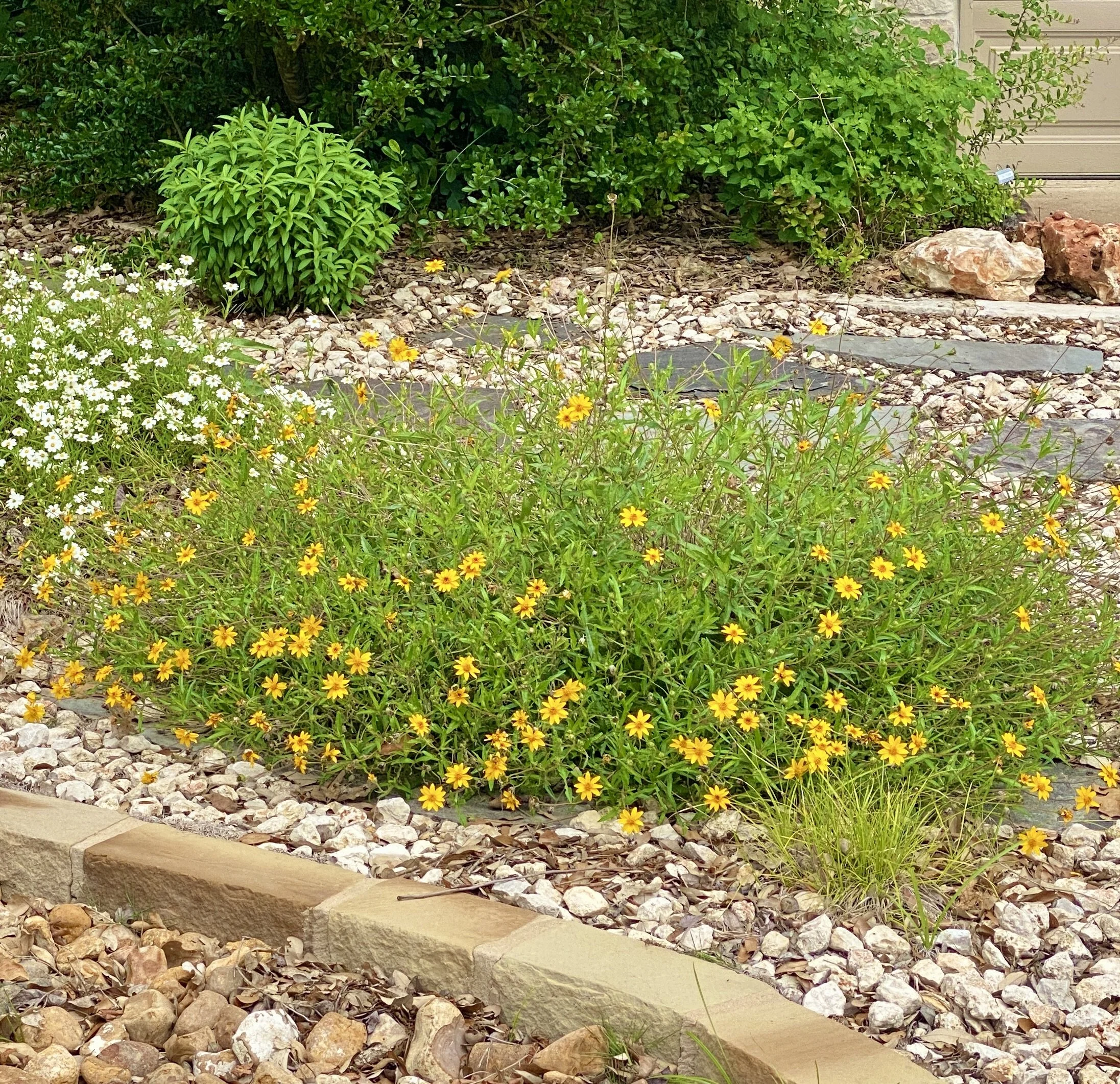
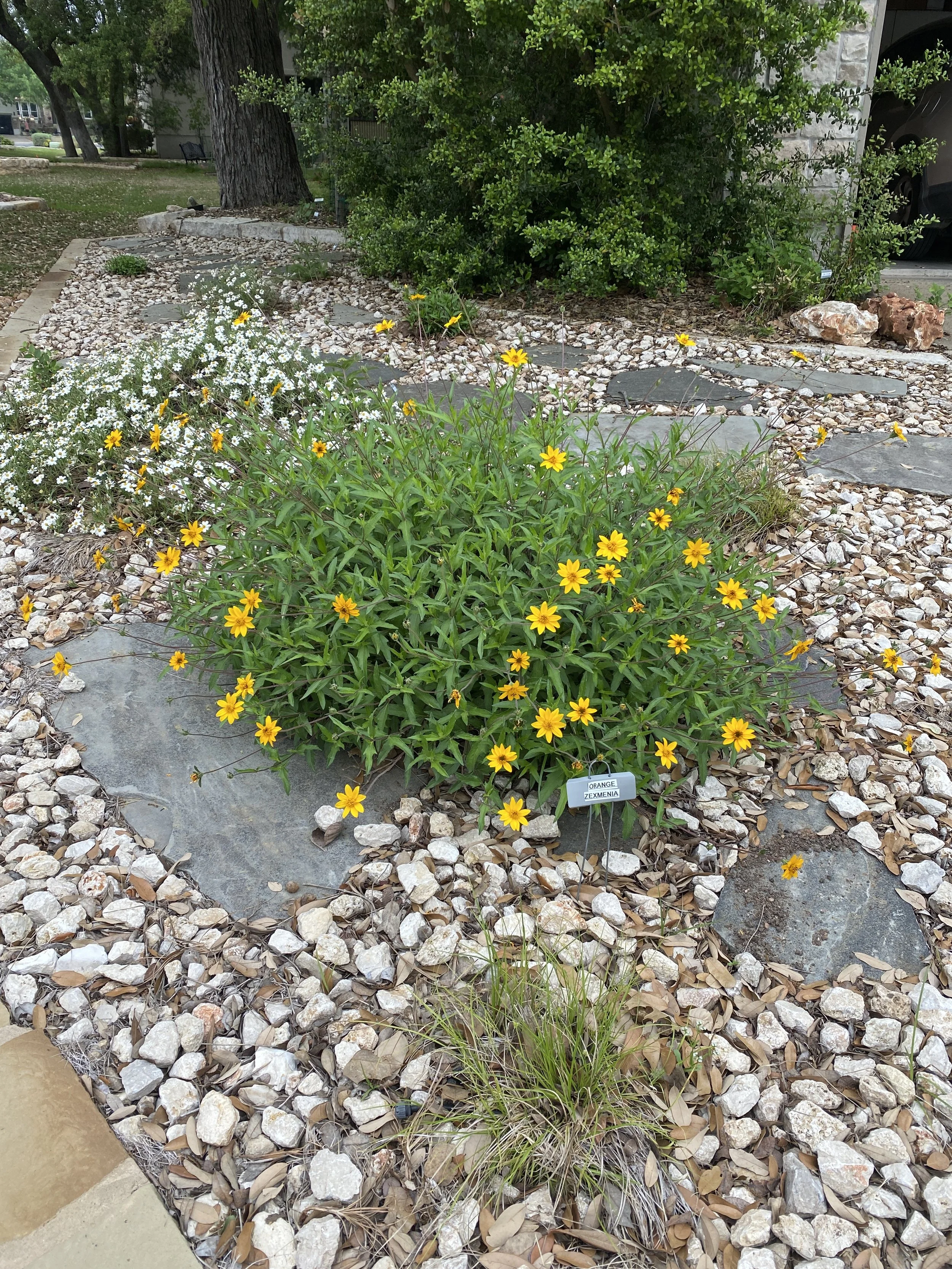
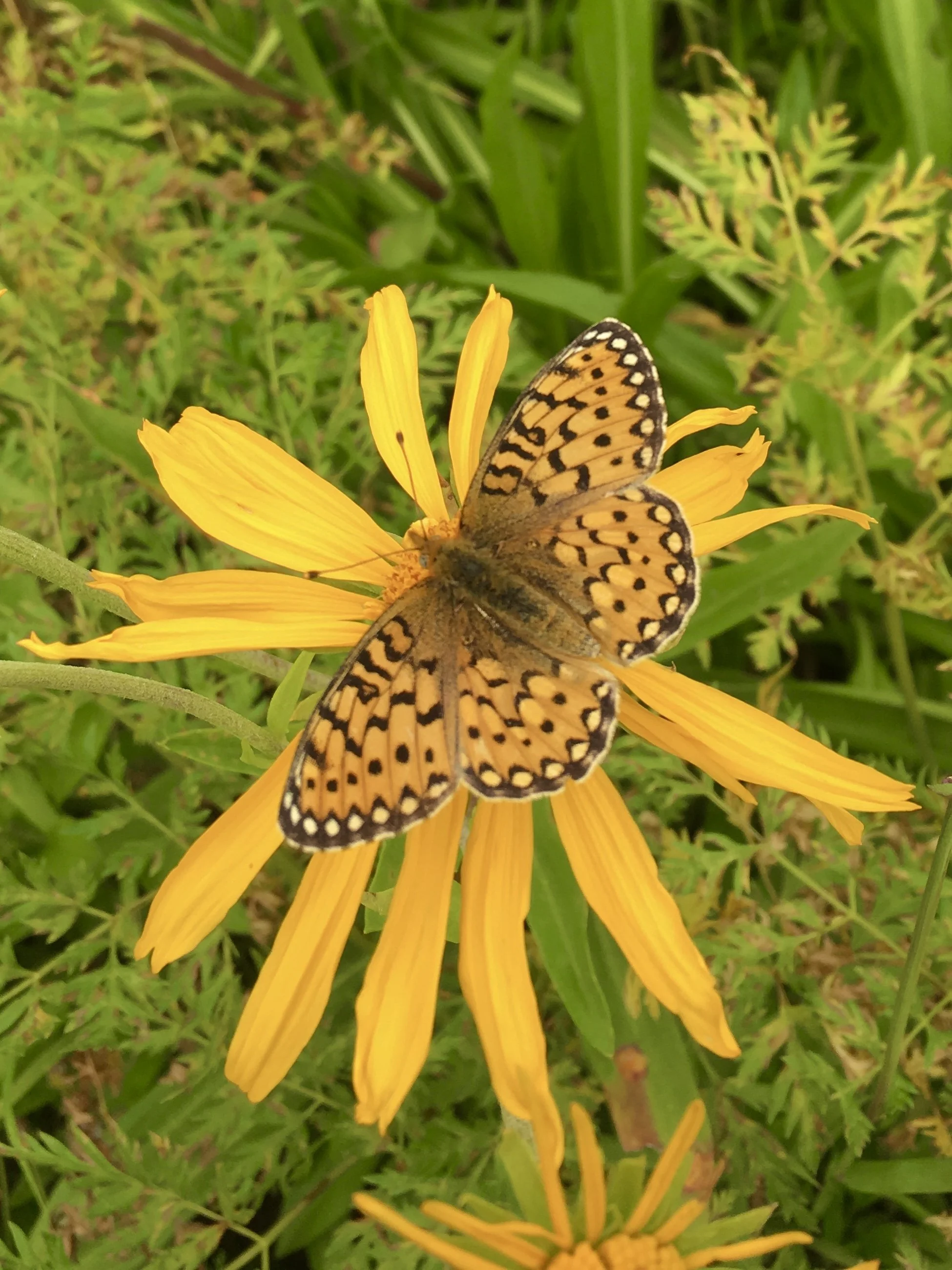
Orange Zexmenia (Wedelia acapulcensis var. hispida) is a tough, long-blooming Texas native perennial that lights up the garden with cheerful golden-orange, daisy-like flowers from spring through fall. Adapted to the heat, drought, and limestone soils of Central Texas, it thrives in full sun and asks for very little care once established. Its bright blooms attract a wide variety of native bees, butterflies, and other pollinators, while its spreading habit makes it an excellent choice for naturalized plantings, meadows, slopes, and informal borders. Orange Zexmenia combines exceptional resilience with months of color, making it one of the most dependable native wildflowers for water-wise landscapes.
Possumhaw Holly
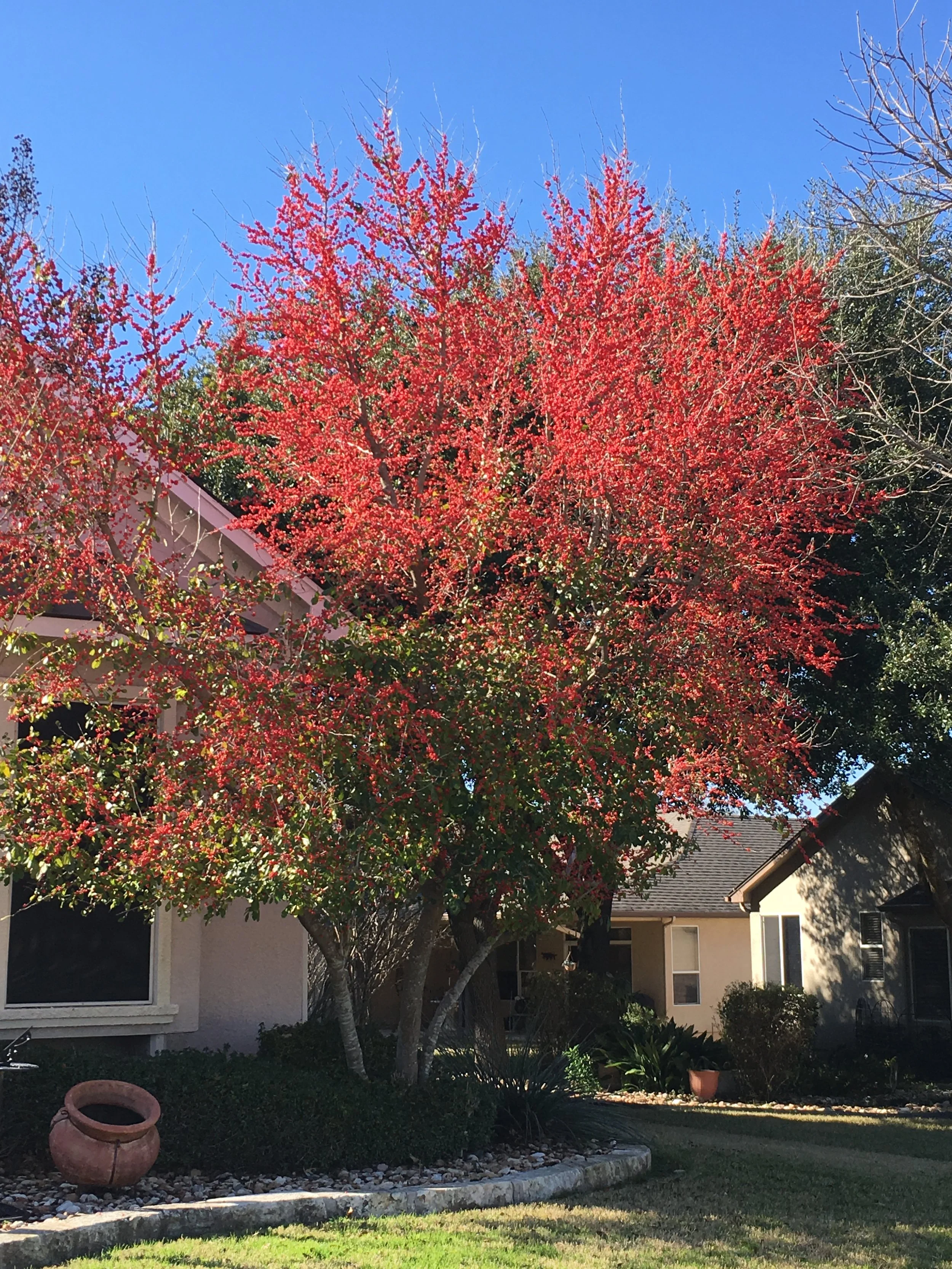
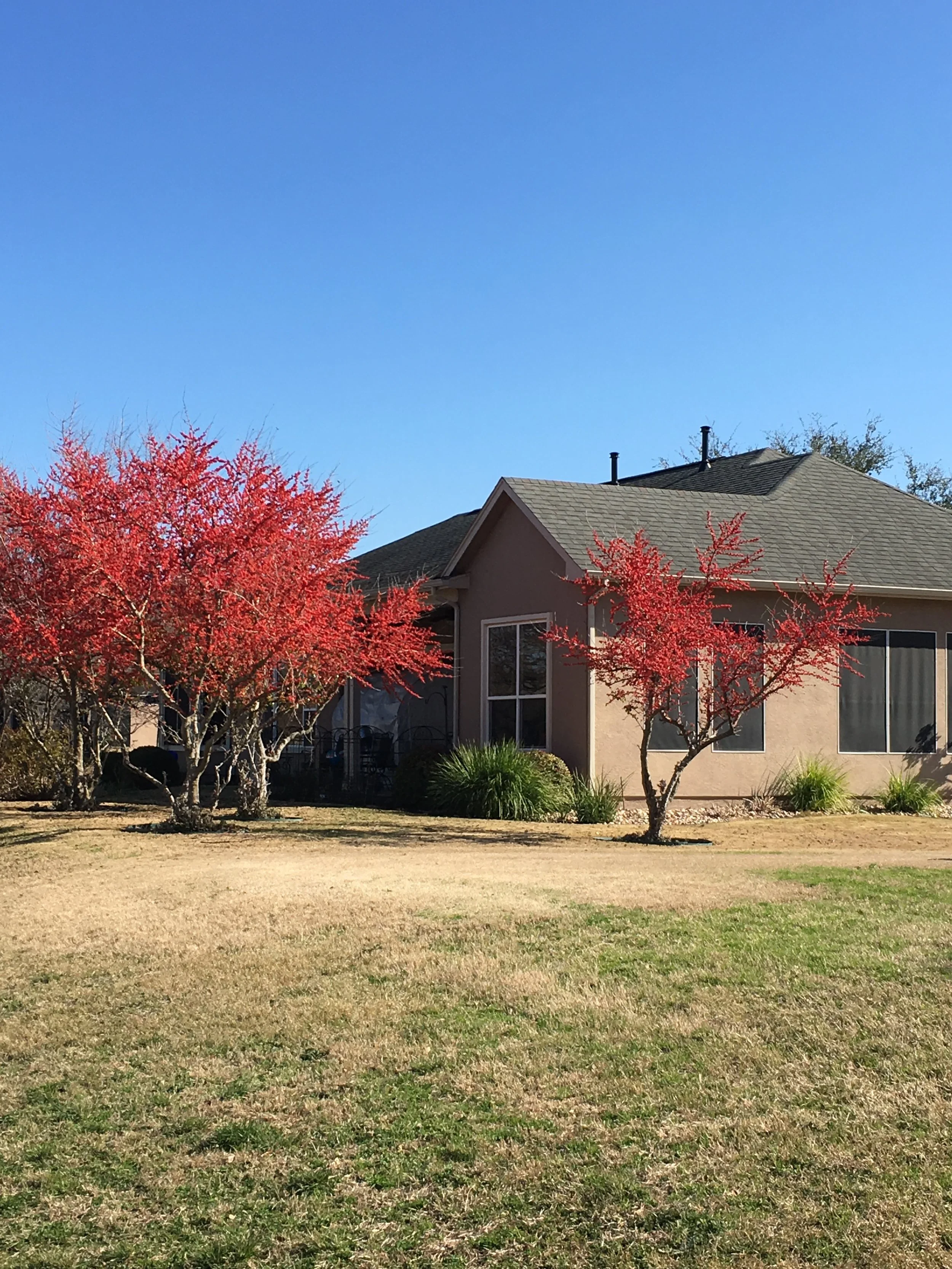
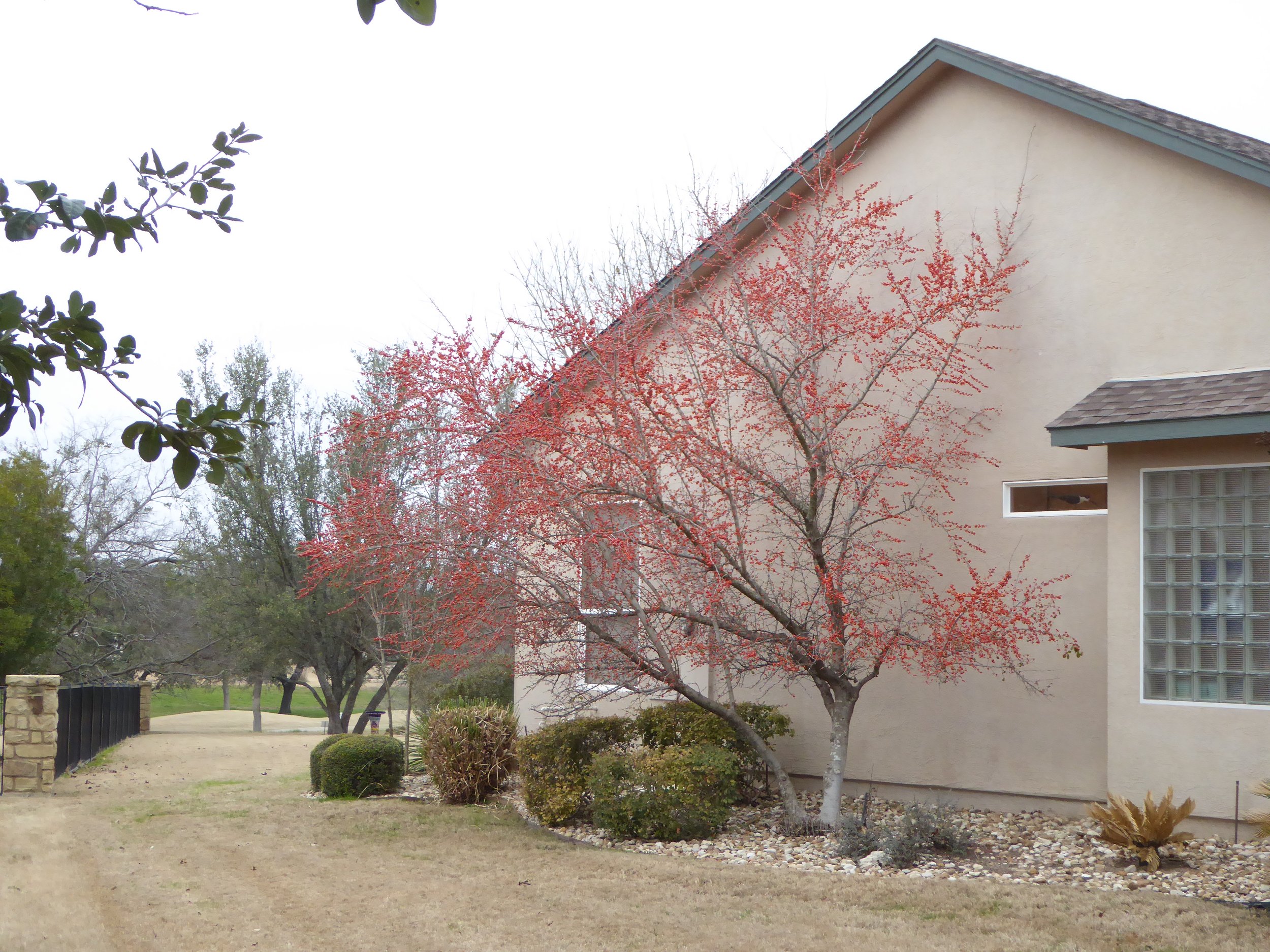
Possumhaw Holly (Ilex decidua) is a hardy Texas native shrub or small tree valued for its brilliant display of red berries in fall and winter. After the leaves drop, the colorful berries remain on the bare branches, providing striking winter interest and an important food source for cedar waxwings, robins, mockingbirds, and many other birds.
Possumhaw grows in sun or part shade and tolerates a wide range of soil conditions, including periodic flooding. Female plants produce the berries, so a male plant must be nearby for pollination. Its wildlife value, seasonal beauty, and adaptability make it an excellent choice for naturalized landscapes and bird-friendly gardens.
Texas Lantana
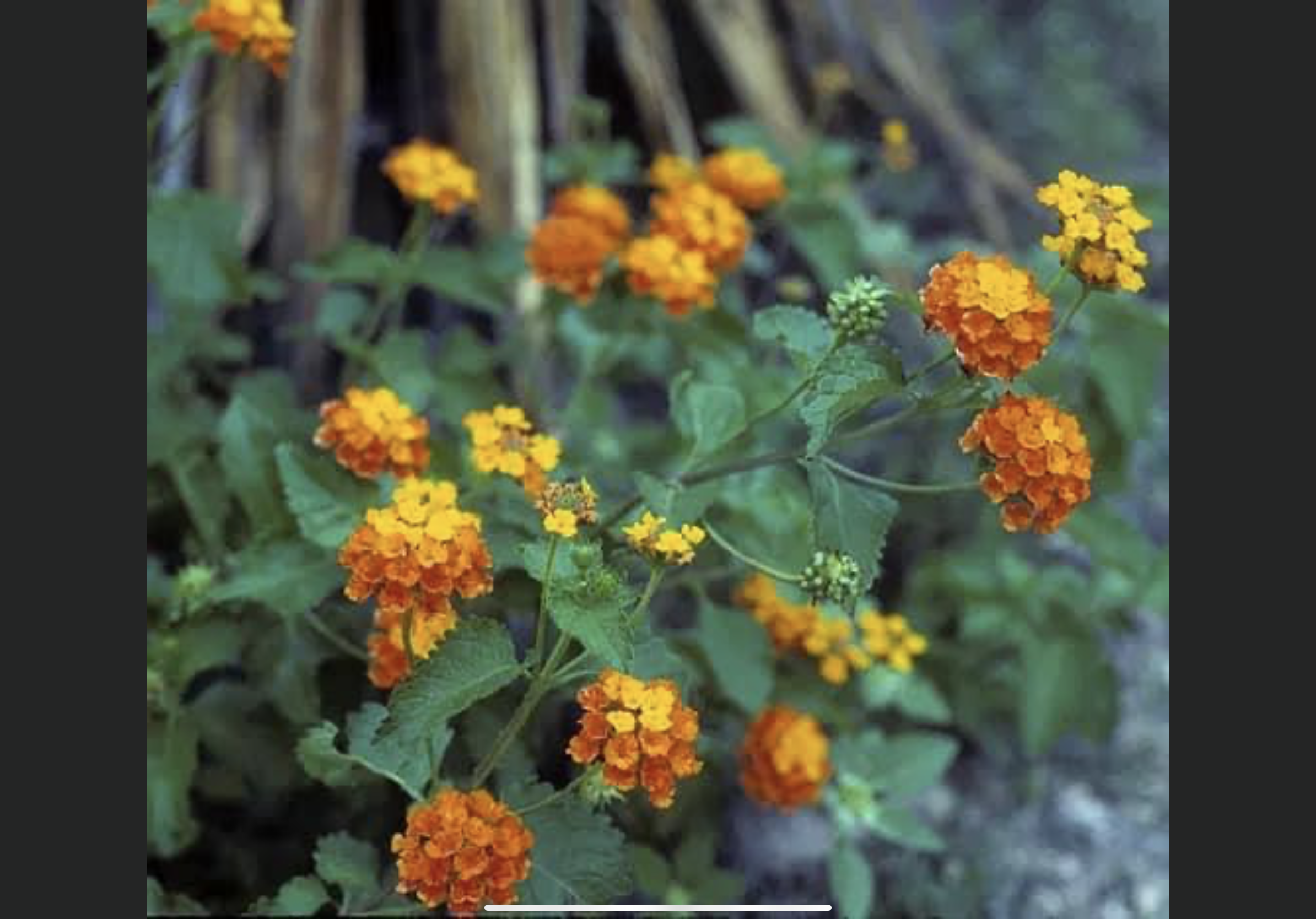
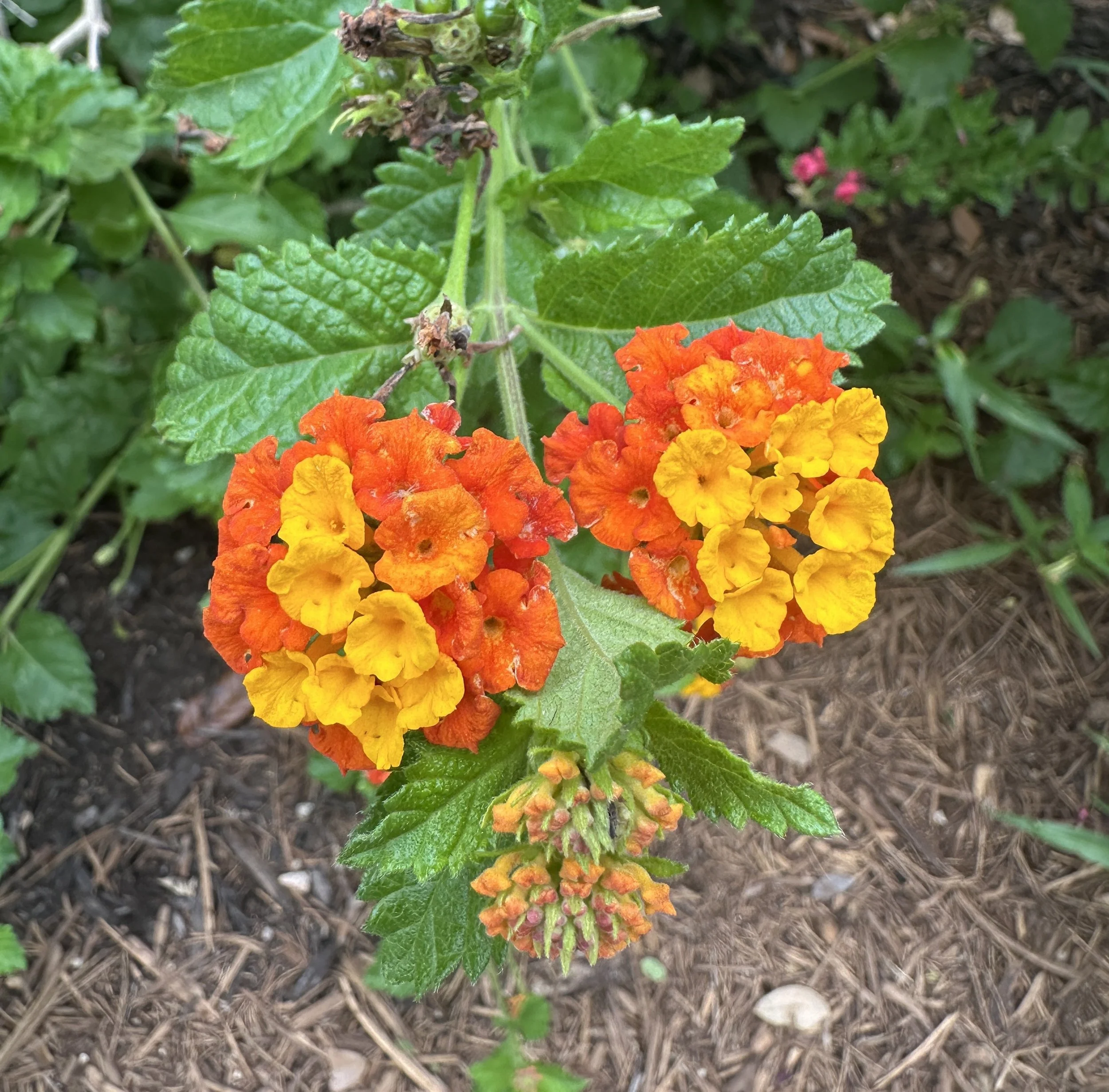
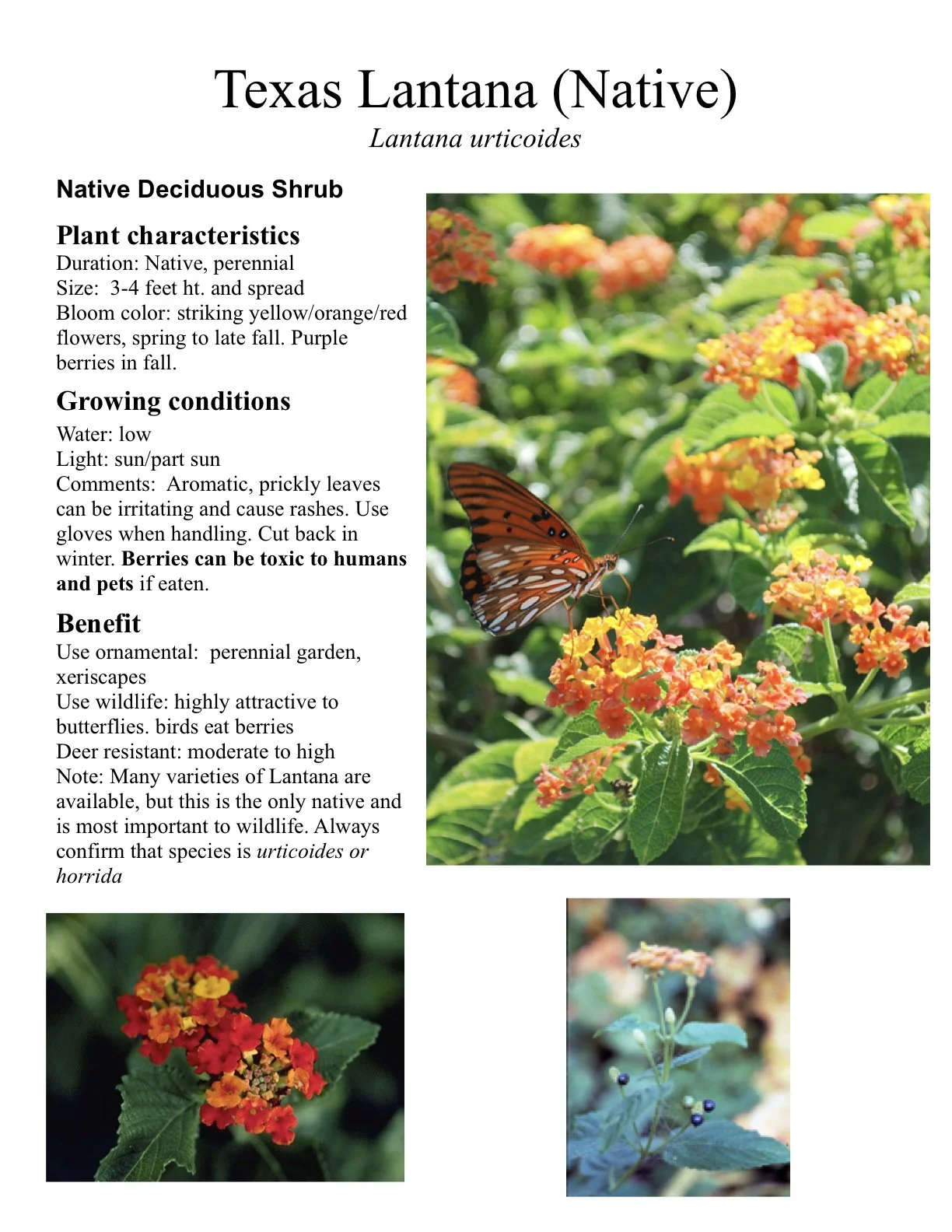
Texas Lantana (Lantana urticoides) is one of the toughest and most colorful native perennials for Central Texas landscapes. Its clusters of bright orange and yellow flowers bloom from spring until frost, attracting butterflies, bees, and other pollinators throughout the growing season. Texas Lantana thrives in full sun, tolerates heat, drought, and poor soils, and is highly resistant to deer, making it an excellent choice for low-maintenance, wildlife-friendly gardens.
Gardeners should take care not to confuse Texas Lantana with the many non-native lantana hybrids commonly sold in nurseries. While some cultivated lantanas are excellent landscape plants, others can be invasive, short-lived, or less beneficial to wildlife. For the greatest ecological value and reliability, I generally recommend the native Texas species whenever possible.