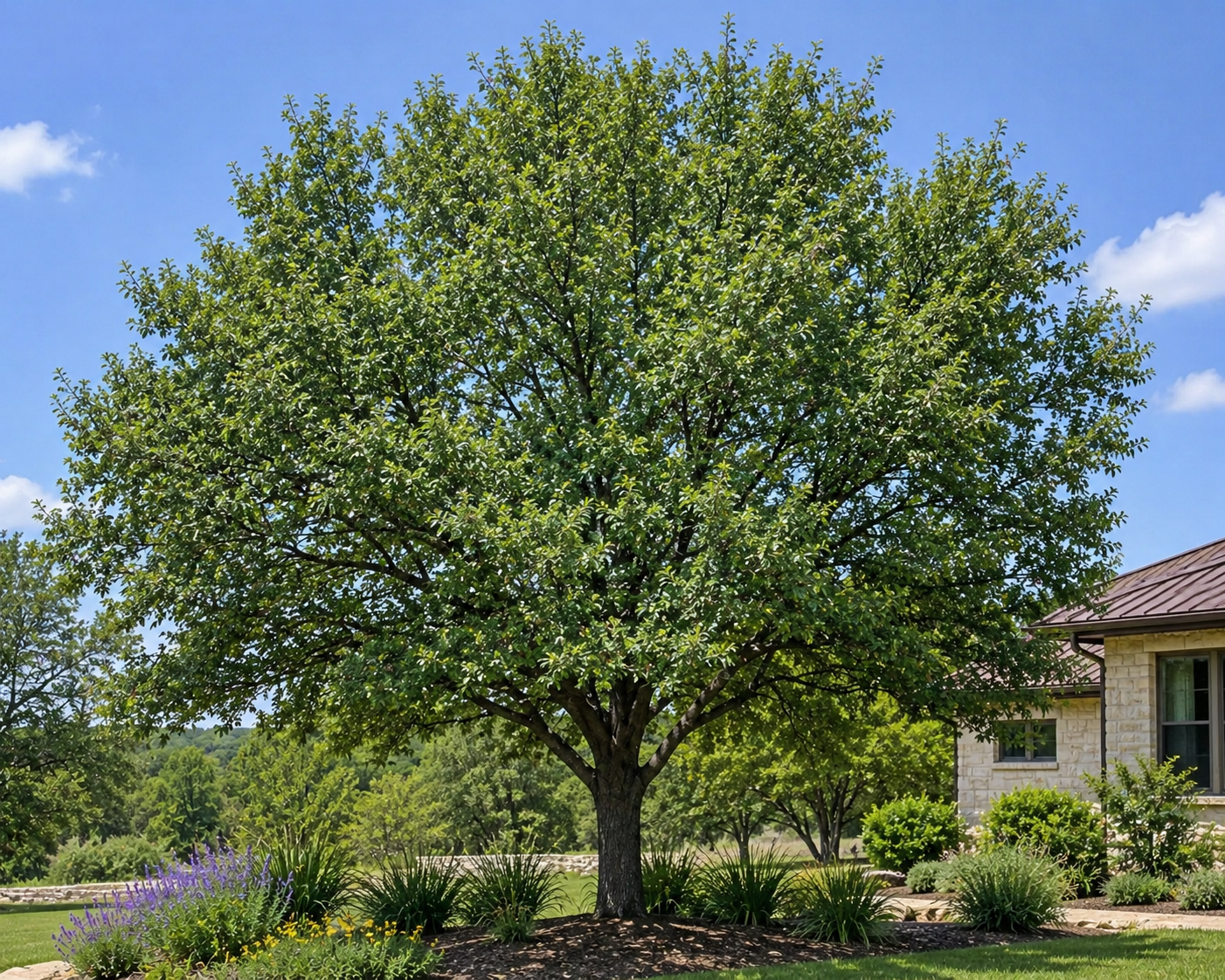

Chinquapin Oak
Chinkapin Oak (Quercus muehlenbergii)
Chinkapin Oak is one of the finest native shade trees for Central Texas, admired for its handsome form, dependable growth, and outstanding adaptability. Its glossy dark green leaves create a broad, dense canopy that provides abundant summer shade before turning beautiful shades of golden yellow and bronze in autumn. Native to limestone hills and river valleys, Chinkapin Oak thrives in the alkaline soils common throughout Georgetown and the Hill Country while tolerating heat and periods of drought once established. Its sweet acorns are an important food source for birds and wildlife, and its long lifespan makes it an exceptional investment for future generations. Strong, beautiful, and relatively fast growing, Chinkapin Oak is an excellent choice for homeowners seeking a durable native shade tree.
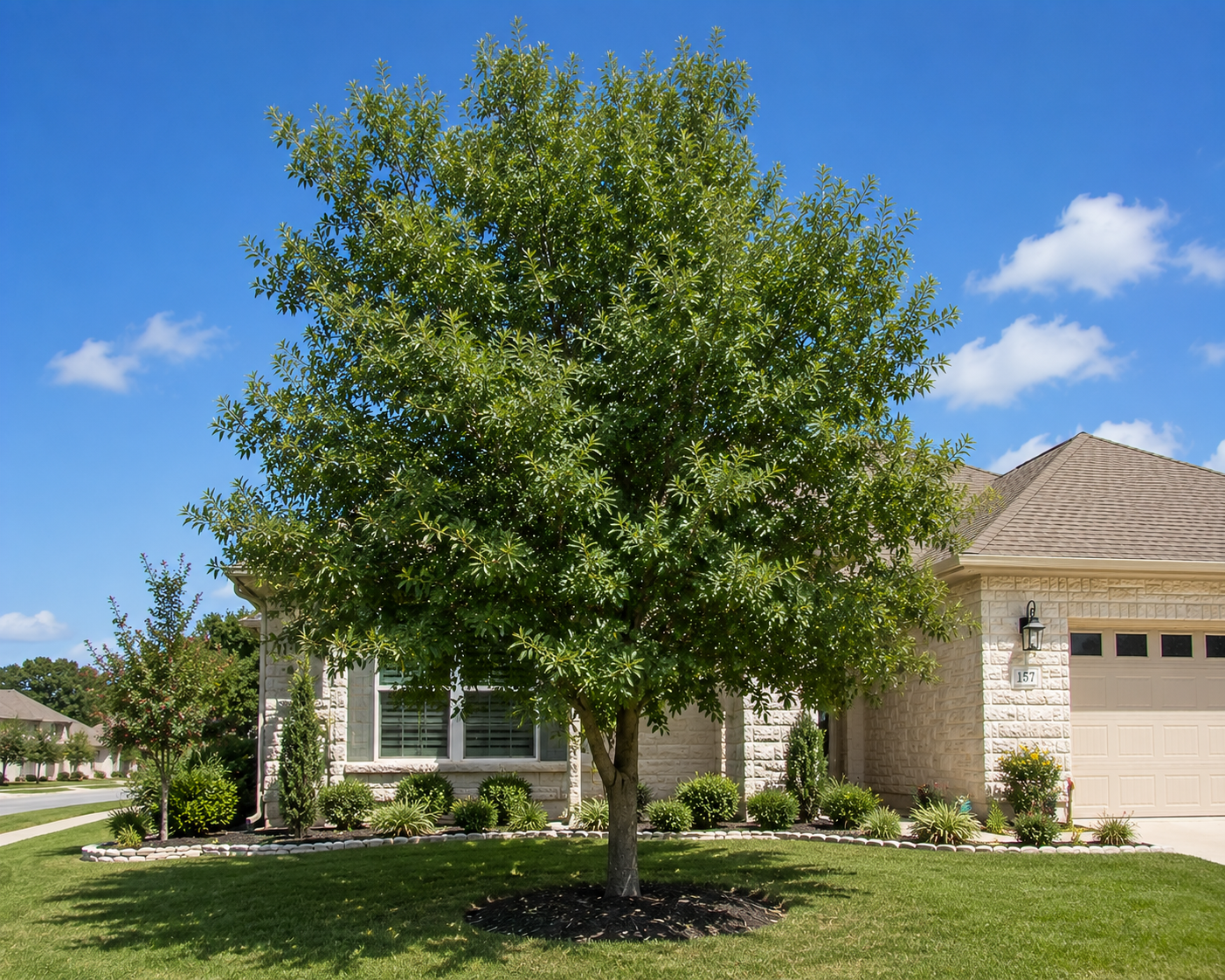
Escarpment Live Oak
Escarpment Live Oak (Quercus fusiformis)
Escarpment Live Oak is one of the most dependable and iconic native shade trees of Central Texas. Evergreen and exceptionally long-lived, it provides dense, cooling shade throughout the year while thriving in the rocky limestone soils and hot, dry climate of the Edwards Plateau. Its broad, graceful canopy creates an inviting landscape feature, and its acorns provide an important food source for birds, deer, squirrels, and other wildlife. Highly tolerant of drought, heat, wind, and urban conditions, Escarpment Live Oak requires little maintenance once established. Its beauty, resilience, and year-round foliage make it one of the finest long-term shade trees for Georgetown and the surrounding Hill Country.
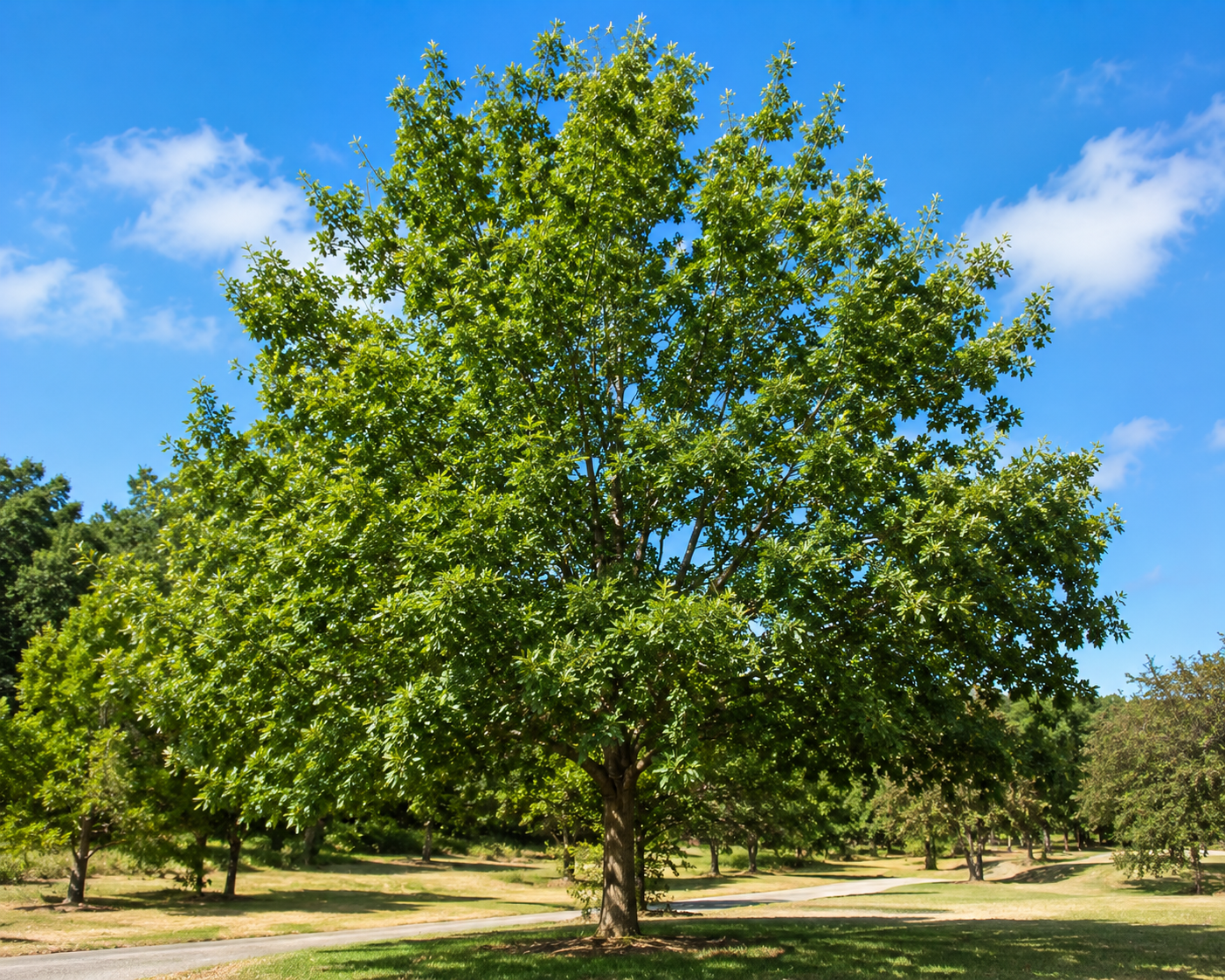
Texas Red Oak
Texas Red Oak (Quercus buckleyi)
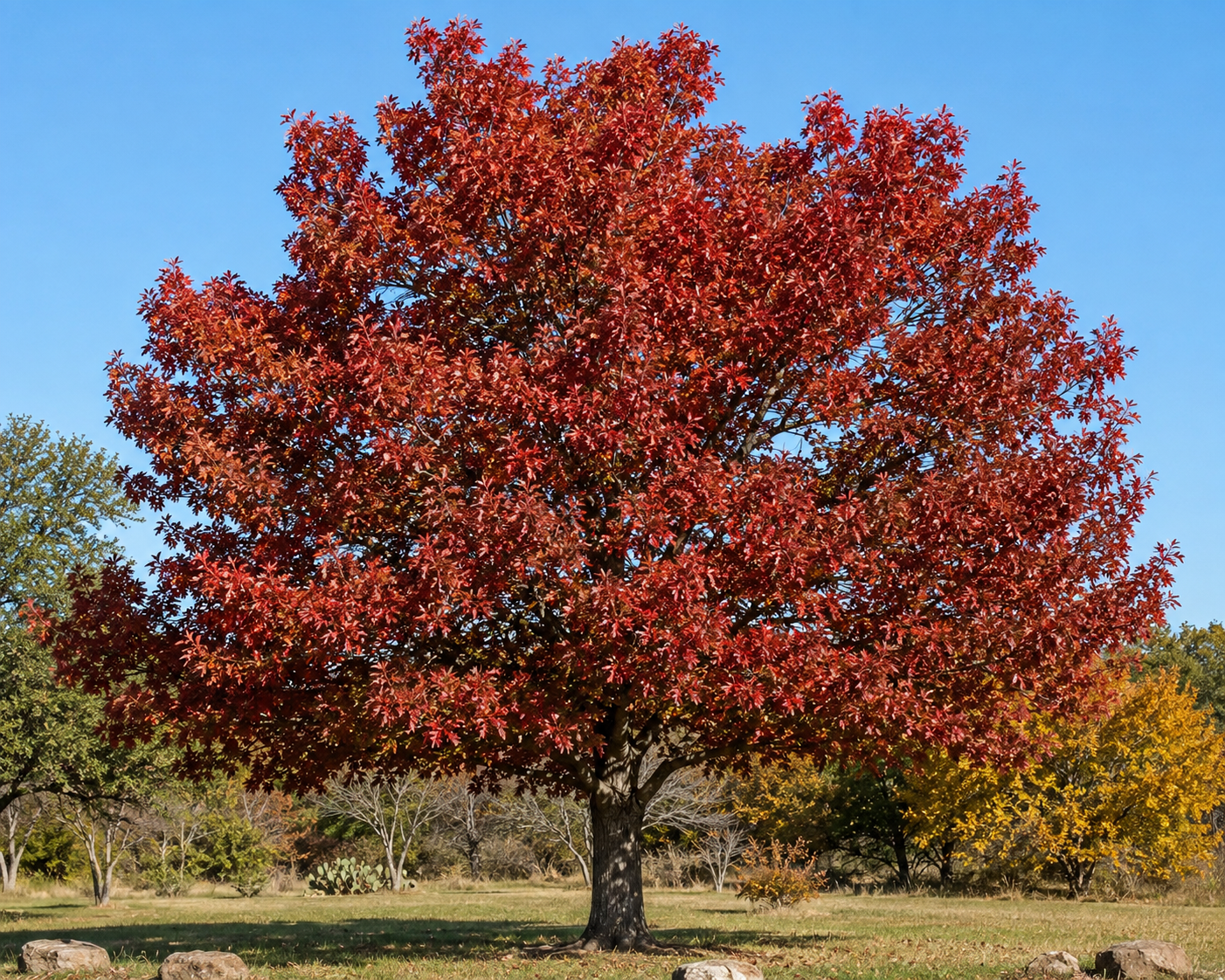
Texas Red Oak is one of the most beautiful native shade trees for Central Texas, prized for its spectacular fall color and excellent adaptation to the rocky limestone soils of the Hill Country. Its glossy green leaves transform into brilliant shades of red, orange, and burgundy each autumn, creating one of the region’s finest seasonal displays. Moderate in growth and exceptionally long-lived, Texas Red Oak develops into a handsome shade tree that supports birds and other wildlife with its acorns while thriving in heat and periodic drought. Its beauty, durability, and outstanding fall color make it an exceptional choice for residential landscapes.
Cedar Elm
Cedar Elm (Ulmus crassifolia)
Cedar Elm is one of the finest native shade trees for Central Texas, prized for its adaptability, durability, and graceful appearance. Unlike many shade trees, it thrives in the rocky limestone soils of the Hill Country while tolerating drought, heat, wind, and urban conditions. Its small, glossy green leaves create a dense canopy that provides excellent summer shade before turning a beautiful golden yellow in autumn. Tiny flowers appear in late summer, followed by seeds that provide food for birds and other wildlife. Long-lived, low-maintenance, and highly resilient, Cedar Elm is an outstanding choice for homeowners seeking a dependable native shade tree that will add beauty and value for generations.
Lacey Oak
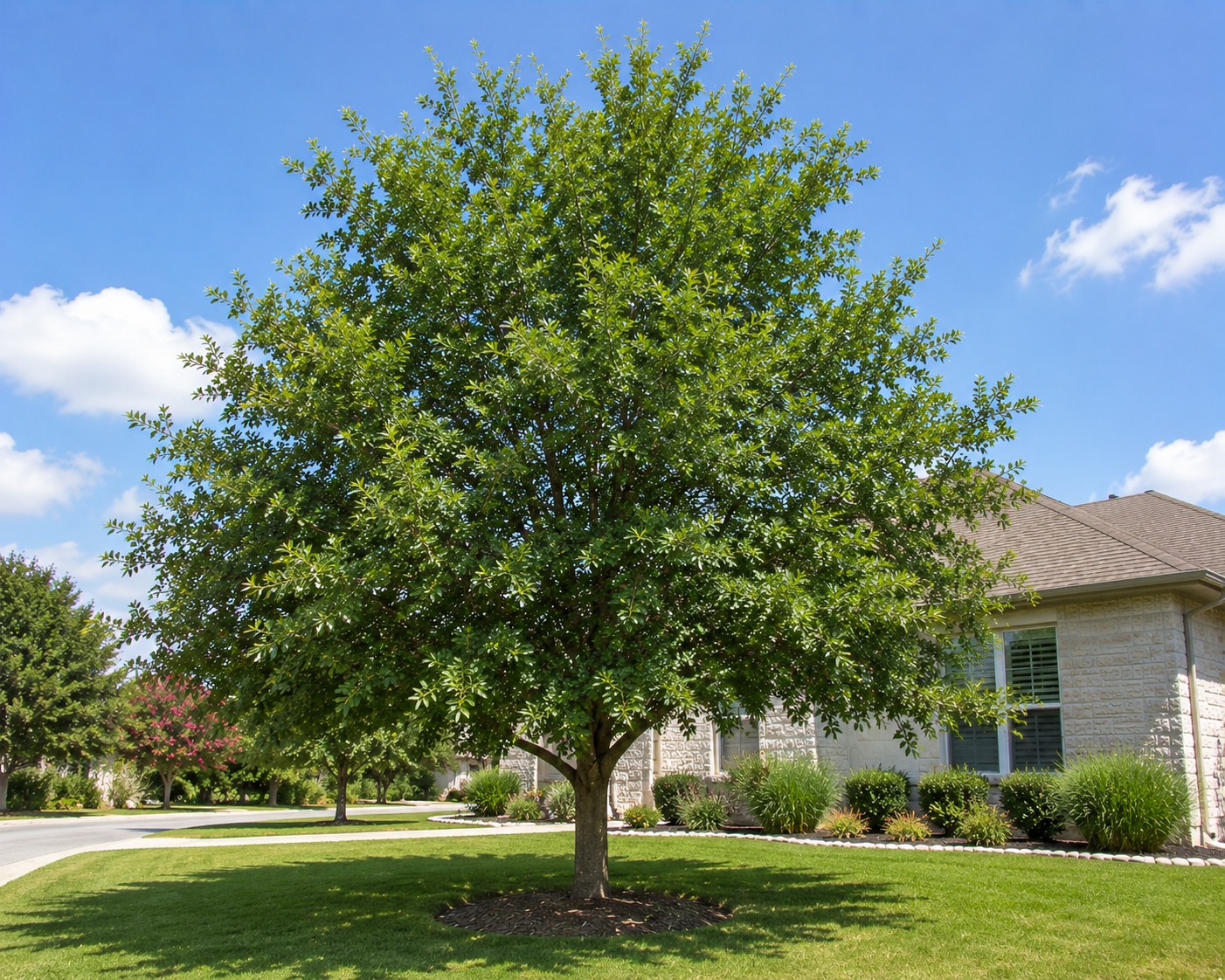
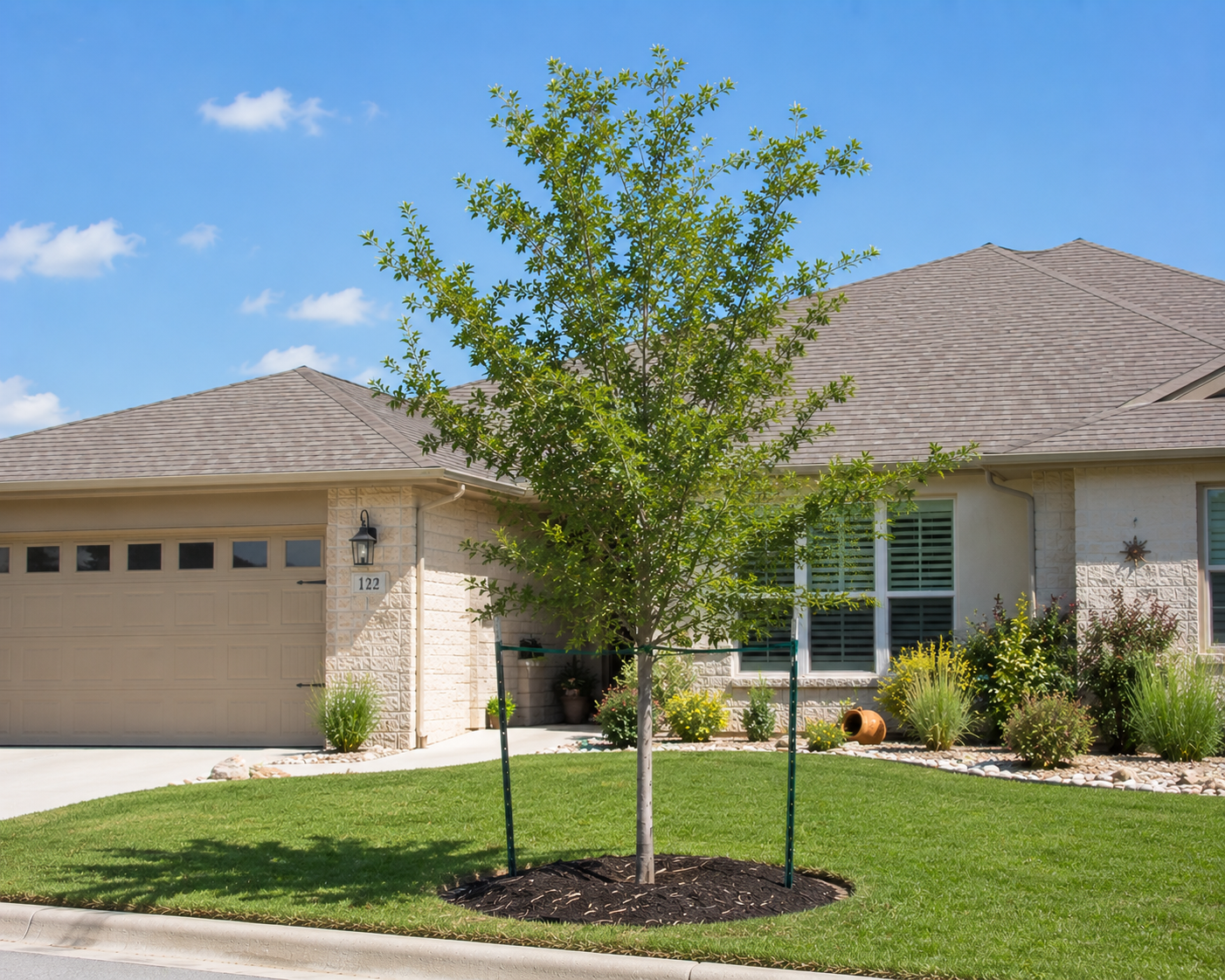
Lacey Oak is one of the finest native shade trees for Central Texas, combining exceptional beauty with outstanding toughness. Its distinctive blue-green leaves emerge with peach-colored new growth in spring, provide cooling summer color, and often turn golden yellow in fall. Slower growing than many shade trees, Lacey Oak develops a broad, graceful canopy that is perfectly sized for most residential landscapes. Native to the Edwards Plateau, it thrives in the rocky limestone soils around Georgetown and is highly drought tolerant once established. Resistant to oak wilt and requiring little maintenance, Lacey Oak provides excellent shade while producing acorns that support birds and other wildlife. It is an outstanding long-term investment for homeowners seeking a beautiful, durable native tree.