
Chinquapin Oak
Chinkapin Oak (Quercus muehlenbergii)
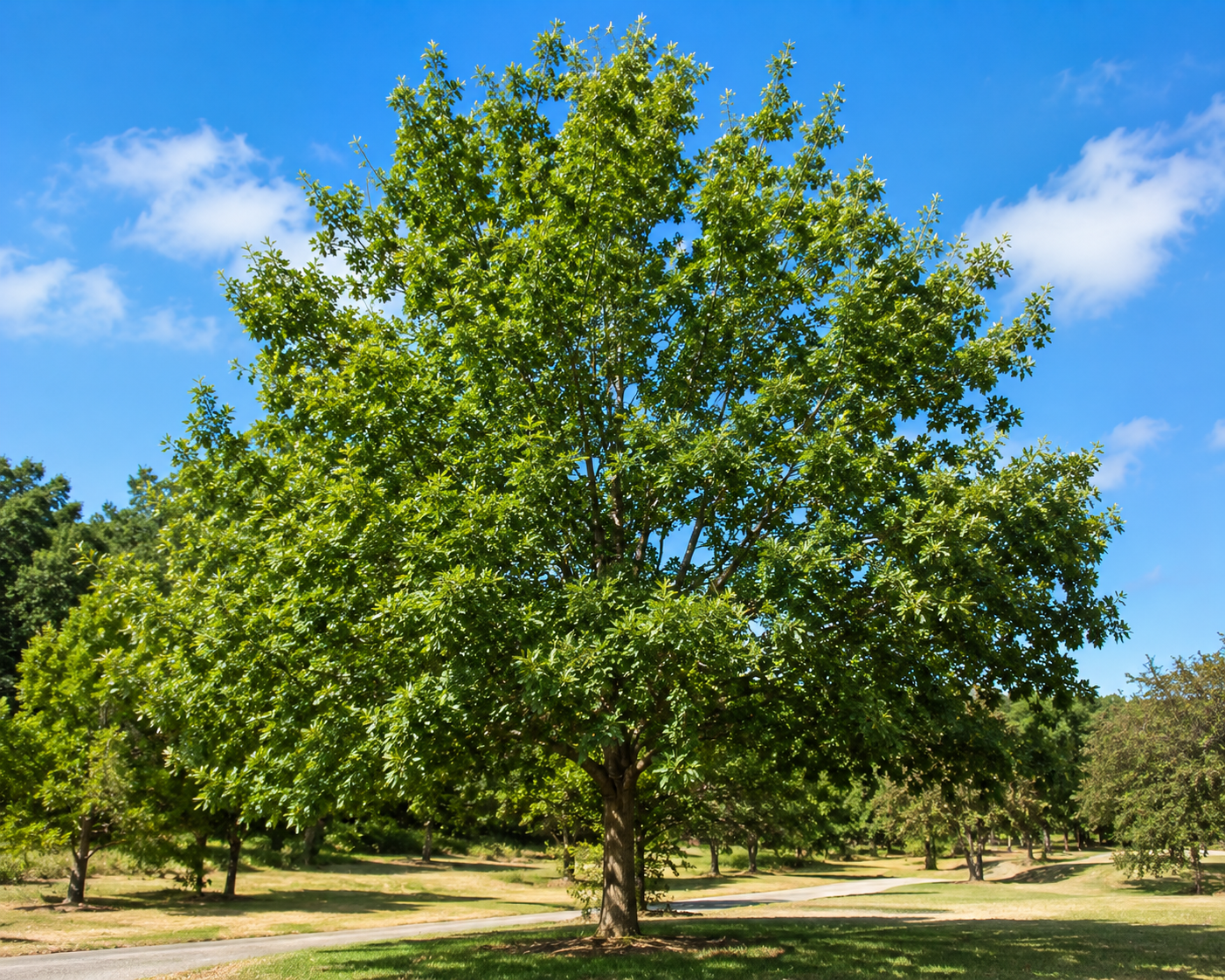
Chinkapin Oak is one of the finest native shade trees for Central Texas, admired for its handsome form, dependable growth, and outstanding adaptability. Its glossy dark green leaves create a broad, dense canopy that provides abundant summer shade before turning beautiful shades of golden yellow and bronze in autumn. Native to limestone hills and river valleys, Chinkapin Oak thrives in the alkaline soils common throughout Georgetown and the Hill Country while tolerating heat and periods of drought once established. Its sweet acorns are an important food source for birds and wildlife, and its long lifespan makes it an exceptional investment for future generations. Strong, beautiful, and relatively fast growing, Chinkapin Oak is an excellent choice for homeowners seeking a durable native shade tree.
Escarpment Live Oak
Escarpment Live Oak (Quercus fusiformis)
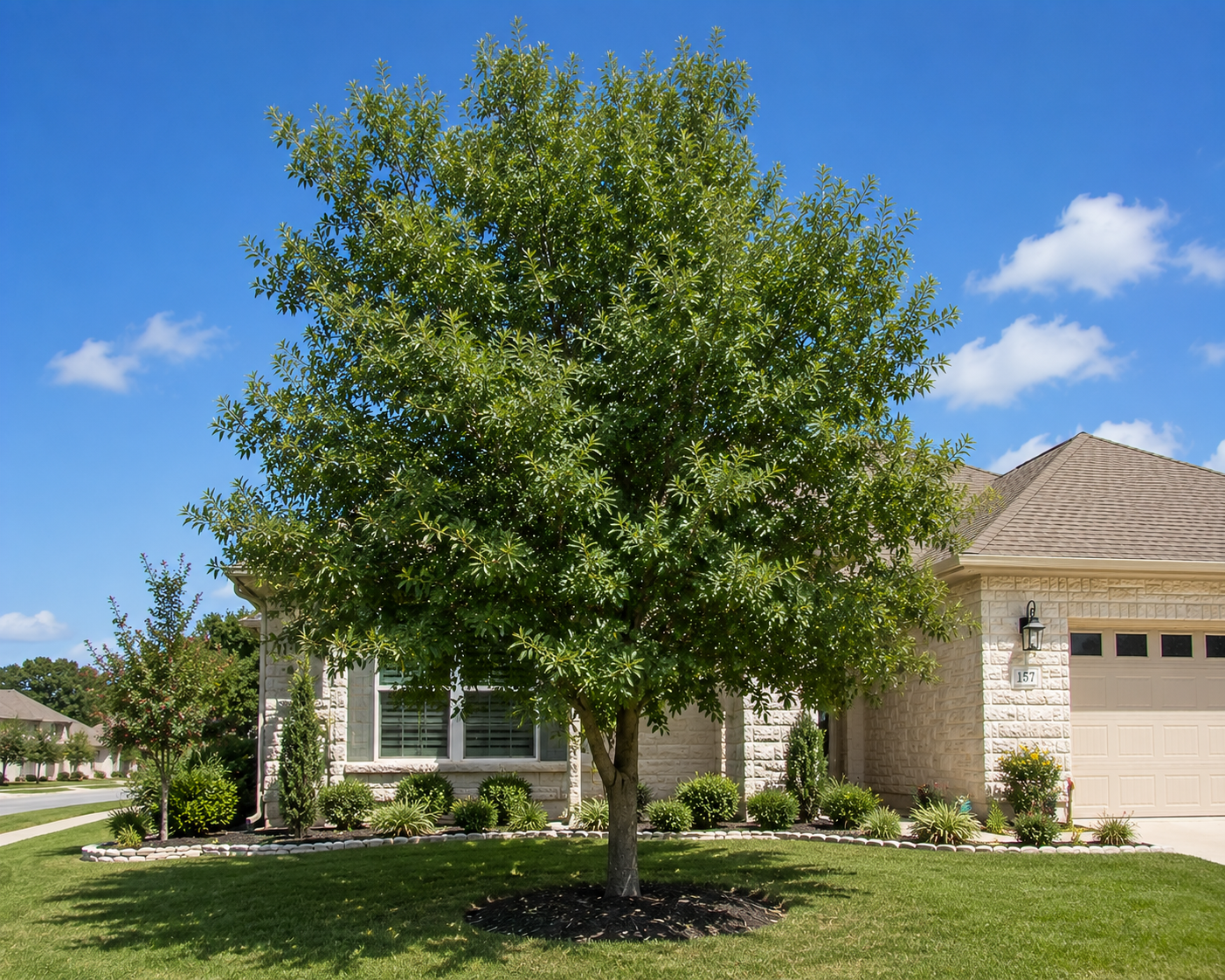
Escarpment Live Oak is one of the most dependable and iconic native shade trees of Central Texas. Evergreen and exceptionally long-lived, it provides dense, cooling shade throughout the year while thriving in the rocky limestone soils and hot, dry climate of the Edwards Plateau. Its broad, graceful canopy creates an inviting landscape feature, and its acorns provide an important food source for birds, deer, squirrels, and other wildlife. Highly tolerant of drought, heat, wind, and urban conditions, Escarpment Live Oak requires little maintenance once established. Its beauty, resilience, and year-round foliage make it one of the finest long-term shade trees for Georgetown and the surrounding Hill Country.
Texas Red Oak
Texas Red Oak (Quercus buckleyi)
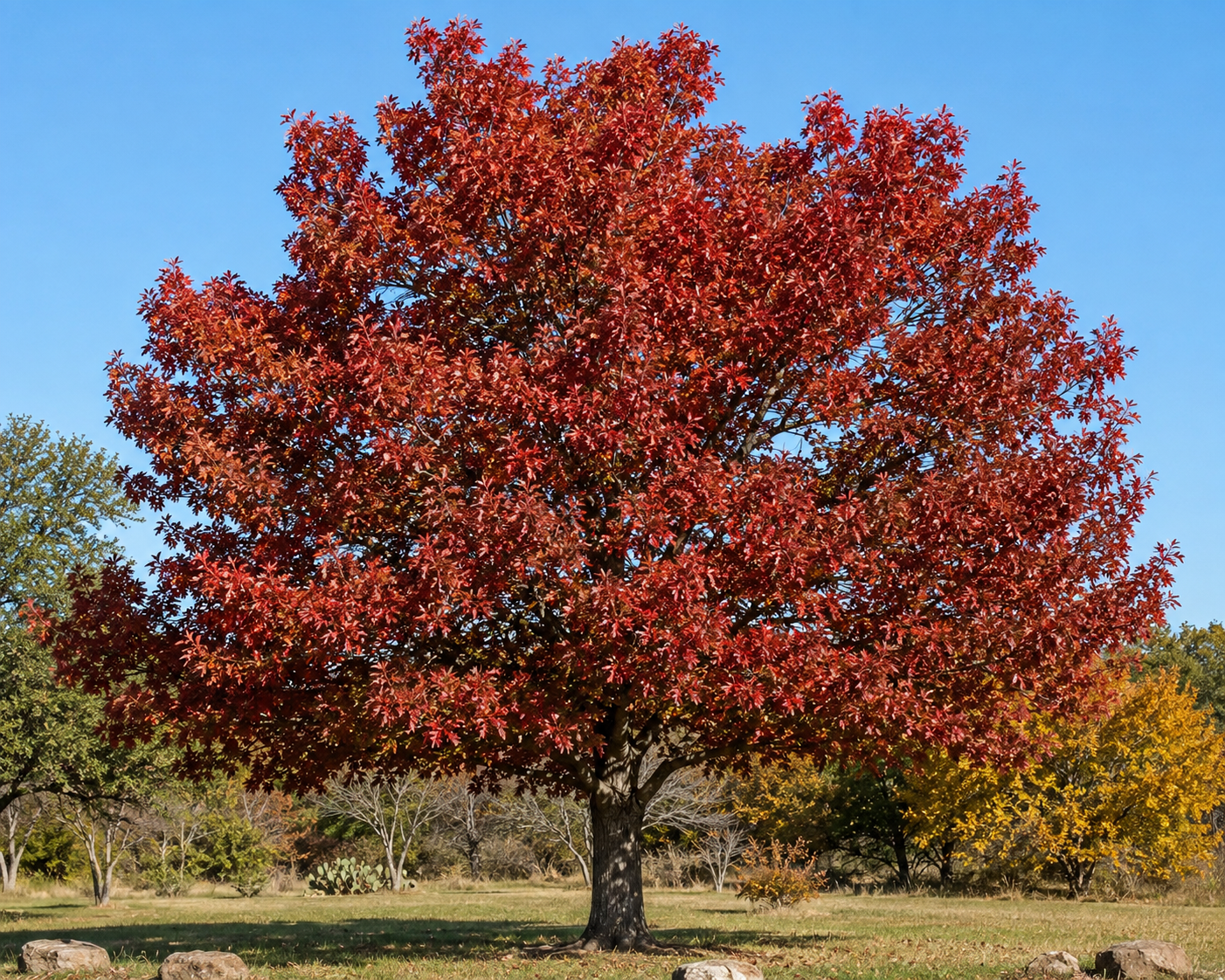
Texas Red Oak is one of the most beautiful native shade trees for Central Texas, prized for its spectacular fall color and excellent adaptation to the rocky limestone soils of the Hill Country. Its glossy green leaves transform into brilliant shades of red, orange, and burgundy each autumn, creating one of the region’s finest seasonal displays. Moderate in growth and exceptionally long-lived, Texas Red Oak develops into a handsome shade tree that supports birds and other wildlife with its acorns while thriving in heat and periodic drought. Its beauty, durability, and outstanding fall color make it an exceptional choice for residential landscapes.
Cedar Elm
Cedar Elm (Ulmus crassifolia)
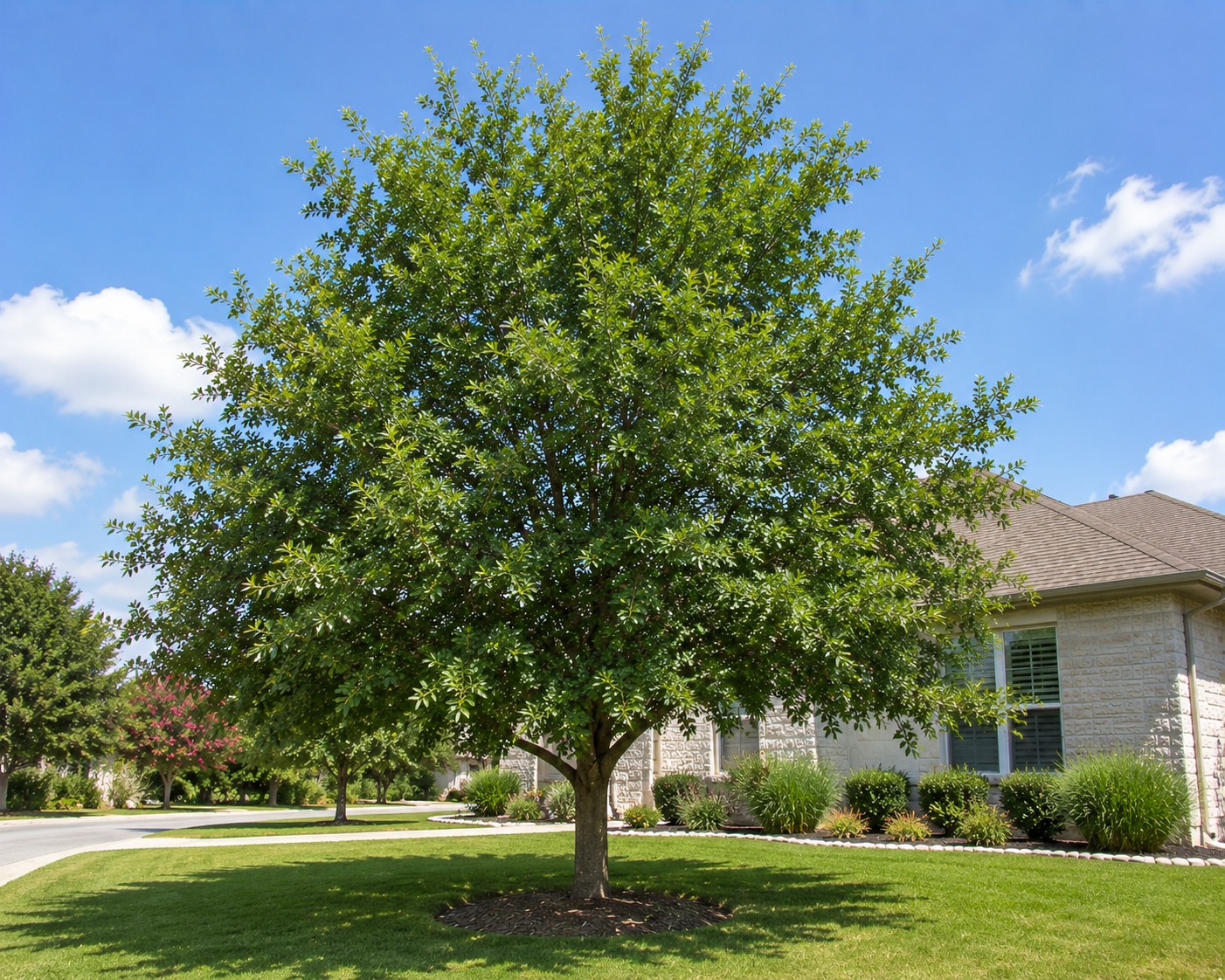
Cedar Elm is one of the finest native shade trees for Central Texas, prized for its adaptability, durability, and graceful appearance. Unlike many shade trees, it thrives in the rocky limestone soils of the Hill Country while tolerating drought, heat, wind, and urban conditions. Its small, glossy green leaves create a dense canopy that provides excellent summer shade before turning a beautiful golden yellow in autumn. Tiny flowers appear in late summer, followed by seeds that provide food for birds and other wildlife. Long-lived, low-maintenance, and highly resilient, Cedar Elm is an outstanding choice for homeowners seeking a dependable native shade tree that will add beauty and value for generations.

Lacey Oak
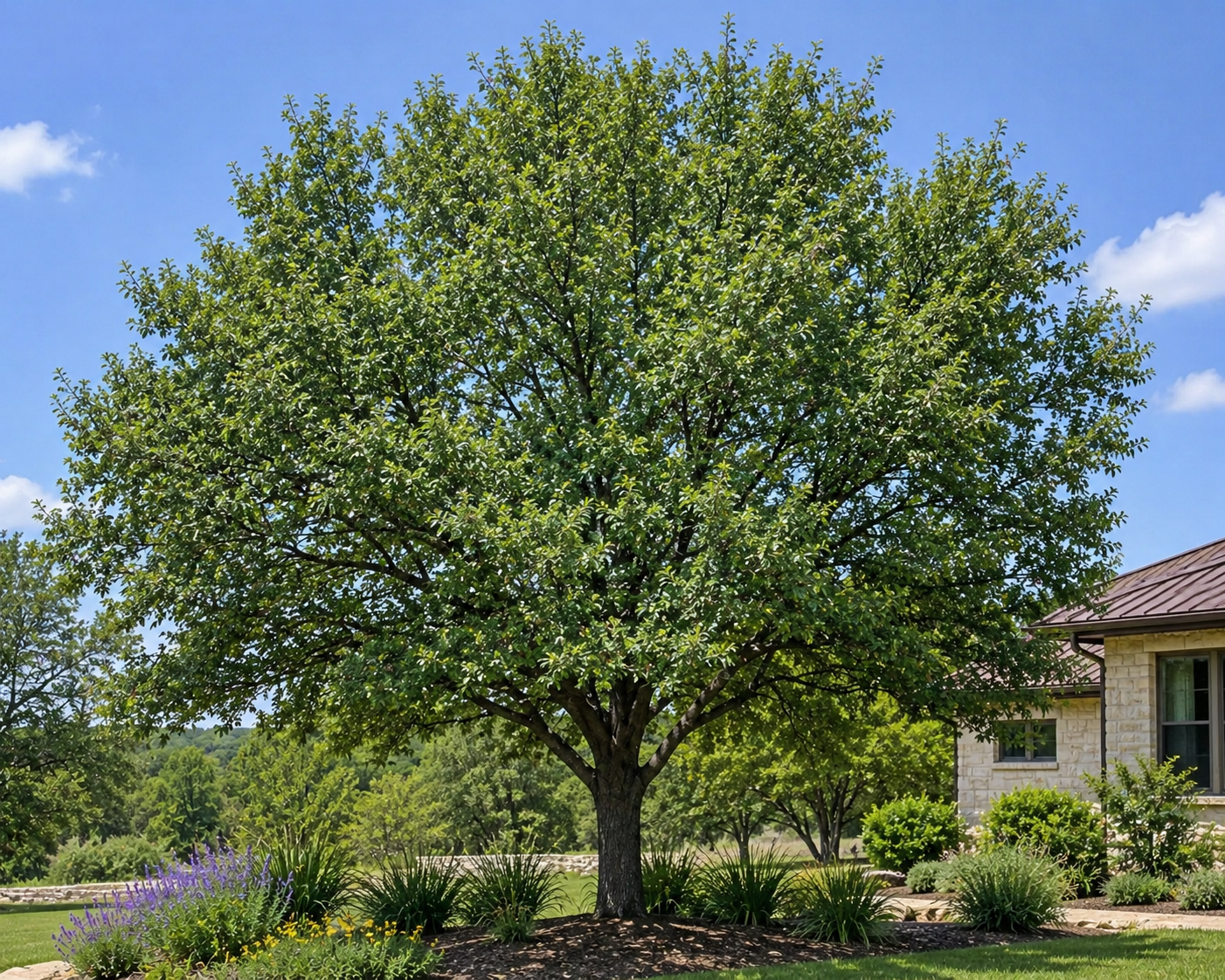
Lacey Oak is one of the finest native shade trees for Central Texas, combining exceptional beauty with outstanding toughness. Its distinctive blue-green leaves emerge with peach-colored new growth in spring, provide cooling summer color, and often turn golden yellow in fall. Slower growing than many shade trees, Lacey Oak develops a broad, graceful canopy that is perfectly sized for most residential landscapes. Native to the Edwards Plateau, it thrives in the rocky limestone soils around Georgetown and is highly drought tolerant once established. Resistant to oak wilt and requiring little maintenance, Lacey Oak provides excellent shade while producing acorns that support birds and other wildlife. It is an outstanding long-term investment for homeowners seeking a beautiful, durable native tree.
Texas Redbud
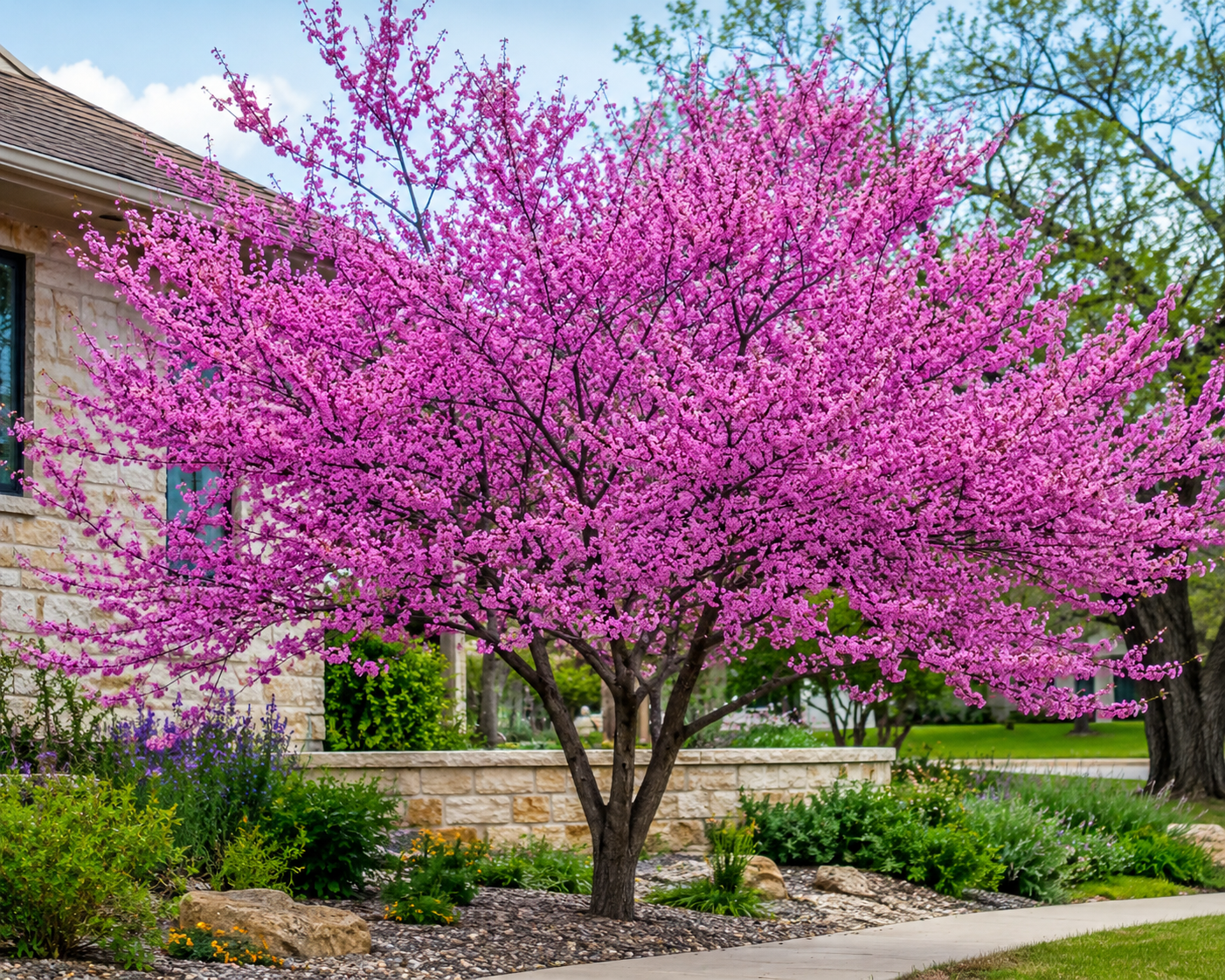
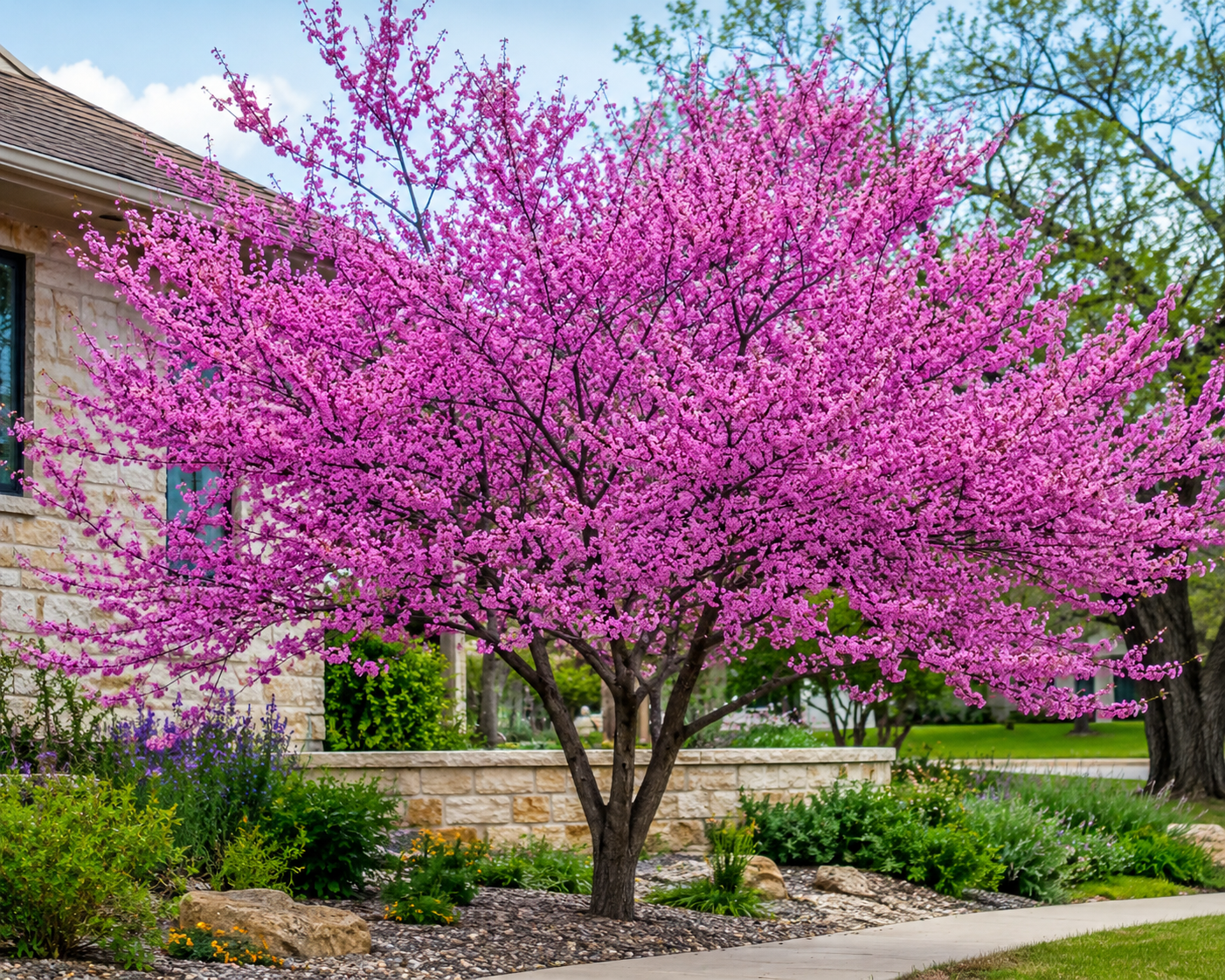
Texas Redbud (Cercis canadensis var. texensis) is one of the most spectacular native small trees for Central Texas landscapes, covering its bare branches with brilliant rosy-pink blossoms in early spring before the leaves emerge. Its attractive, glossy, heart-shaped leaves provide beauty throughout the growing season, while the flowers offer an important early nectar source for bees and other pollinators. Adapted to the limestone soils of the Hill Country, Texas Redbud thrives in full sun to part shade and is moderately drought tolerant once established. Its manageable size, outstanding spring display, and year-round ornamental appeal make it an excellent specimen tree for residential landscapes, wildlife gardens, and native plantings.
Goldenball Leadtree
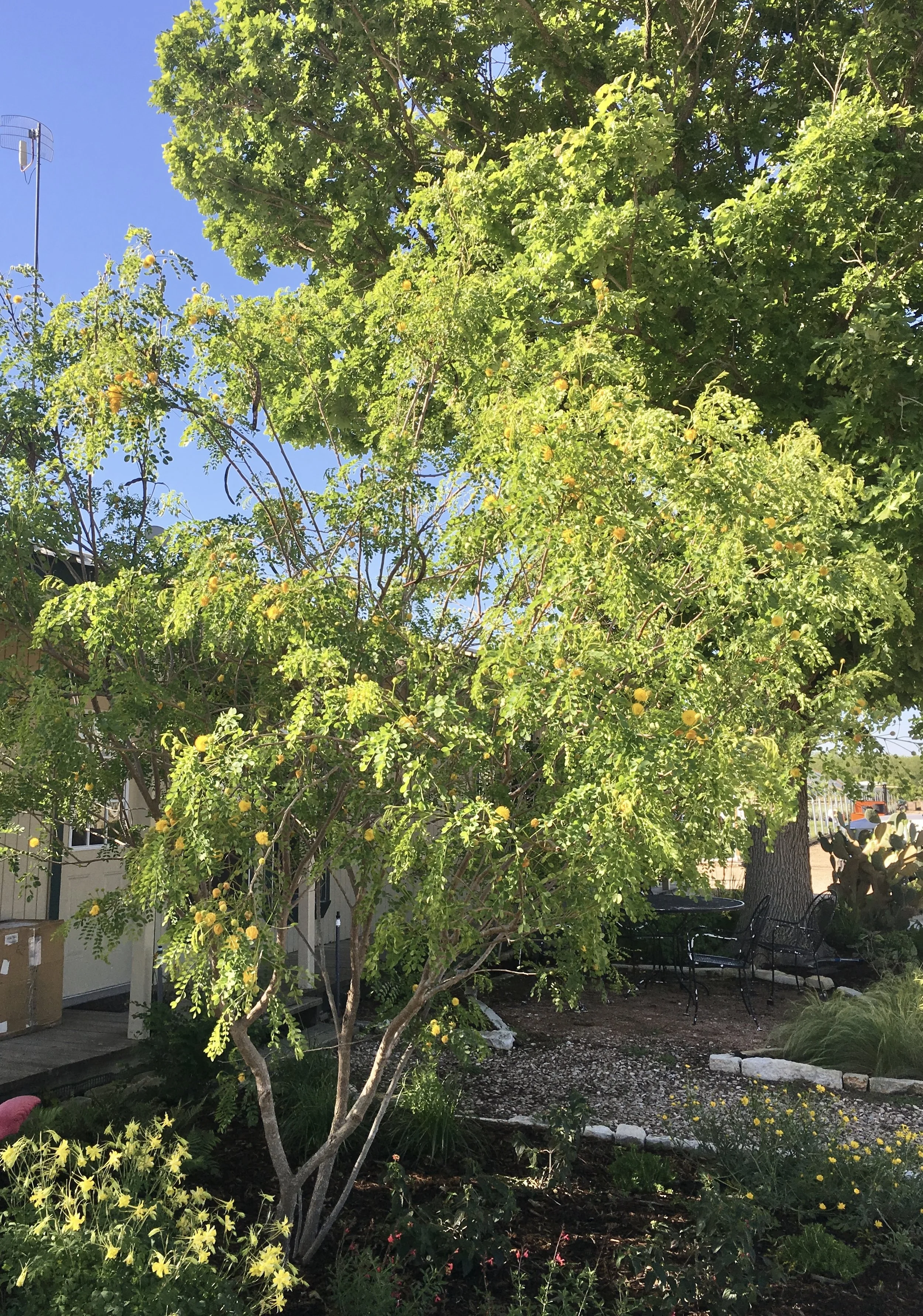
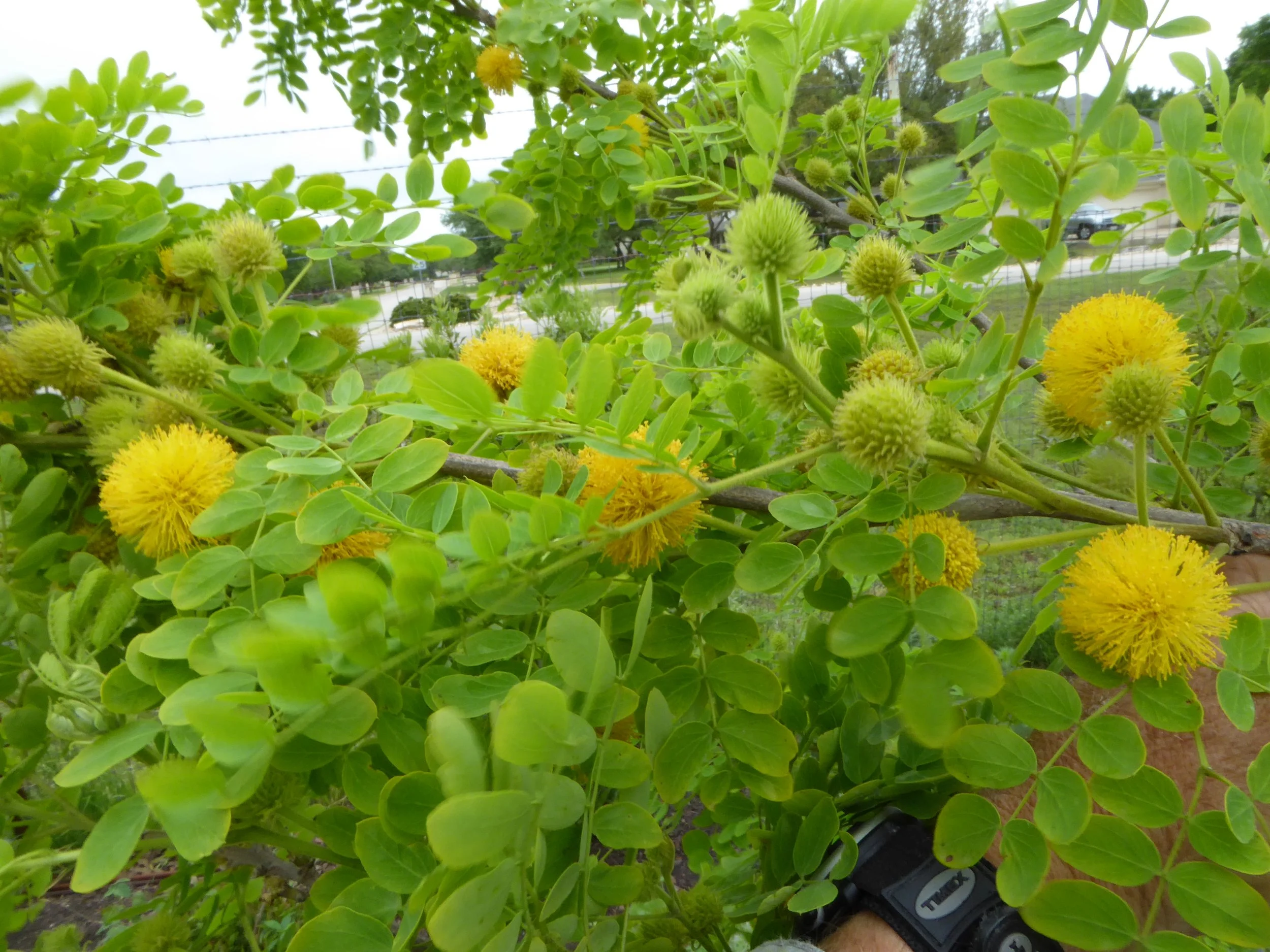
Goldenball Leadtree (Leucaena retusa) is a distinctive native Texas small tree prized for its bright golden-yellow, ball-shaped flowers that bloom repeatedly from late spring through summer. Its fine, fern-like foliage gives the tree a light, airy appearance while providing filtered shade for smaller landscapes. The nectar-rich blossoms attract bees, butterflies, and other pollinators, adding vibrant color and wildlife activity to the garden. Exceptionally heat and drought tolerant once established, Goldenball Leadtree thrives in full sun and well-drained soils, including the limestone soils common throughout Central Texas. Its long bloom season, unique flowers, and low-maintenance nature make it an outstanding choice for native, pollinator-friendly, and water-wise landscapes.
Texas Persimmon
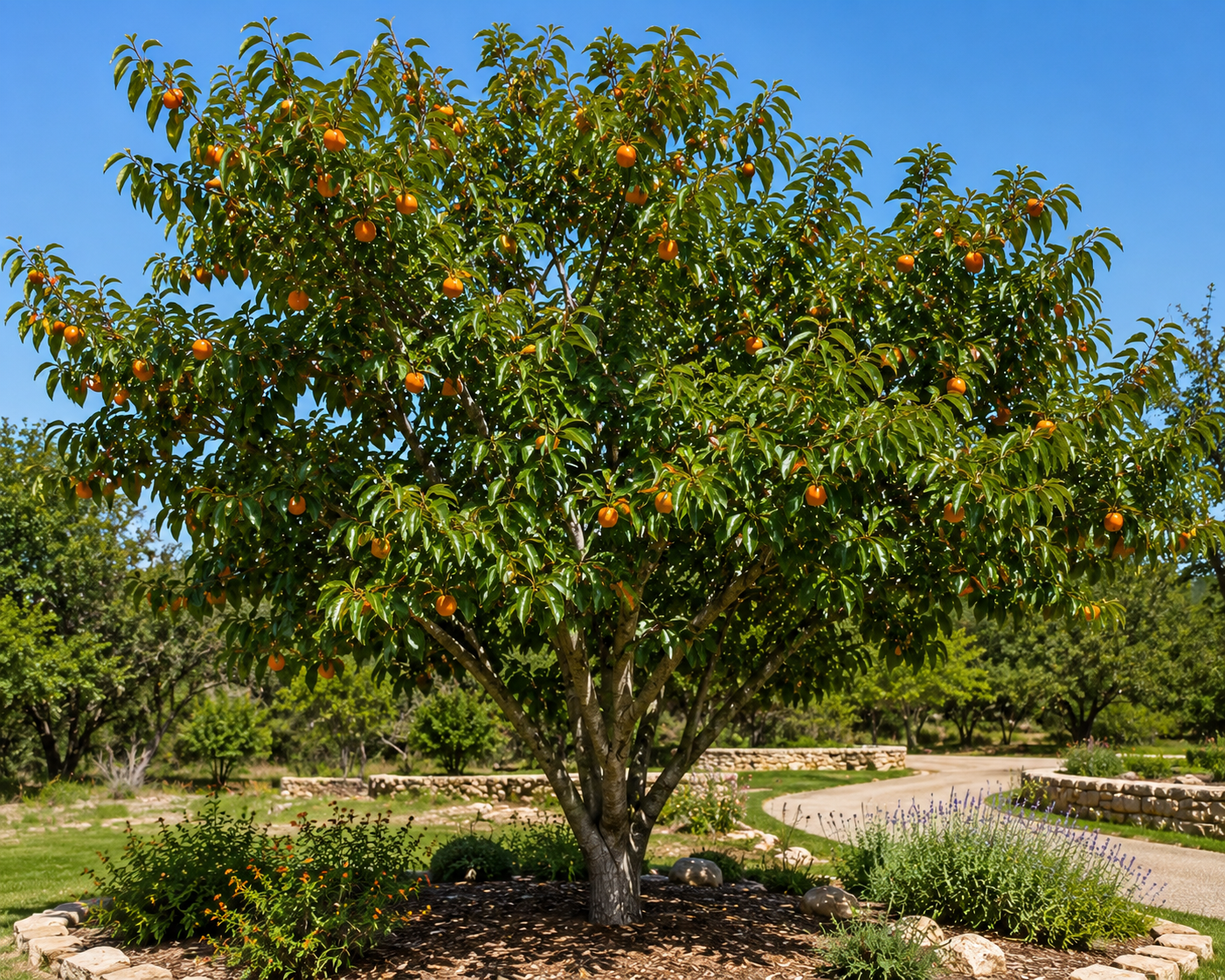
Texas Persimmon is one of the most distinctive and beautiful native small trees for Central Texas landscapes. Its smooth, peeling gray bark provides year-round interest, while its glossy, dark green leaves create a dense, attractive canopy. Small, fragrant flowers appear in spring, followed by sweet, dark purple-black fruit on female trees that is enjoyed by birds, other wildlife, and even people. Exceptionally heat and drought tolerant, Texas Persimmon thrives in full sun and the rocky limestone soils of the Hill Country. Its compact size, ornamental bark, edible fruit, and outstanding toughness make it an excellent choice for water-wise landscapes and native gardens.
Possumhaw Holly
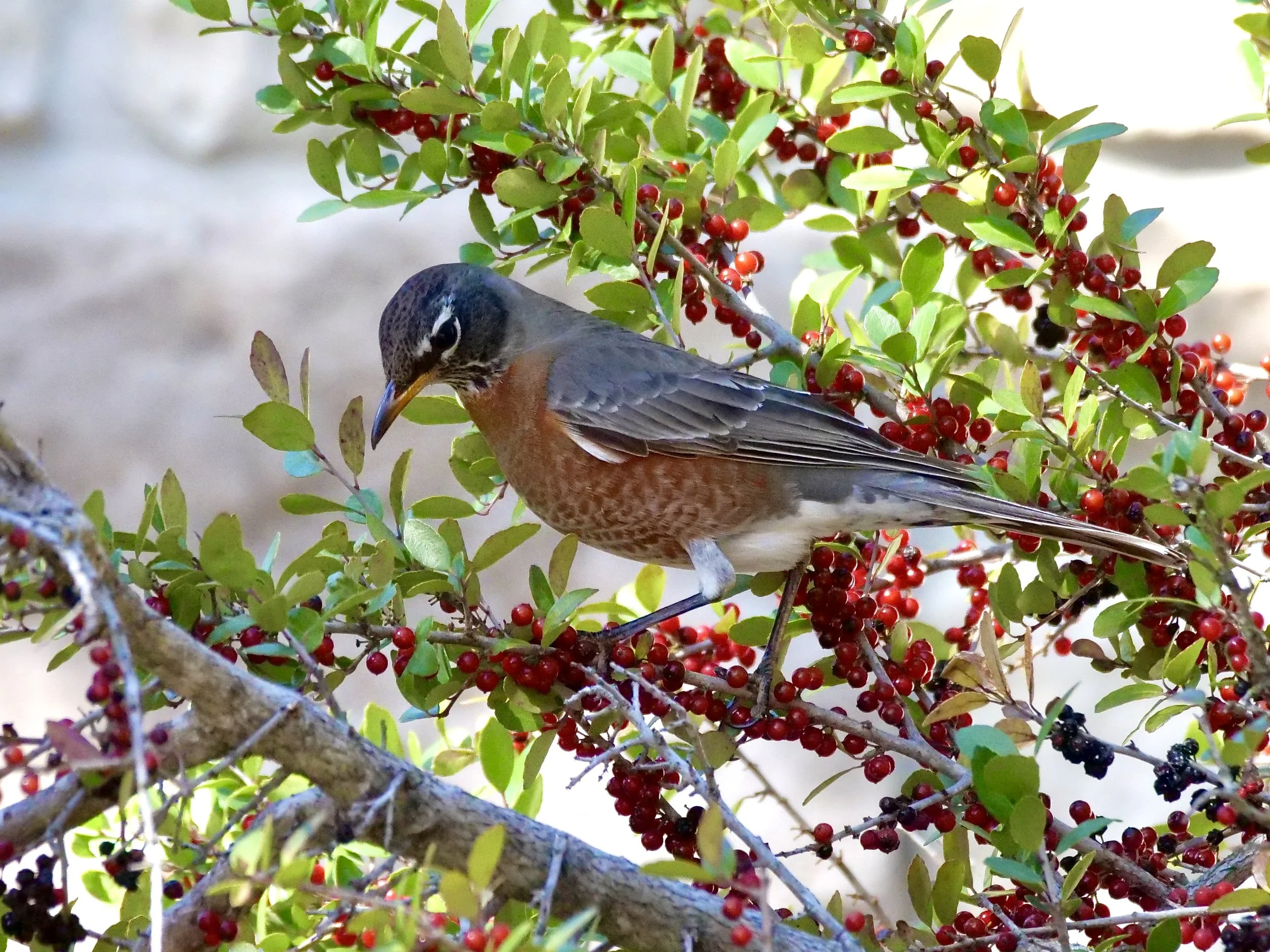
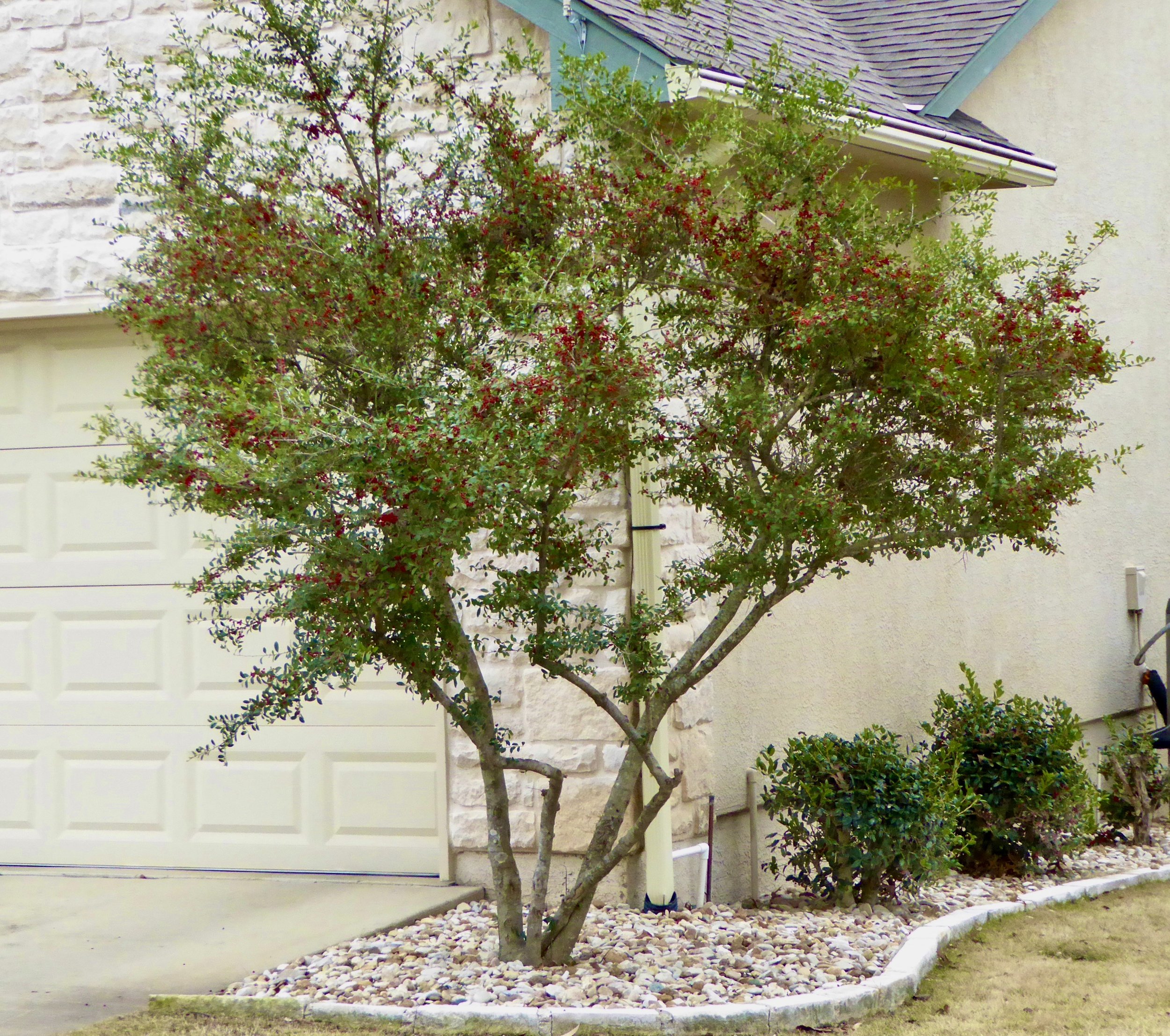
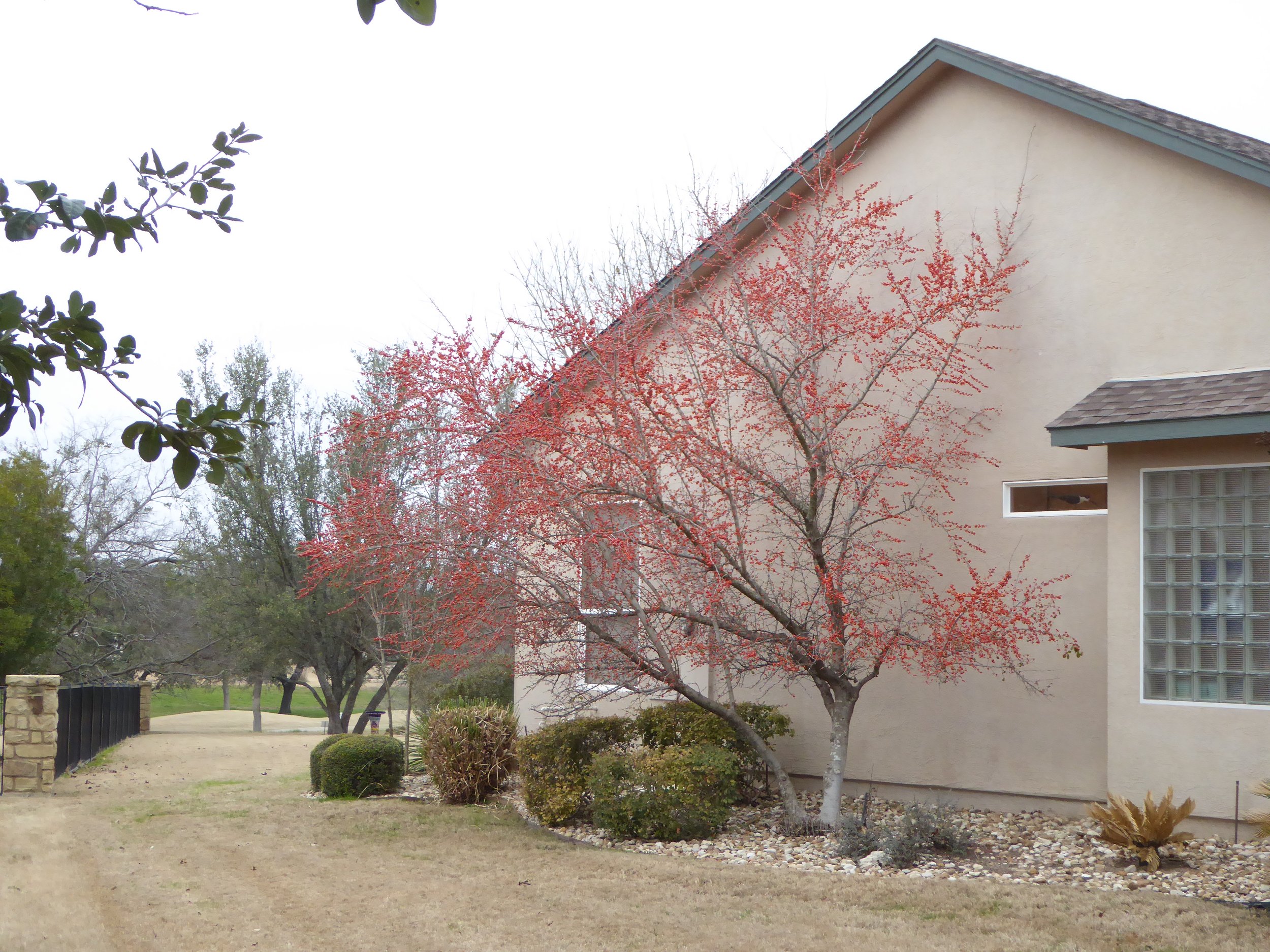
Possumhaw is an outstanding native small tree or large shrub that brings exceptional beauty and wildlife value to Central Texas landscapes. In winter, after its leaves have dropped, the branches become covered with brilliant red berries that create one of the most striking seasonal displays of any native plant. The fruit provides an important winter food source for cedar waxwings, robins, bluebirds, mockingbirds, and many other songbirds. Small white spring flowers attract native bees and other pollinators, while the plant’s adaptability makes it well suited to a variety of landscape settings. Possumhaw grows best in full sun to part shade and is moderately drought tolerant once established, making it an excellent choice for adding year-round interest and supporting local wildlife.
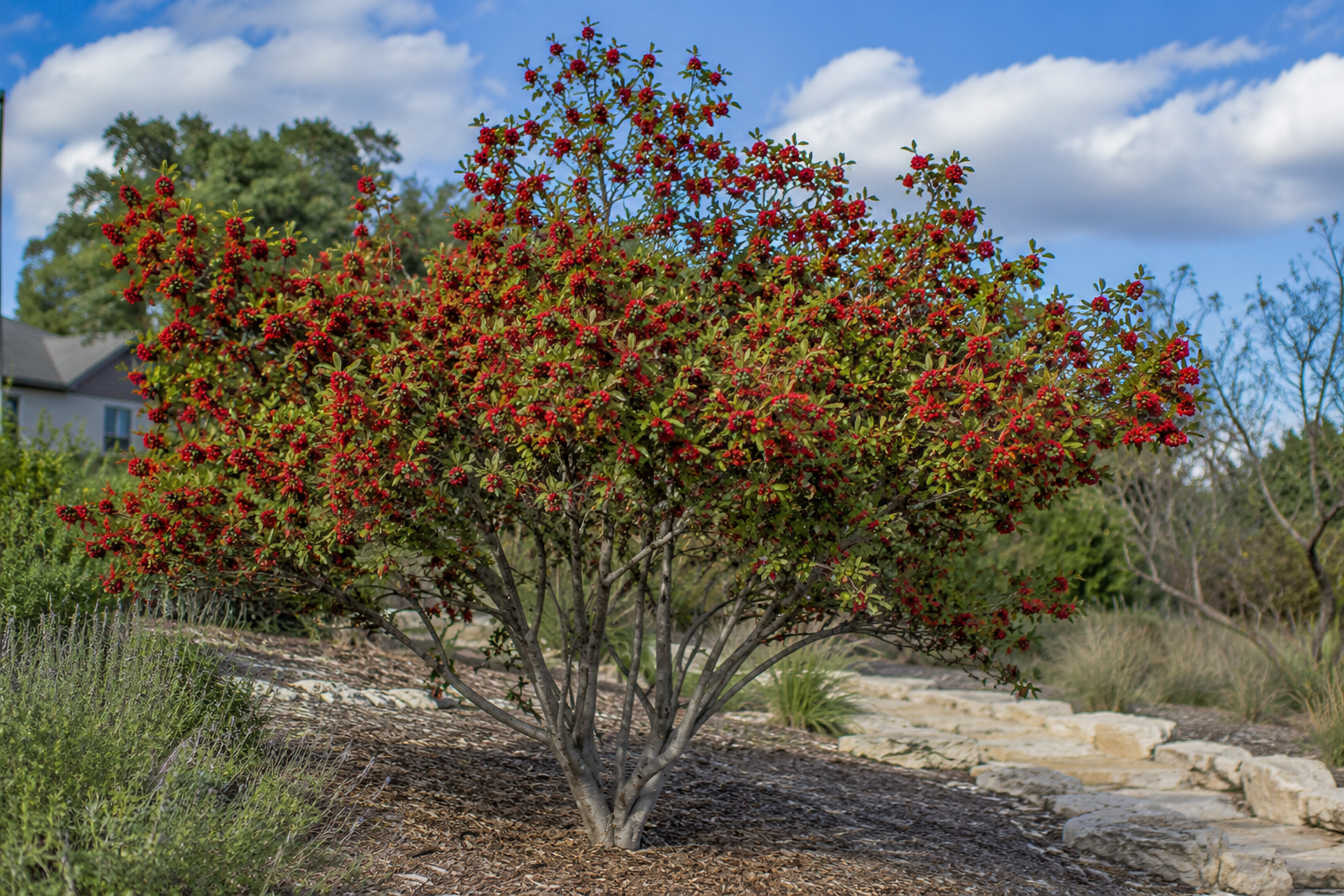
Mexican Plum
Mexican Plum (Prunus mexicana)
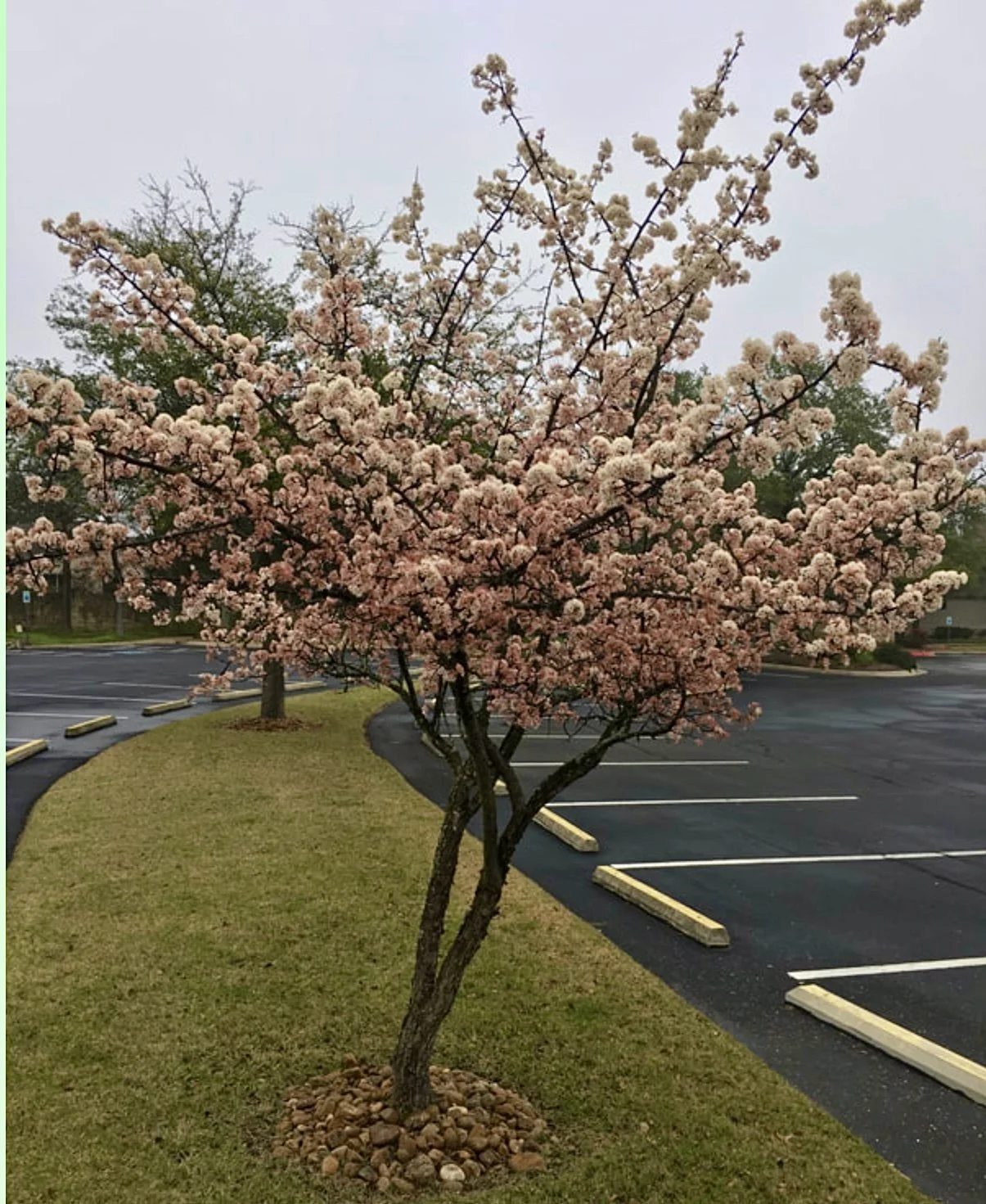
Mexican Plum is a beautiful native small tree that announces the arrival of spring with a spectacular display of fragrant white blossoms before its leaves emerge. The flowers provide an early source of nectar and pollen for bees and other pollinators, while the summer fruit is enjoyed by songbirds and other wildlife. Its attractive bark, glossy green foliage, and vibrant yellow fall color add year-round interest to the landscape. Adaptable and relatively drought tolerant once established, Mexican Plum thrives in full sun to part shade and is well suited to the limestone soils of Central Texas. Its ornamental beauty, wildlife benefits, and seasonal interest make it an excellent choice for residential landscapes and native gardens.
Desert Willow
Desert Willow (Chilopsis linearis)
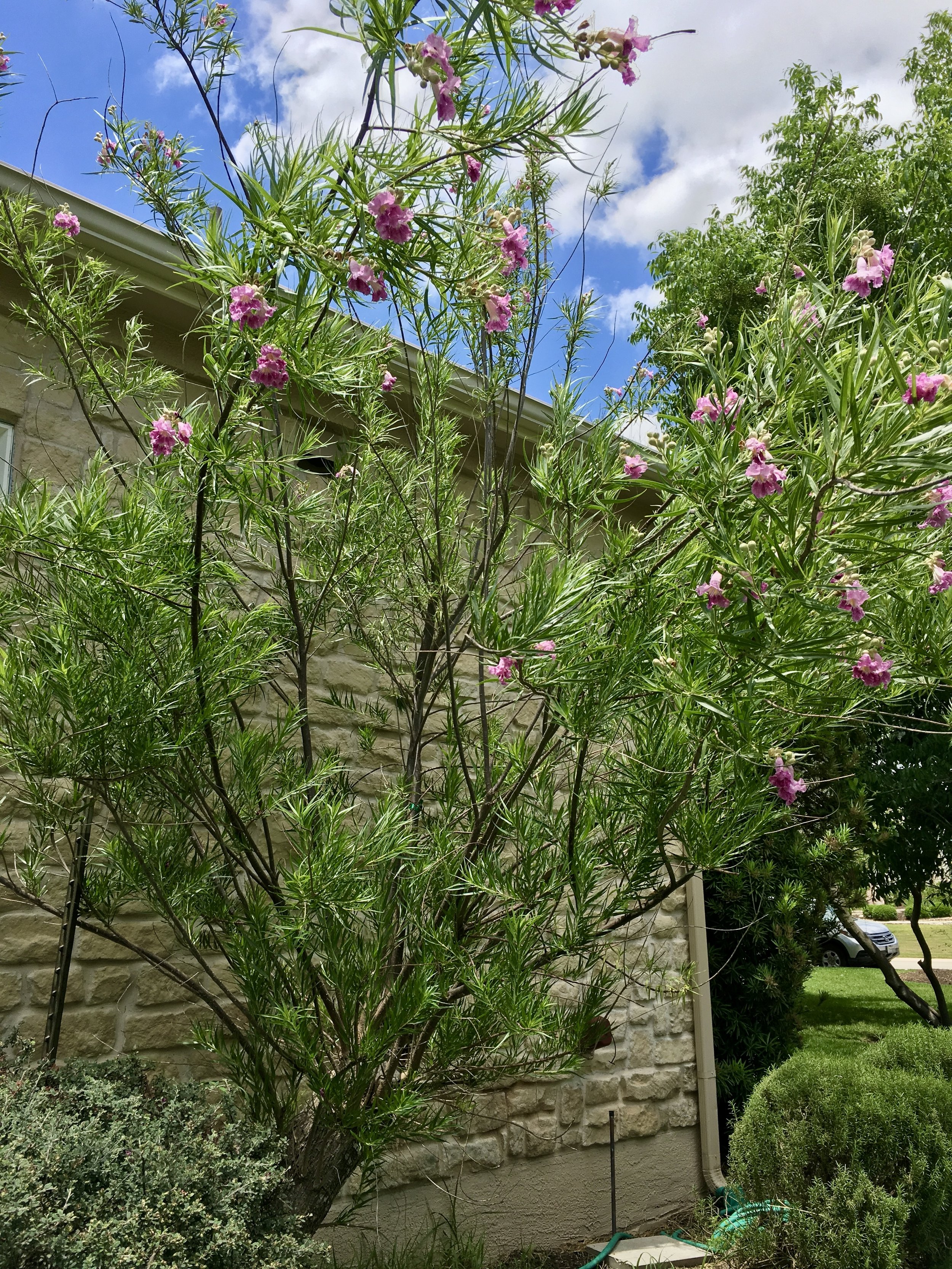
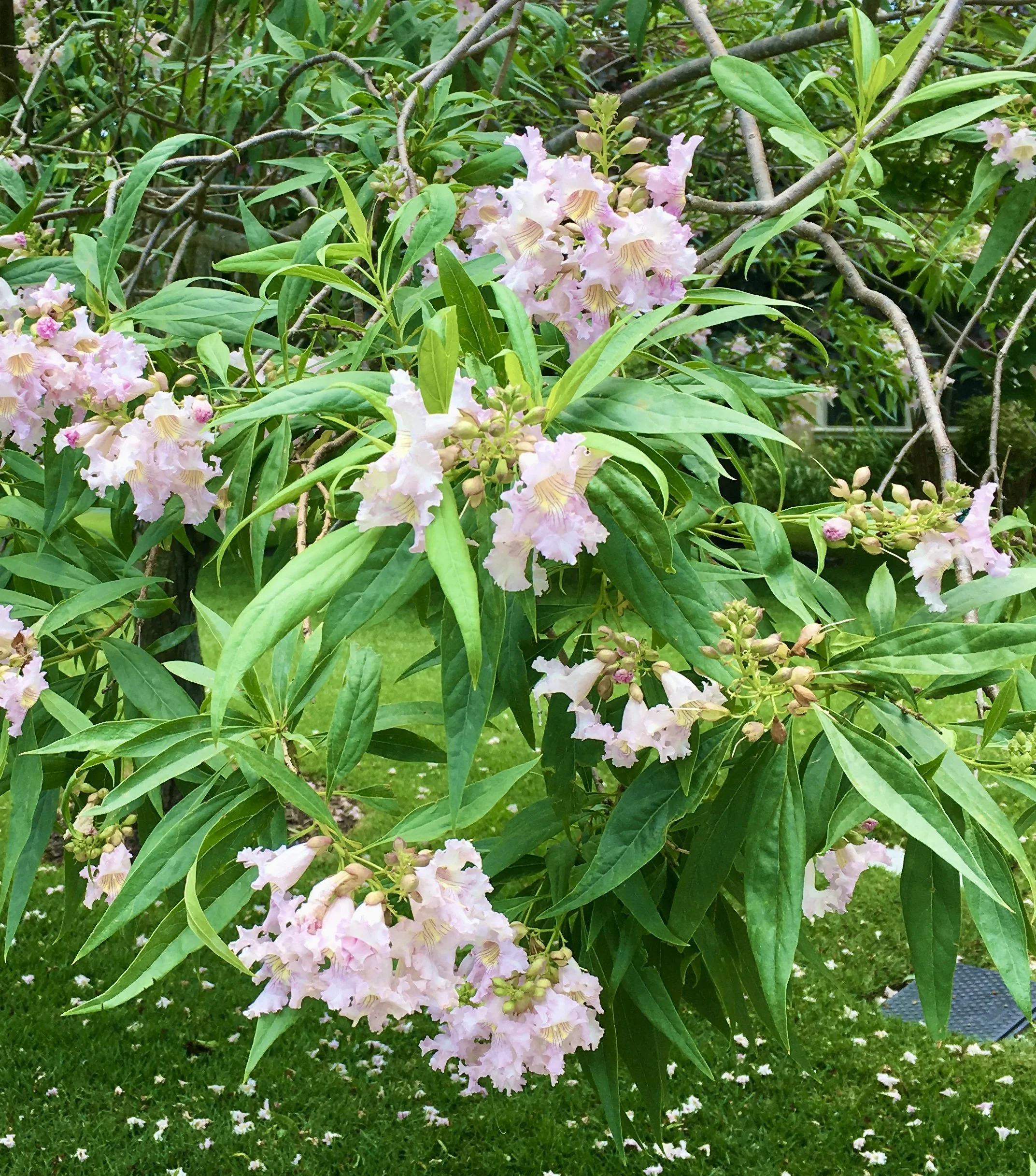
Desert Willow is one of the most beautiful and dependable small native trees for Central Texas landscapes. Despite its name, it is not a true willow but is prized for its graceful, willow-like foliage and abundant trumpet-shaped flowers that bloom from late spring through summer. The blossoms, which range from lavender-pink to deep purple with yellow and white markings, are highly attractive to hummingbirds, bees, and butterflies. Exceptionally heat and drought tolerant once established, Desert Willow thrives in full sun and well-drained soils, making it an outstanding choice for water-wise landscapes. Its long flowering season, airy form, and outstanding wildlife value make it a favorite for both residential gardens and naturalized settings.
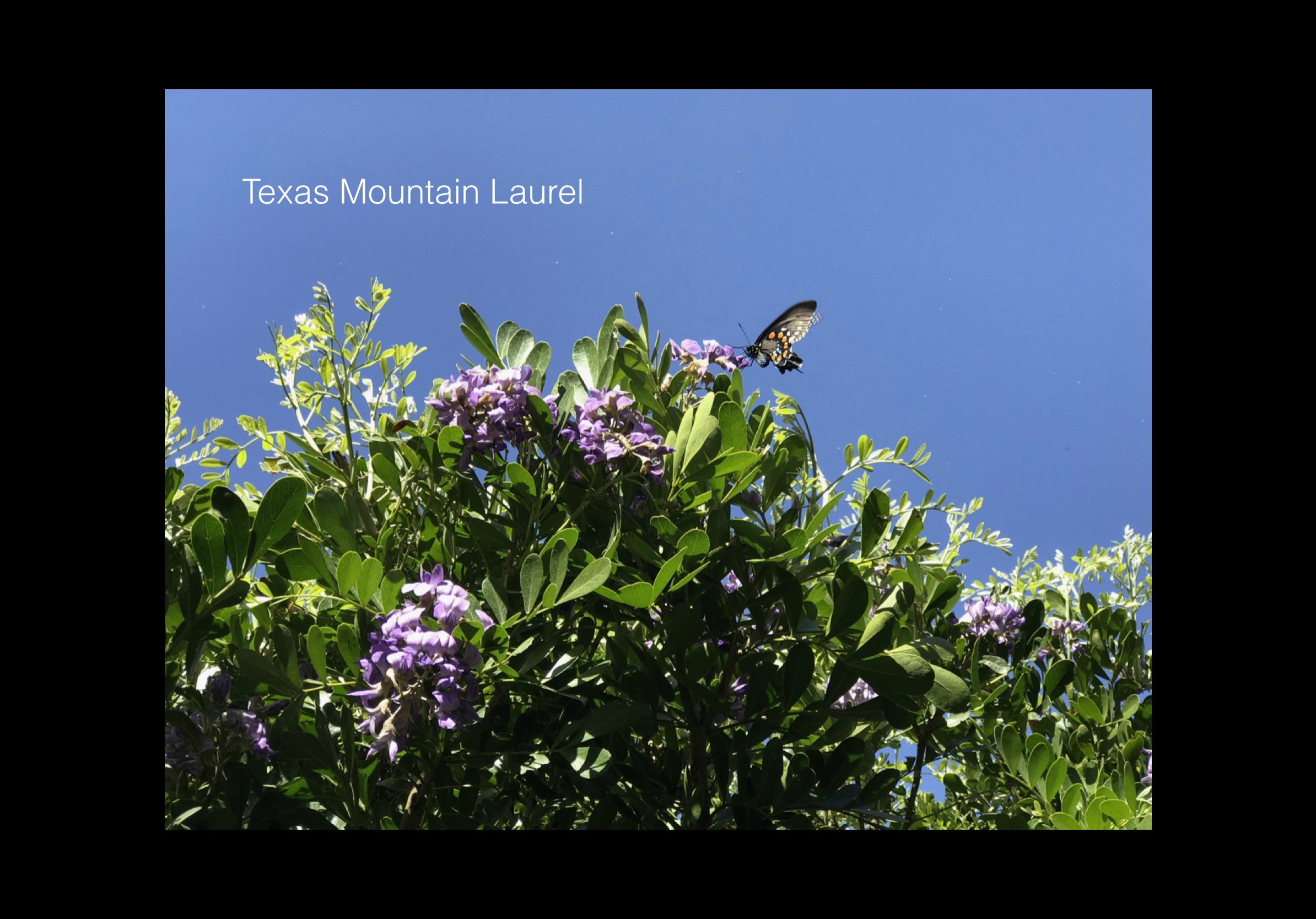
Texas Mountain Laurel
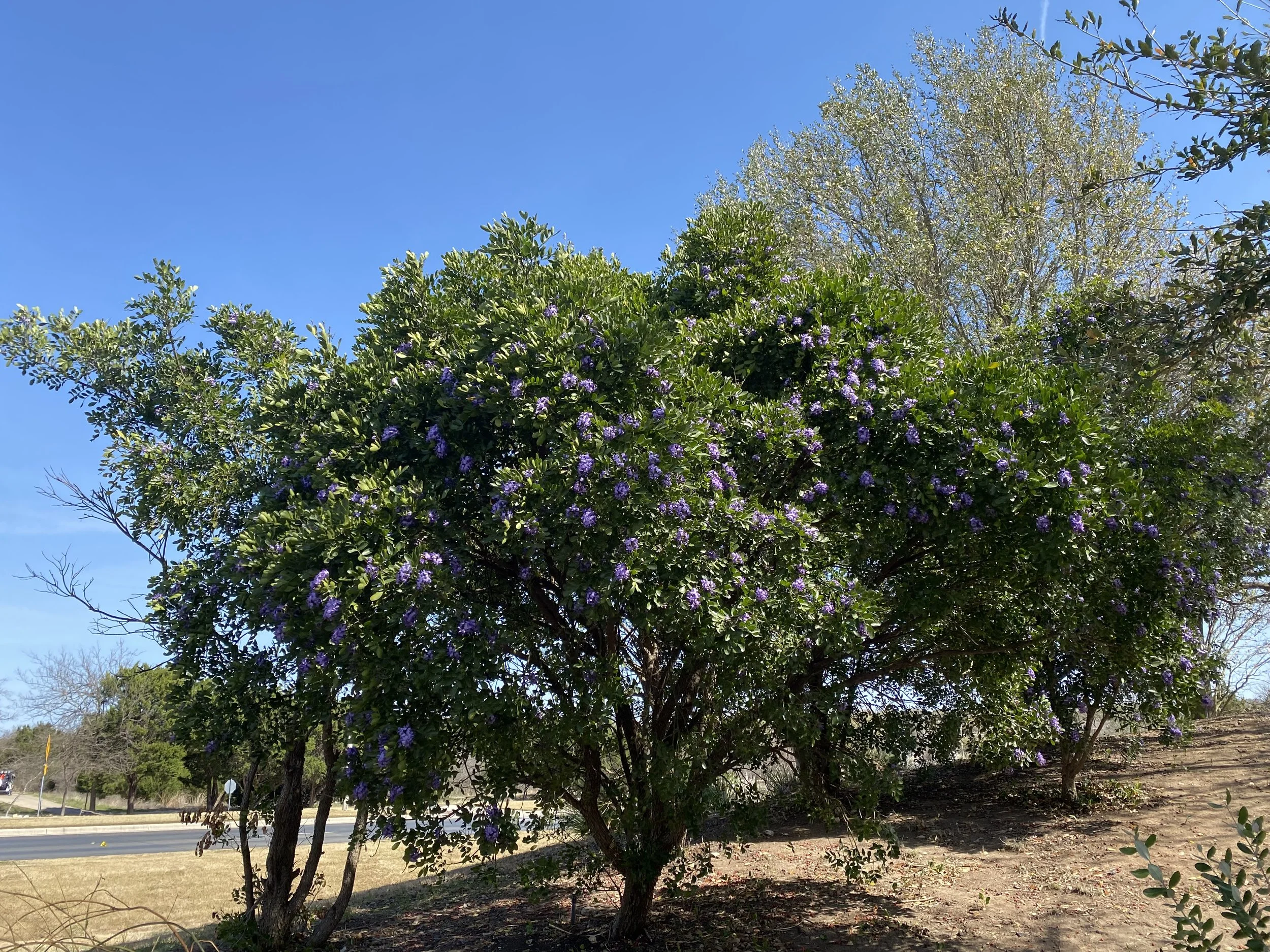
Texas Mountain Laurel (Sophora secundiflora) is one of the most treasured native small trees in Texas, prized for its glossy evergreen foliage and spectacular clusters of fragrant purple flowers. Blooming in early spring, the blossoms fill the air with a sweet grape-like fragrance and attract bees and other pollinators. Its dense, dark green canopy provides year-round beauty and makes an excellent focal point in the landscape.
Texas Mountain Laurel thrives in full sun to part shade and is highly adapted to the heat, drought, and alkaline soils of Central Texas. Slow growing but exceptionally long-lived, it requires little maintenance once established and is one of the finest native trees for residential landscapes.
Mexican Buckeye
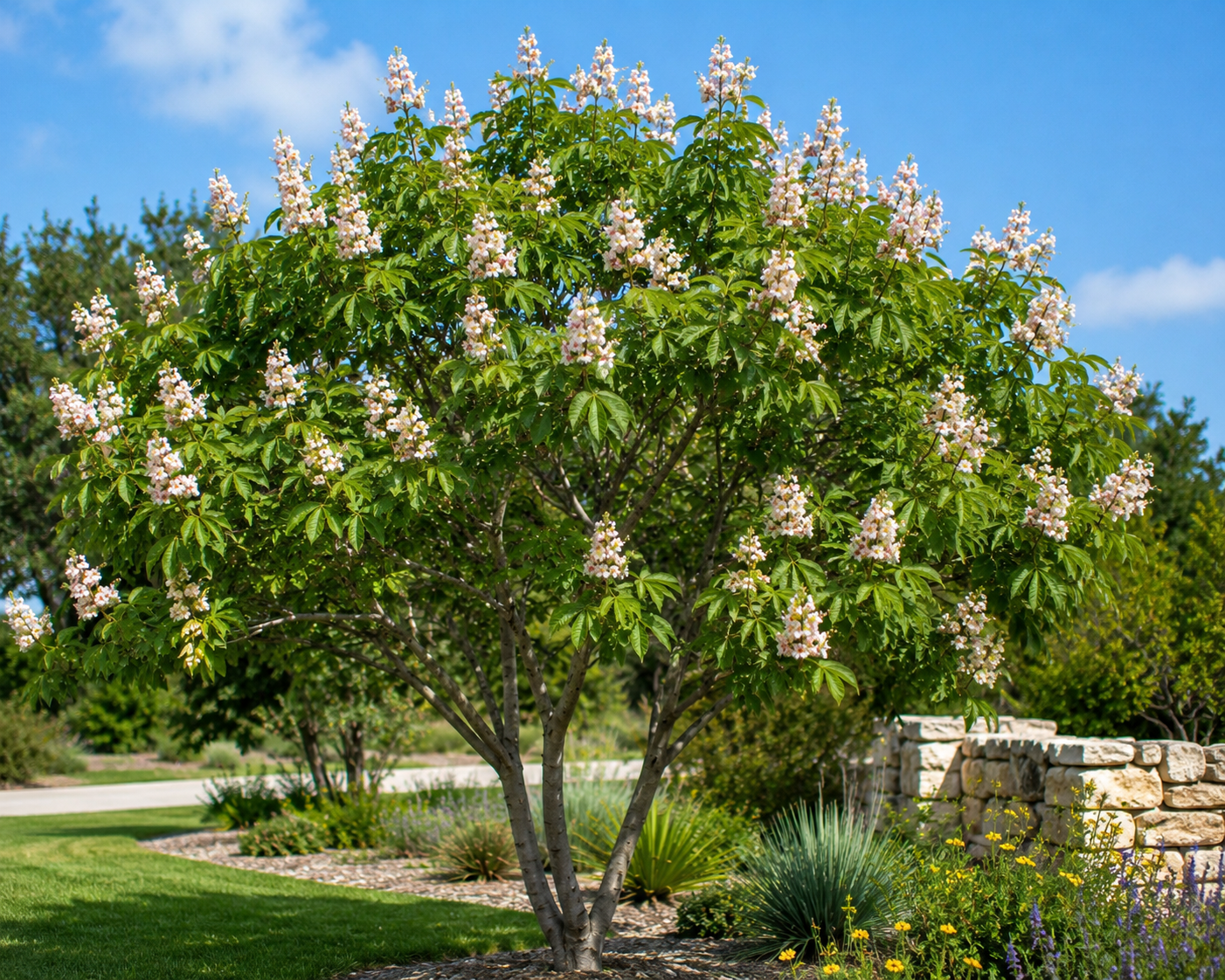
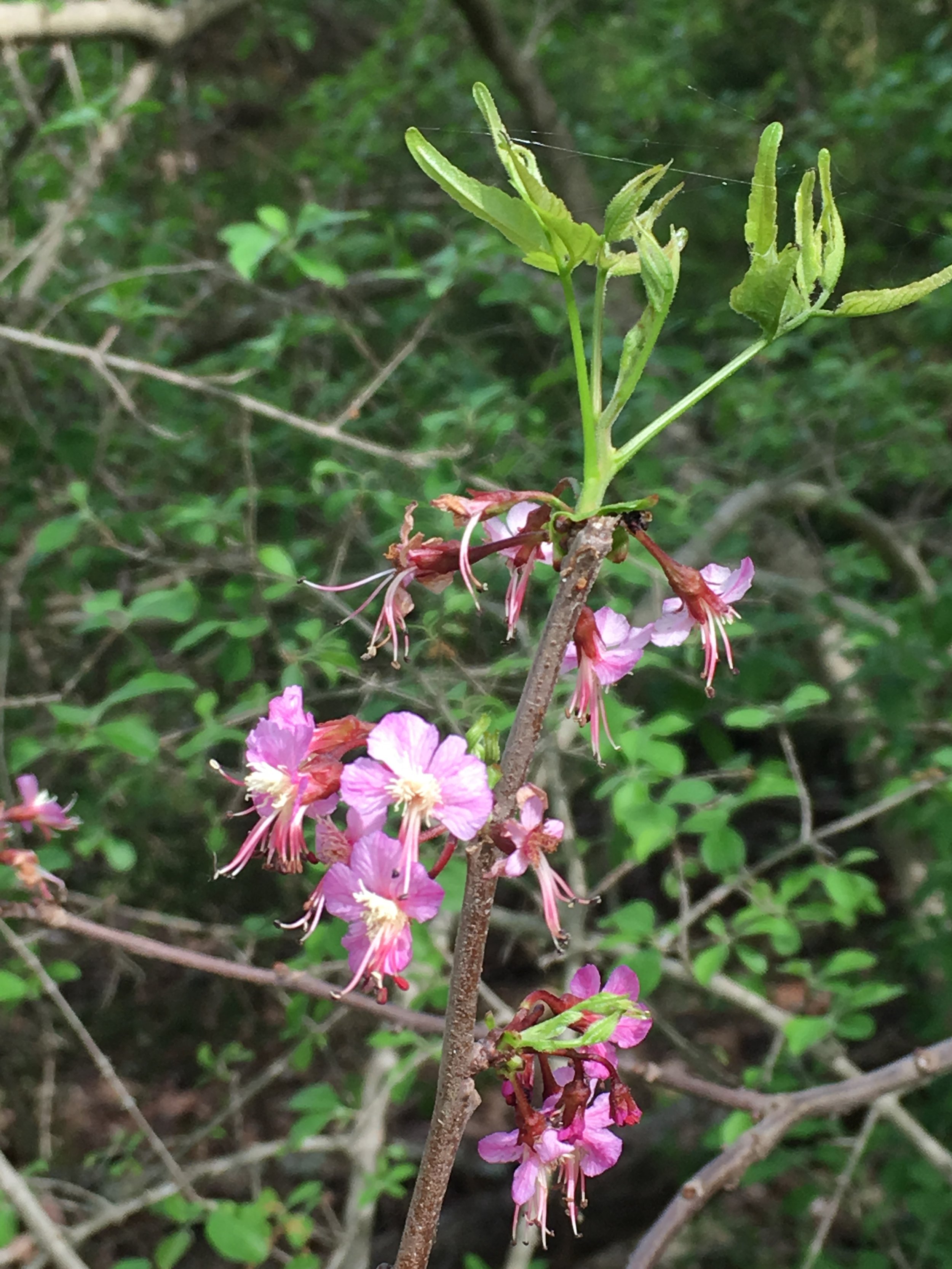
Mexican Buckeye (Ungnadia speciosa) is a beautiful native small tree or large shrub that brings year-round interest to Central Texas landscapes. In spring, its branches are covered with clusters of fragrant pink to lavender flowers that resemble redbud blossoms and attract bees and other pollinators. Glossy green foliage turns shades of yellow and gold in fall, while the distinctive seed capsules add ornamental interest well into winter.
Mexican Buckeye thrives in full sun to part shade and is well adapted to the limestone soils and periodic droughts common throughout Central Texas. Its moderate size, seasonal beauty, and wildlife value make it an excellent choice as a specimen tree, understory tree, or accent plant in native and water-wise landscapes.
Anacacho Orchid
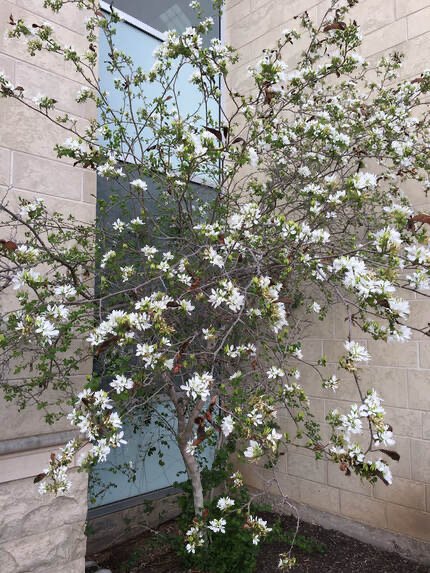
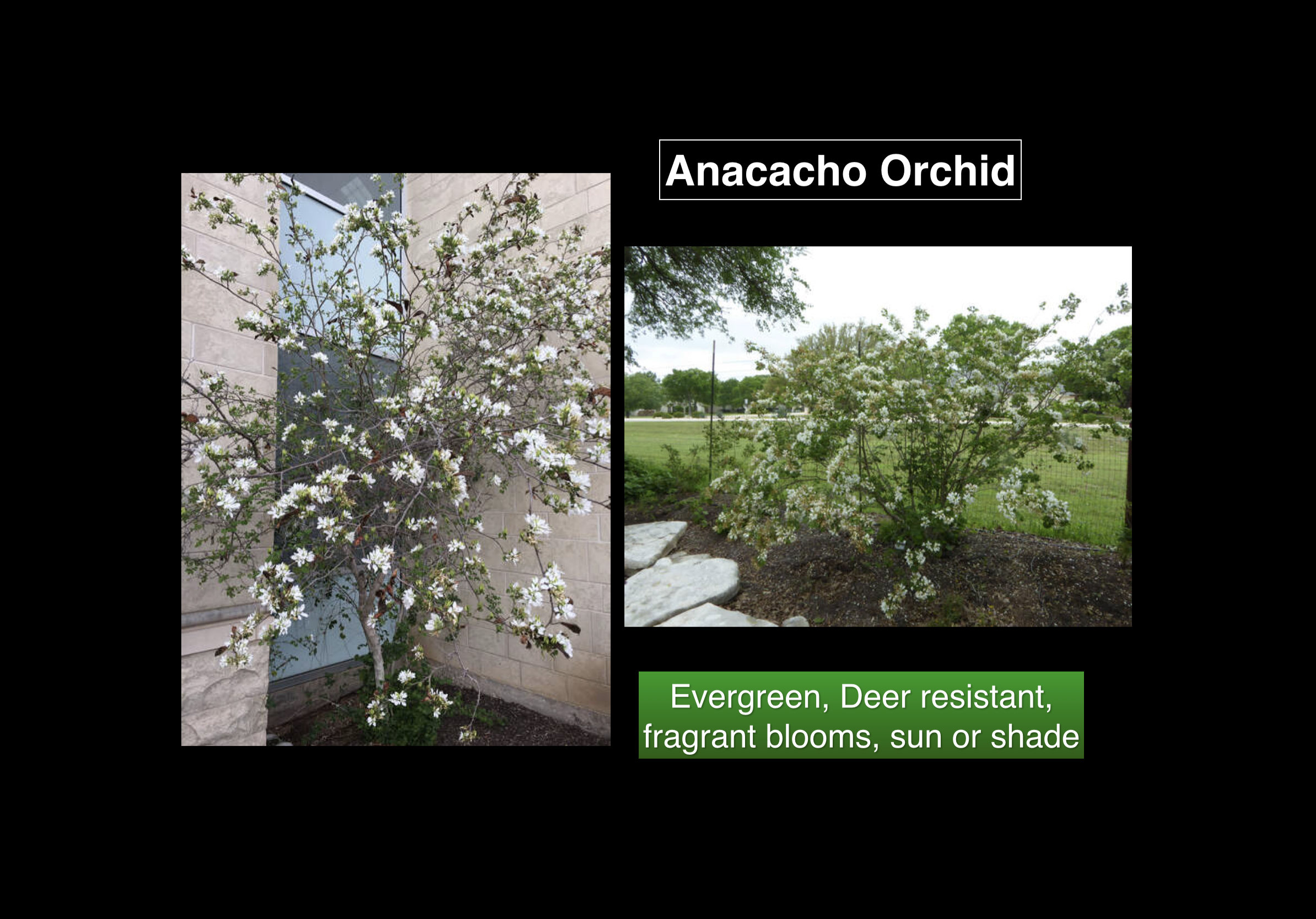
Anacacho Orchid Tree (Bauhinia lunarioides) is one of the most beautiful small native trees in Texas. In spring it produces a spectacular display of fragrant white, orchid-like flowers that often cover the tree before the leaves emerge, creating a striking focal point in the landscape. The distinctive two-lobed leaves add ornamental interest throughout the growing season.
Native to the limestone canyons of Southwest Texas, the Anacacho Orchid Tree thrives in well-drained soils and full sun to light shade. Once established, it is highly drought tolerant and well suited to water-wise landscapes. Its flowers attract bees and other pollinators, while its small size makes it ideal for courtyards, patios, and residential gardens.
Possumhaw Holly
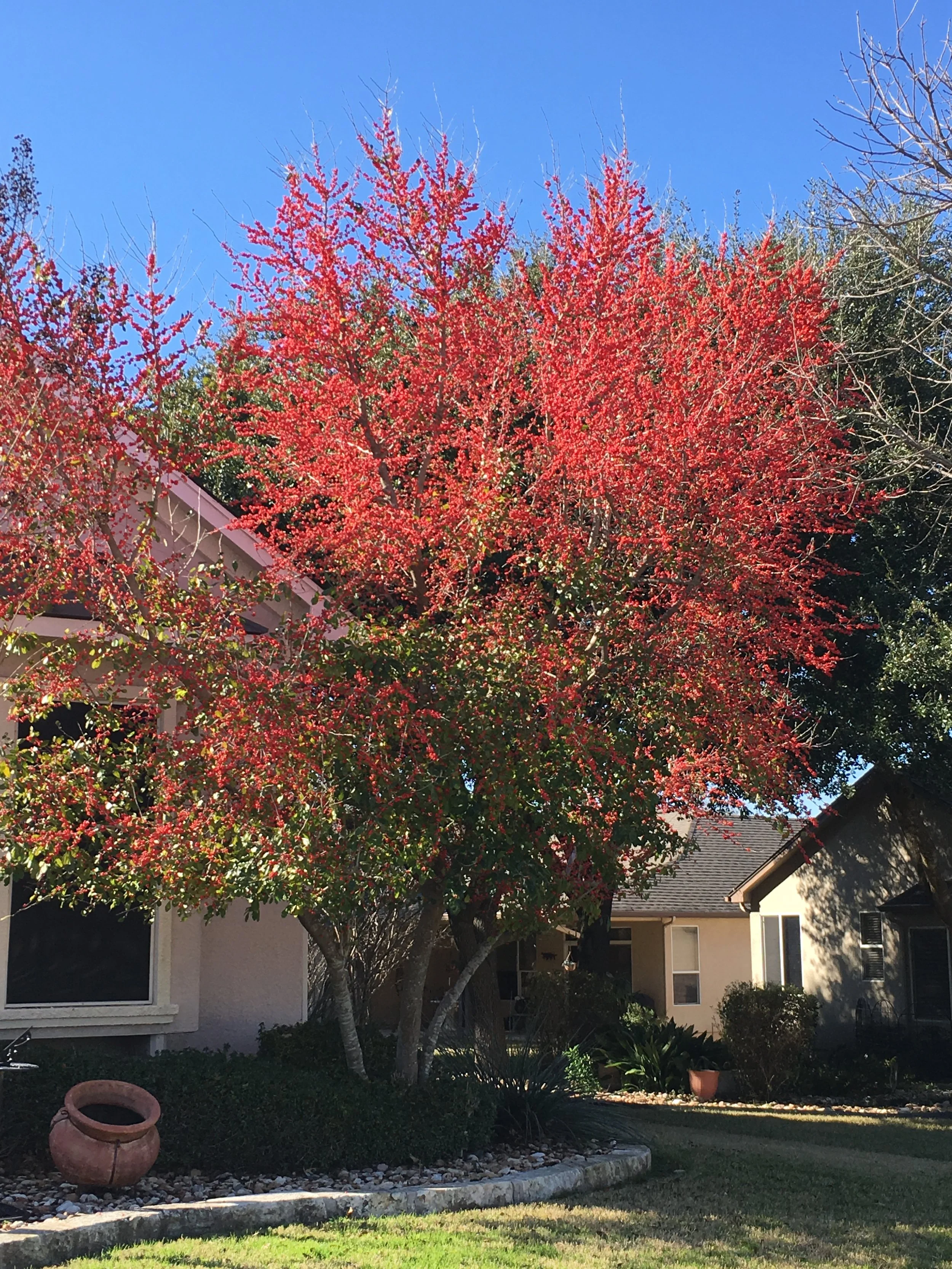
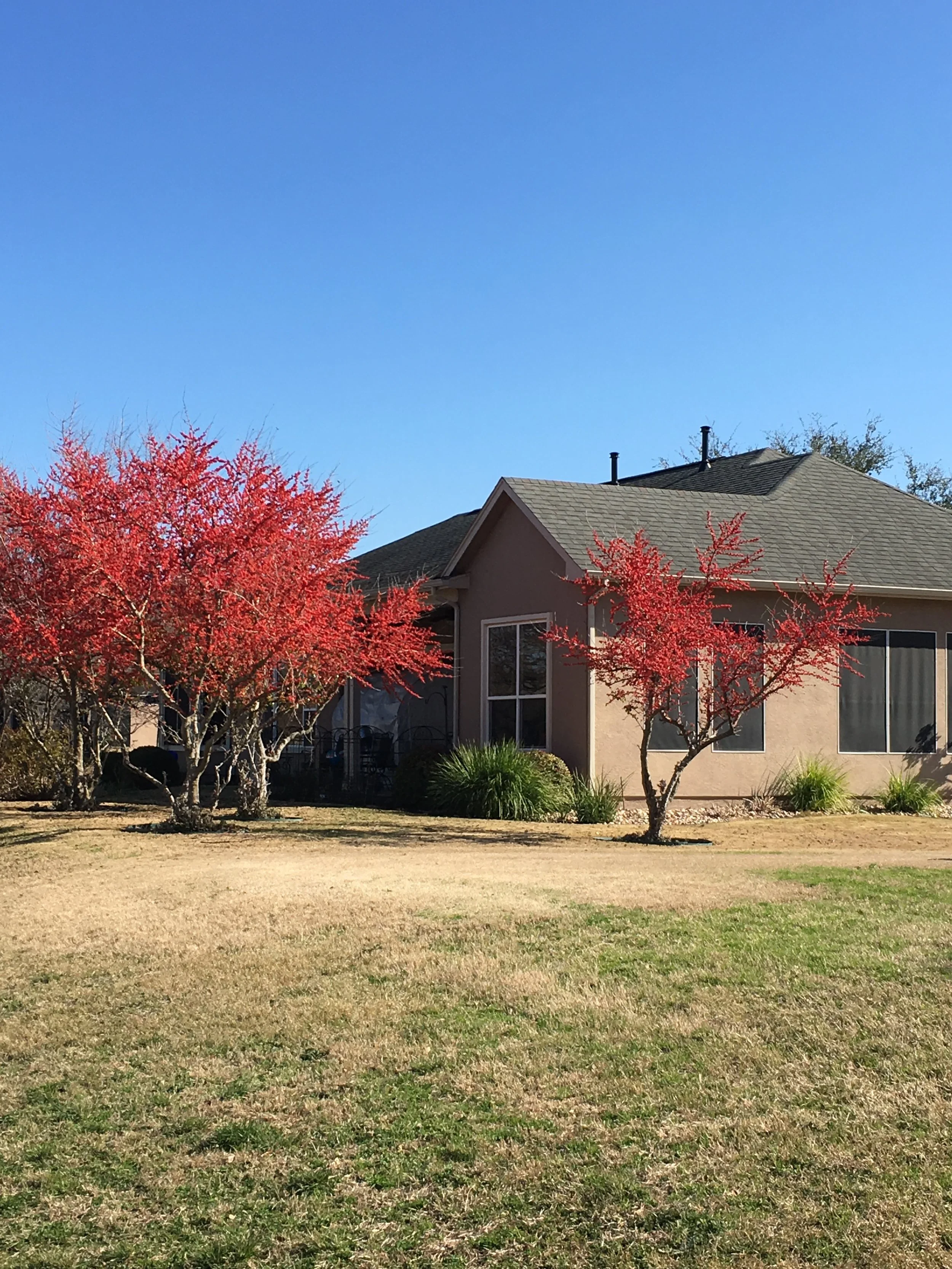
Possumhaw Holly (Ilex decidua) is a hardy Texas native shrub or small tree valued for its brilliant display of red berries in fall and winter. After the leaves drop, the colorful berries remain on the bare branches, providing striking winter interest and an important food source for cedar waxwings, robins, mockingbirds, and many other birds.
Possumhaw grows in sun or part shade and tolerates a wide range of soil conditions, including periodic flooding. Female plants produce the berries, so a male plant must be nearby for pollination. Its wildlife value, seasonal beauty, and adaptability make it an excellent choice for naturalized landscapes and bird-friendly gardens.
Yaupon Holly
Yaupon Holly (Ilex vomitoria) is one of the most versatile and valuable native shrubs or small trees for Central Texas landscapes. Its dense evergreen foliage provides year-round beauty, nesting cover, and shelter for birds, while female plants produce bright red berries that are an important winter food source for many species. Yaupon Holly thrives in sun or shade, tolerates drought once established, and can be used as a screening plant, hedge, accent shrub, or small tree.