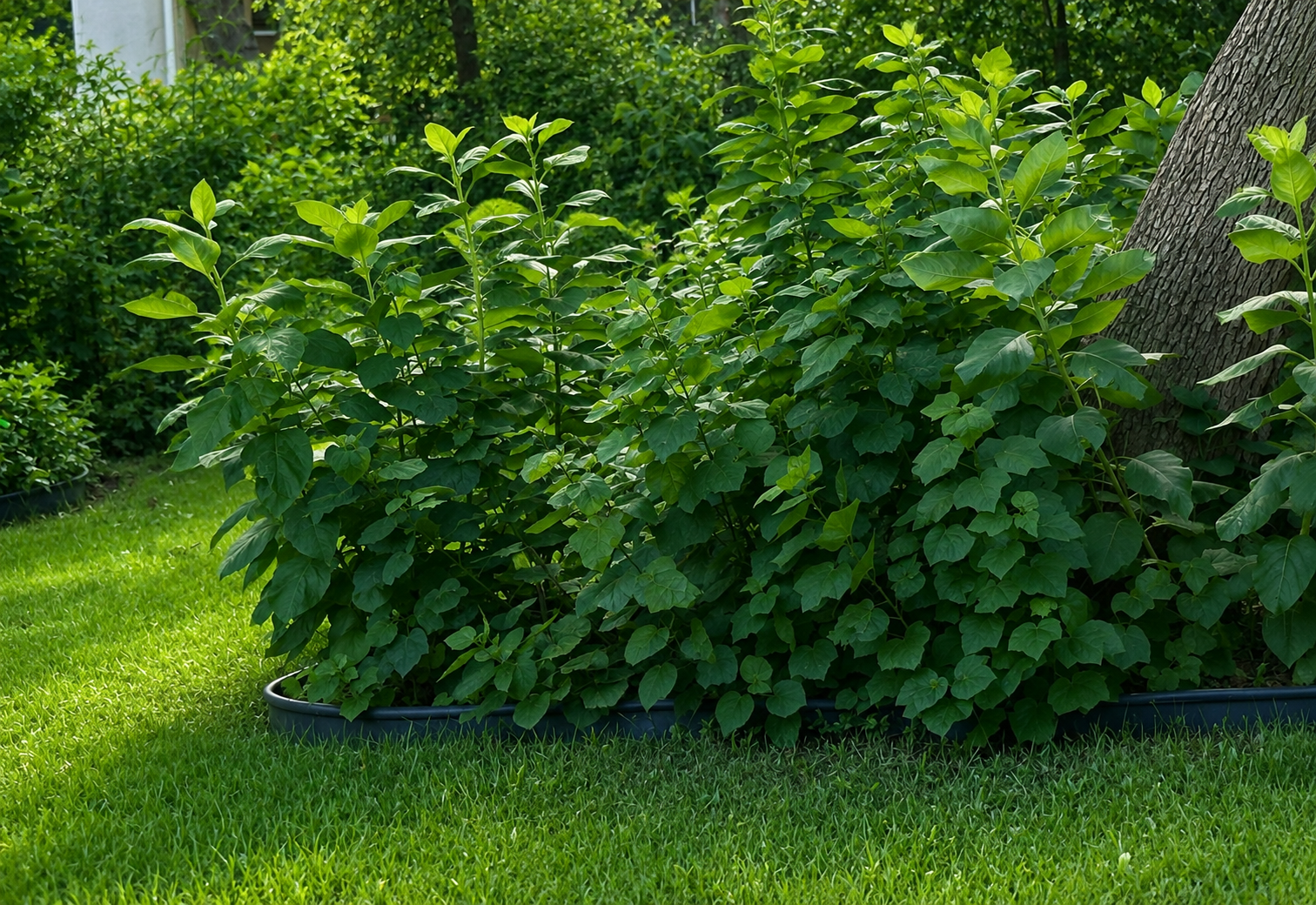
Frostweed
Frostweed (Verbesina virginica) is a striking native Texas perennial that brightens woodland edges and shaded gardens with large clusters of brilliant white flowers from late summer through fall. It is a favorite of butterflies, bees, and many other pollinators, providing an important late-season nectar source. Frostweed is especially famous for the beautiful ribbons of ice that form around its stems on the first freezing mornings of autumn—a rare natural phenomenon that gives the plant its common name. Thriving in part shade to full sun with average to moist soils, it adds both seasonal beauty and fascinating winter interest to native landscapes.
Possumhaw Holly
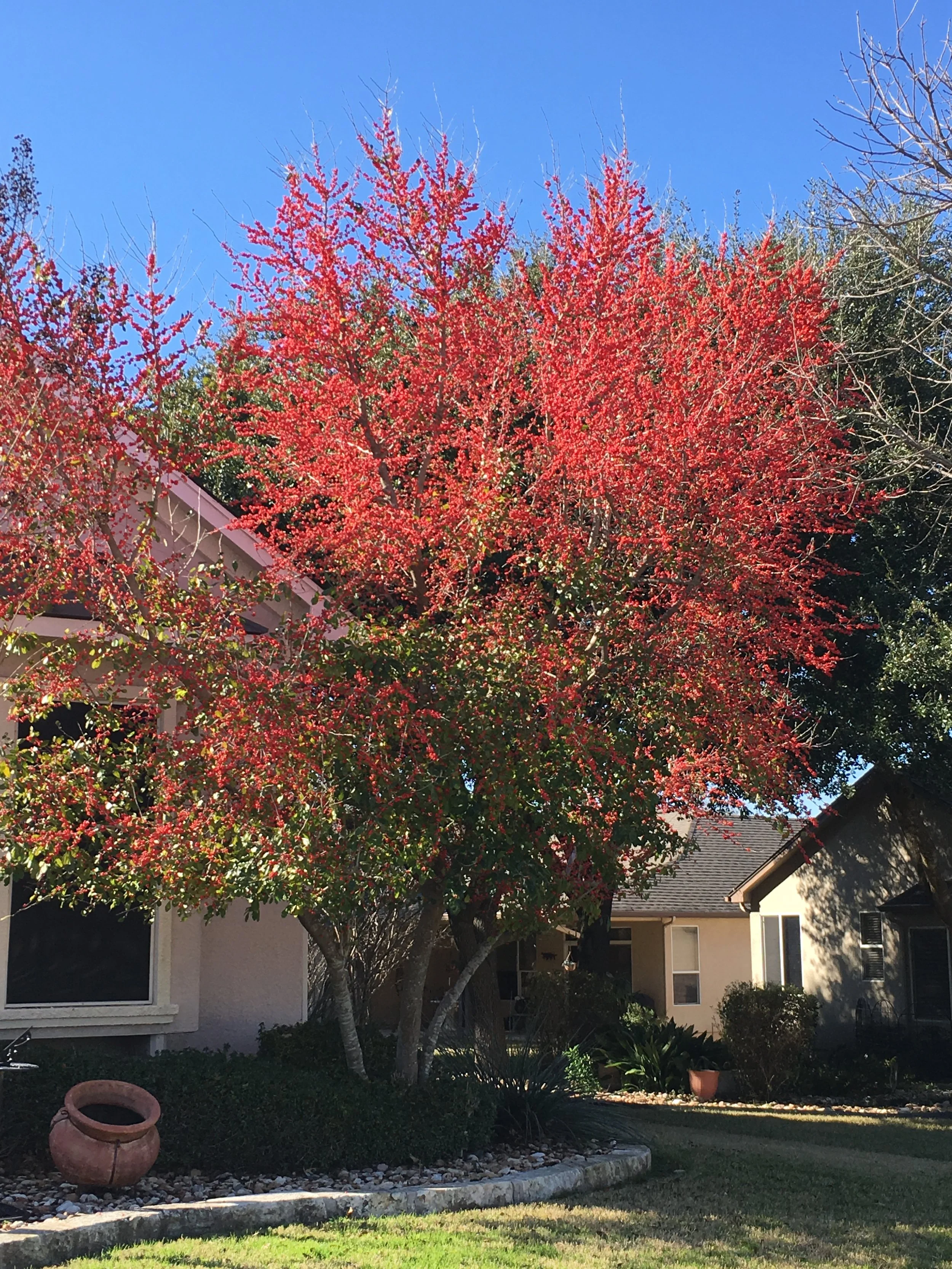
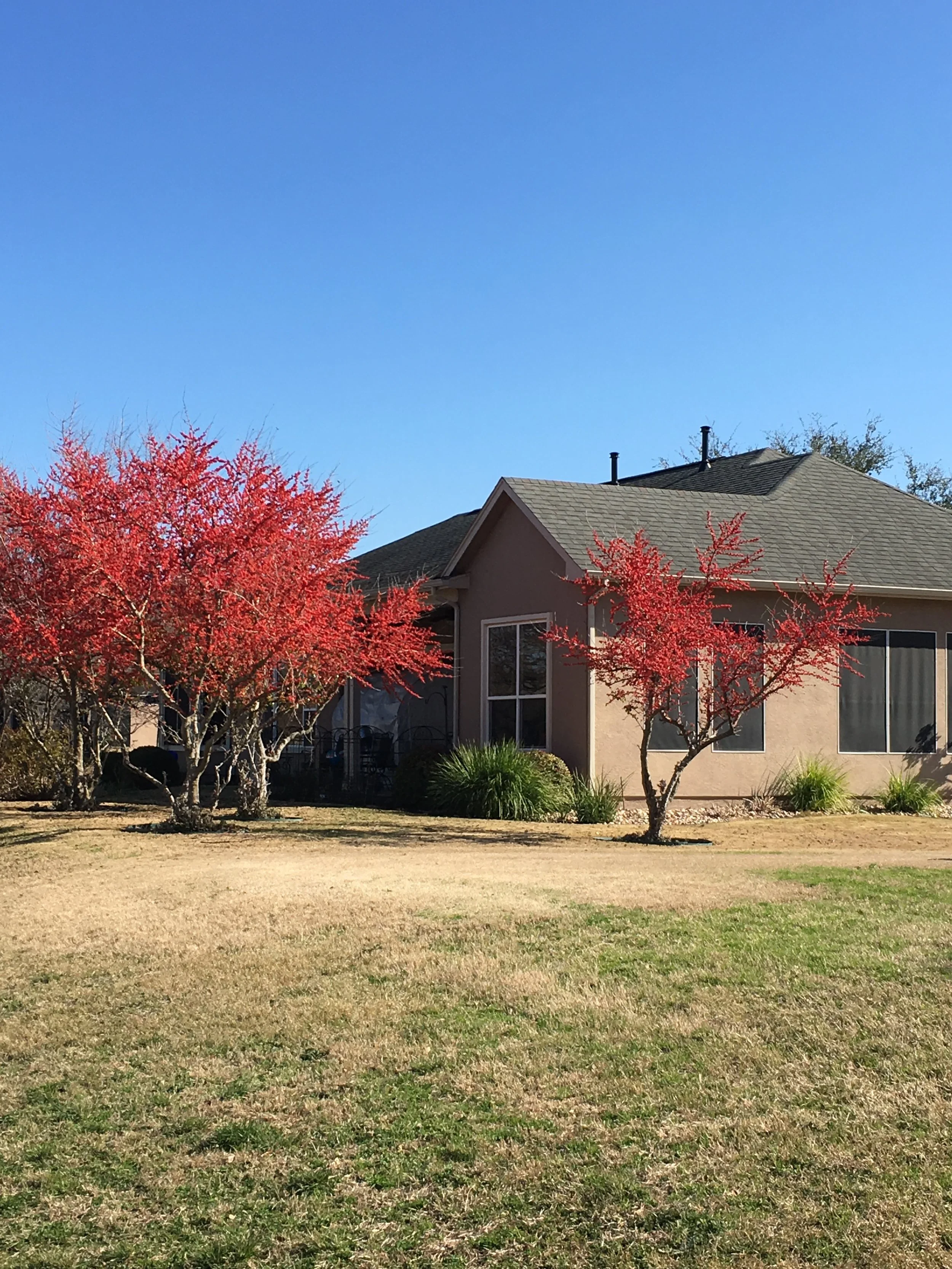
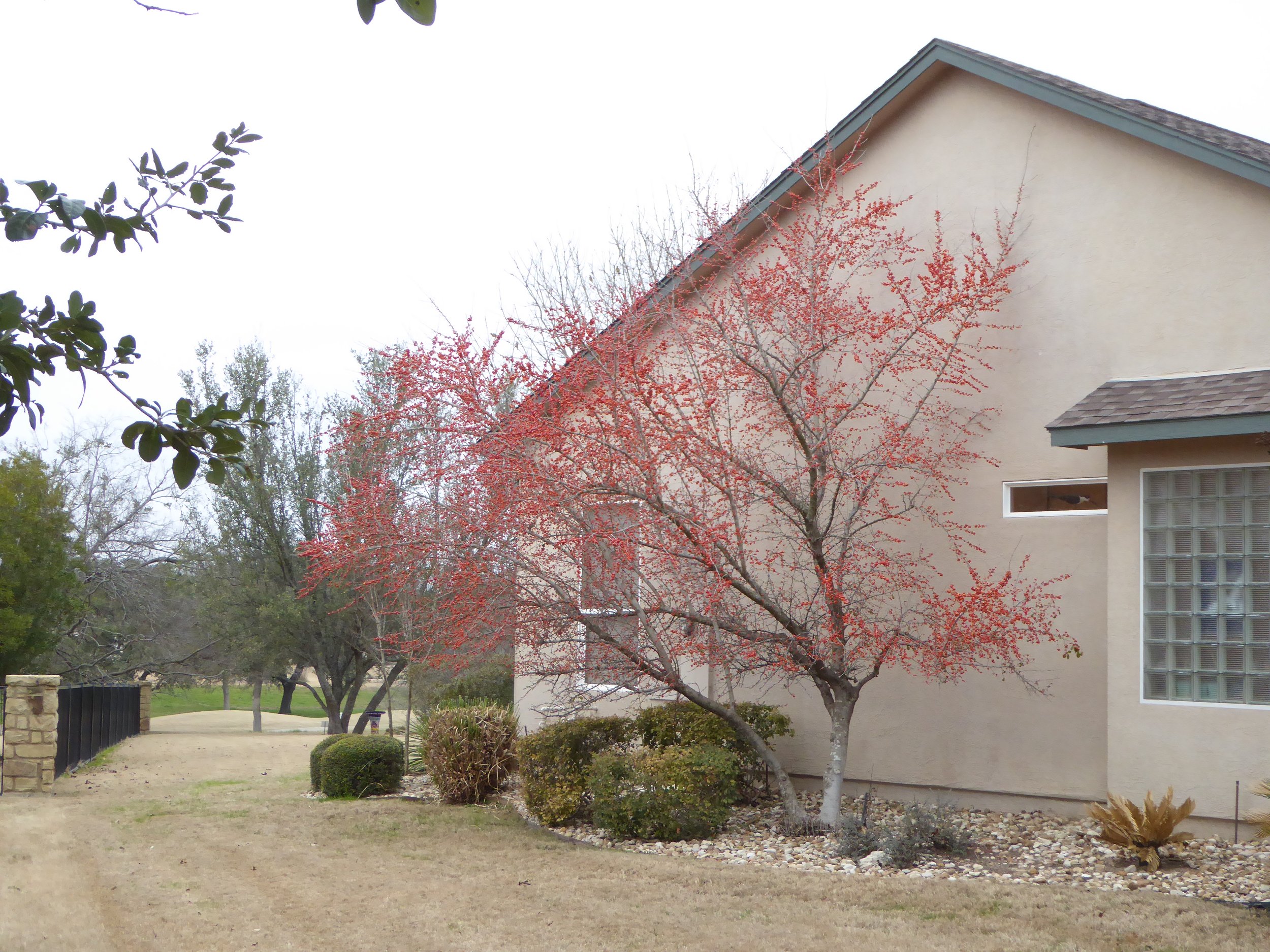
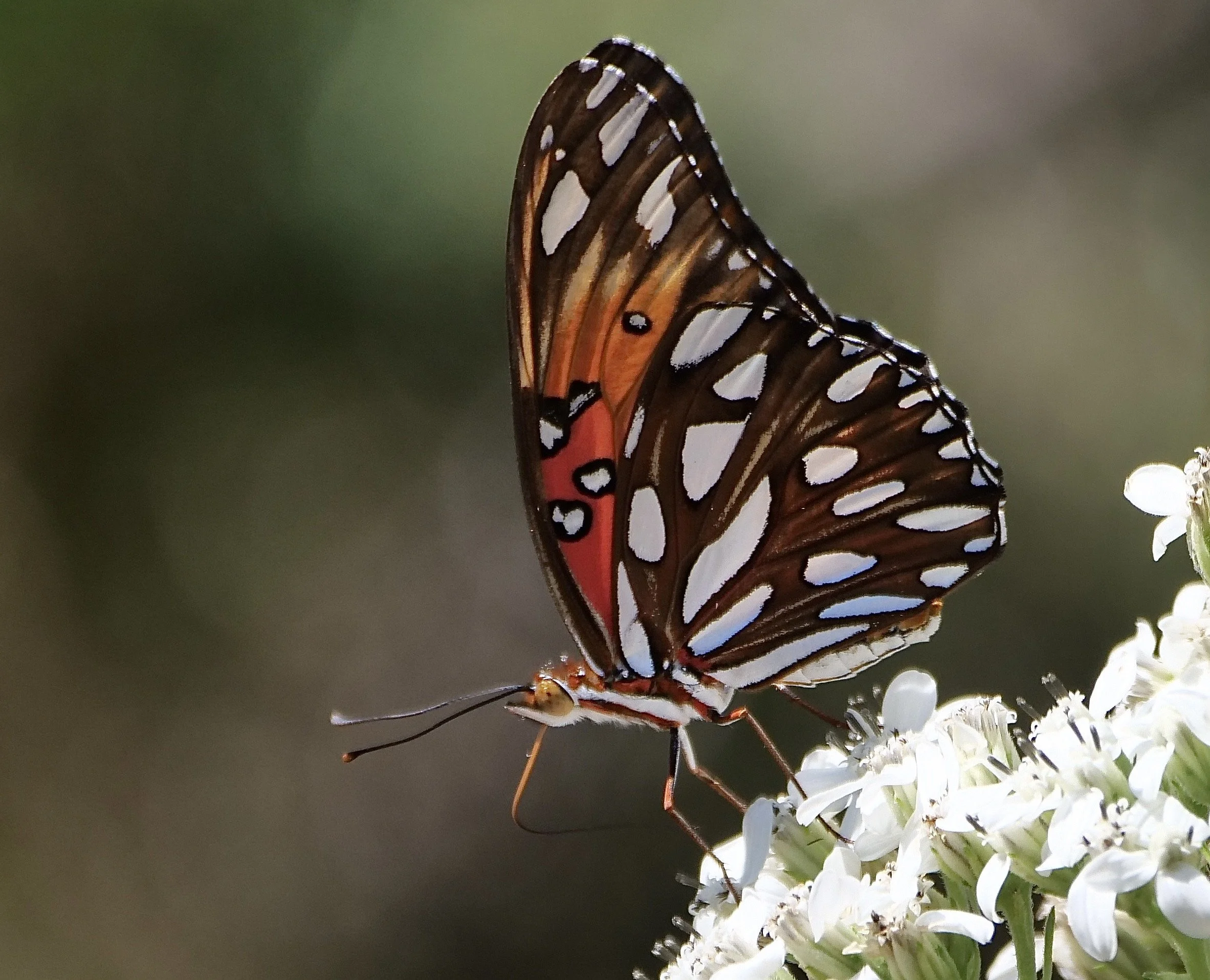
Possumhaw is an outstanding native small tree or large shrub that brings exceptional beauty and wildlife value to Central Texas landscapes. In winter, after its leaves have dropped, the branches become covered with brilliant red berries that create one of the most striking seasonal displays of any native plant. The fruit provides an important winter food source for cedar waxwings, robins, bluebirds, mockingbirds, and many other songbirds. Small white spring flowers attract native bees and other pollinators, while the plant’s adaptability makes it well suited to a variety of landscape settings. Possumhaw grows best in full sun to part shade and is moderately drought tolerant once established, making it an excellent choice for adding year-round interest and supporting local wildlife.
Possumhaw Holly
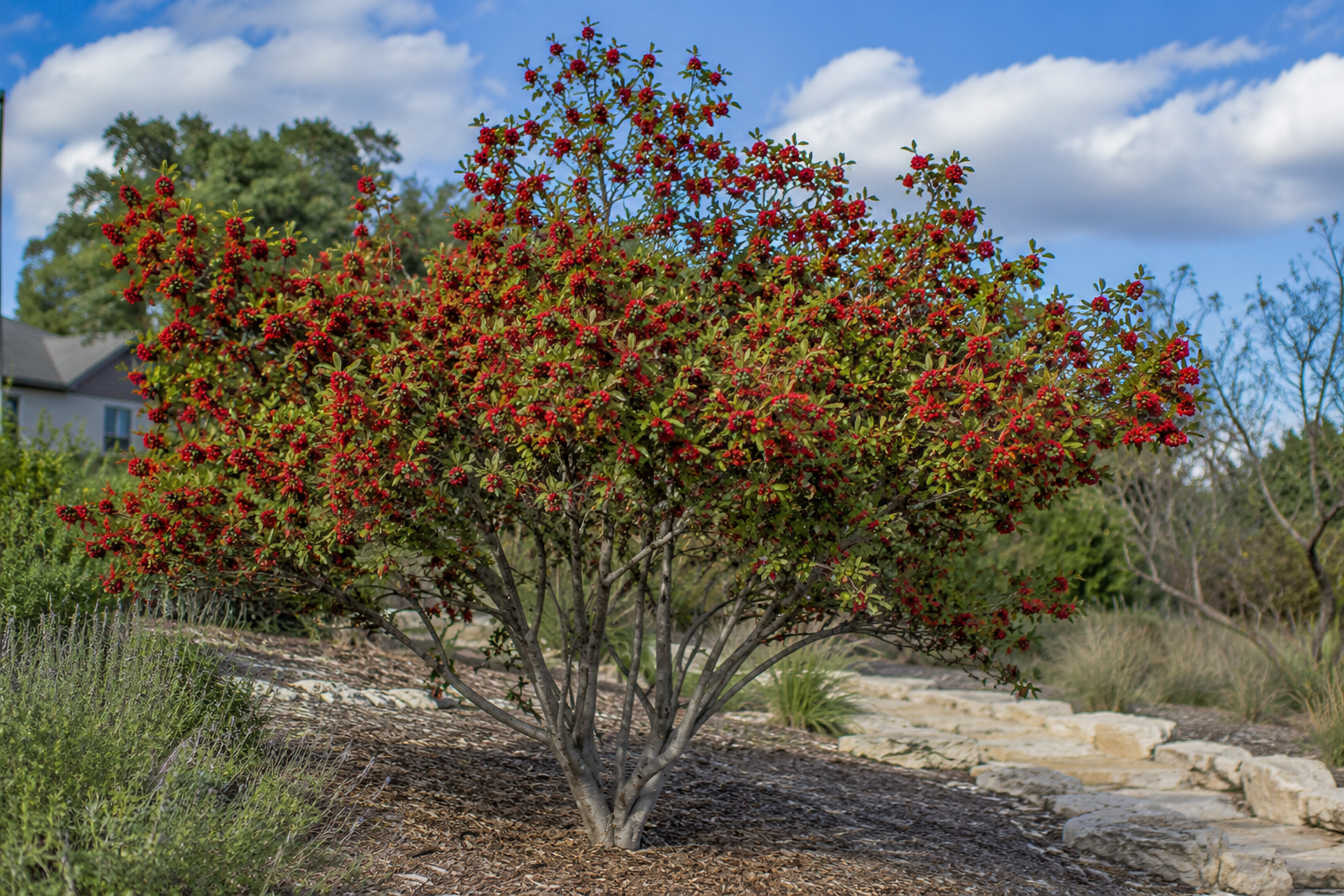
Possumhaw Holly (Ilex decidua) is a hardy Texas native shrub or small tree valued for its brilliant display of red berries in fall and winter. After the leaves drop, the colorful berries remain on the bare branches, providing striking winter interest and an important food source for cedar waxwings, robins, mockingbirds, and many other birds.
Possumhaw grows in sun or part shade and tolerates a wide range of soil conditions, including periodic flooding. Female plants produce the berries, so a male plant must be nearby for pollination. Its wildlife value, seasonal beauty, and adaptability make it an excellent choice for naturalized landscapes and bird-friendly gardens.