
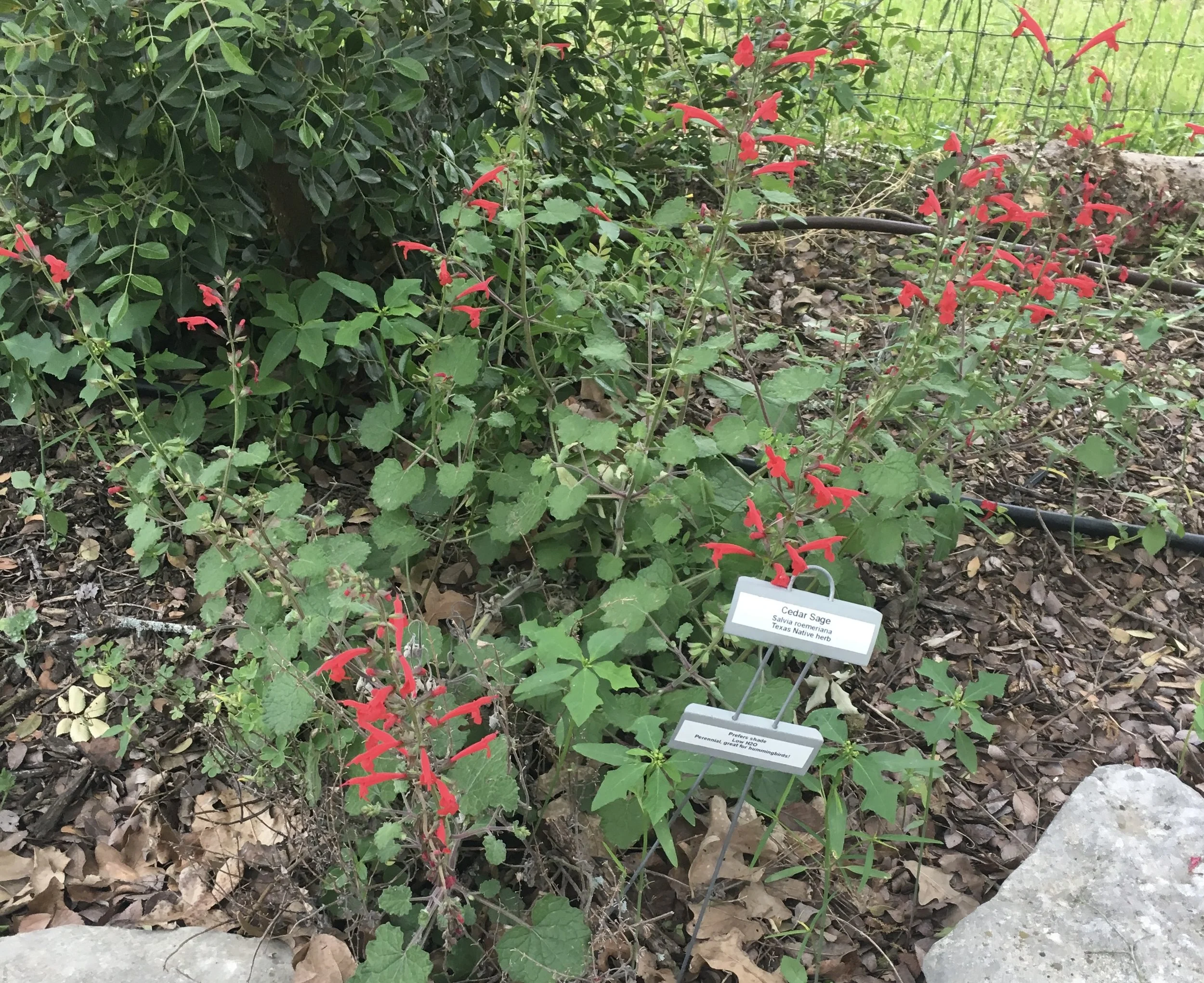
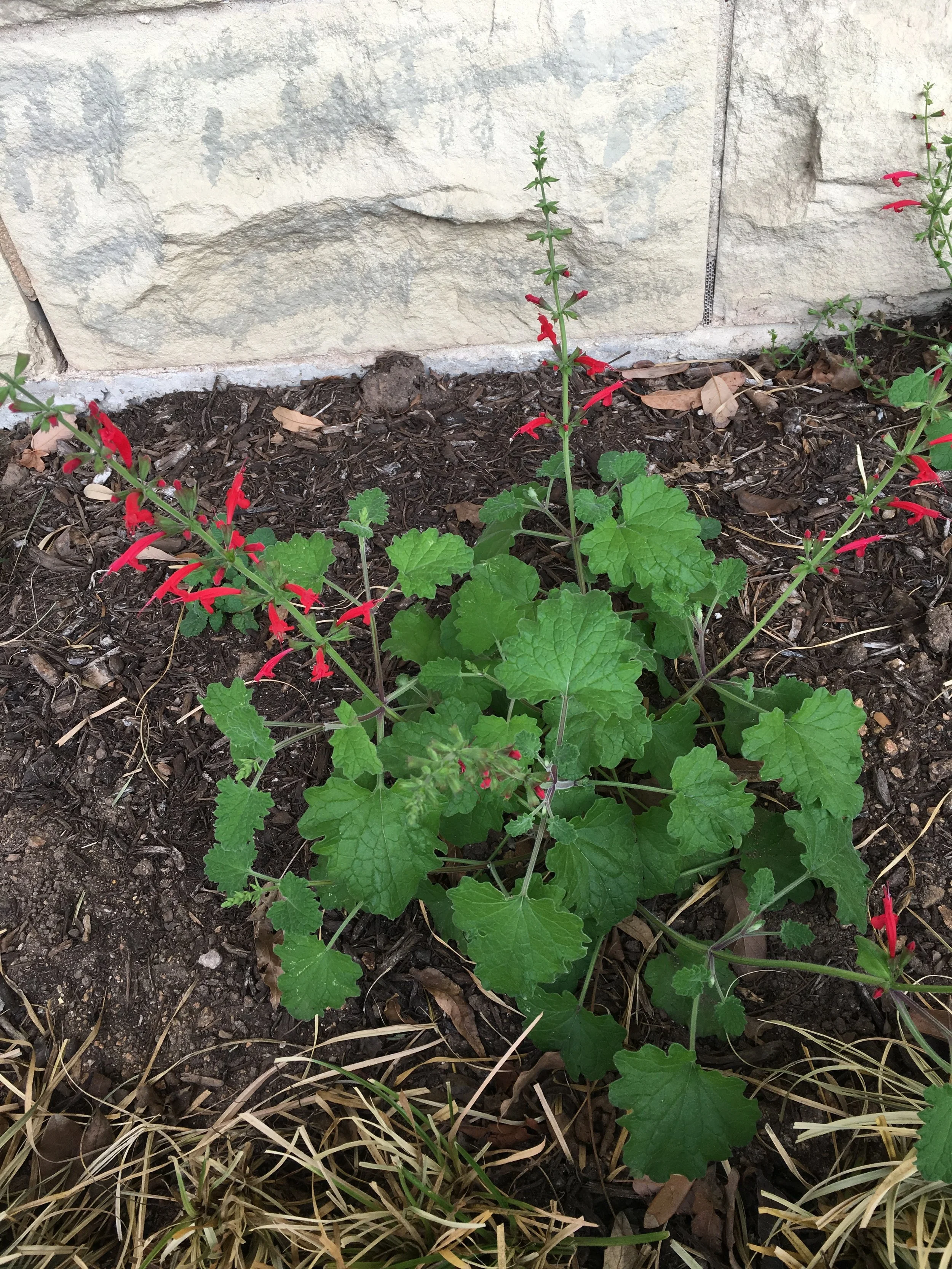
Cedar Sage
Cedar Sage (Salvia roemeriana) is a beautiful native Texas perennial that brings brilliant red flowers to shady gardens from spring through early summer, with occasional reblooming after rains. One of the best hummingbird plants for Central Texas, it also attracts butterflies and native bees while thriving beneath trees and in limestone soils where many flowering plants struggle. Its lush green foliage forms an attractive mound, making it an excellent choice for woodland gardens, shaded borders, and naturalized landscapes. Once established, Cedar Sage is easy to grow, deer resistant, and a dependable source of color and wildlife value.
Button Bush
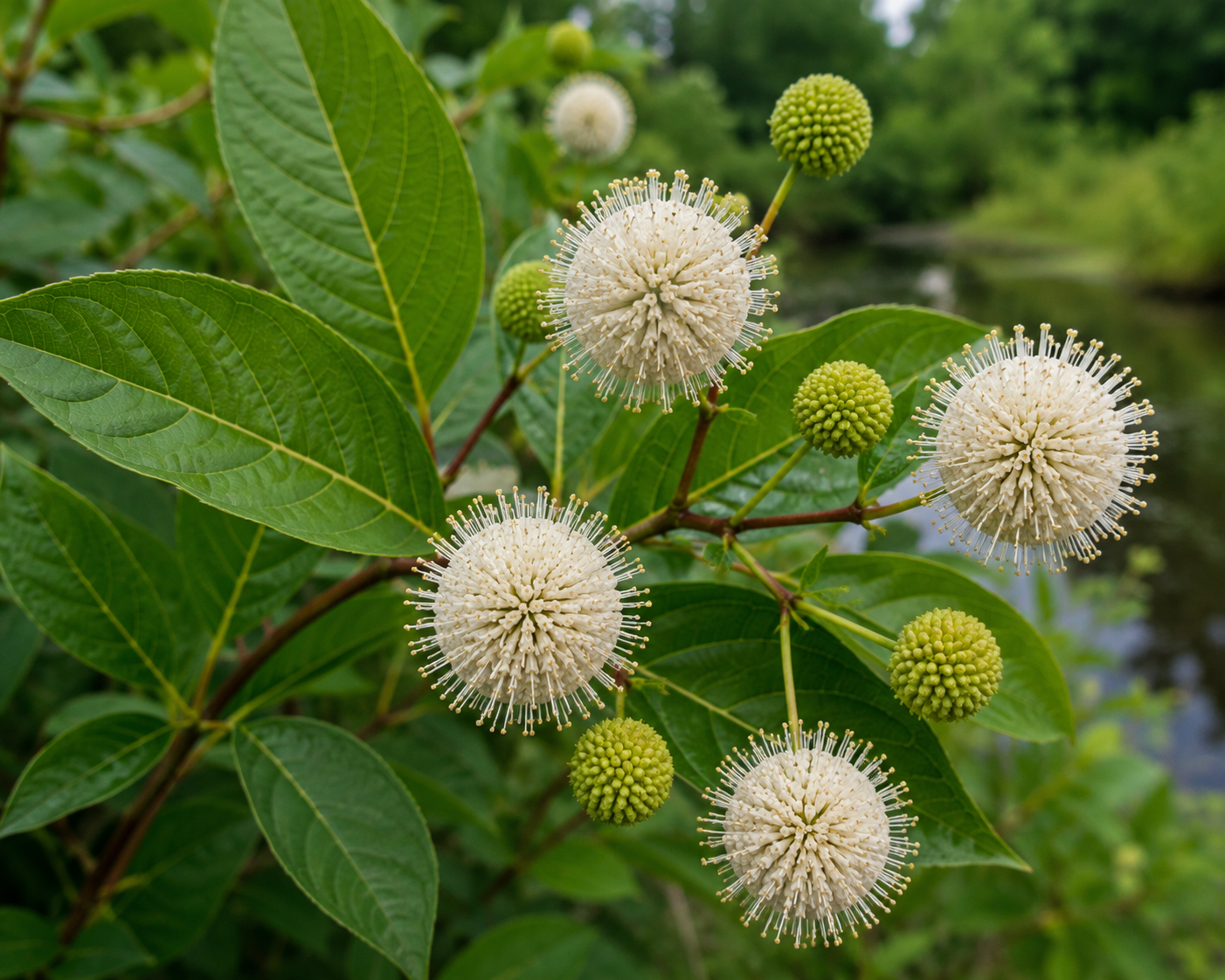
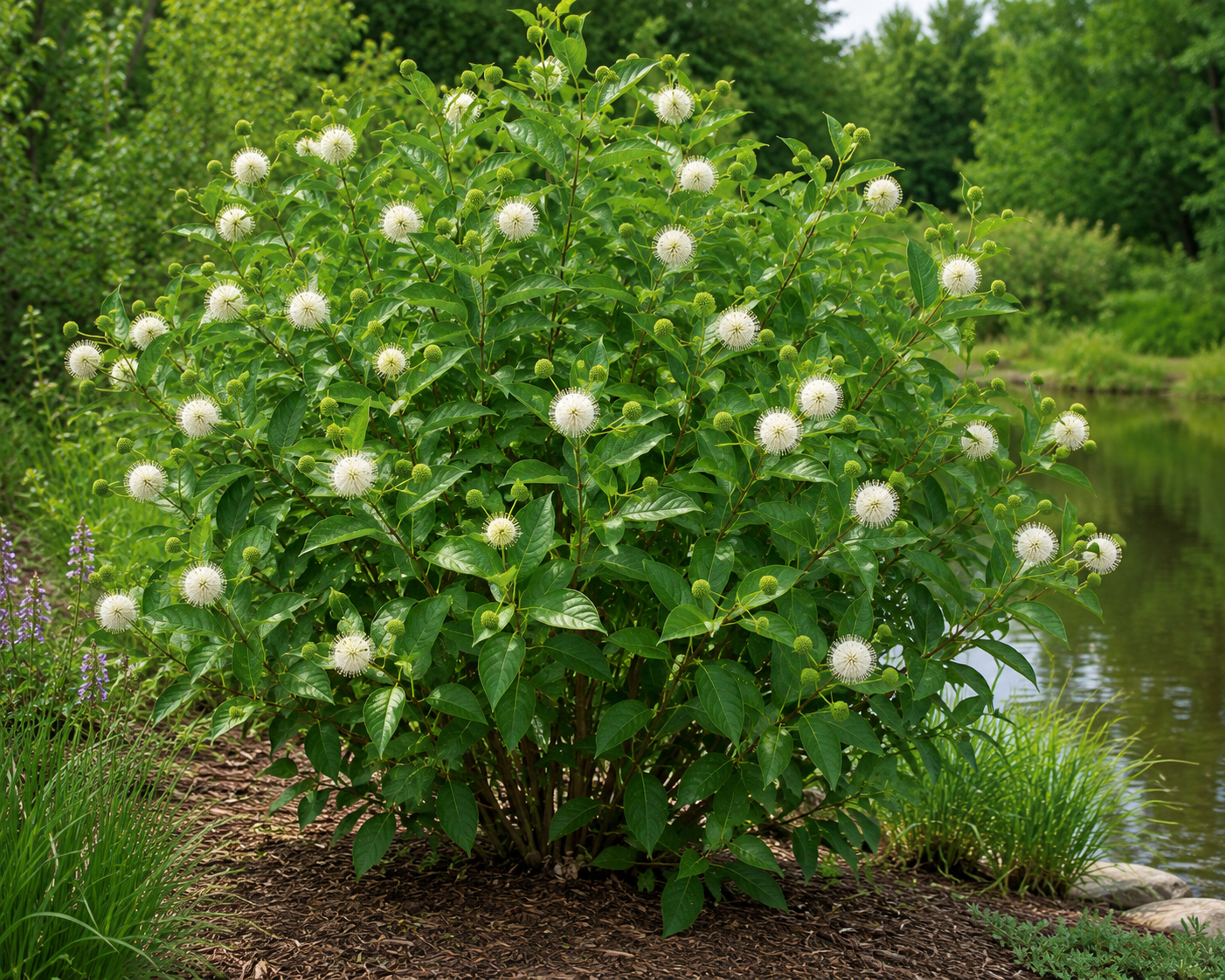
Buttonbush (Cephalanthus occidentalis) is one of the best native shrubs for supporting wildlife in moist areas. Its unique, spherical white flowers resemble pincushions and bloom in summer, attracting a remarkable variety of butterflies, native bees, hummingbirds, and other pollinators. The flowers are followed by decorative seed heads that provide food for ducks and other birds, while the dense branching offers excellent cover for wildlife. Buttonbush thrives in consistently moist soils and even tolerates standing water, making it an outstanding choice for rain gardens, pond edges, low spots, or streambanks. Although it naturally prefers wet conditions, it can adapt to average garden soils with supplemental watering during dry periods.
Rock Rose
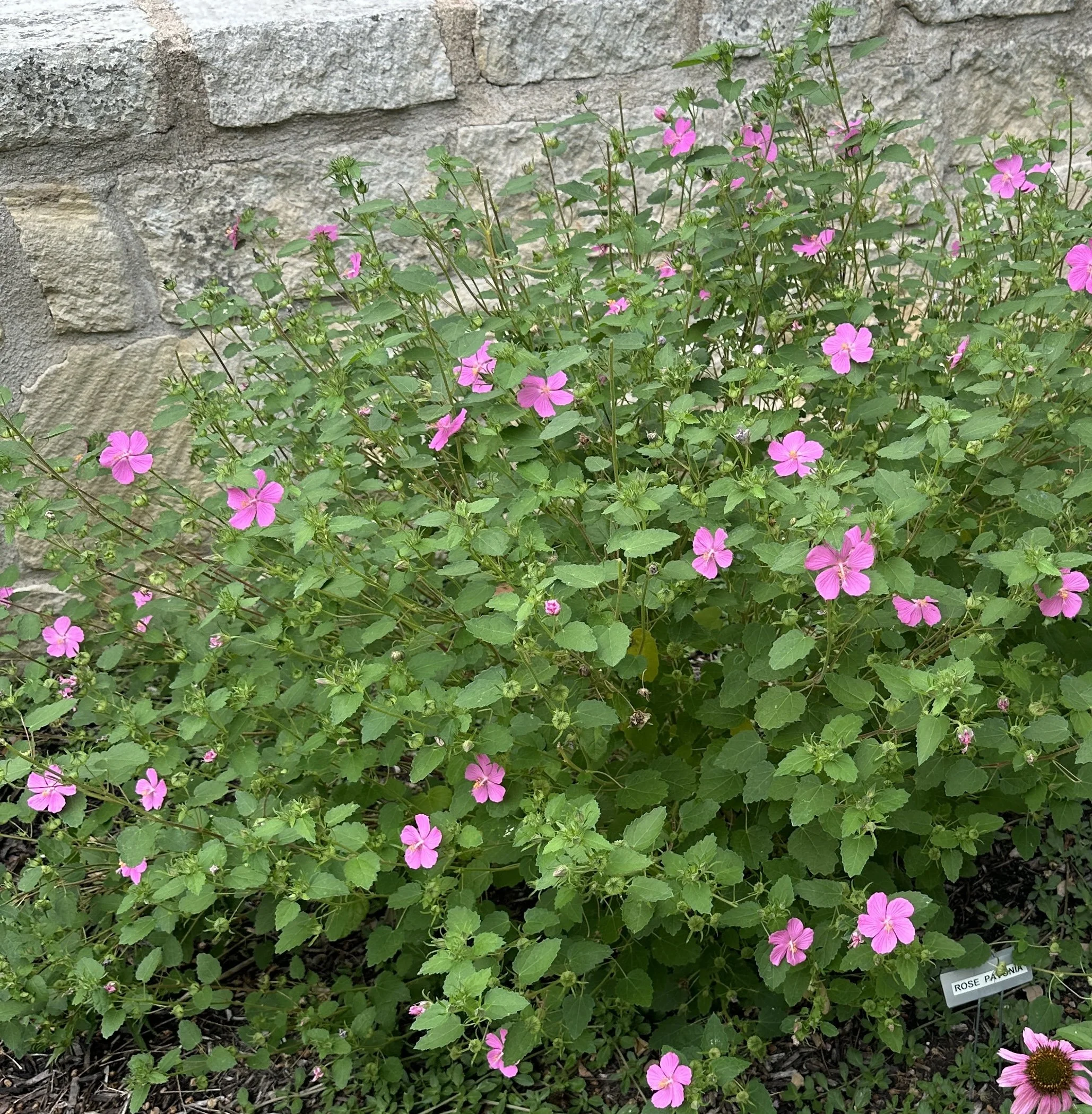
Rock Rose Pavonia lasiopetala is a charming Texas native perennial that produces an abundance of delicate, hibiscus-like pink flowers from spring through fall. Its long bloom season provides a dependable source of nectar for native bees, butterflies, and other pollinators, while its compact size makes it ideal for borders, cottage gardens, and naturalized landscapes. Rock Rose thrives in the heat of Central Texas and tolerates drought once established, performing best in well-drained soils with full sun to partial shade.
Datura
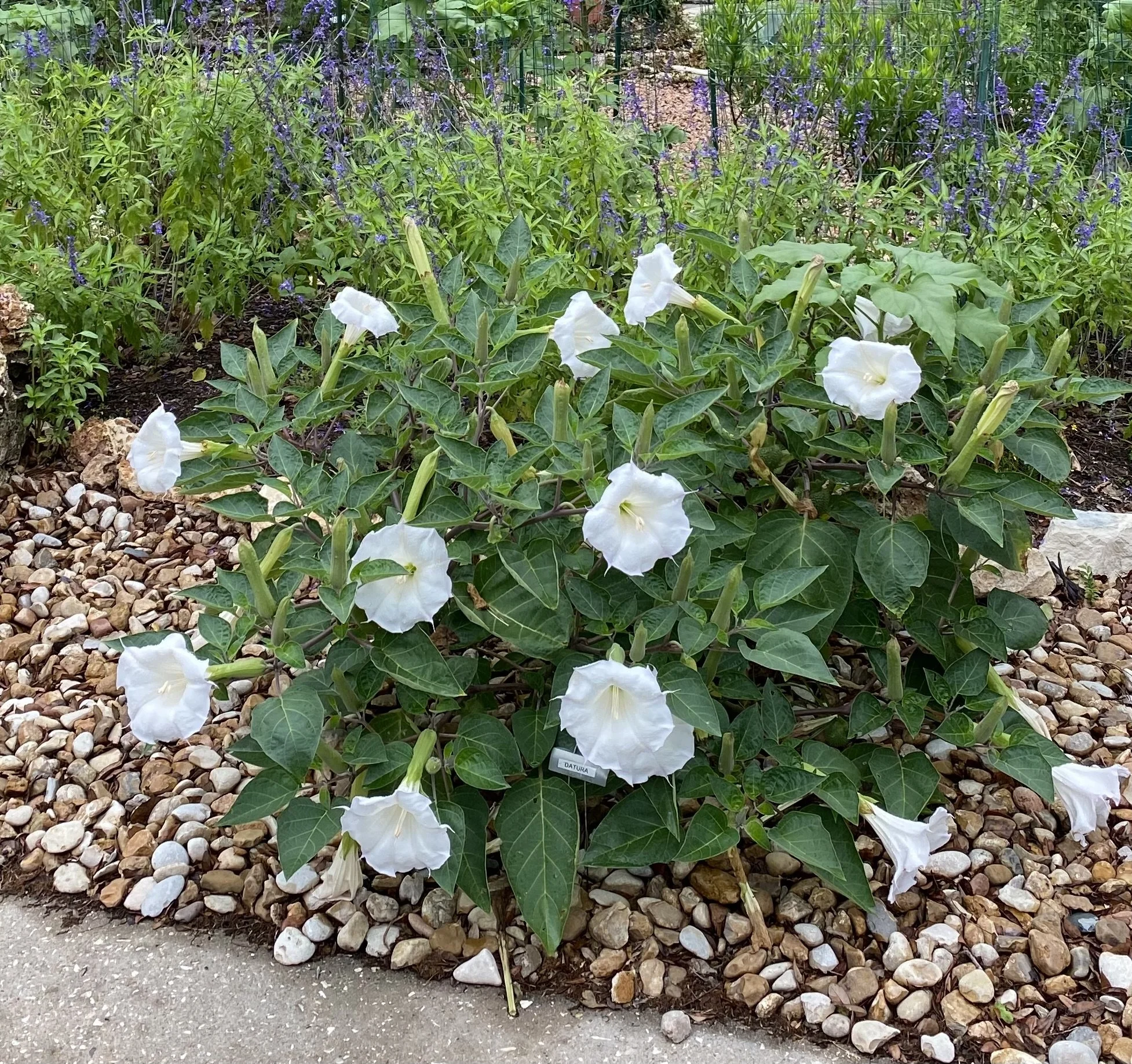
TEXAS Datura Datura wrightii is one of Texas’ most striking native wildflowers, producing large, fragrant, trumpet-shaped white flowers that open in the evening and attract sphinx moths and other nighttime pollinators. Its bold gray-green foliage and spectacular blooms make it a dramatic addition to naturalistic landscapes, moon gardens, and wildlife-friendly plantings. Once established, it is highly drought tolerant and thrives in the hot, sunny conditions of Central Texas. Caution: All parts of the plant are highly toxic if ingested by people, pets, or livestock.
Coral Honeysuckle
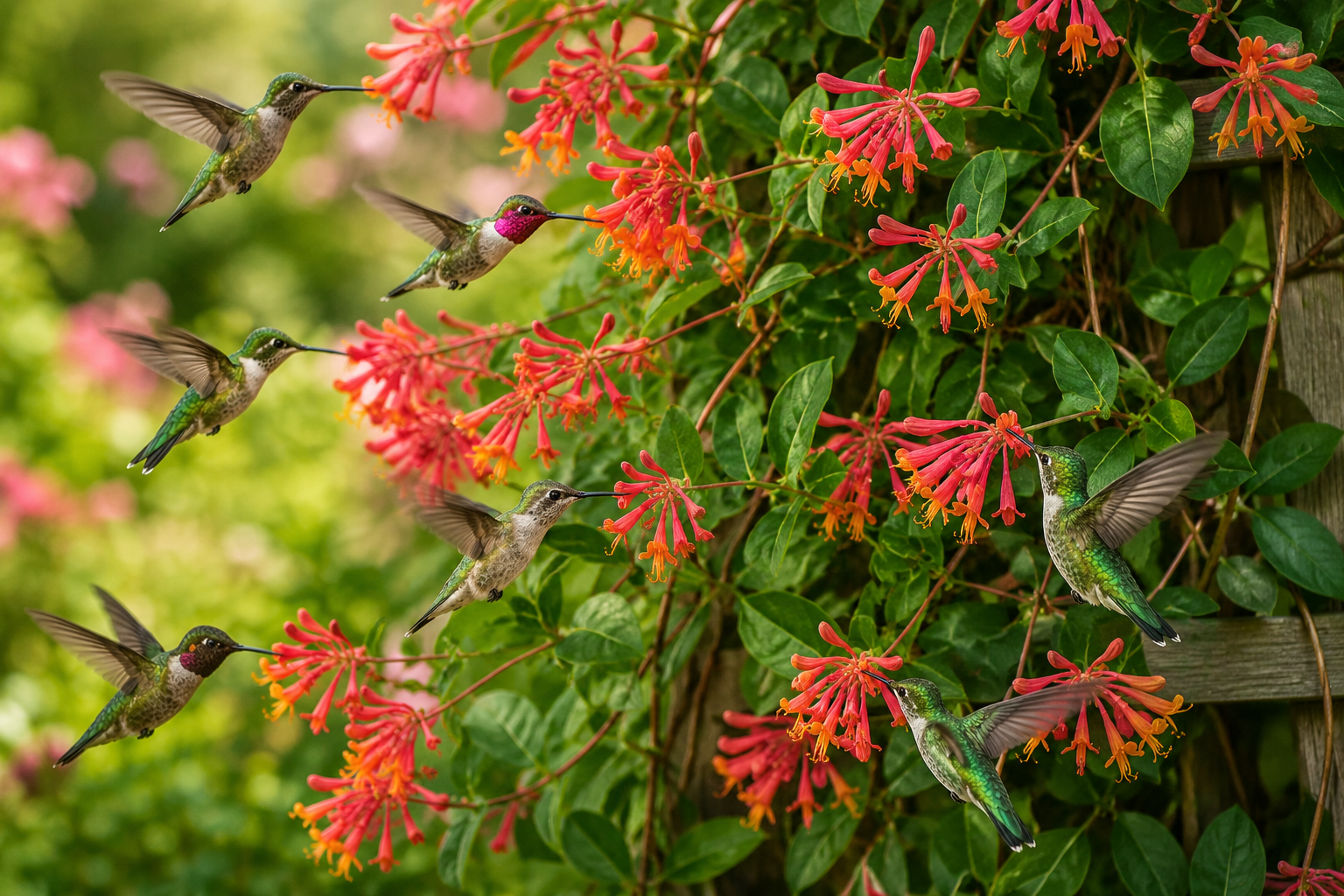
Coral Honeysuckle (Lonicera sempervirens) is one of the finest native vines for Central Texas, producing clusters of brilliant red tubular flowers from spring through fall that are irresistible to hummingbirds, butterflies, and other pollinators. This vigorous but well-behaved vine thrives in full sun to part shade, tolerates drought once established, and is perfect for covering fences, arbors, pergolas, and trellises while adding beauty and wildlife value to the landscape.
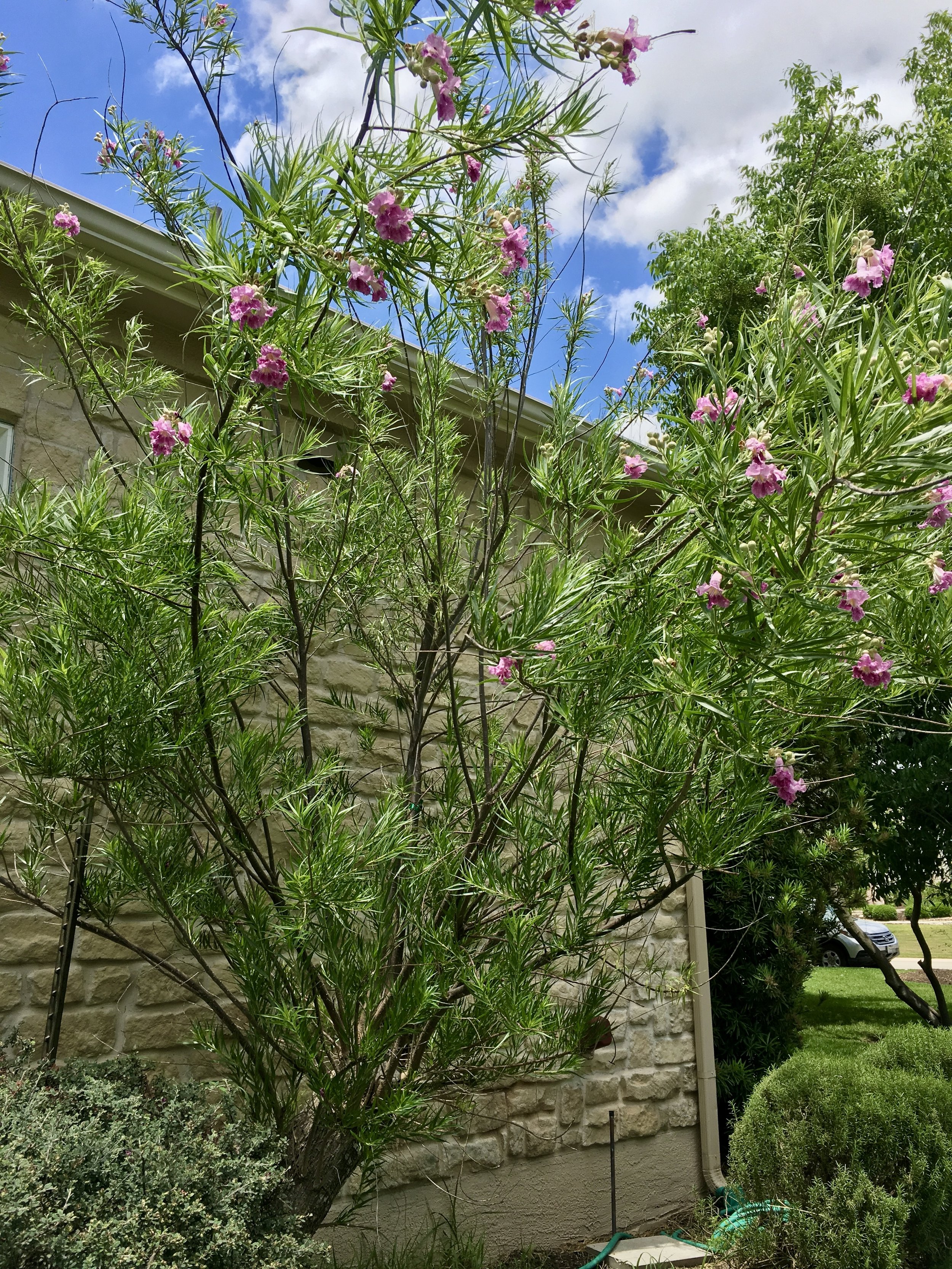
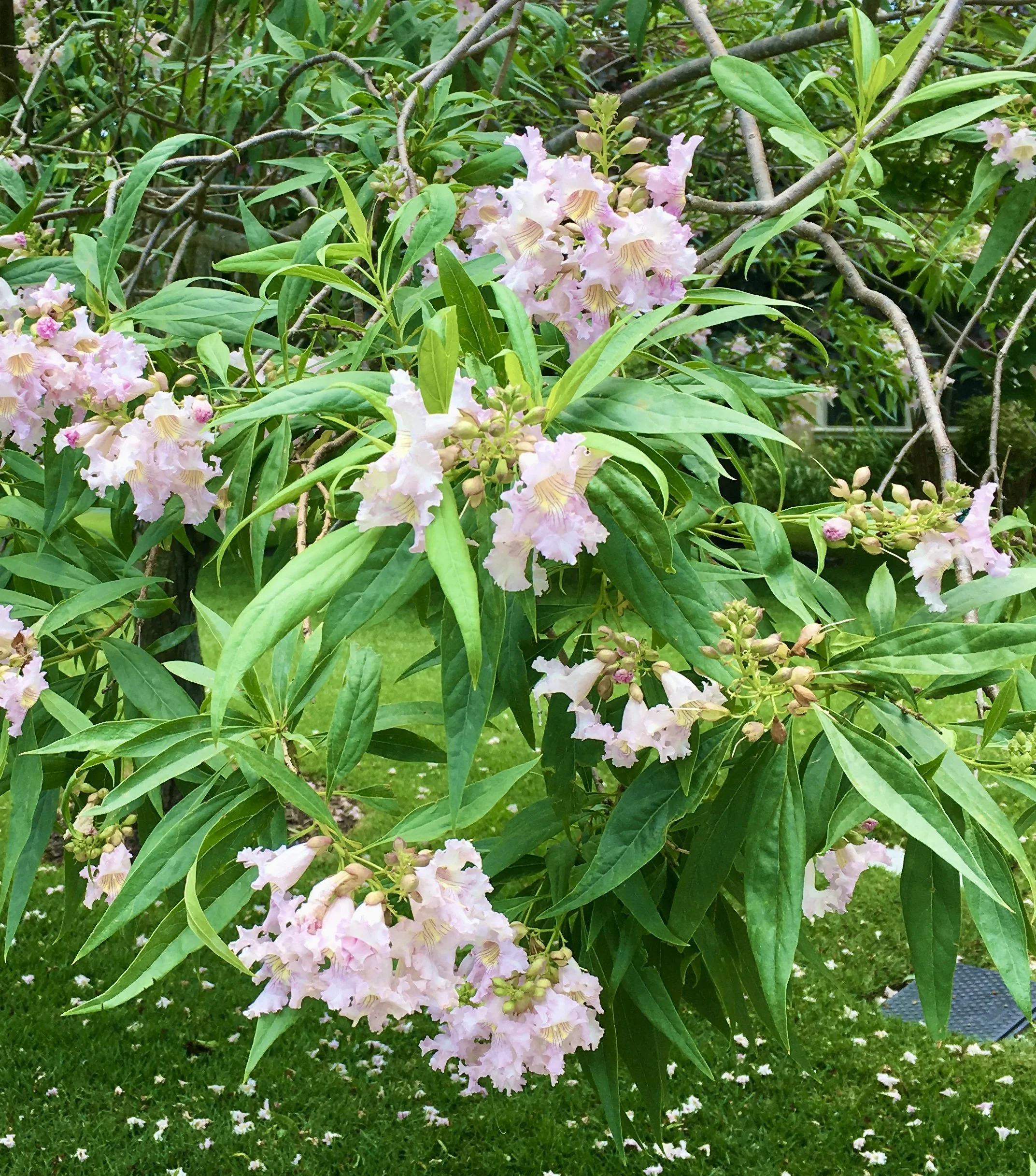
Desert Willow
Desert Willow (Chilopsis linearis)
Desert Willow is one of the most beautiful and dependable small native trees for Central Texas landscapes. Despite its name, it is not a true willow but is prized for its graceful, willow-like foliage and abundant trumpet-shaped flowers that bloom from late spring through summer. The blossoms, which range from lavender-pink to deep purple with yellow and white markings, are highly attractive to hummingbirds, bees, and butterflies. Exceptionally heat and drought tolerant once established, Desert Willow thrives in full sun and well-drained soils, making it an outstanding choice for water-wise landscapes. Its long flowering season, airy form, and outstanding wildlife value make it a favorite for both residential gardens and naturalized settings.