
Prairie Coneflower
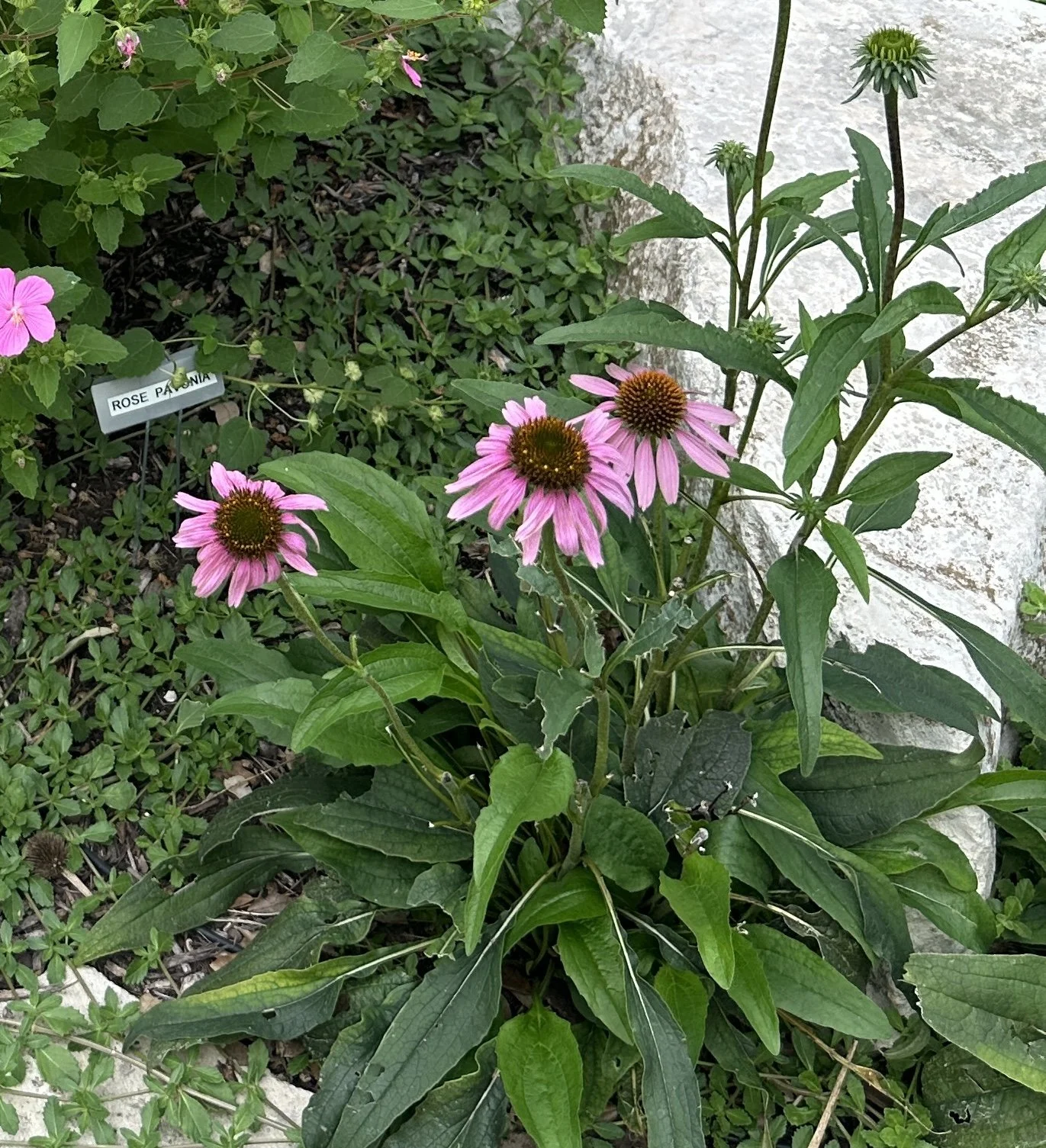
Prairie Coneflower (Ratibida columnifera) is a cheerful, long-blooming native Texas wildflower that produces distinctive yellow petals surrounding a tall, reddish-brown central cone. Blooming from late spring through fall, it provides an abundant nectar source for butterflies, native bees, and other pollinators while its seeds feed songbirds later in the season. Exceptionally heat- and drought-tolerant, Prairie Coneflower thrives in full sun and poor, well-drained soils, making it an excellent choice for wildflower meadows, pollinator gardens, and water-wise landscapes. Its carefree nature and extended bloom season make it one of the easiest and most rewarding Texas natives to grow.
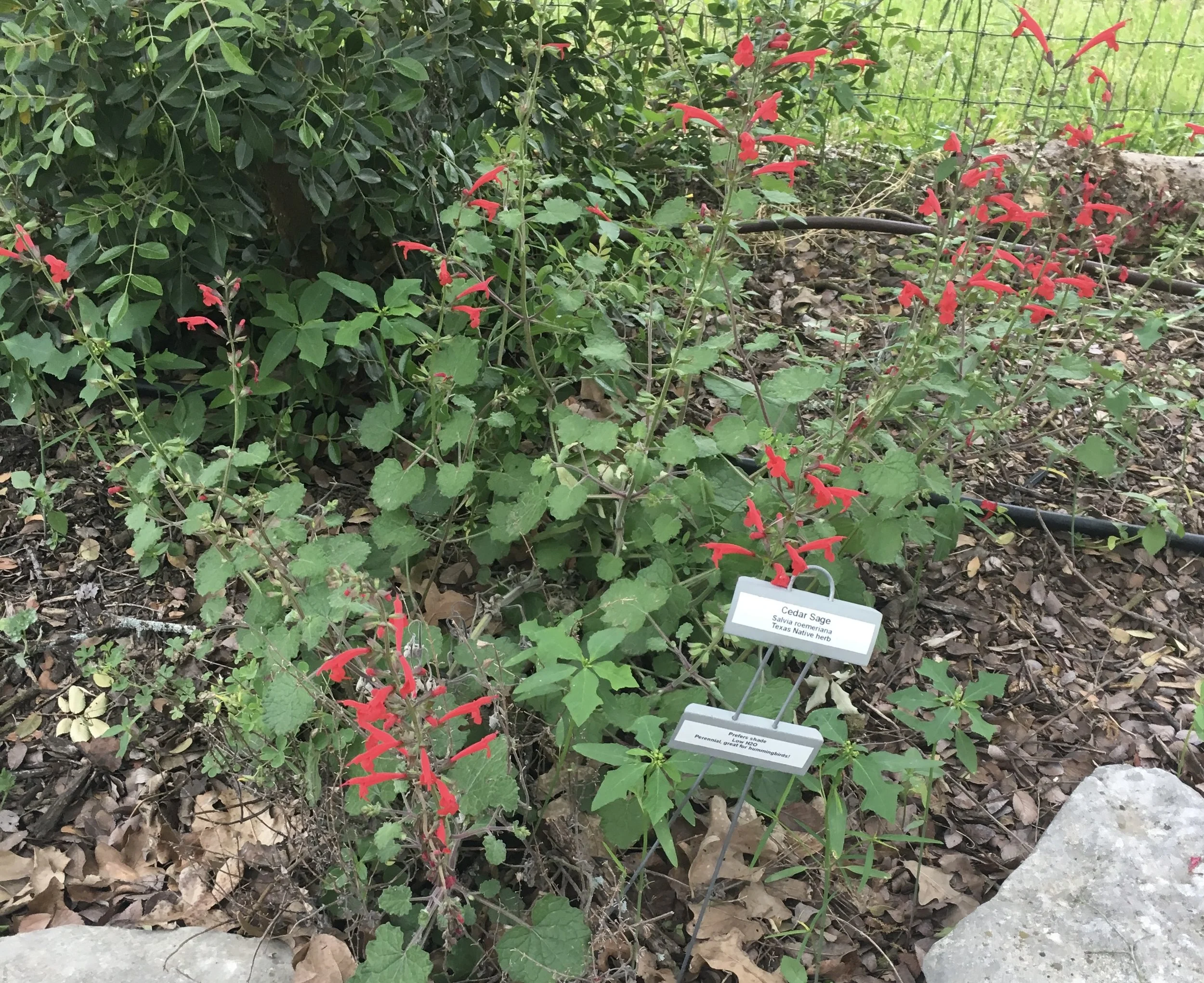
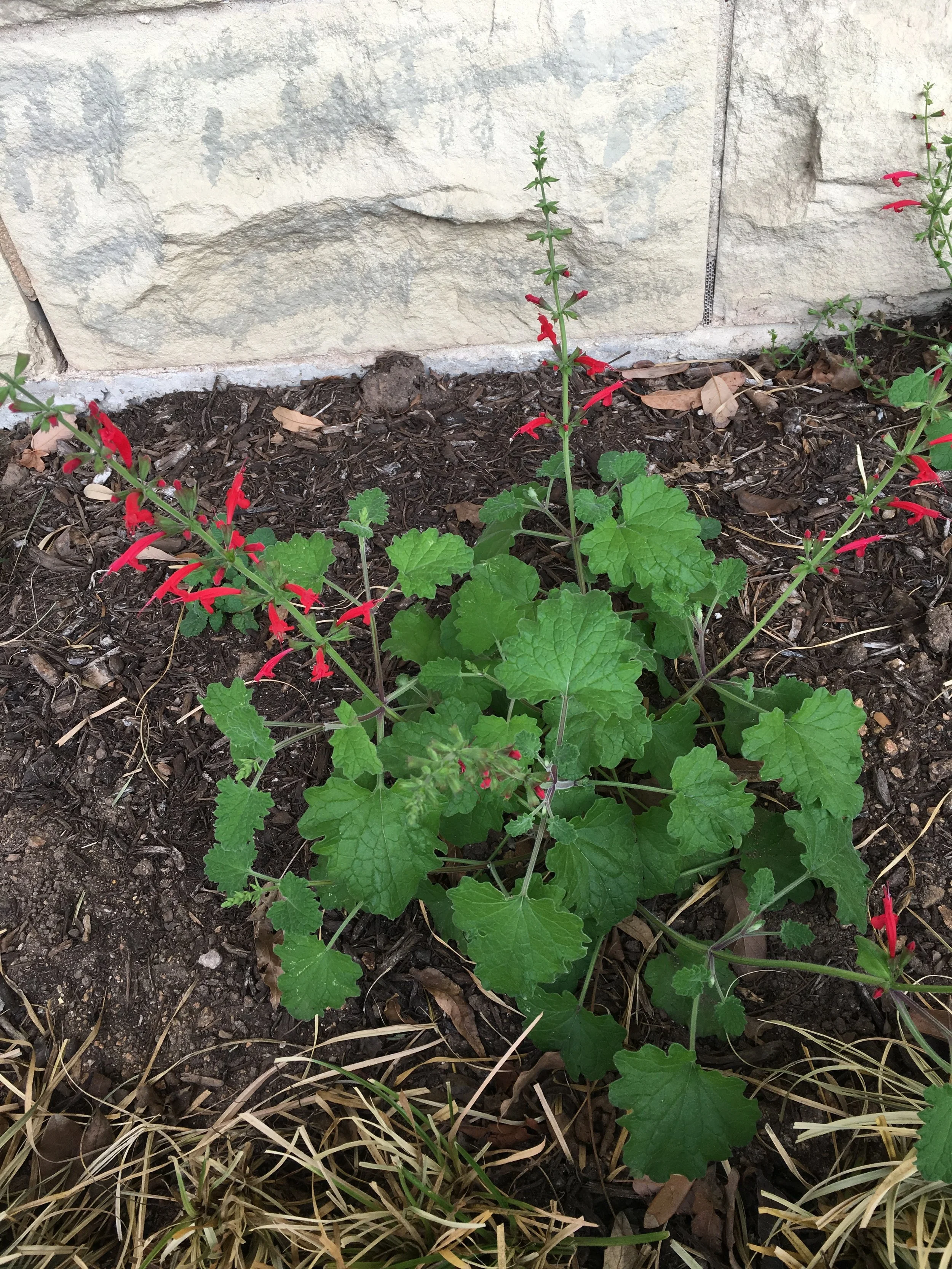
Cedar Sage
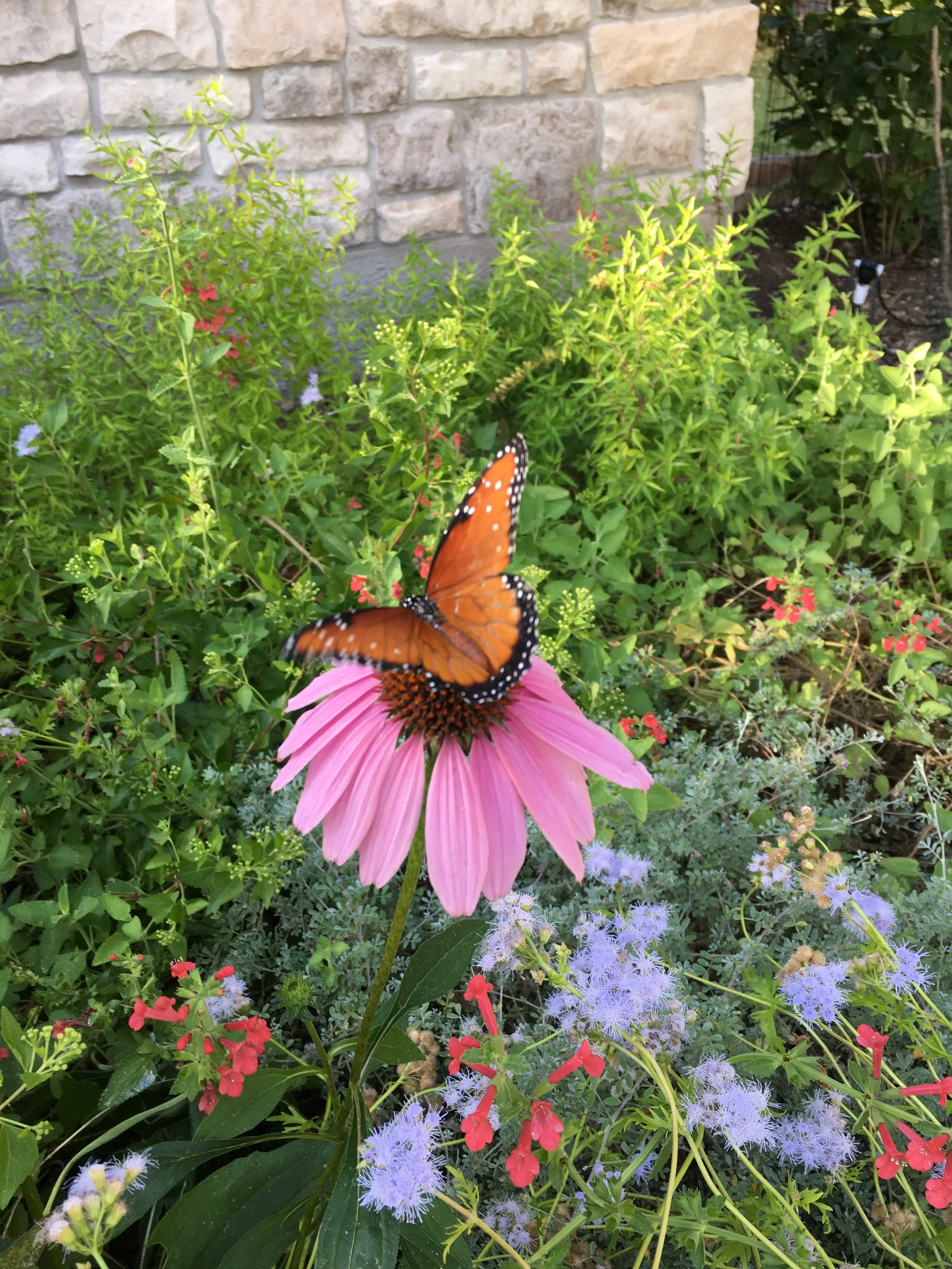
Cedar Sage (Salvia roemeriana) is a beautiful native Texas perennial that brings brilliant red flowers to shady gardens from spring through early summer, with occasional reblooming after rains. One of the best hummingbird plants for Central Texas, it also attracts butterflies and native bees while thriving beneath trees and in limestone soils where many flowering plants struggle. Its lush green foliage forms an attractive mound, making it an excellent choice for woodland gardens, shaded borders, and naturalized landscapes. Once established, Cedar Sage is easy to grow, deer resistant, and a dependable source of color and wildlife value.
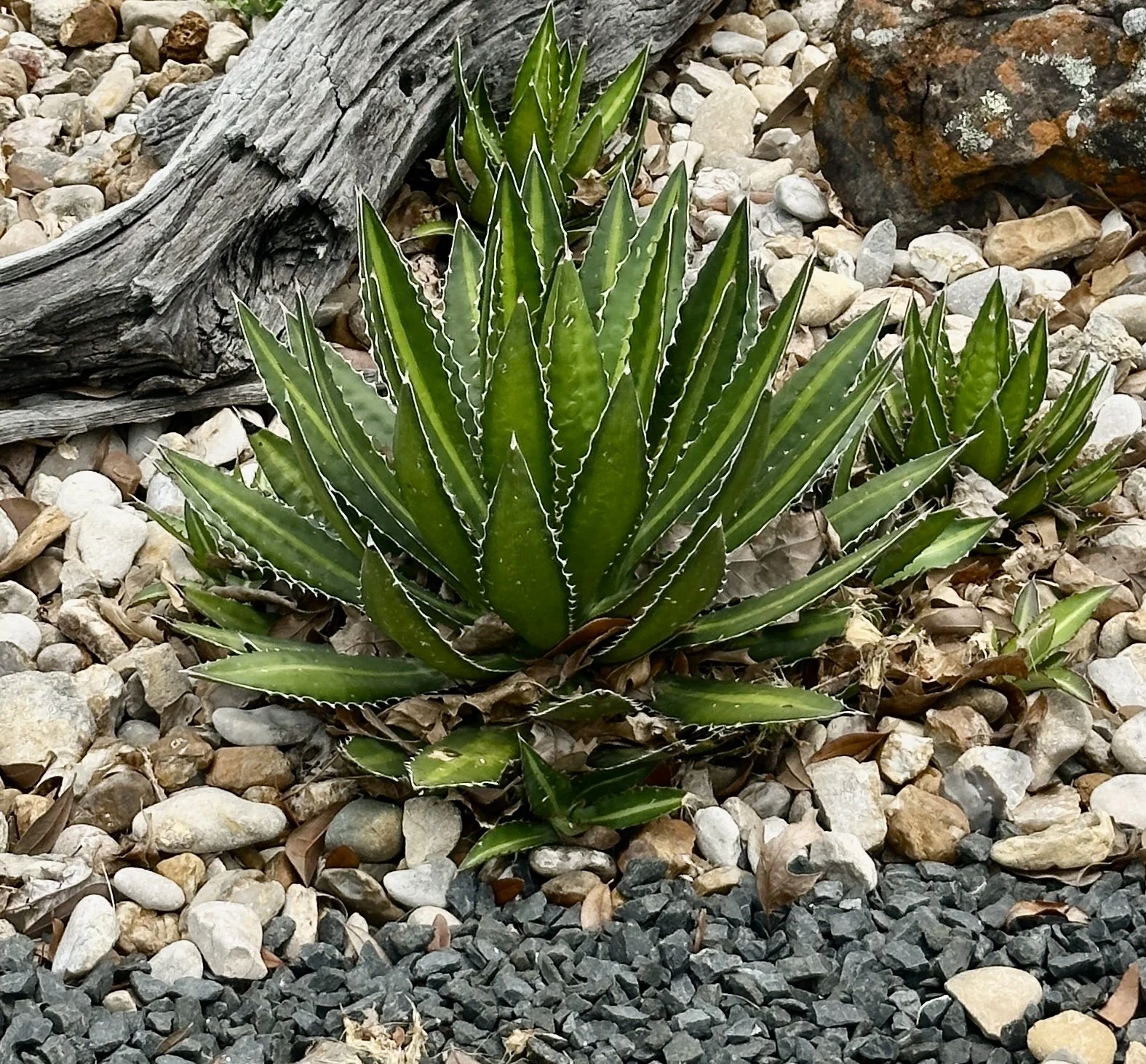
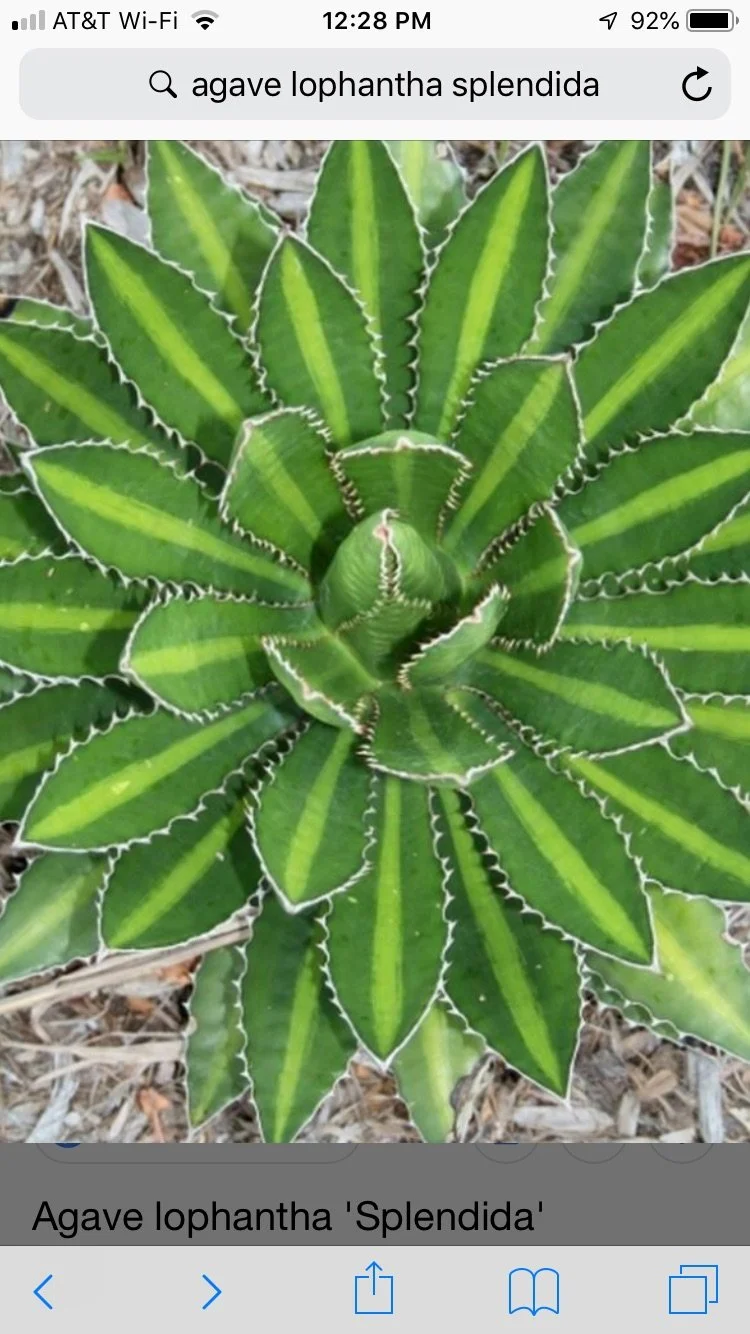
Agave lophantha
Agave lophantha ‘Splendida’ Agave lophantha ‘Splendida’ is a striking variegated selection of the native Texas agave, prized for its symmetrical rosettes of dark green leaves accented by bright lime-green center stripes. White-edged teeth and a sharp terminal spine add bold architectural character, making it an outstanding focal point in rock gardens, xeriscapes, and modern landscapes. This compact agave thrives in full sun and excellent drainage, tolerates drought and limestone soils once established, and slowly forms attractive clumps by producing offsets. Like other agaves, each individual rosette flowers only once late in its life, but the surrounding pups continue the colony for many years.
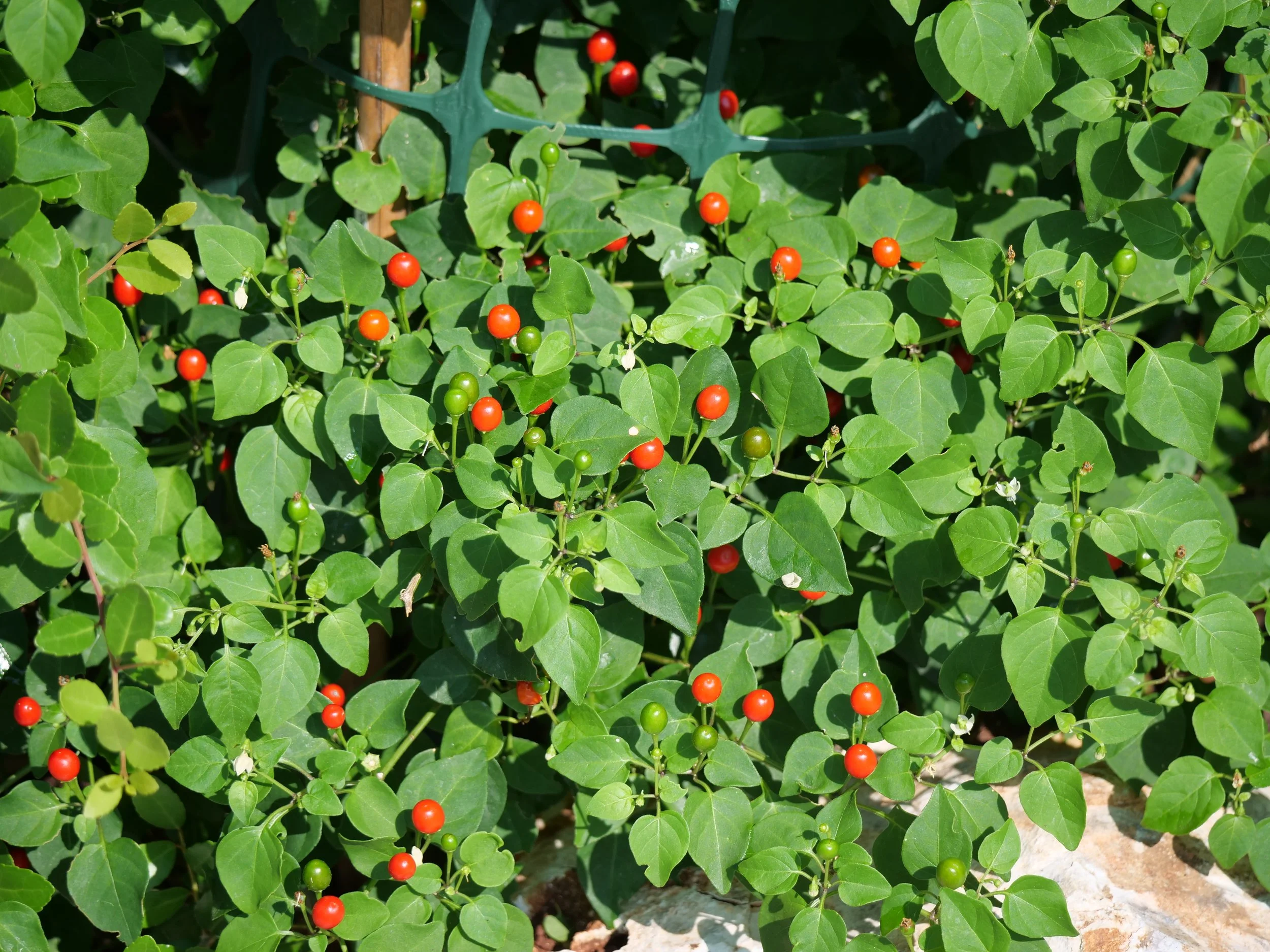
Chile Pequin
Chile Pequin (Capsicum annuum var. glabriusculum) is a hardy Texas native shrub-like perennial that produces hundreds of tiny, fiery red peppers beloved by birds but ignored by deer and most mammals. Delicate white flowers appear from late spring through summer, followed by bright red fruits that persist into fall, providing an important food source for mockingbirds, thrashers, cardinals, and many other songbirds. Thriving in dappled shade or morning sun, Chile Pequin is exceptionally heat and drought tolerant once established and makes an attractive addition to native gardens, woodland edges, and edible landscapes. The peppers are extremely hot and can be harvested for fresh or dried culinary use, adding both wildlife value and ornamental appeal to the garden.
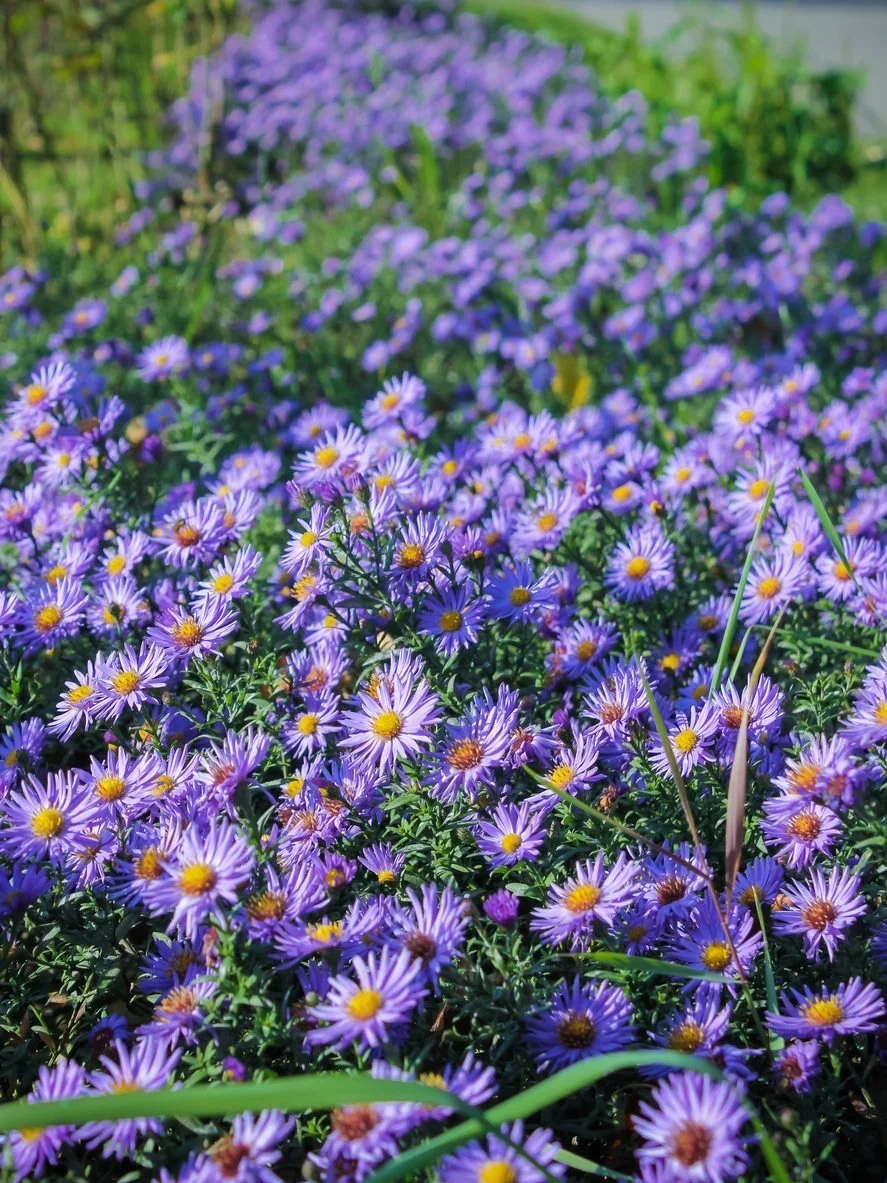
Fall Aster
Fall Aster (Symphyotrichum oblongifolium) is one of the stars of the autumn garden, producing masses of lavender to violet, daisy-like flowers with bright yellow centers just as many other plants are finishing their bloom season. This hardy Texas native perennial forms a dense, rounded mound of aromatic foliage and thrives in the heat, drought, and limestone soils of Central Texas. Its late-season flowers are an invaluable source of nectar for native bees, butterflies, and migrating monarchs, making it one of the most important pollinator plants for fall. Easy to grow and long-lived, Fall Aster adds a spectacular splash of color to native gardens, borders, meadows, and wildlife landscapes.
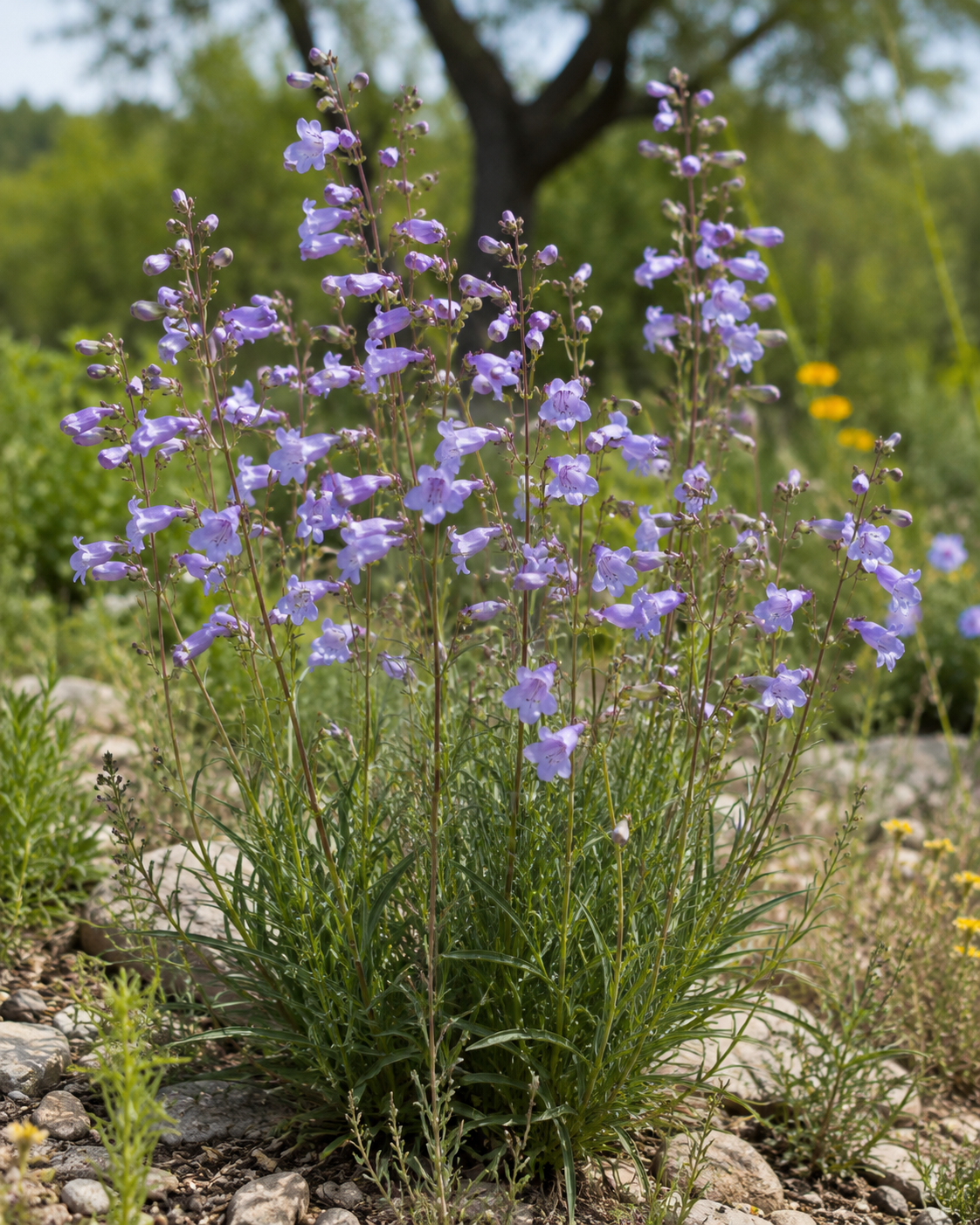
Brazos (Gulf Coast) Penstemon
Brazos Penstemon (Penstemon tenuis) is an elegant Texas native perennial prized for its tall spikes of soft lavender to pale purple, tubular flowers that bloom in spring. A favorite of hummingbirds, native bees, and butterflies, it adds height and graceful movement to sunny or lightly shaded gardens while thriving in the clay and limestone soils common across Central Texas. Once established, Brazos Penstemon is both drought tolerant and easy to grow, making it an excellent choice for native plant gardens, pollinator habitats, and naturalized landscapes. Its delicate blooms and upright form pair beautifully with grasses, salvias, and other native wildflowers.
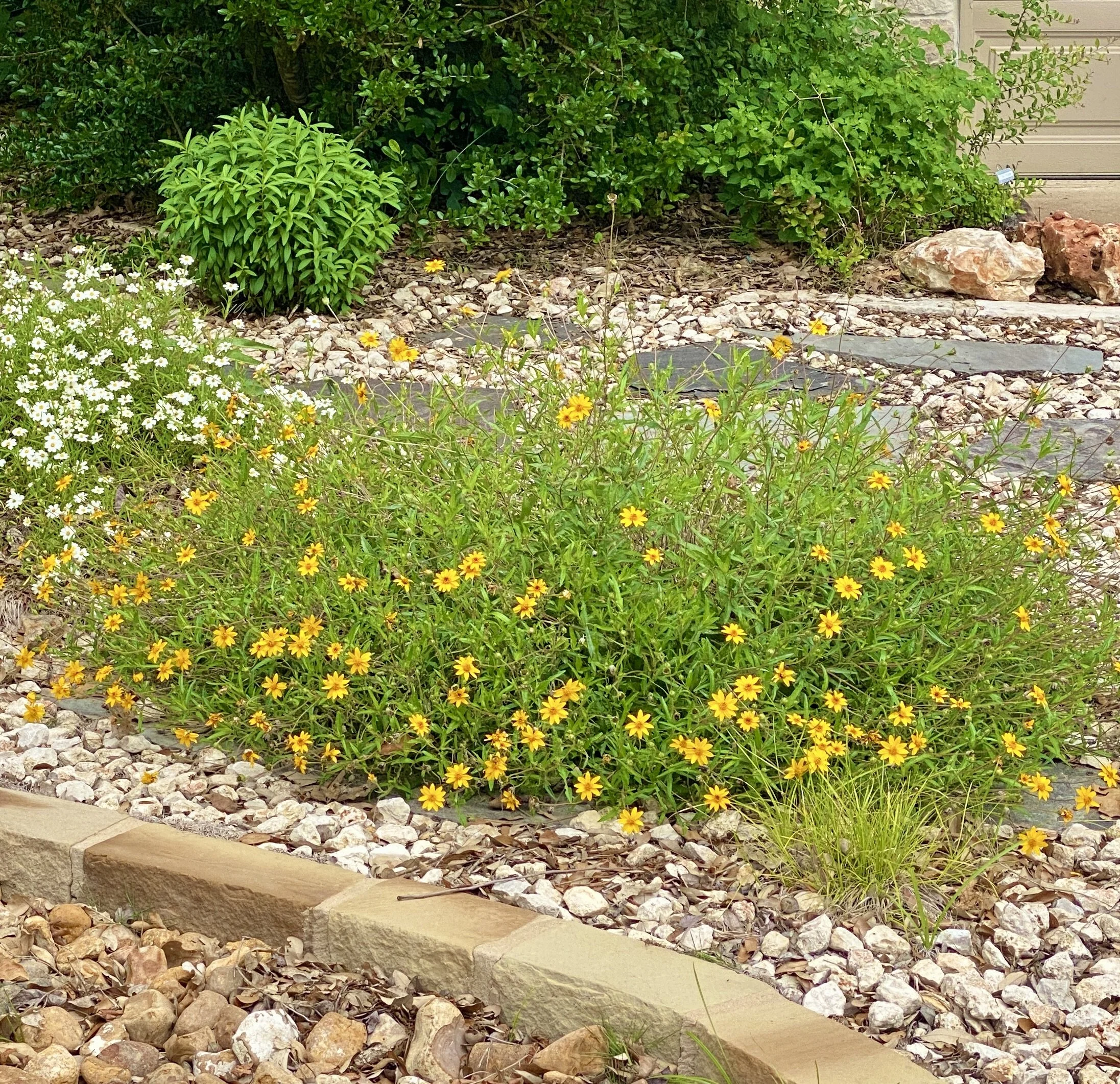
Orange Zexmenia
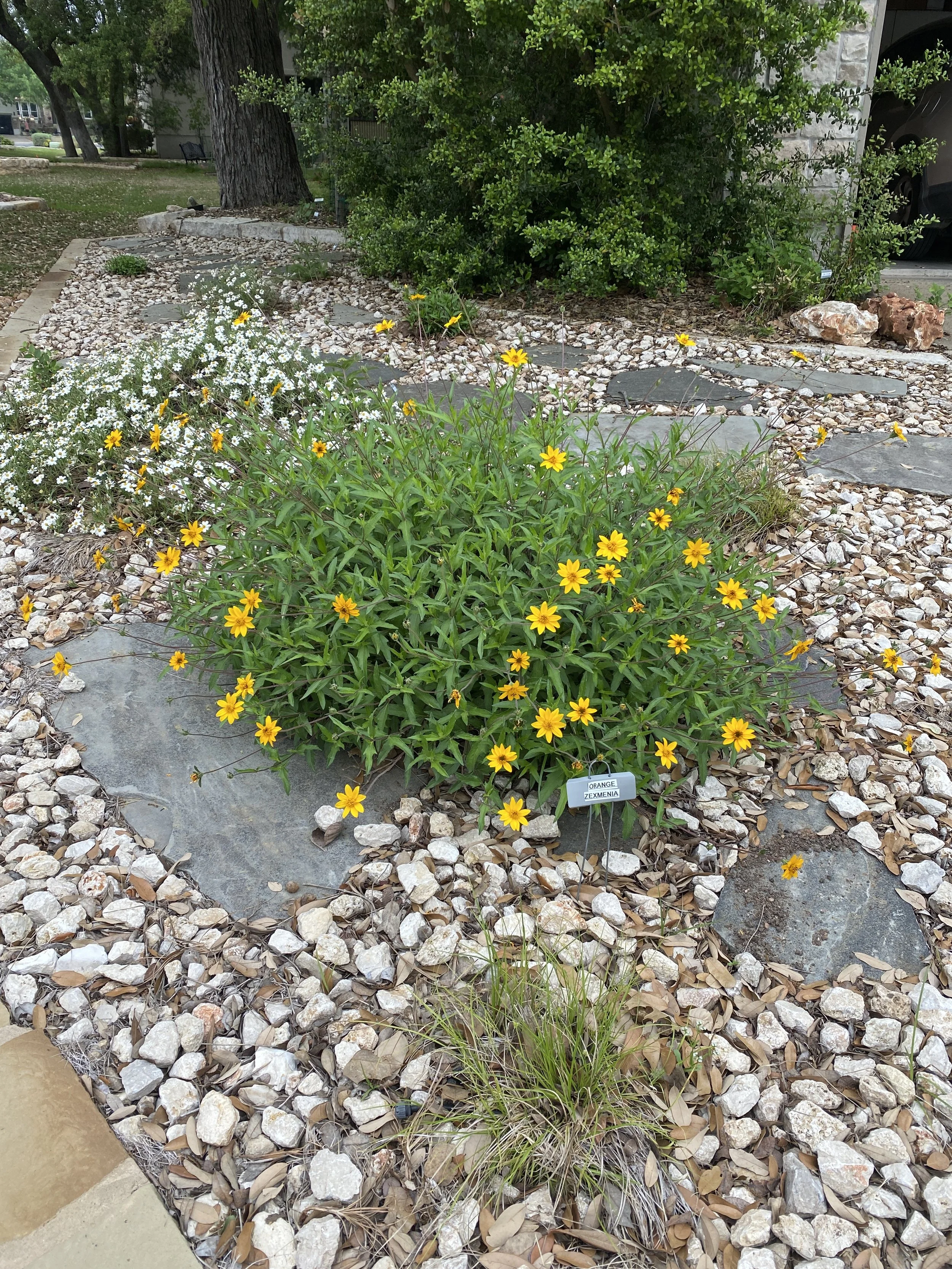
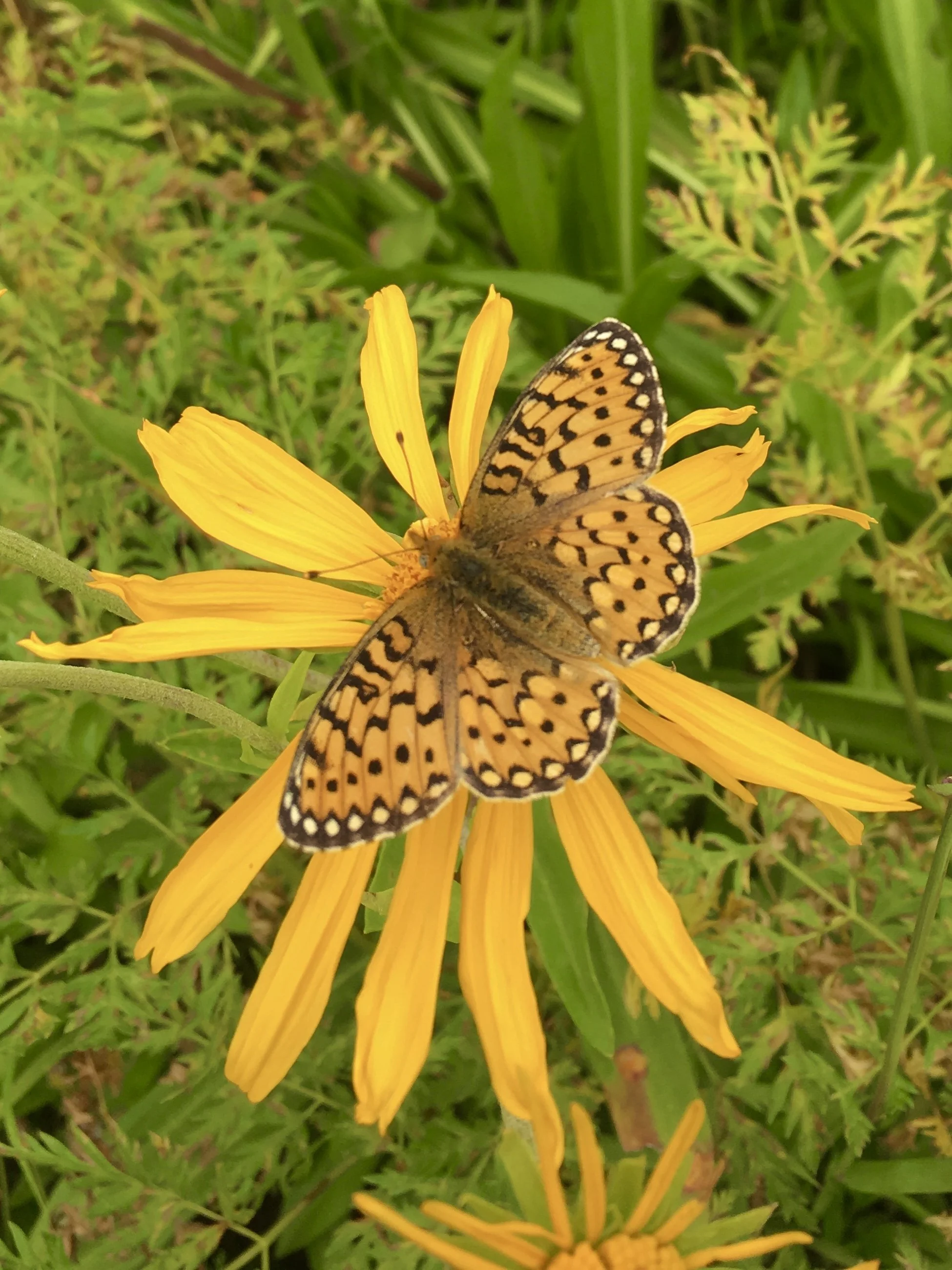
Orange Zexmenia (Wedelia acapulcensis var. hispida) is a tough, long-blooming Texas native perennial that lights up the garden with cheerful golden-orange, daisy-like flowers from spring through fall. Adapted to the heat, drought, and limestone soils of Central Texas, it thrives in full sun and asks for very little care once established. Its bright blooms attract a wide variety of native bees, butterflies, and other pollinators, while its spreading habit makes it an excellent choice for naturalized plantings, meadows, slopes, and informal borders. Orange Zexmenia combines exceptional resilience with months of color, making it one of the most dependable native wildflowers for water-wise landscapes.
Webberville Sedge
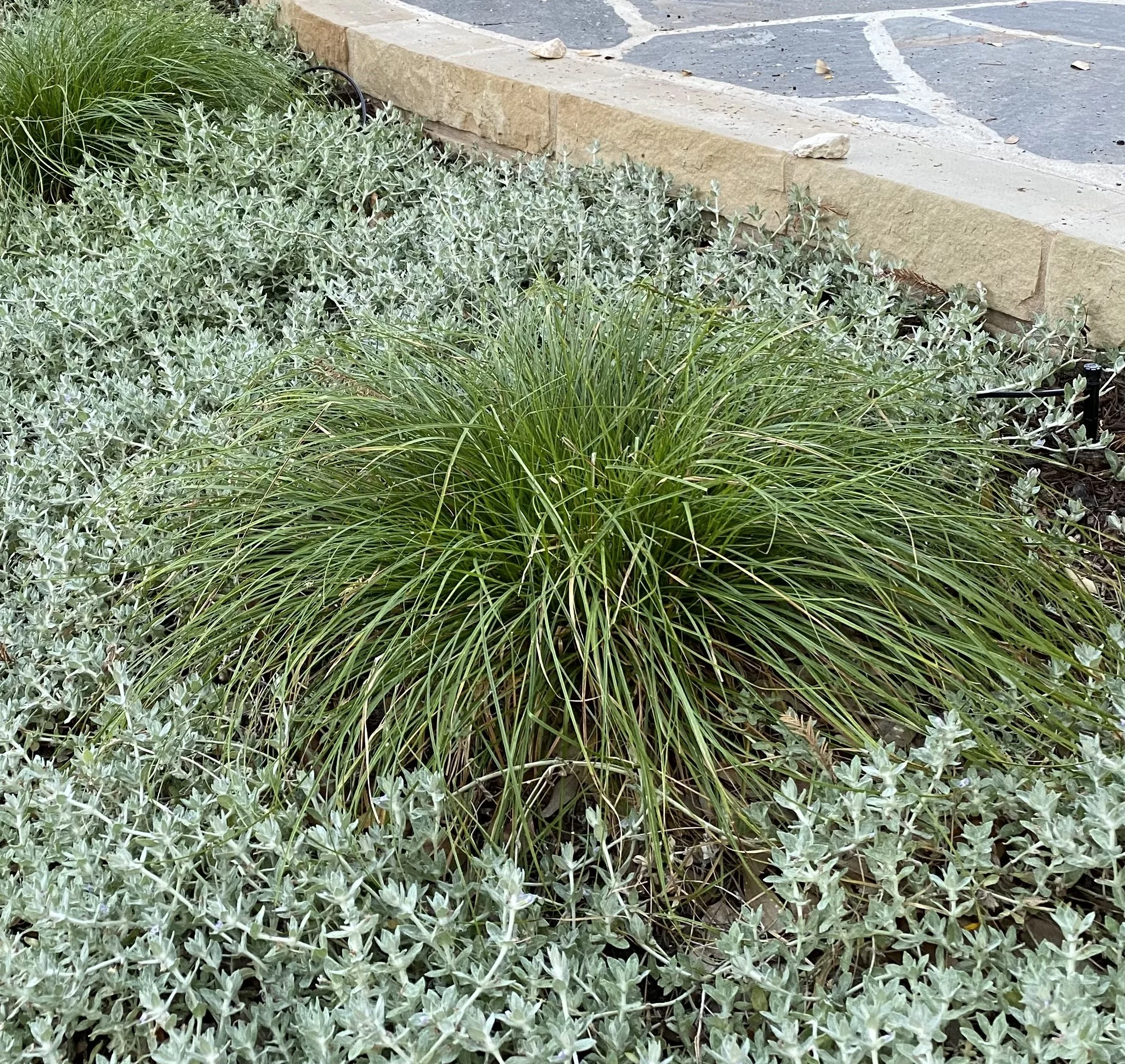
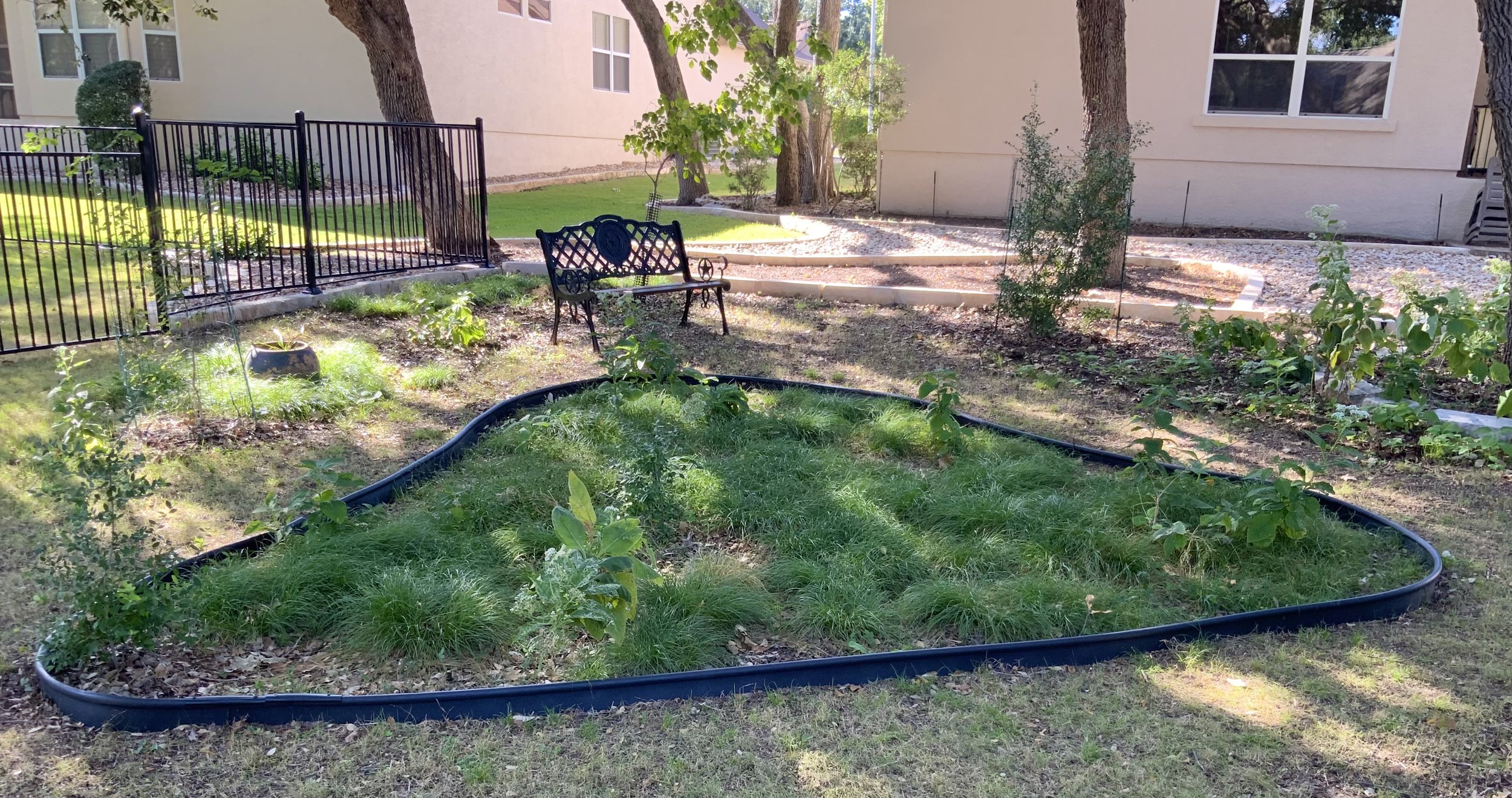
Webberville Sedge (Carex perdentata) is a graceful, clump-forming native sedge that thrives in the shaded woodlands and limestone soils of Central Texas. Its fine-textured, arching foliage creates a soft, natural groundcover that blends beautifully beneath trees, along woodland paths, or in shaded garden beds. Highly drought tolerant once established, Webberville Sedge requires little maintenance and helps suppress weeds while providing habitat for beneficial insects and shelter for small wildlife. It is an excellent lawn alternative for dry shade and pairs well with ferns, inland sea oats, woodland phlox, and Turk’s cap for a naturalistic Texas landscape.
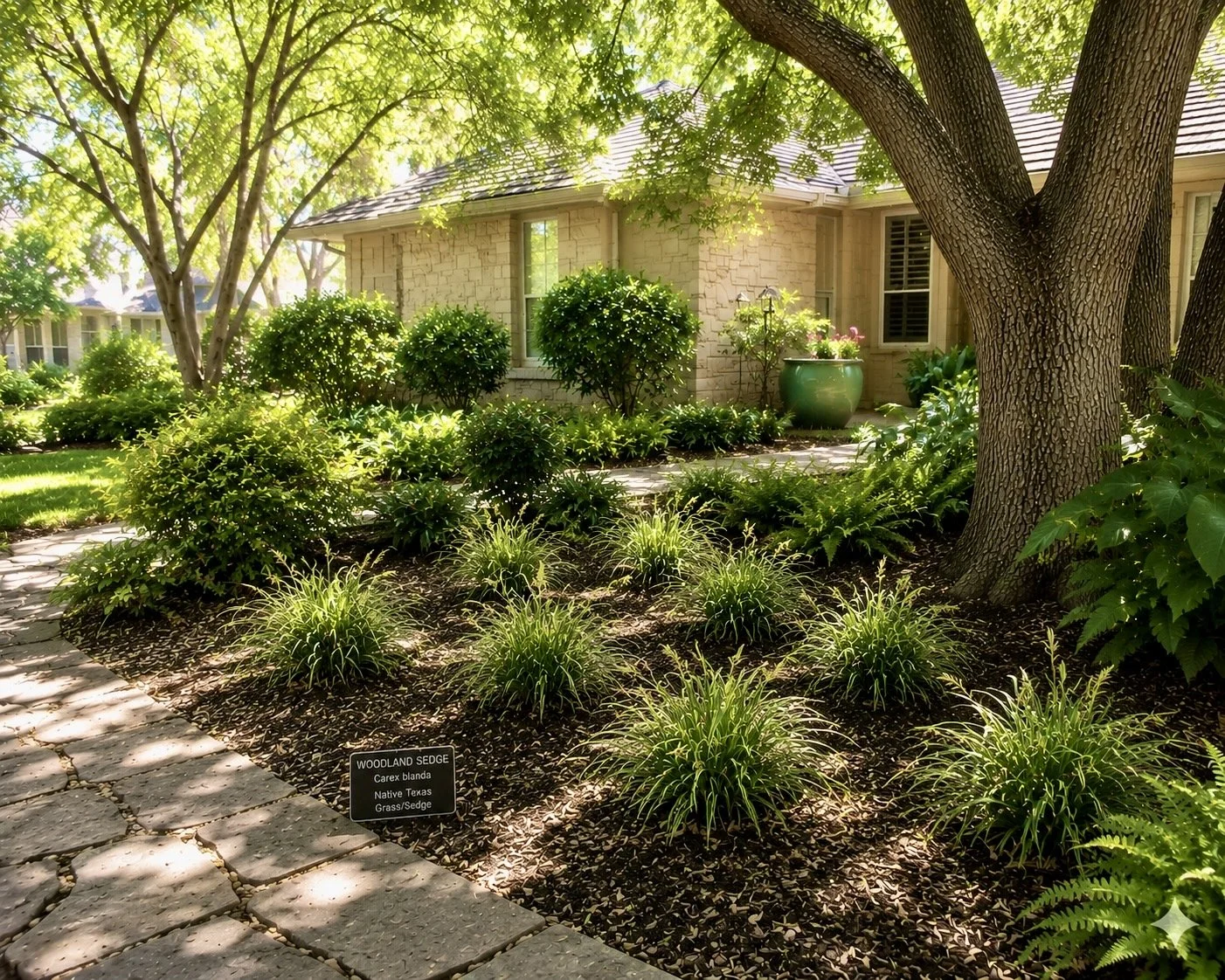
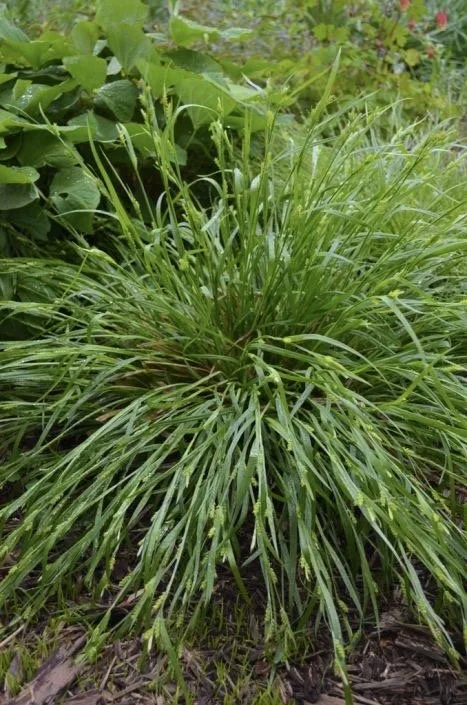
Woodland Sedge
Woodland Sedge Carex blanda is a graceful Texas native sedge that thrives in the dappled shade of woodlands, beneath mature trees, and in other low-light garden settings. Its fine-textured, arching green foliage forms soft, attractive clumps that provide year-round interest while helping suppress weeds and stabilize soil. Woodland Sedge is an excellent low-maintenance alternative to traditional groundcovers or turf in shaded landscapes and provides valuable habitat for beneficial insects and other small wildlife. It tolerates a variety of soils, including the limestone soils common in Central Texas, and becomes moderately drought tolerant once established.
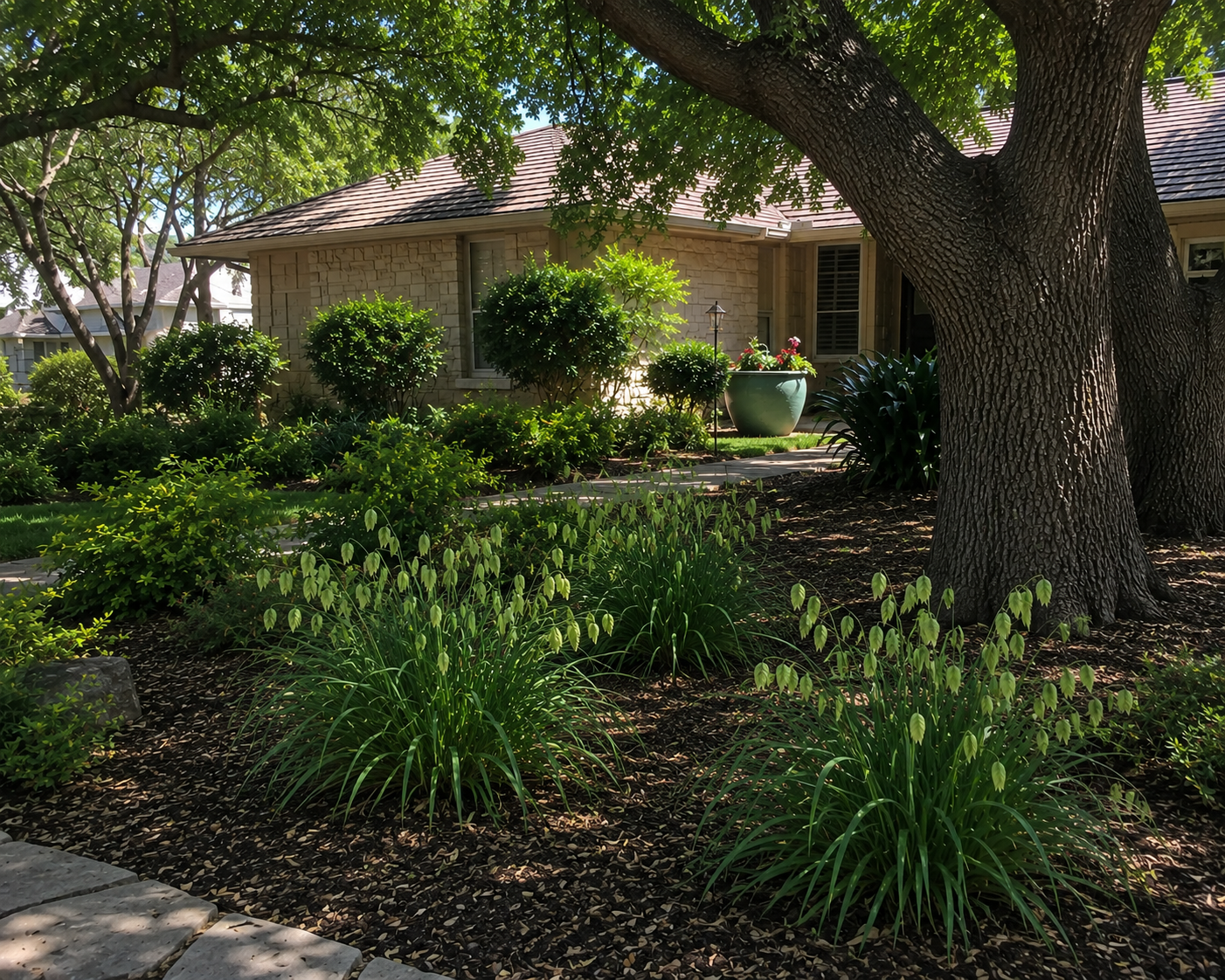
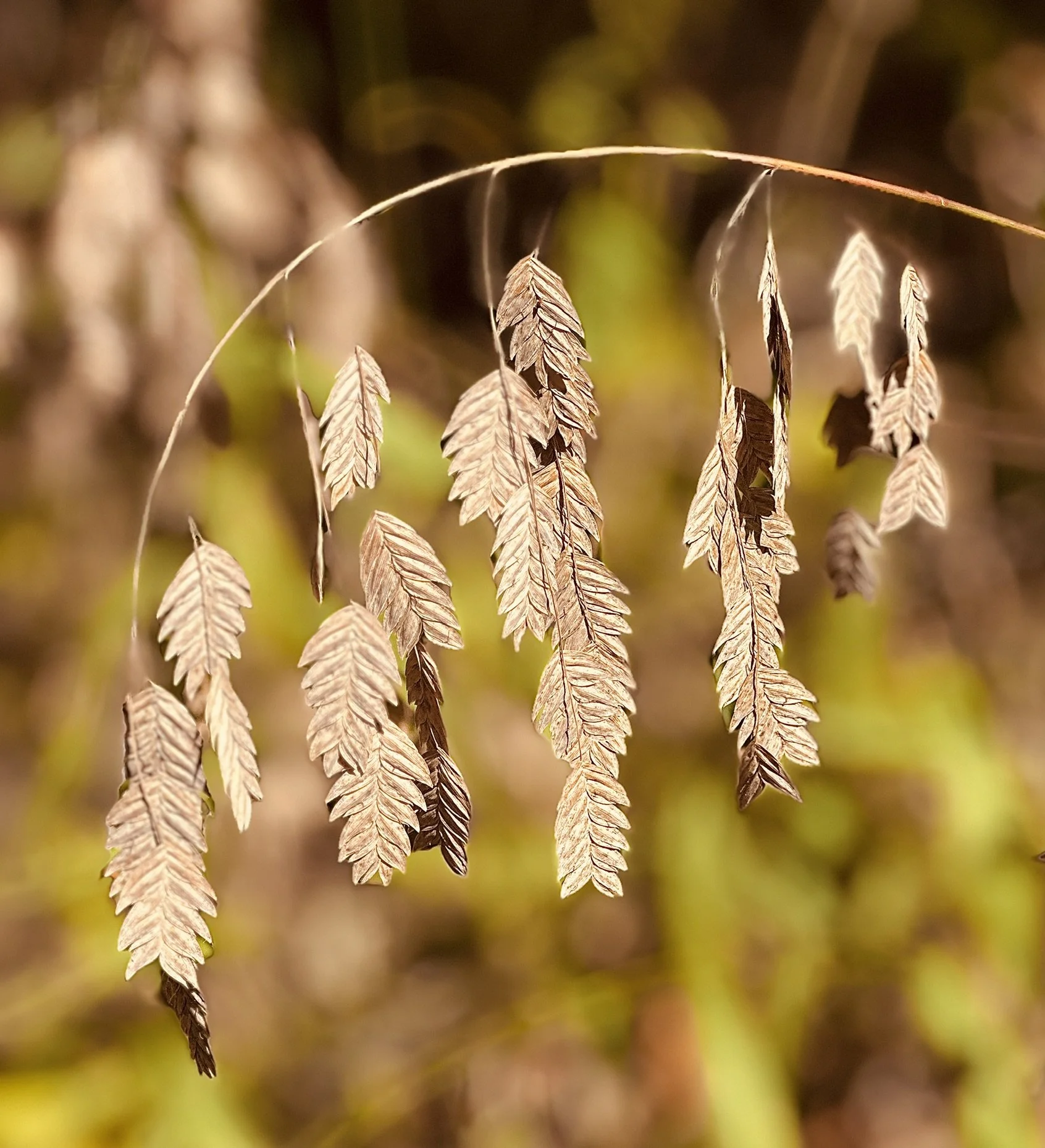
Inland Sea Oats
Inland Sea Oats Chasmanthium latifolium is one of the finest native ornamental grasses for shaded Texas landscapes. Its graceful, arching foliage and distinctive dangling seed heads add texture and movement from summer through winter, while the seeds provide food for songbirds and cover for wildlife. Inland Sea Oats spreads slowly to form attractive colonies, making it an excellent choice beneath trees, along woodland edges, or in naturalized gardens where it thrives in shade or part sun.
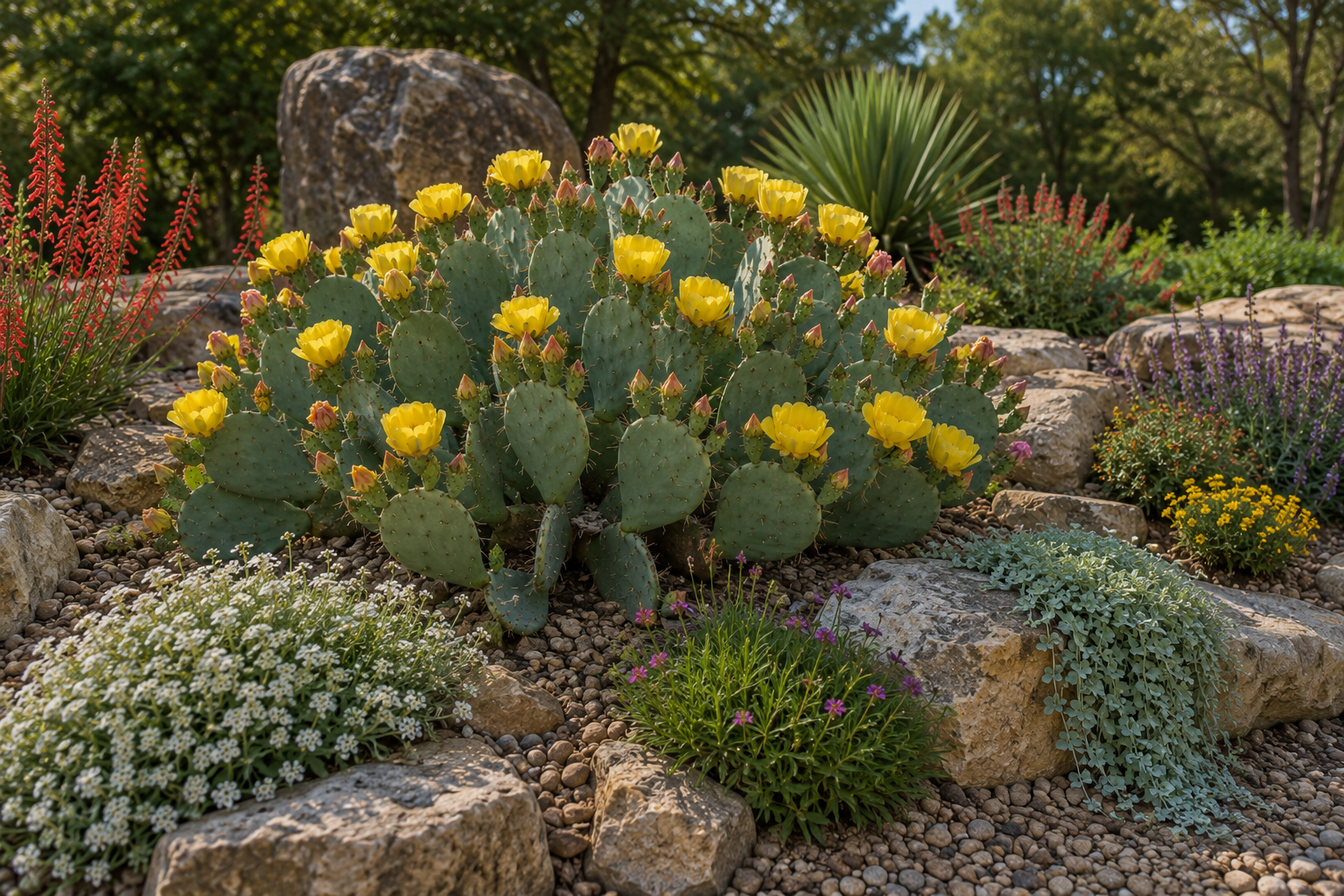
Texas Prickly Pear
Texas Prickly Pear
Opuntia engelmannii
Texas Prickly Pear is an iconic native cactus that adds bold texture, year-round interest, and outstanding drought tolerance to Central Texas landscapes. Its broad blue-green pads are topped in spring with large, cheerful yellow flowers that often develop orange centers as they mature, followed by colorful reddish-purple fruits that provide food for birds and other wildlife. Thriving in full sun and well-drained soils, Texas Prickly Pear is an excellent choice for rock gardens, xeriscapes, wildlife gardens, and natural landscapes where its striking form creates a dramatic focal point.
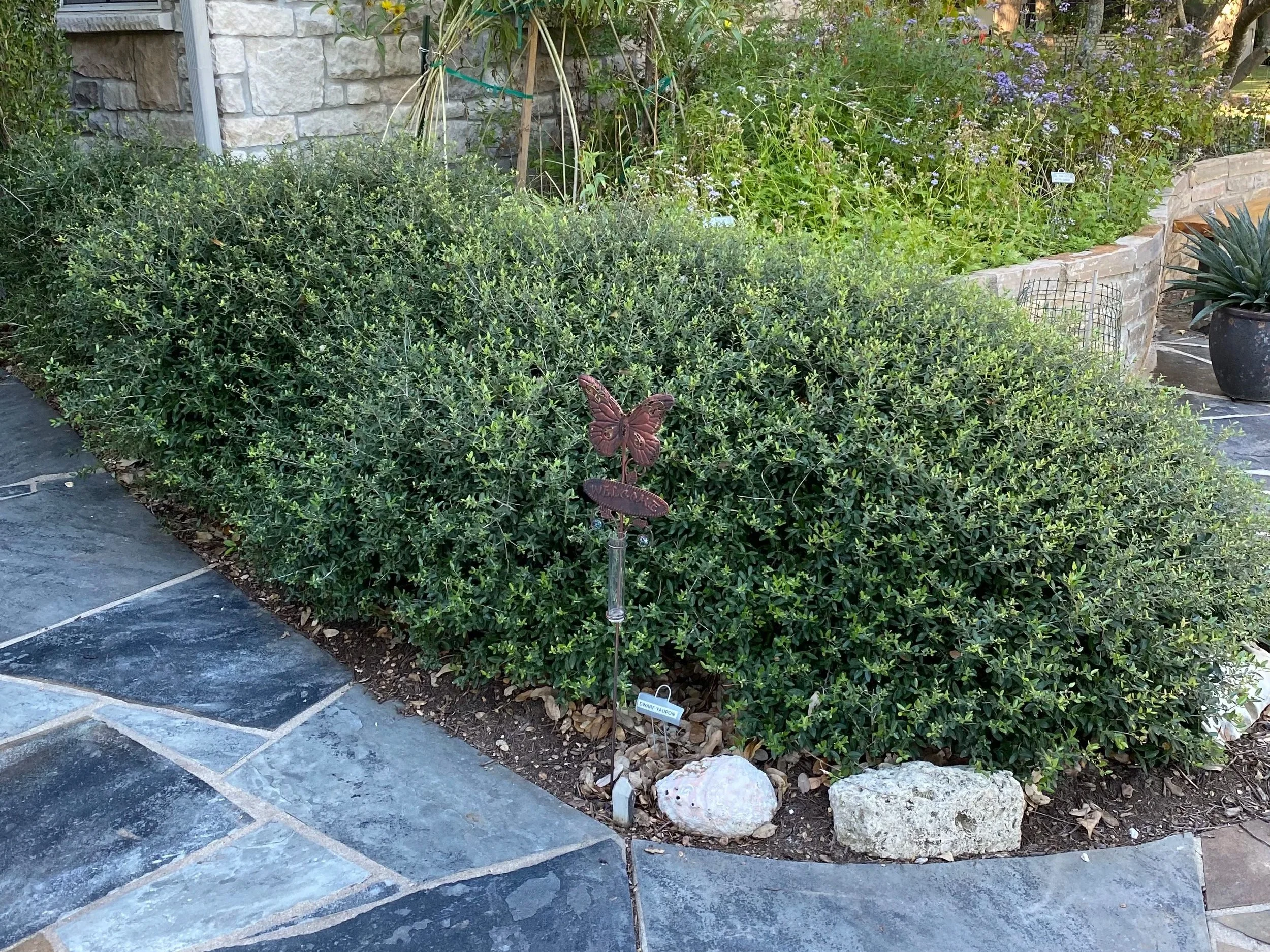
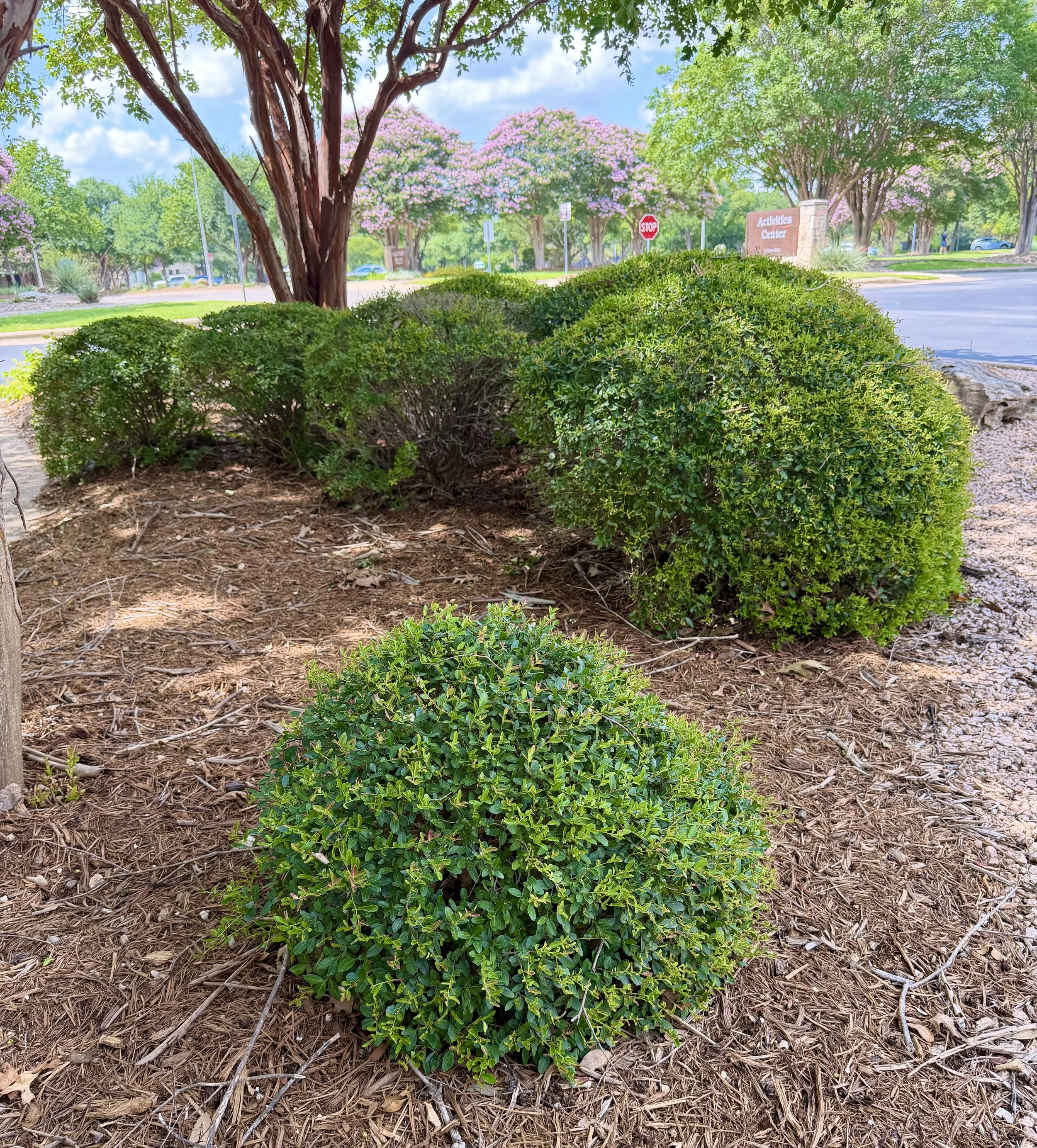
Dwarf Yaupon Holly
Dwarf Yaupon Holly is a compact evergreen Texas native shrub that forms a dense, rounded mound of attractive small green leaves with very little pruning. It thrives in full sun to part shade, tolerates drought once established, and performs well in a wide variety of soils, including the limestone soils common in Central Texas. Its neat appearance makes it an excellent choice for foundation plantings, borders, low hedges, mass plantings, and formal or natural landscapes. While this dwarf cultivar rarely produces berries, it provides excellent evergreen texture and year-round structure in the garden.
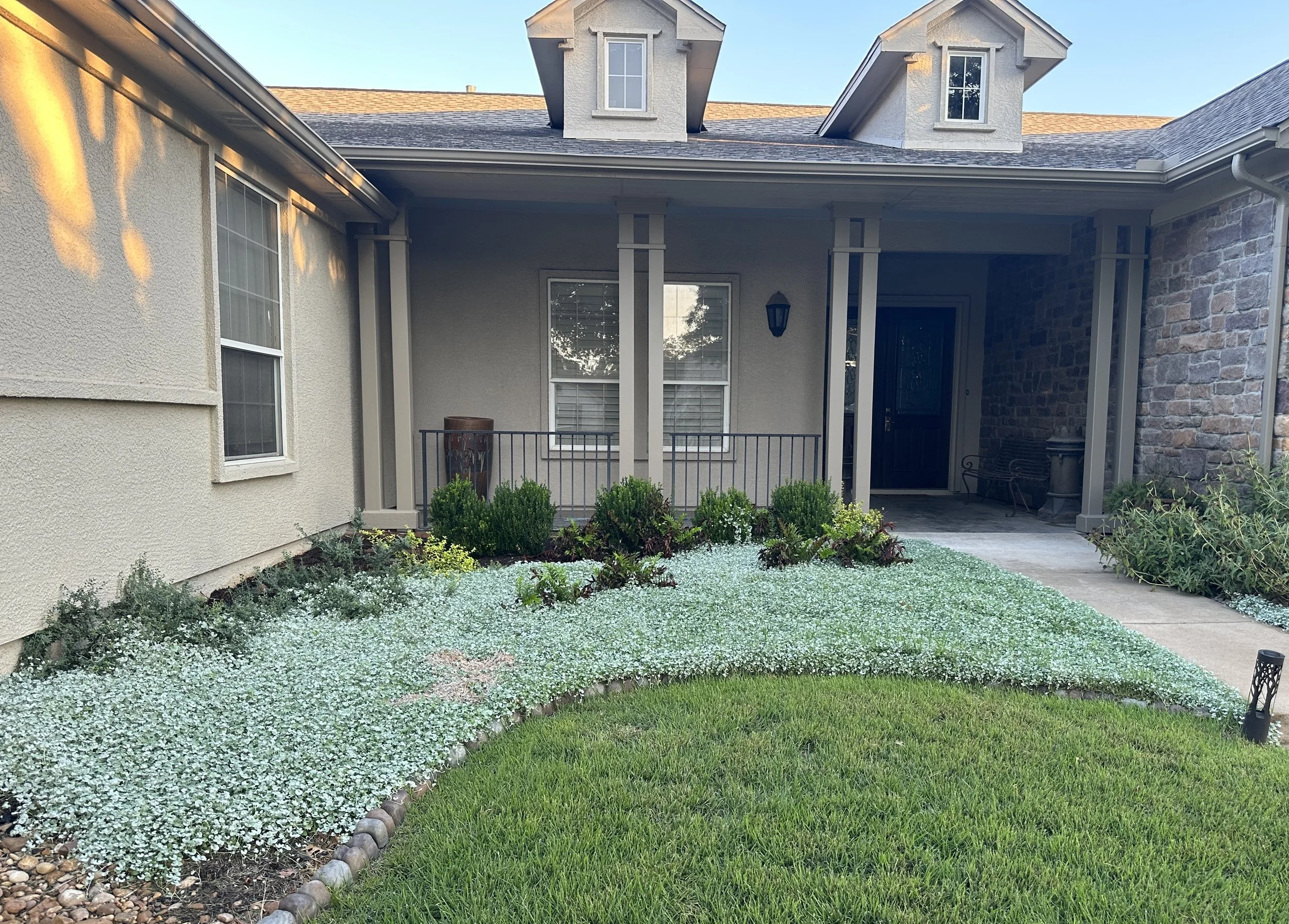
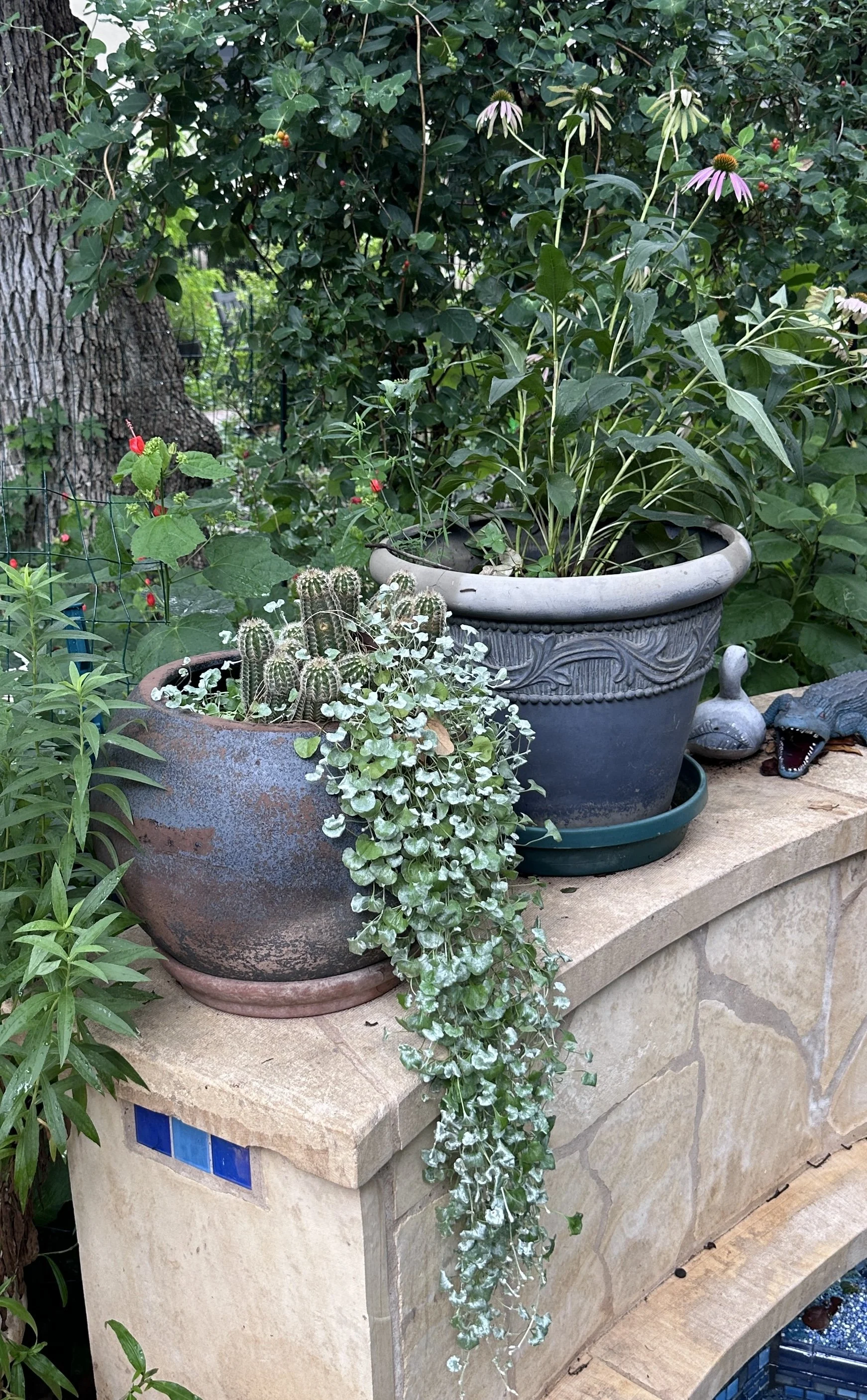
Silver Ponyfoot
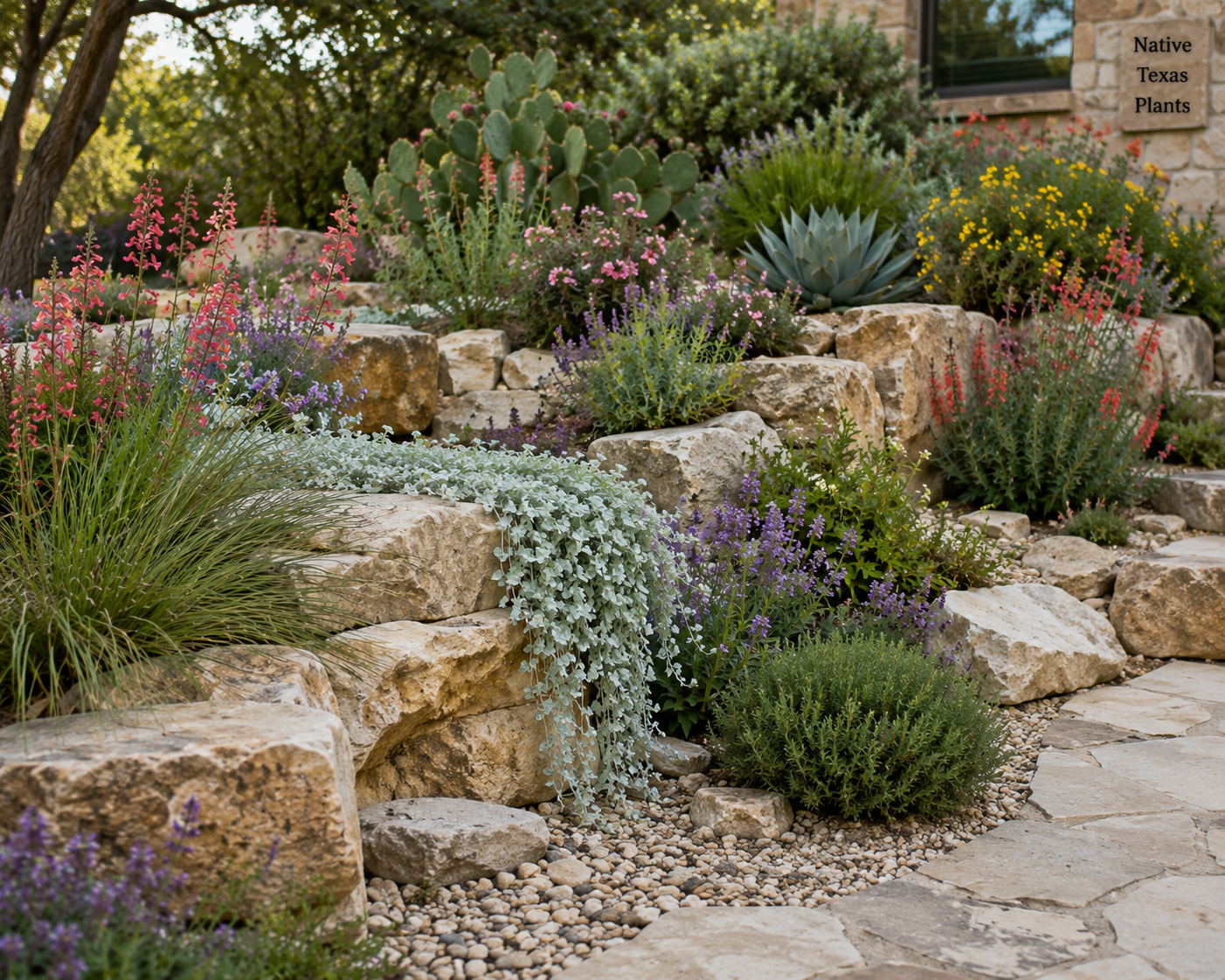
Silver Ponyfoot is a beautiful low-growing native Texas groundcover prized for its soft, silvery foliage that cascades gracefully over walls, containers, and garden edges. It thrives in full sun to part shade, tolerates heat and drought once established, and provides an attractive contrast to flowering perennials and shrubs. Its trailing habit makes it an excellent choice for rock gardens, dry landscapes, hanging baskets, and erosion control on slopes.
Damianita
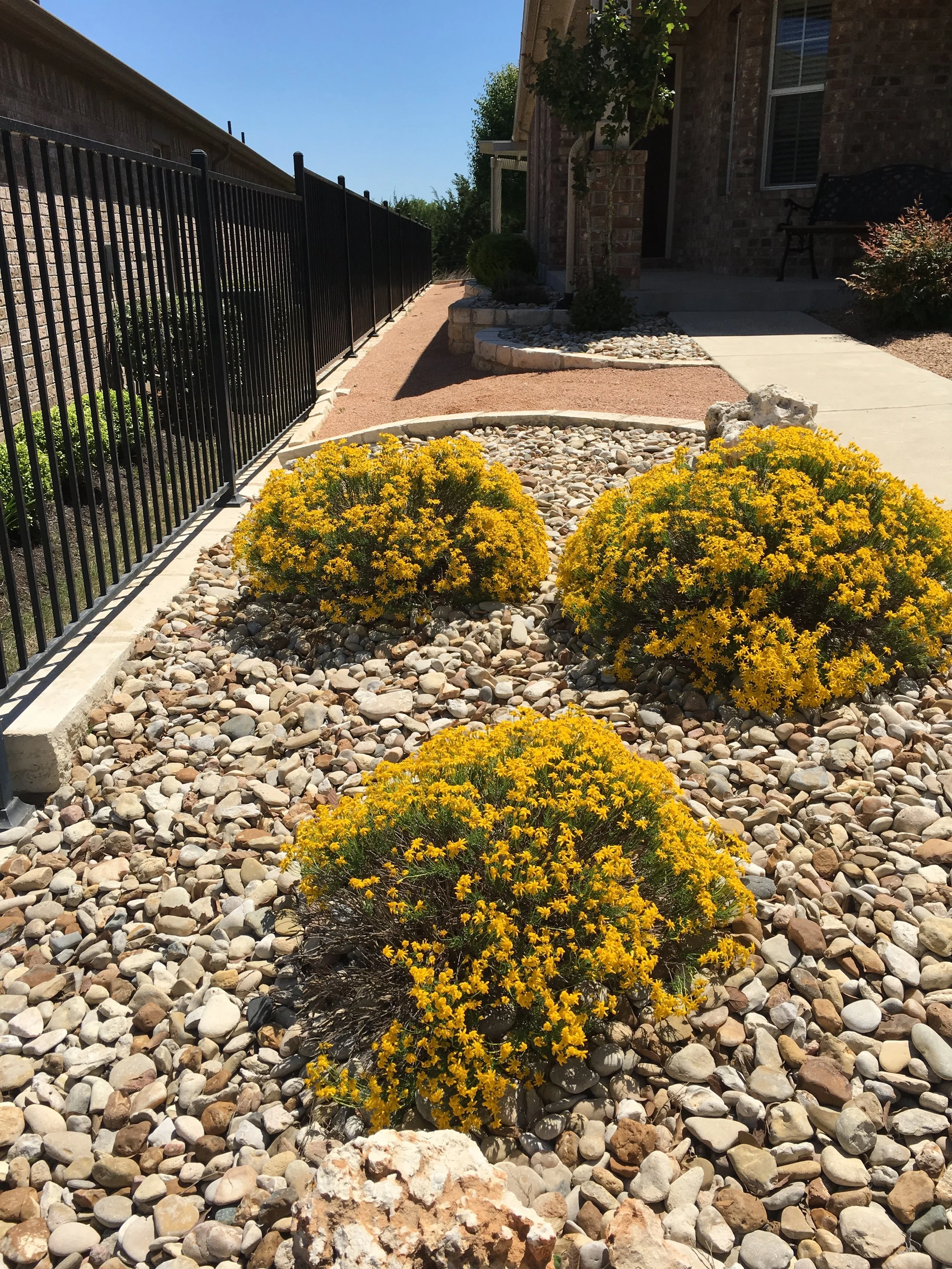
Damianita ( Chrysactinia mexicana) is one of the brightest little native shrubs for Central Texas landscapes. This compact evergreen forms a tidy mound covered with cheerful golden-yellow daisy-like flowers from spring through fall, often blooming after rains. Its fine, aromatic foliage stays attractive year-round, and once established it thrives in hot, dry conditions with very little maintenance. Damianita is an excellent choice for rock gardens, borders, pathways, and pollinator gardens where its long bloom season provides nectar for native bees and butterflies. It performs best in full sun and well-drained limestone soils and is highly deer resistant.
Mealy Blue Sage
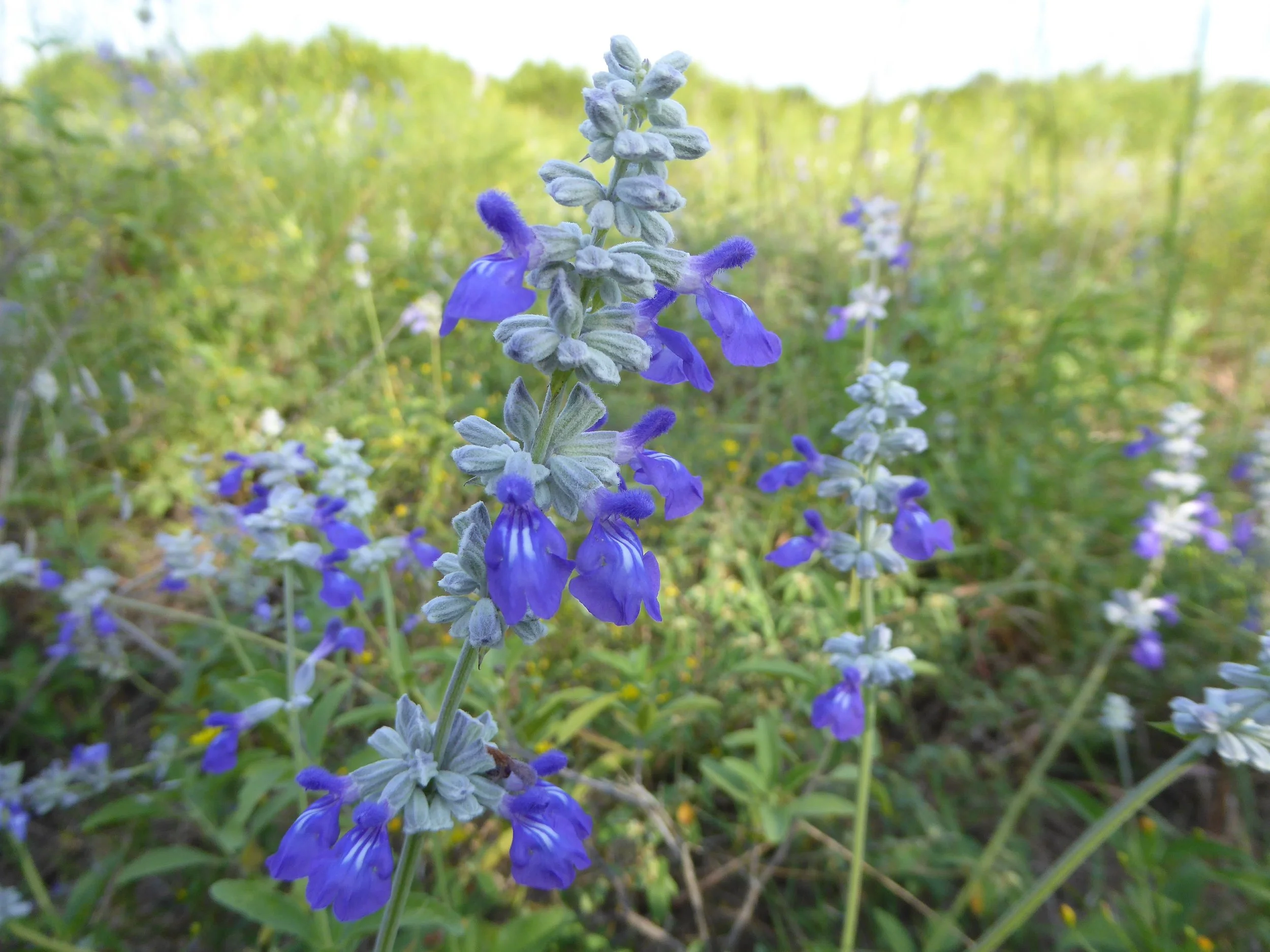
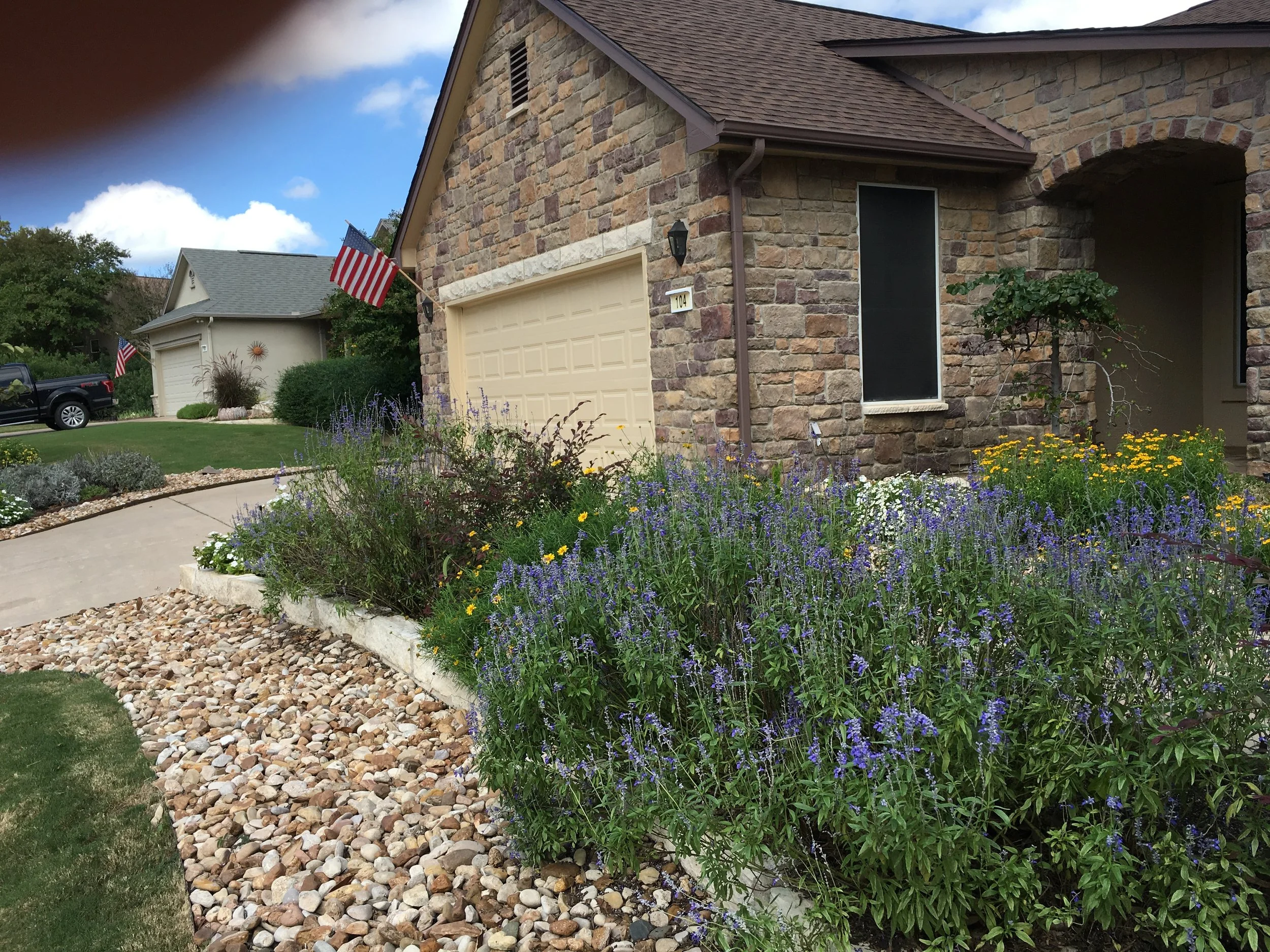
Mealy Blue Sage (Salvia farinacea) is one of the most reliable and longest-blooming native perennials for Central Texas gardens. Its spikes of blue to violet flowers provide months of color from spring through fall and are highly attractive to bees, butterflies, and other pollinators. The cool flower color combines beautifully with yellow, orange, and red flowering natives, making it a valuable addition to mixed garden beds.
Mealy Blue Sage thrives in full sun and is remarkably tolerant of heat, drought, and a variety of soil conditions. Easy to grow and low maintenance, it is an excellent choice for pollinator gardens, native plant landscapes, and water-wise designs.
Gregg’s Mistflower
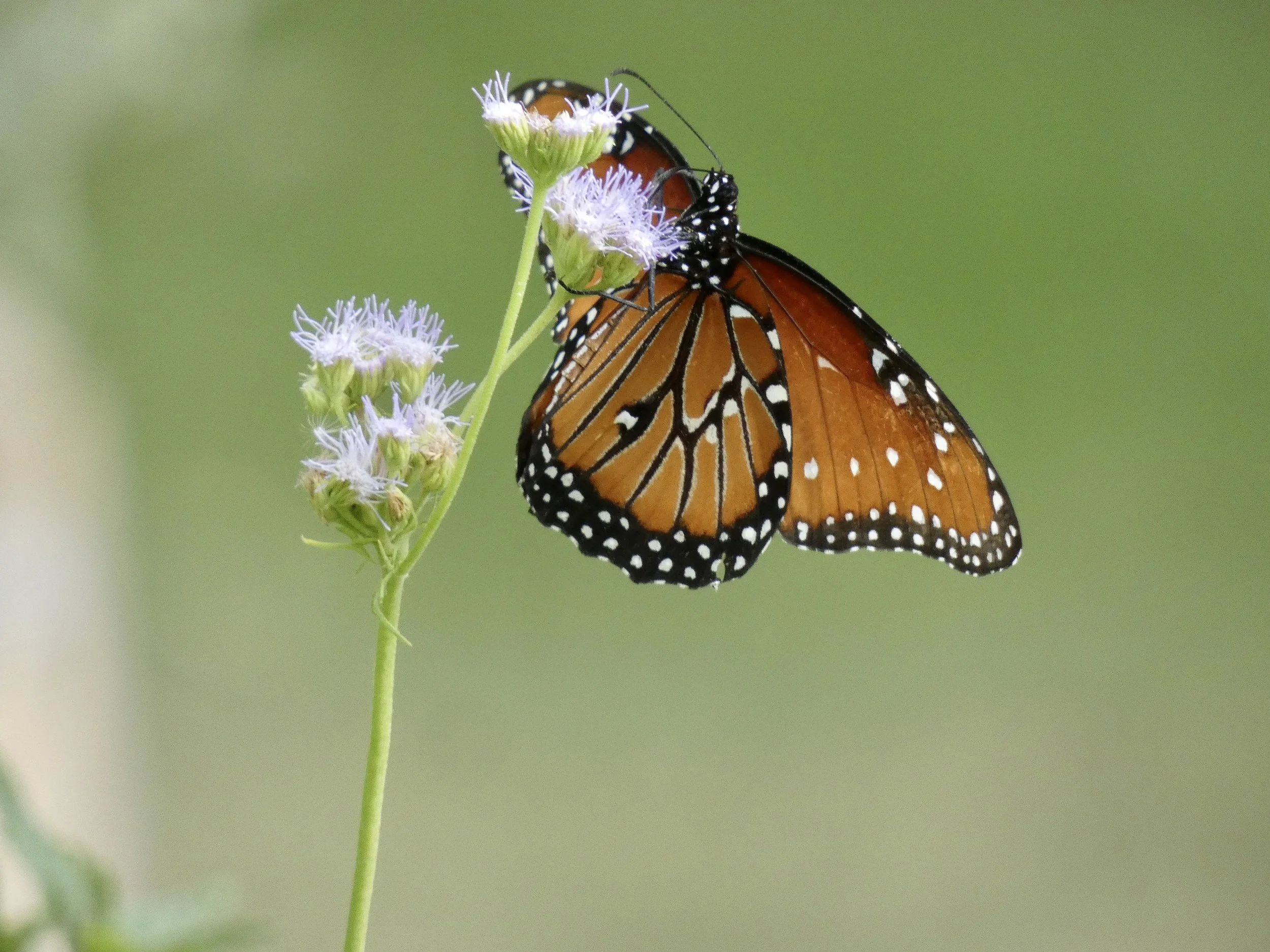
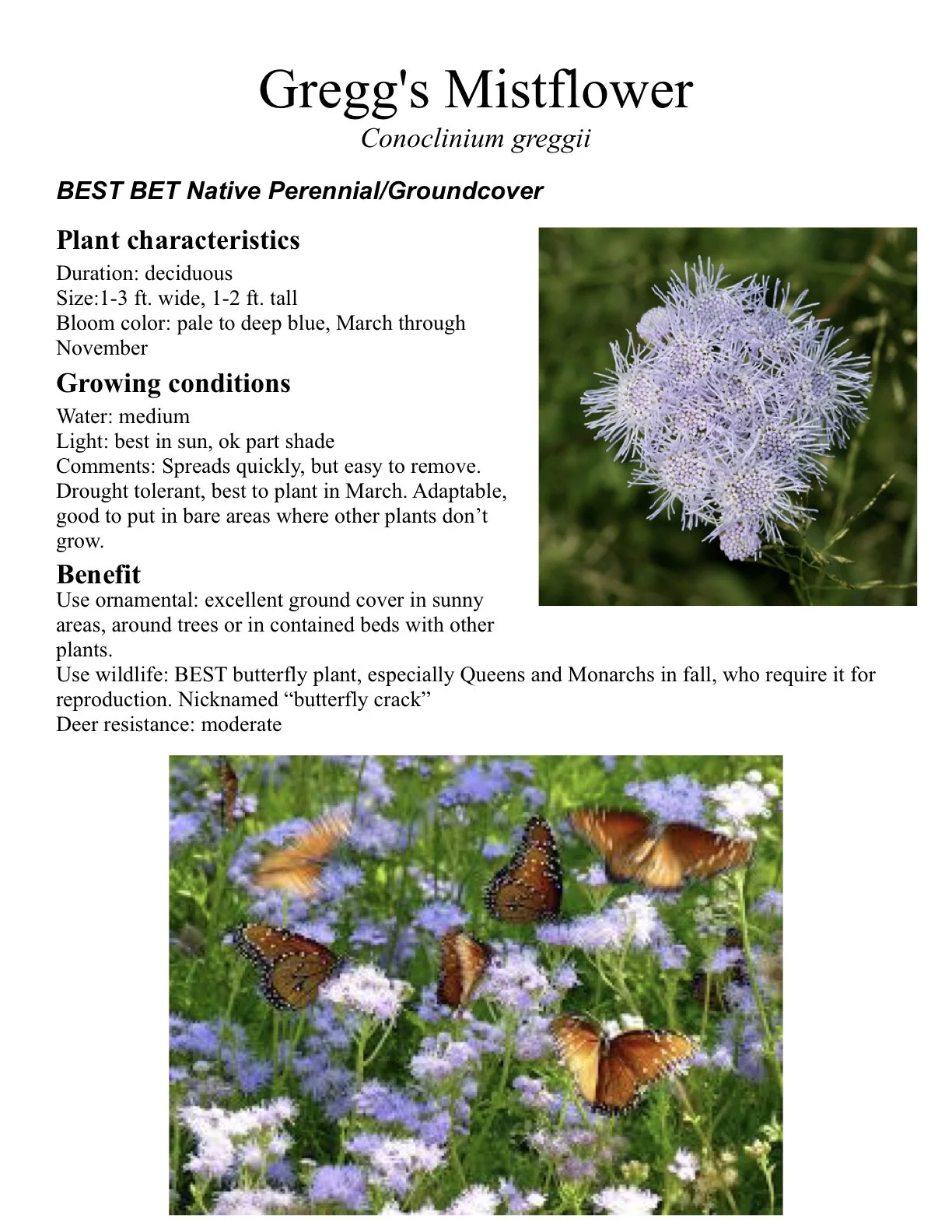
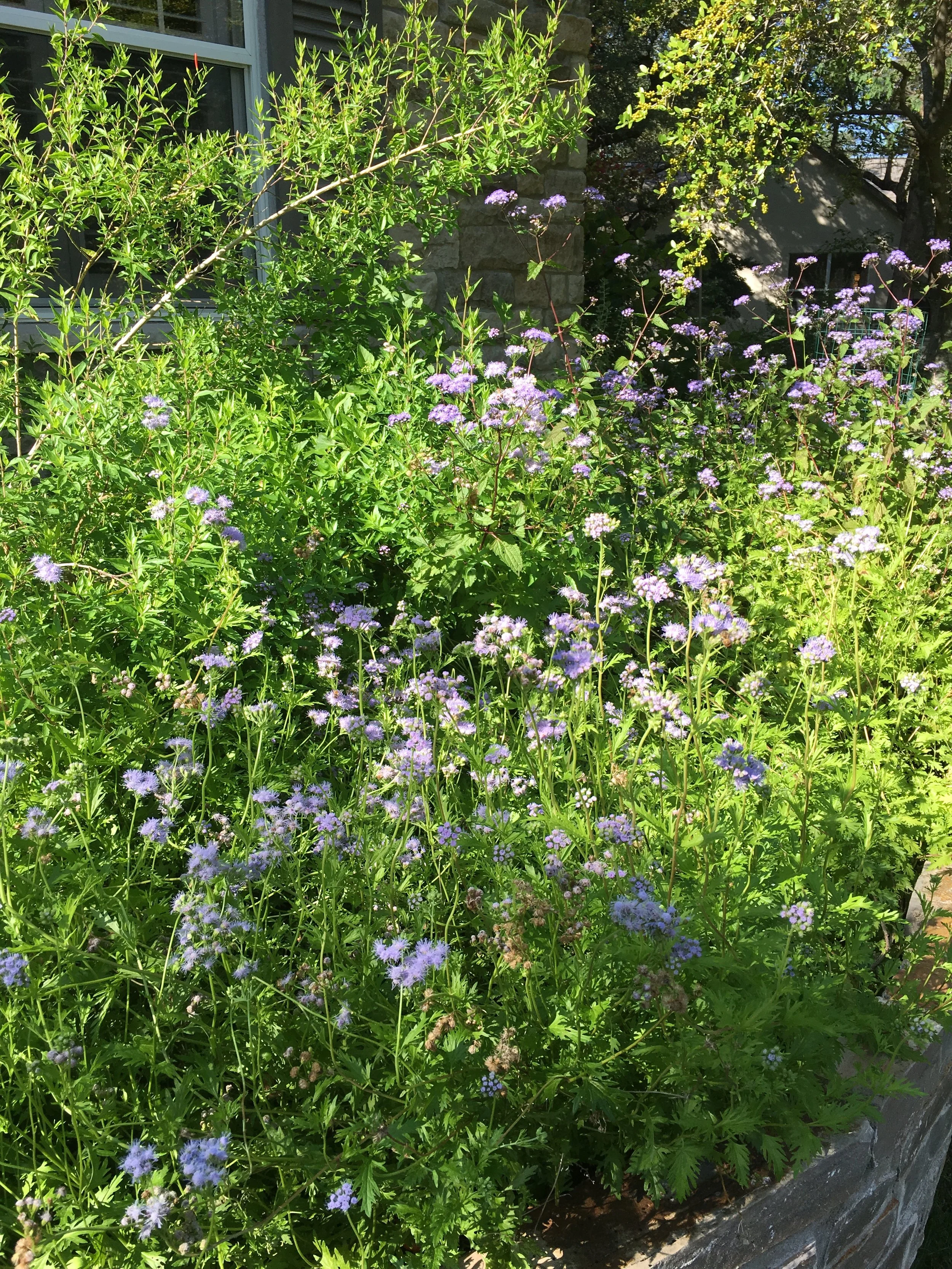
Gregg’s Mistflower (Conoclinium greggii) is one of the finest native plants for attracting butterflies to Central Texas gardens. Its clusters of soft lavender-blue flowers bloom from late summer through fall, often covering the plant with color when many other perennials have finished flowering. Butterflies, bees, and other pollinators are drawn to the abundant nectar produced by its blooms.
Gregg’s Mistflower thrives in full to part shade and is remarkably drought tolerant once established. It spreads gradually to form attractive colonies, making it an excellent choice for naturalized areas, pollinator gardens, and wildlife-friendly landscapes.
Pigeonberry
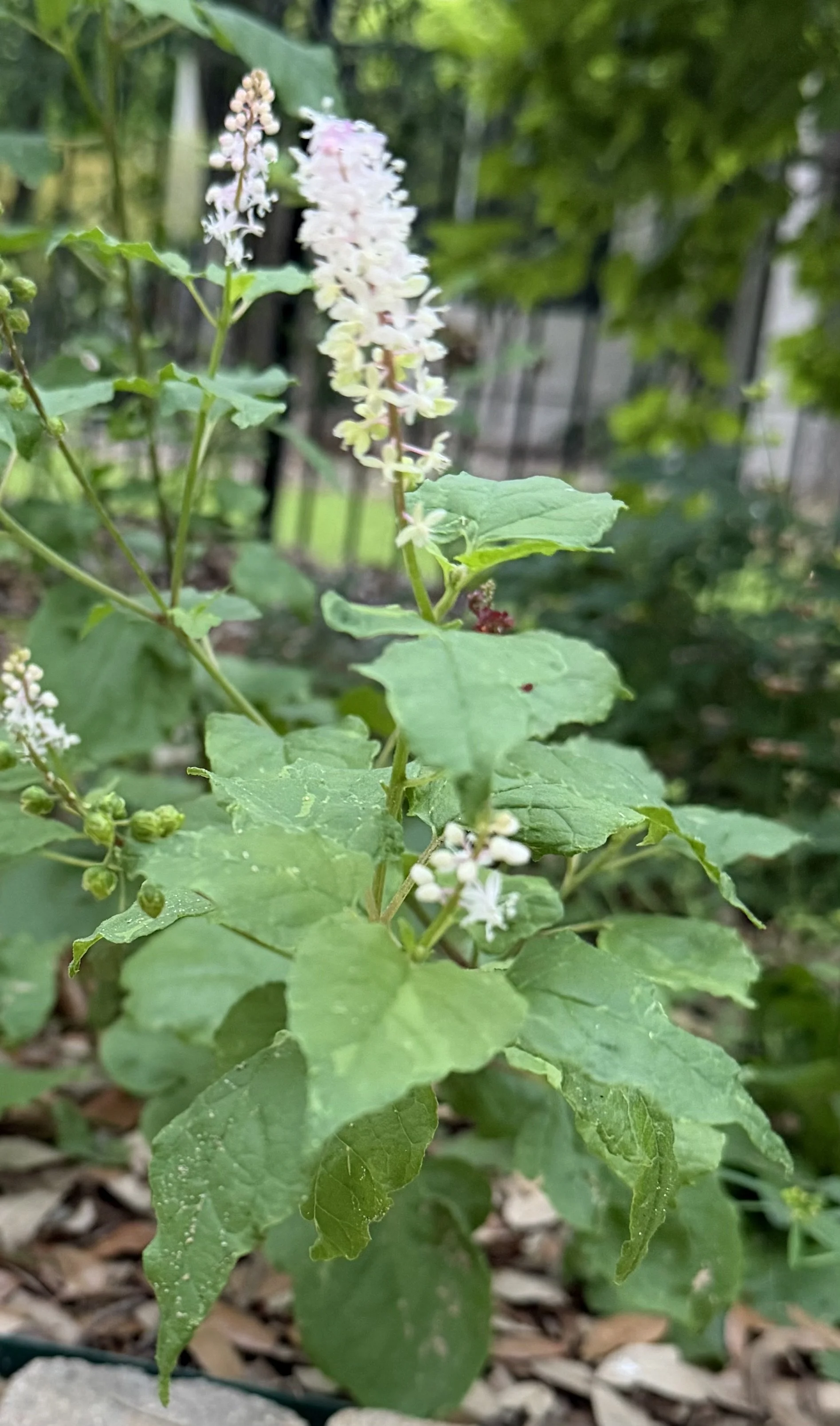
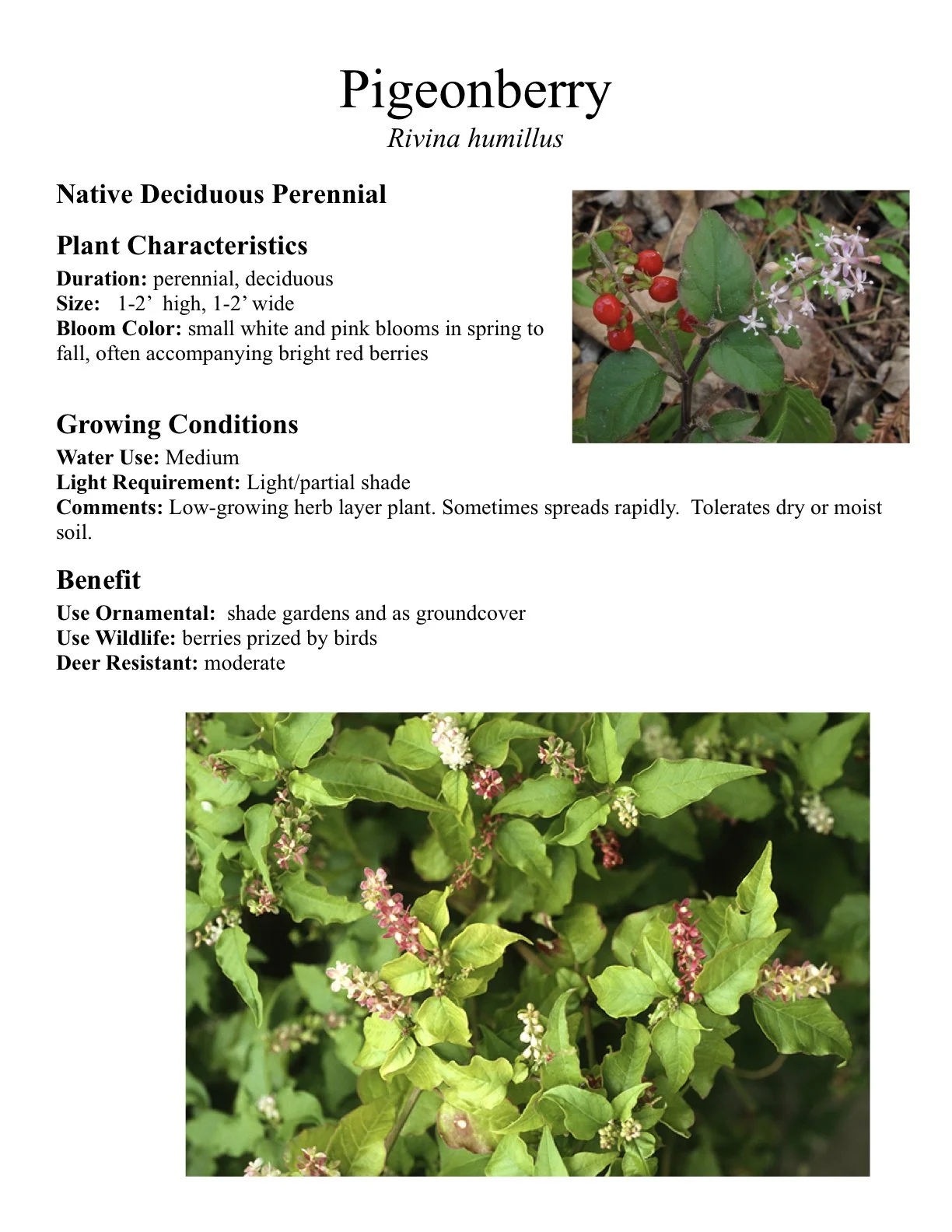
Pigeonberry (Rivina humilis) is a graceful native perennial that thrives in the dappled shade of Central Texas woodlands and gardens. Its delicate white to pinkish flowers are followed by clusters of bright red berries that often persist for months, providing color and interest through much of the year.
Pigeonberry spreads slowly to form an attractive ground cover beneath trees and shrubs, where it helps soften the landscape while supporting wildlife. The flowers attract small pollinators, and the berries are eaten by birds and other wildlife. Its tolerance of shade, drought, and poor soils makes it an excellent choice for naturalistic and bird-friendly gardens.
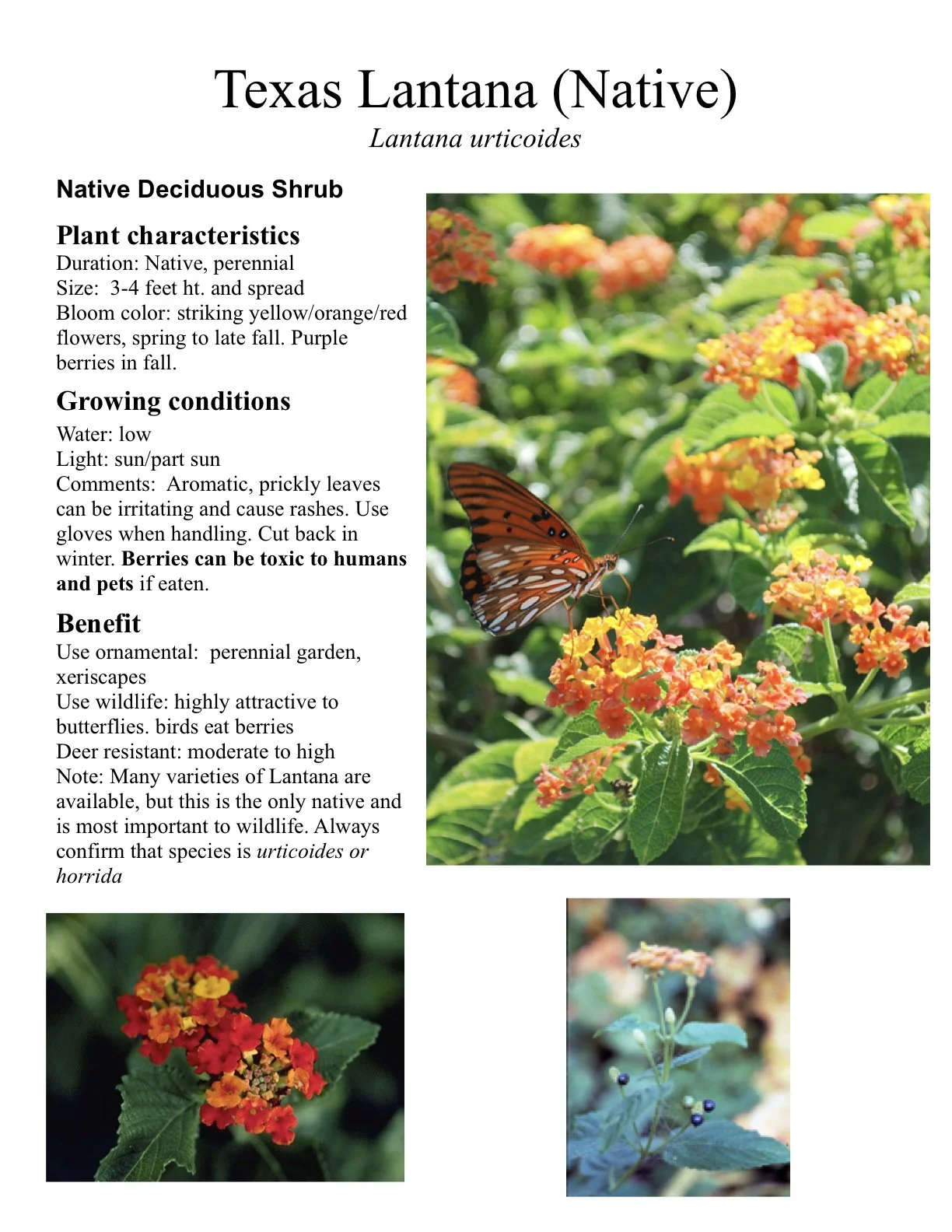
Texas Lantana
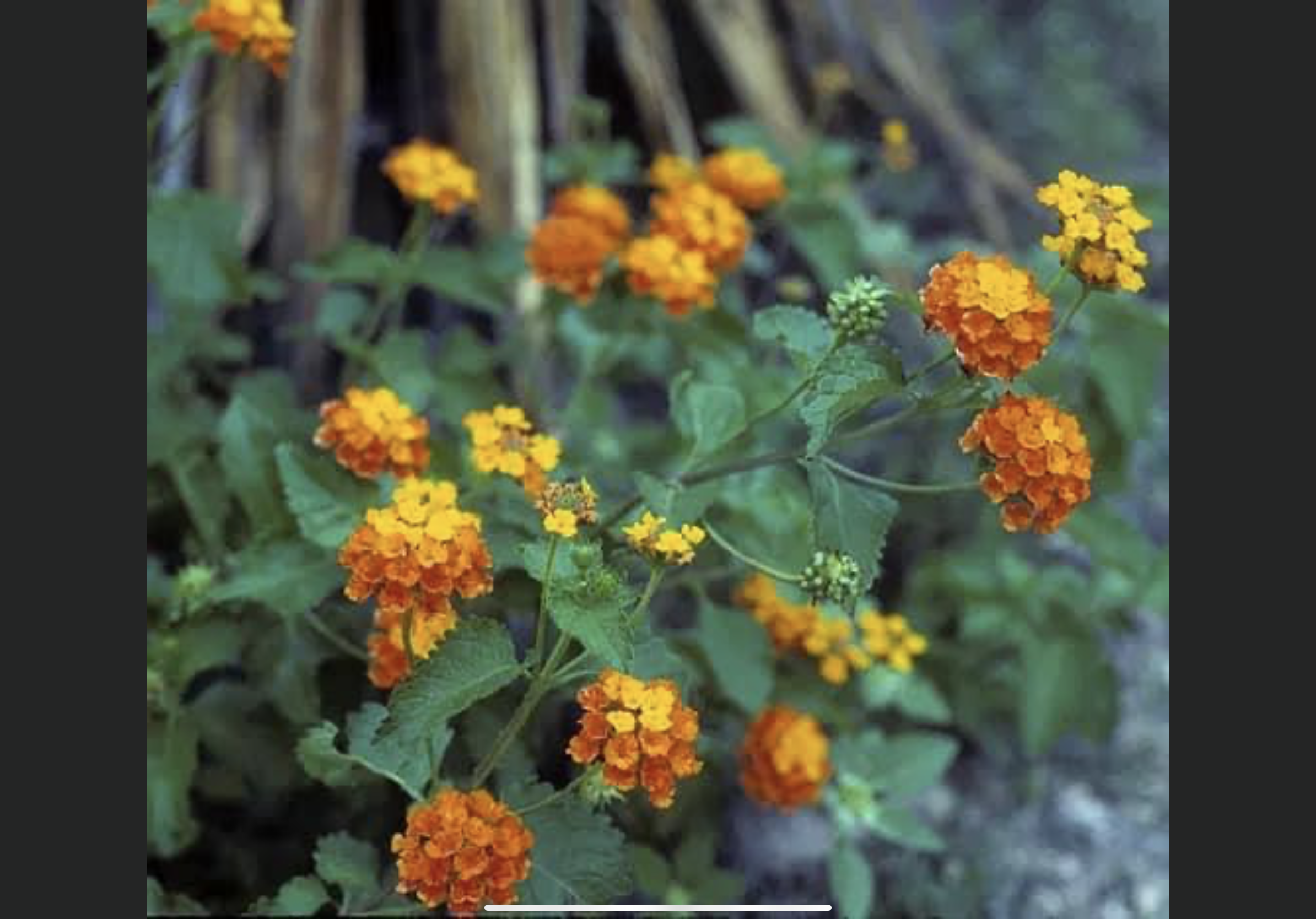
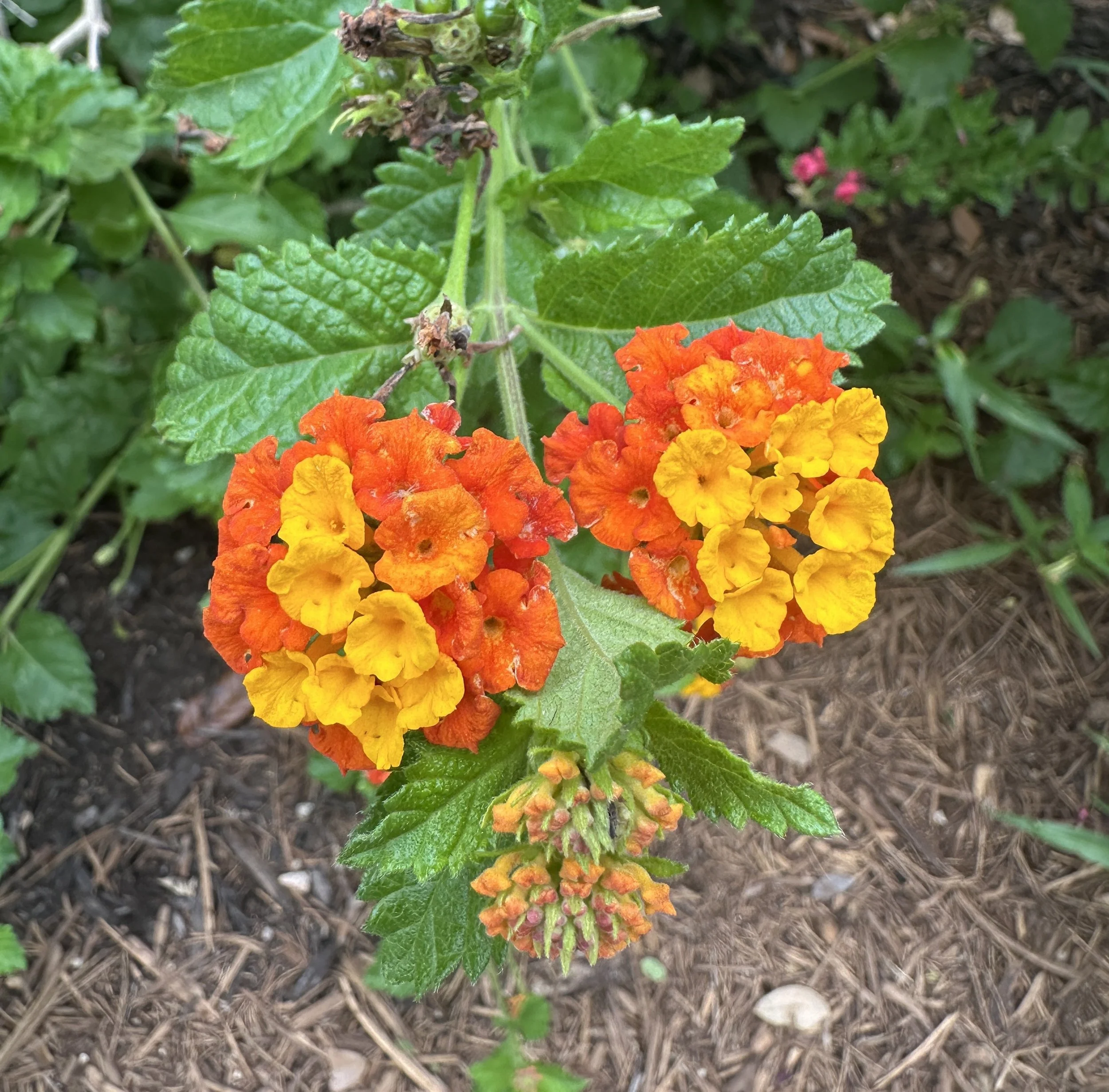
Texas Lantana (Lantana urticoides) is one of the toughest and most colorful native perennials for Central Texas landscapes. Its clusters of bright orange and yellow flowers bloom from spring until frost, attracting butterflies, bees, and other pollinators throughout the growing season. Texas Lantana thrives in full sun, tolerates heat, drought, and poor soils, and is highly resistant to deer, making it an excellent choice for low-maintenance, wildlife-friendly gardens.
Gardeners should take care not to confuse Texas Lantana with the many non-native lantana hybrids commonly sold in nurseries. While some cultivated lantanas are excellent landscape plants, others can be invasive, short-lived, or less beneficial to wildlife. For the greatest ecological value and reliability, I generally recommend the native Texas species whenever possible.
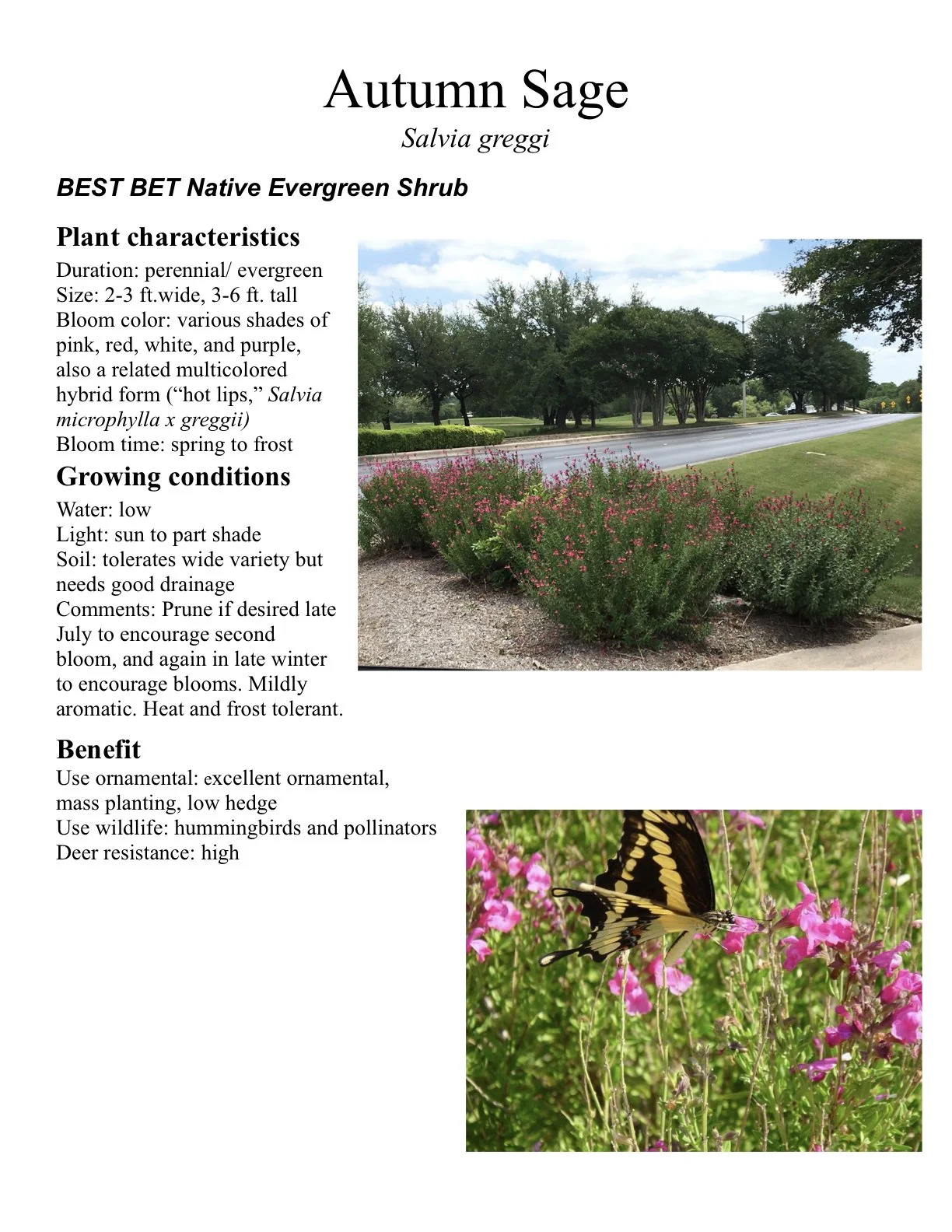
Autumn Sage
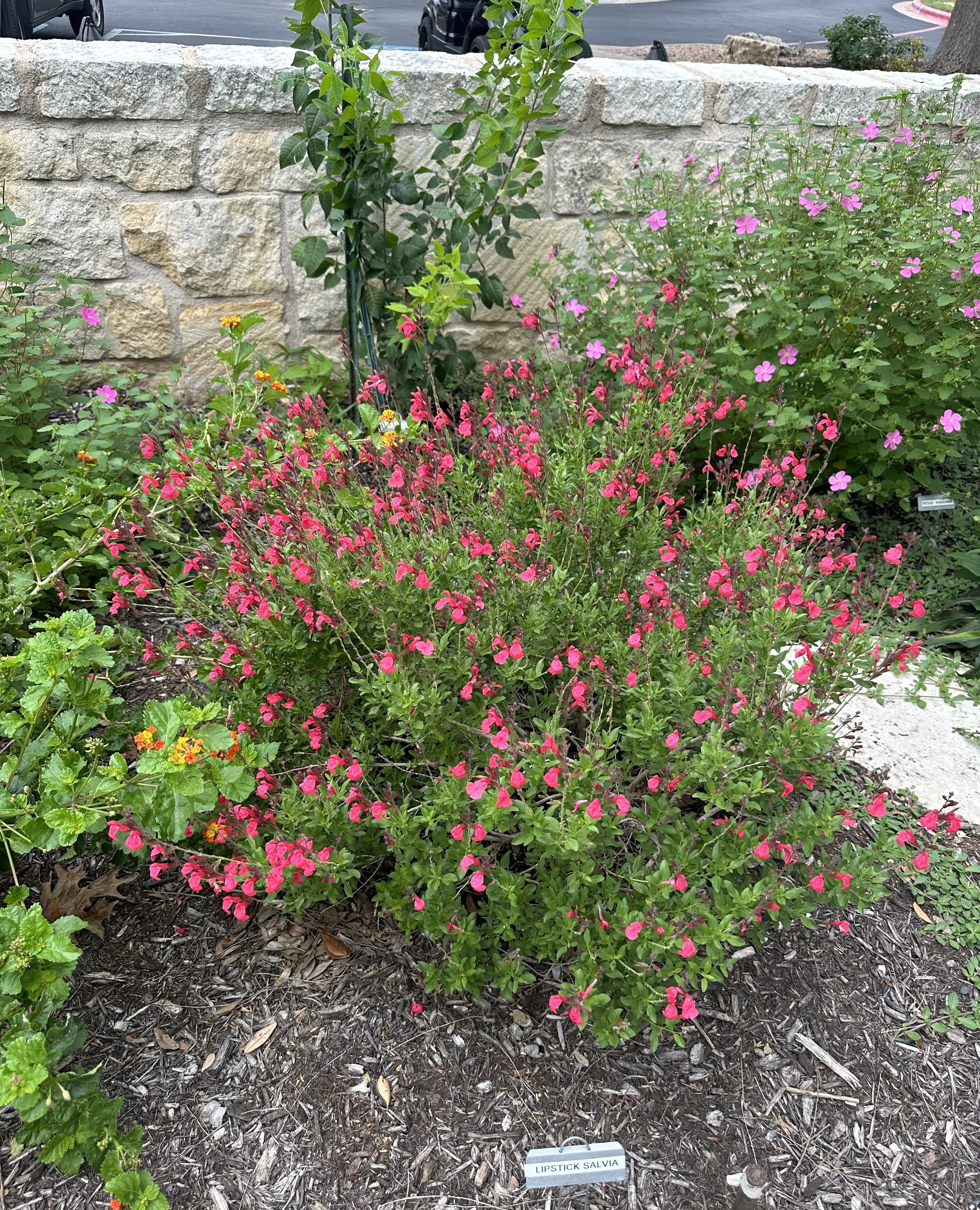
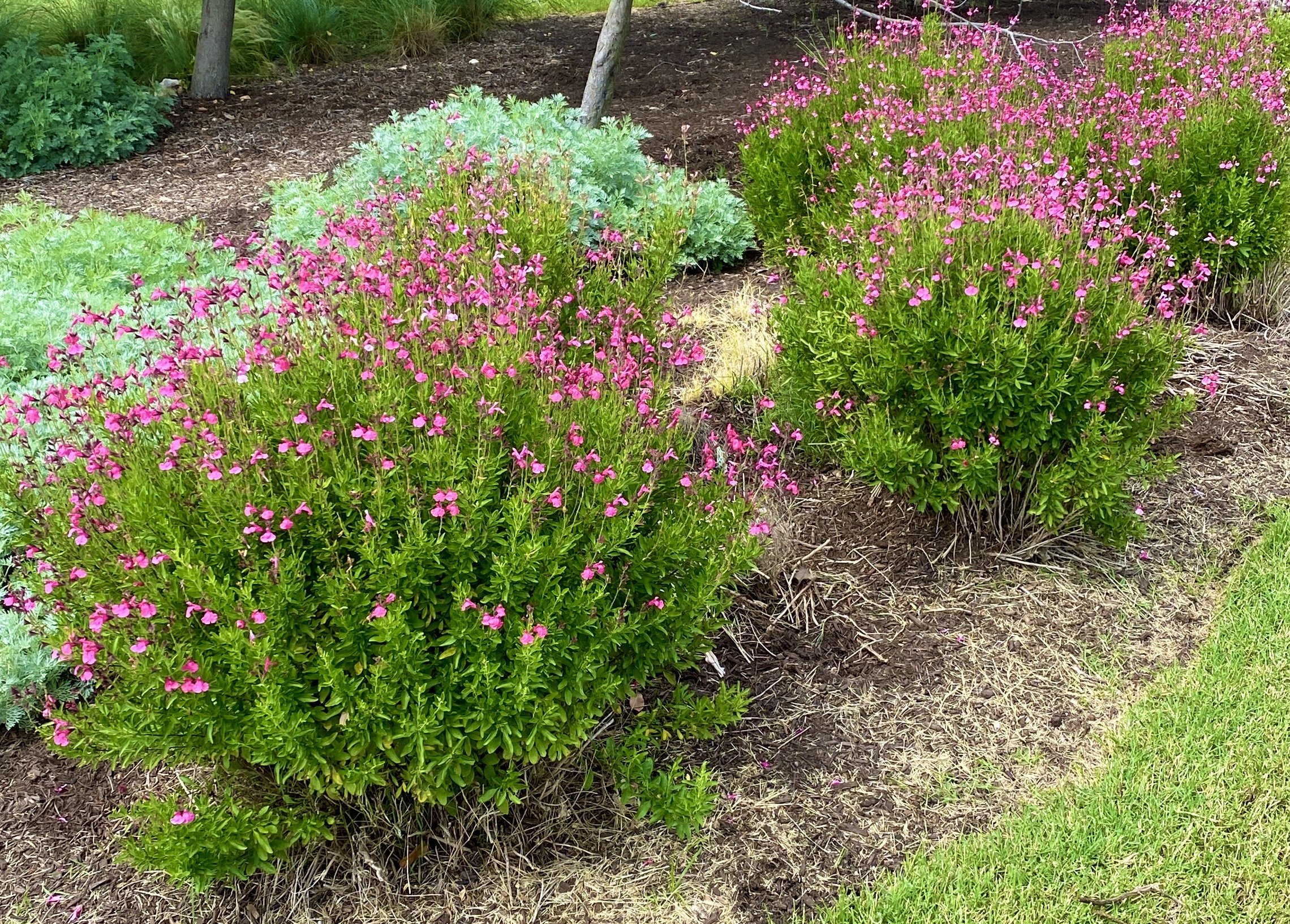
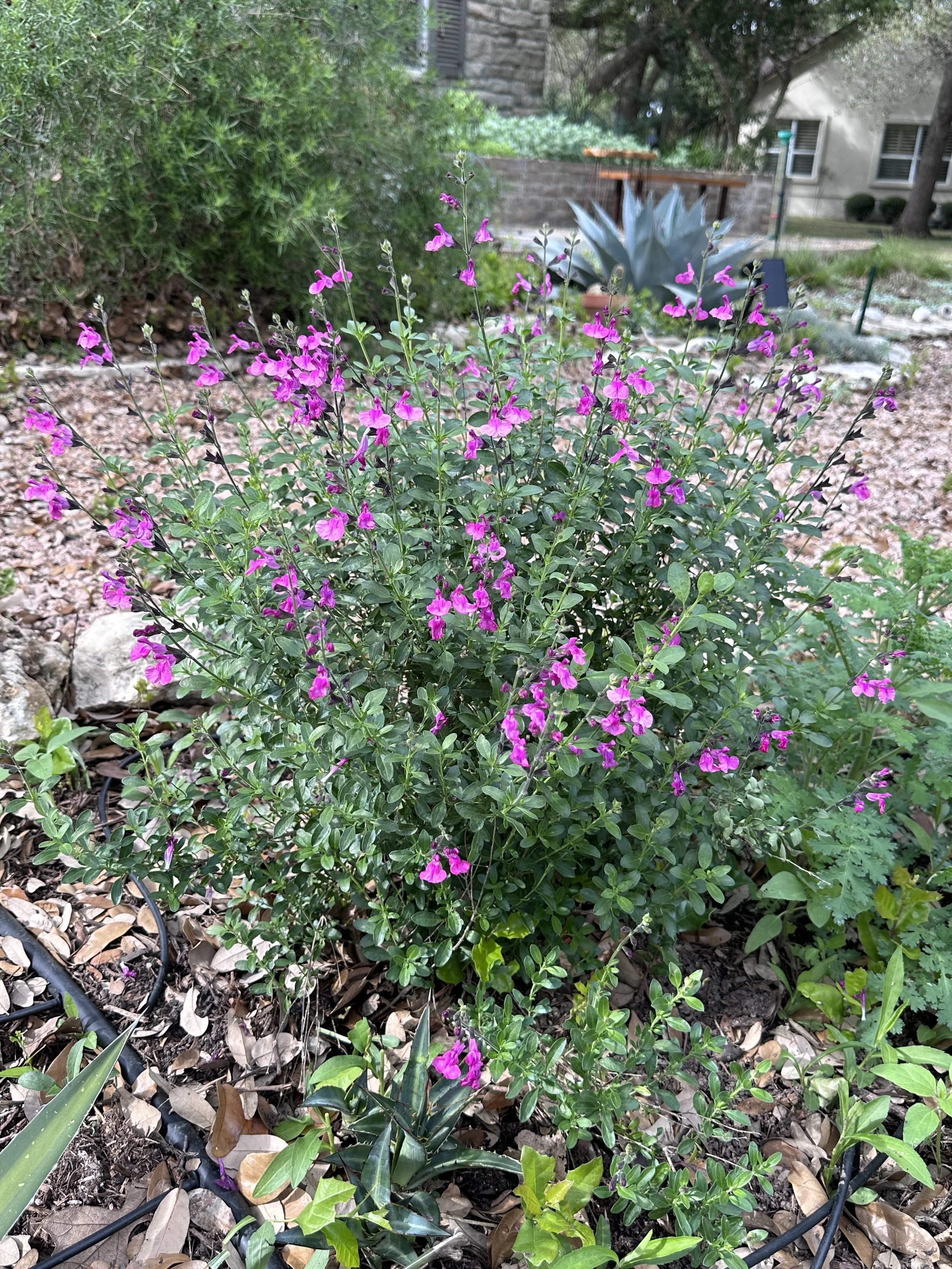
Autumn Sage (Salvia greggii) is a versatile native perennial that provides colorful blooms from spring through fall in shades of red, pink, coral, and white. Its nectar-rich flowers are highly attractive to hummingbirds, butterflies, and other pollinators. Autumn Sage thrives in full sun to part shade, tolerates heat and drought, and is one of the most reliable flowering plants for Central Texas landscapes.
Blackfoot Daisy
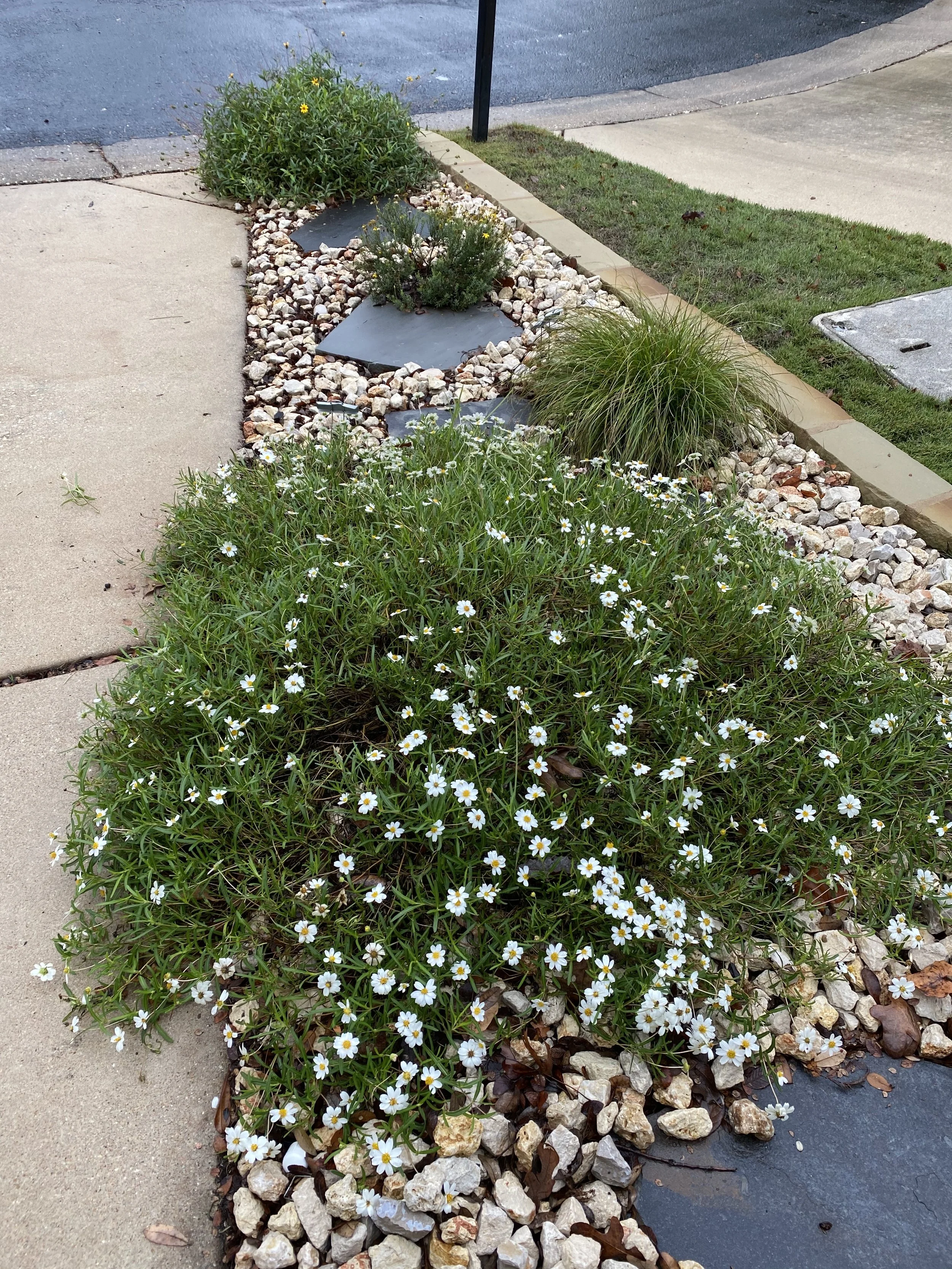
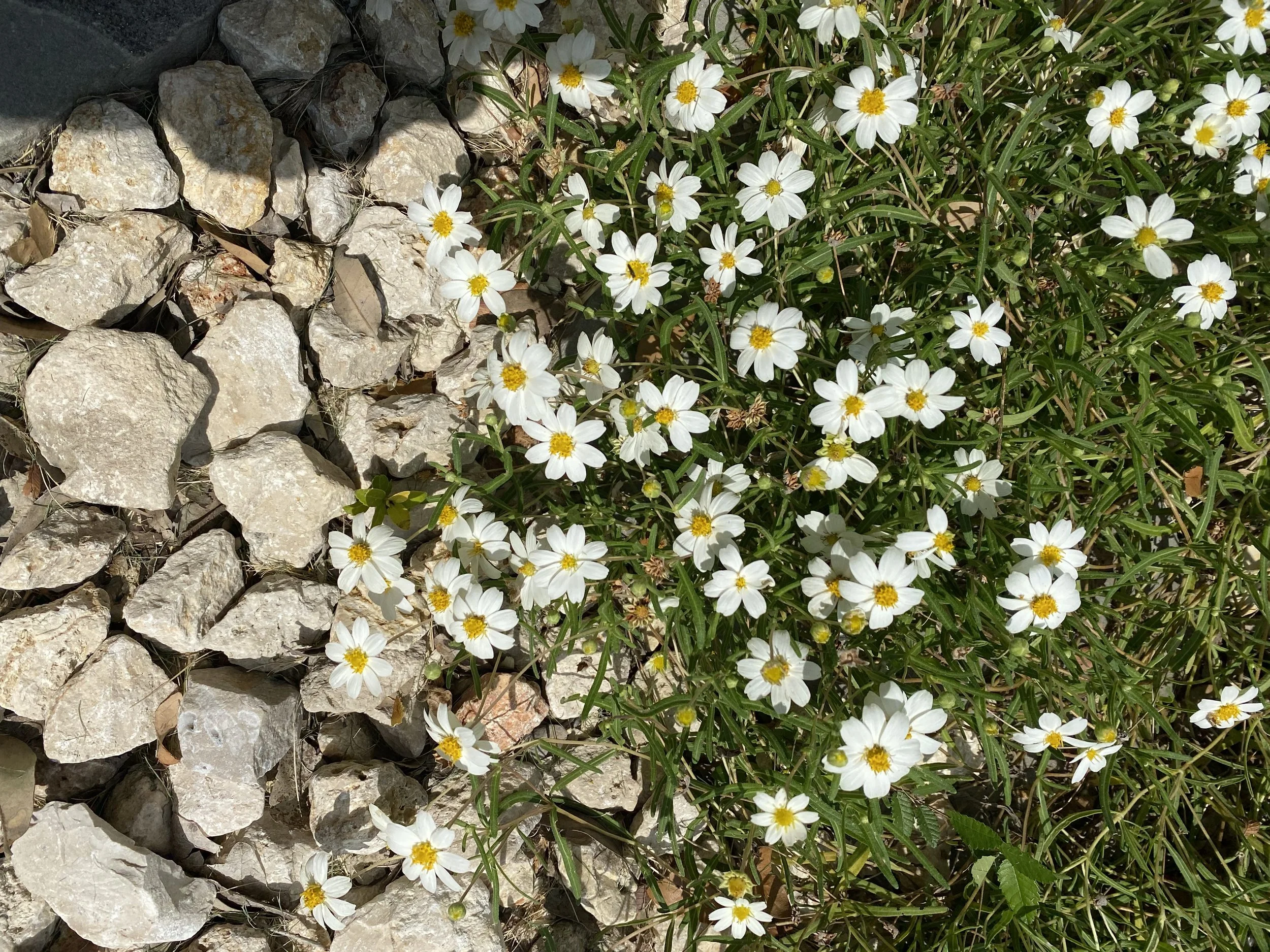
Blackfoot Daisy (Melampodium leucanthum) is a tough, long-blooming Central Texas native perennial prized for its cheerful white flowers and exceptional drought tolerance. It thrives in full sun and well-drained soils, often blooming from spring through fall with minimal care. Blackfoot Daisy attracts butterflies and other pollinators while remaining highly resistant to deer, making it an excellent choice for rock gardens, borders, and water-wise landscapes.