
Prairie Coneflower
Prairie Coneflower (Ratibida columnifera) is a cheerful, long-blooming native Texas wildflower that produces distinctive yellow petals surrounding a tall, reddish-brown central cone. Blooming from late spring through fall, it provides an abundant nectar source for butterflies, native bees, and other pollinators while its seeds feed songbirds later in the season. Exceptionally heat- and drought-tolerant, Prairie Coneflower thrives in full sun and poor, well-drained soils, making it an excellent choice for wildflower meadows, pollinator gardens, and water-wise landscapes. Its carefree nature and extended bloom season make it one of the easiest and most rewarding Texas natives to grow.
Mexican Oregano
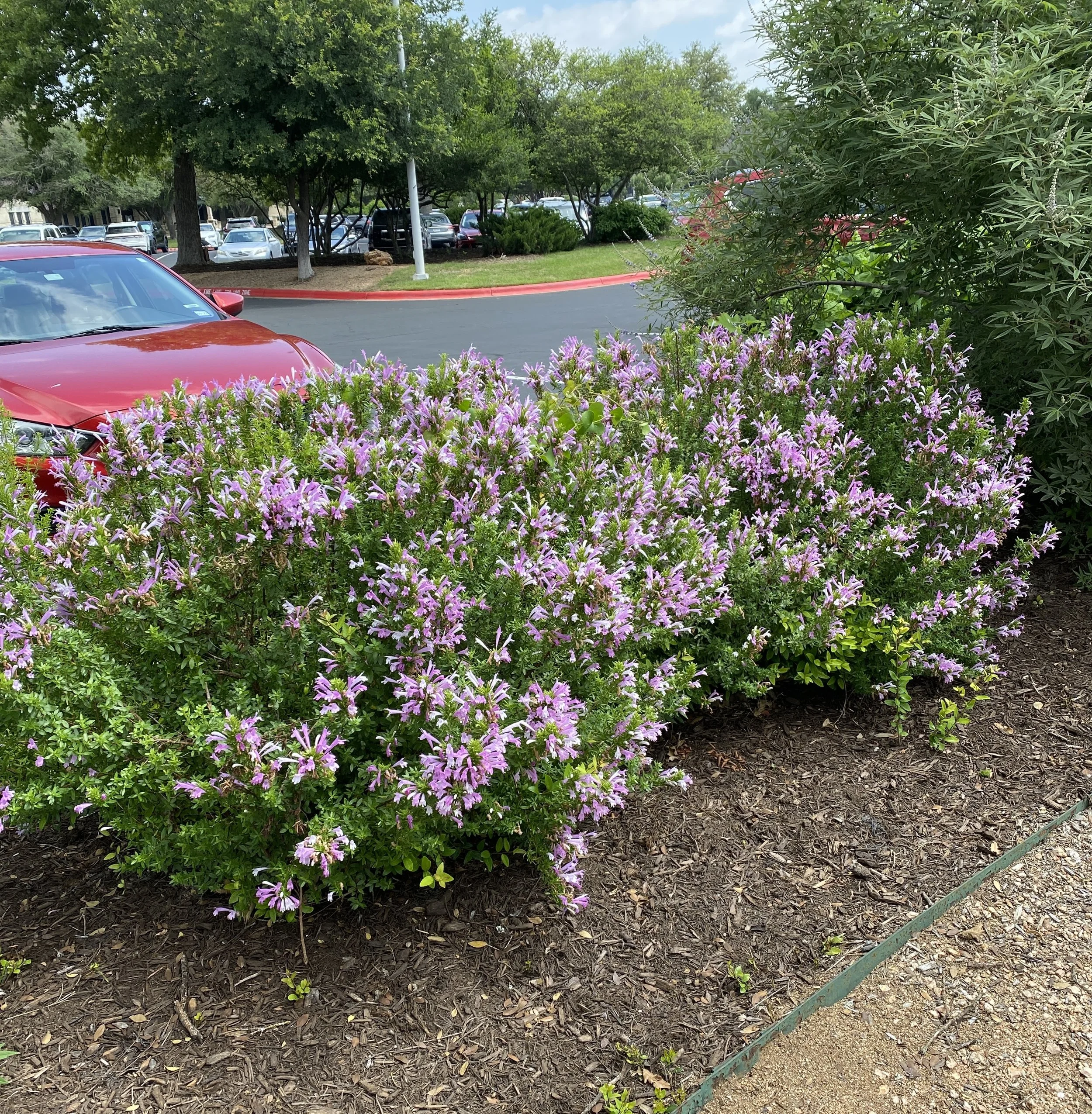
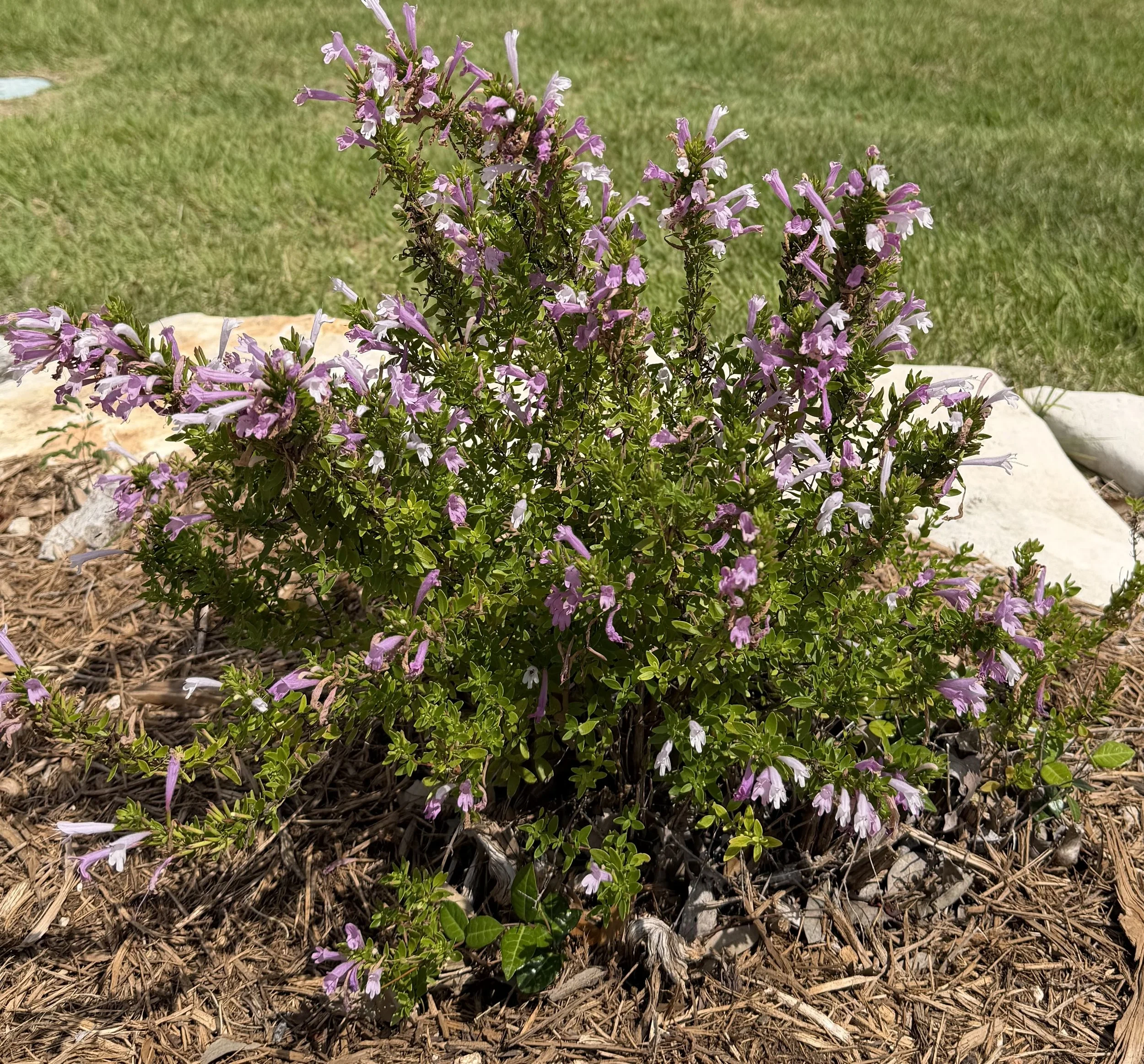
Mexican Oregano (Poliomintha longiflora) is an outstanding evergreen Texas native shrub prized for its fragrant foliage, abundant lavender flowers, and exceptional value to pollinators. Blooming from spring through fall, it attracts hummingbirds, butterflies, and native bees while thriving in full sun and well-drained soils. Its aromatic leaves can be harvested fresh or dried for culinary use, offering a flavor similar to oregano with hints of citrus and mint. Heat, drought, and deer resistant once established, Mexican Oregano is one of the most dependable and attractive shrubs for Central Texas landscapes.
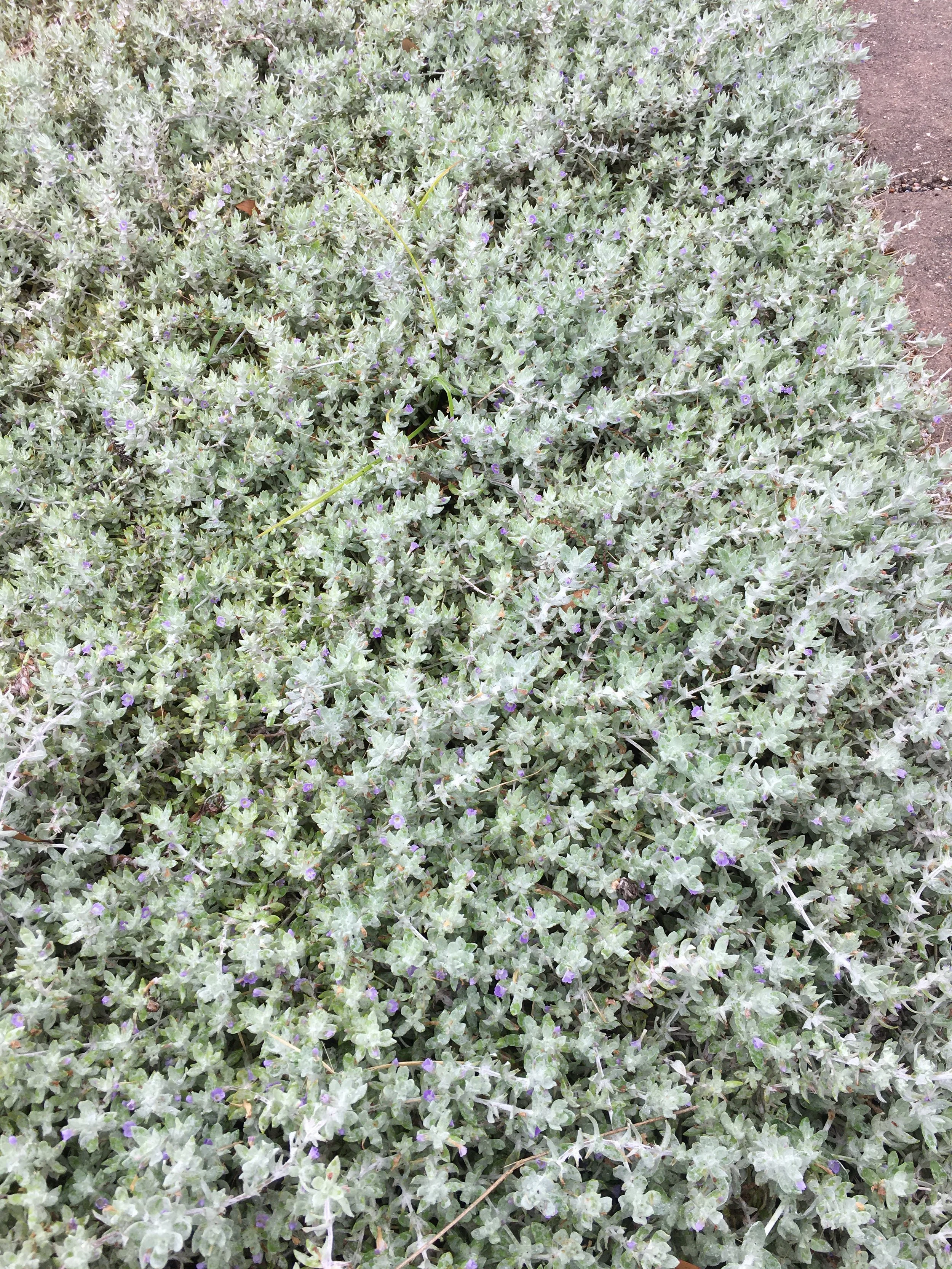
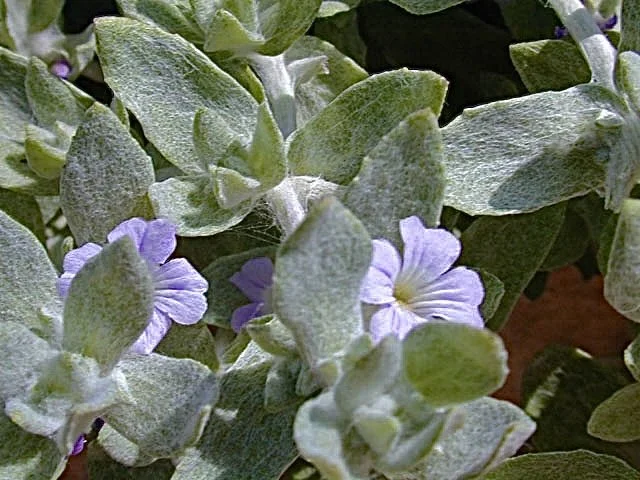
Woolly Stemodia
Woolly Stemodia (Stemodia lanata) is a charming, low-growing Texas native perennial prized for its soft, woolly silver-gray foliage and delicate lavender flowers. Blooming from spring through fall, it attracts native bees and other pollinators while thriving in full sun, heat, drought, and rocky limestone soils. Its compact habit and attractive texture make it an excellent choice for rock gardens, edging pathways, and the front of native plant beds, where it provides year-round interest with very little maintenance.
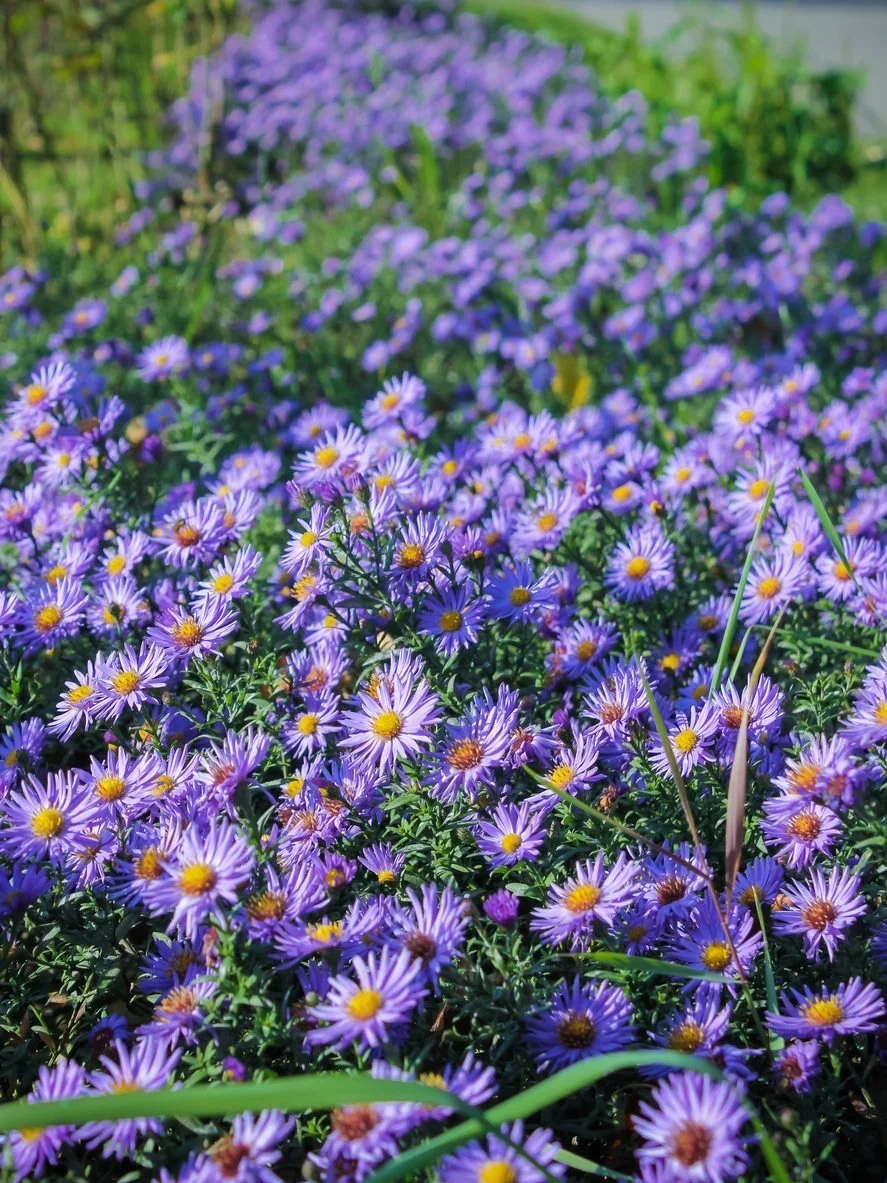
Fall Aster
Fall Aster (Symphyotrichum oblongifolium) is one of the stars of the autumn garden, producing masses of lavender to violet, daisy-like flowers with bright yellow centers just as many other plants are finishing their bloom season. This hardy Texas native perennial forms a dense, rounded mound of aromatic foliage and thrives in the heat, drought, and limestone soils of Central Texas. Its late-season flowers are an invaluable source of nectar for native bees, butterflies, and migrating monarchs, making it one of the most important pollinator plants for fall. Easy to grow and long-lived, Fall Aster adds a spectacular splash of color to native gardens, borders, meadows, and wildlife landscapes.
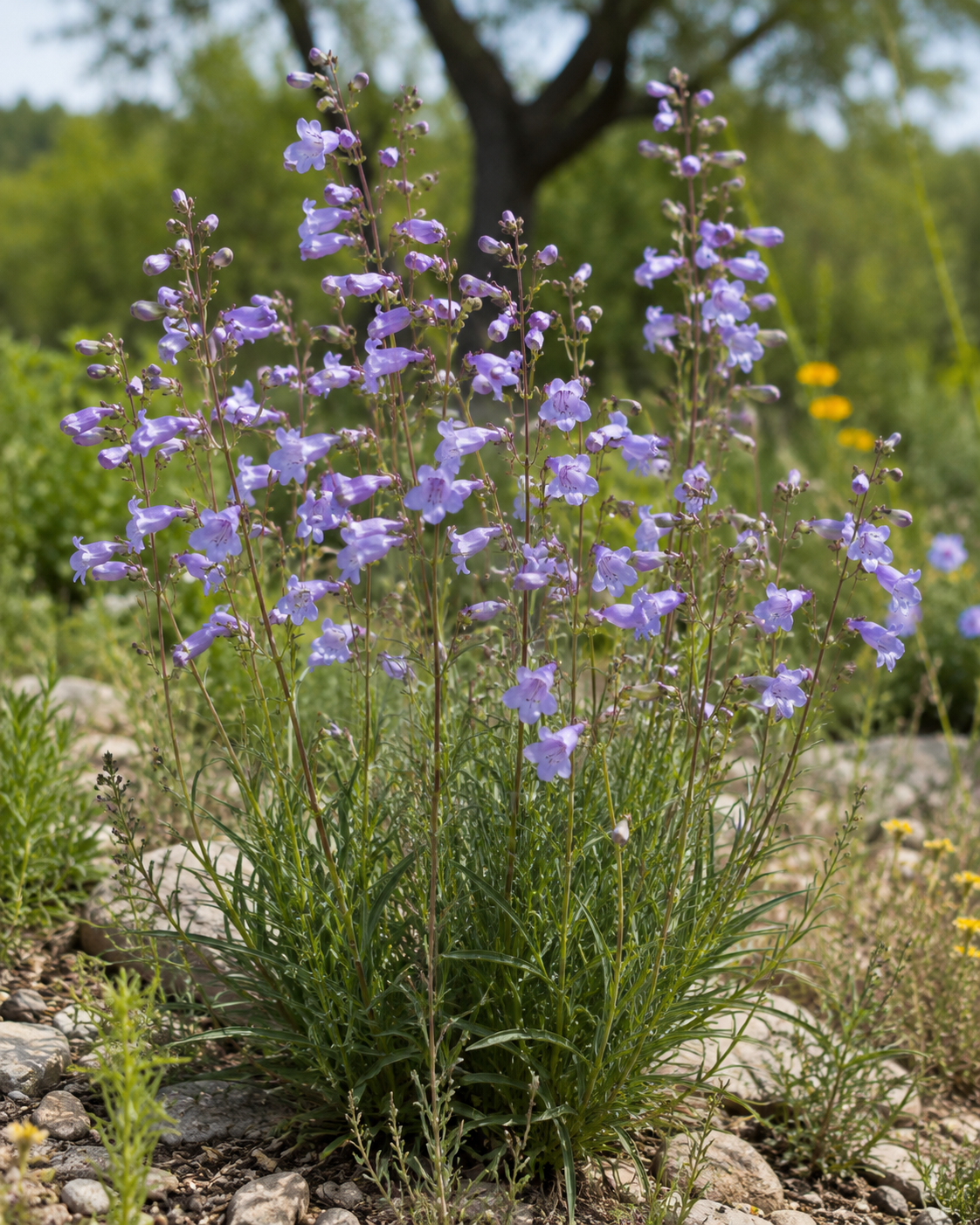
Brazos (Gulf Coast) Penstemon
Brazos Penstemon (Penstemon tenuis) is an elegant Texas native perennial prized for its tall spikes of soft lavender to pale purple, tubular flowers that bloom in spring. A favorite of hummingbirds, native bees, and butterflies, it adds height and graceful movement to sunny or lightly shaded gardens while thriving in the clay and limestone soils common across Central Texas. Once established, Brazos Penstemon is both drought tolerant and easy to grow, making it an excellent choice for native plant gardens, pollinator habitats, and naturalized landscapes. Its delicate blooms and upright form pair beautifully with grasses, salvias, and other native wildflowers.
Desert Willow
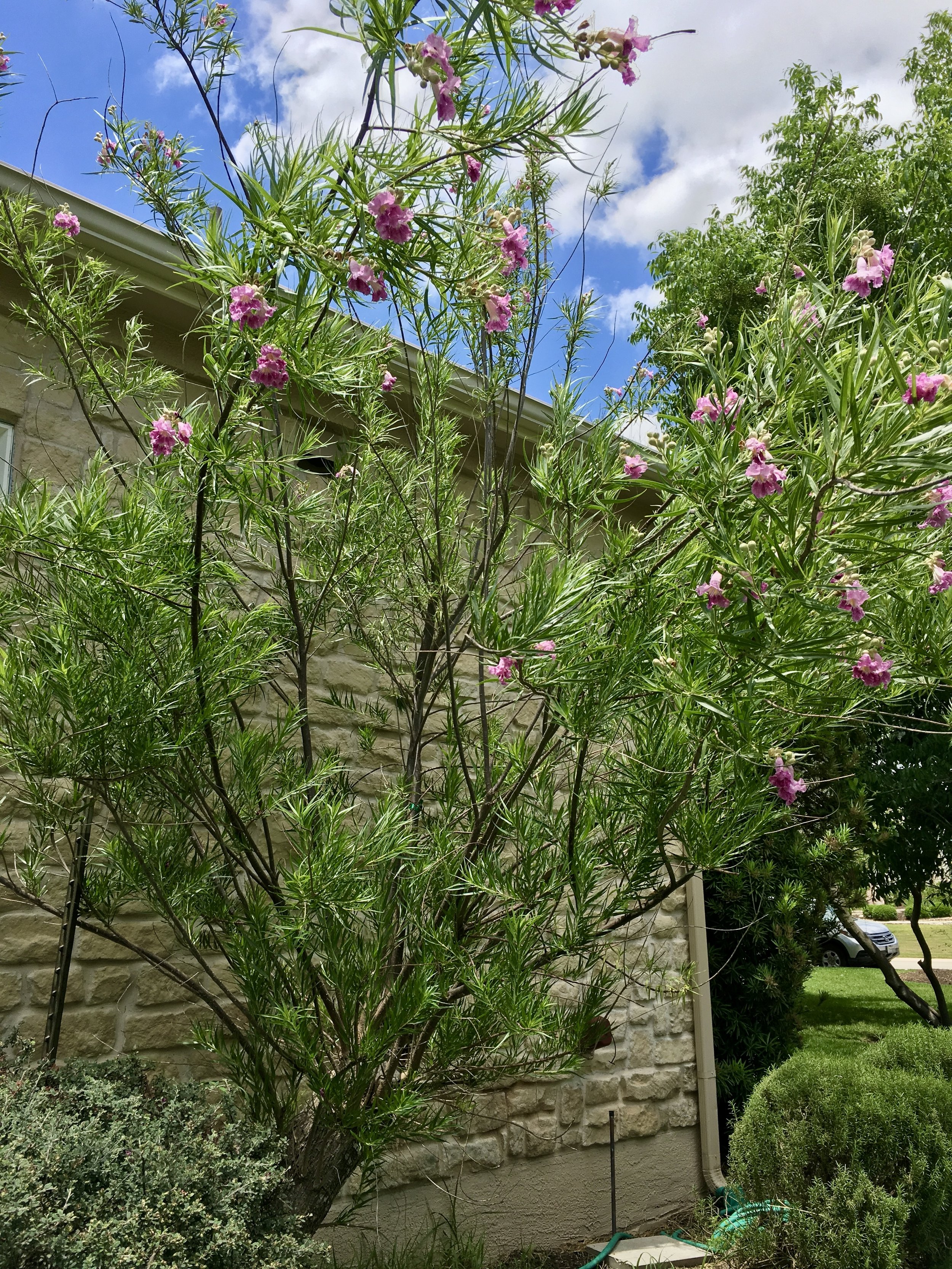
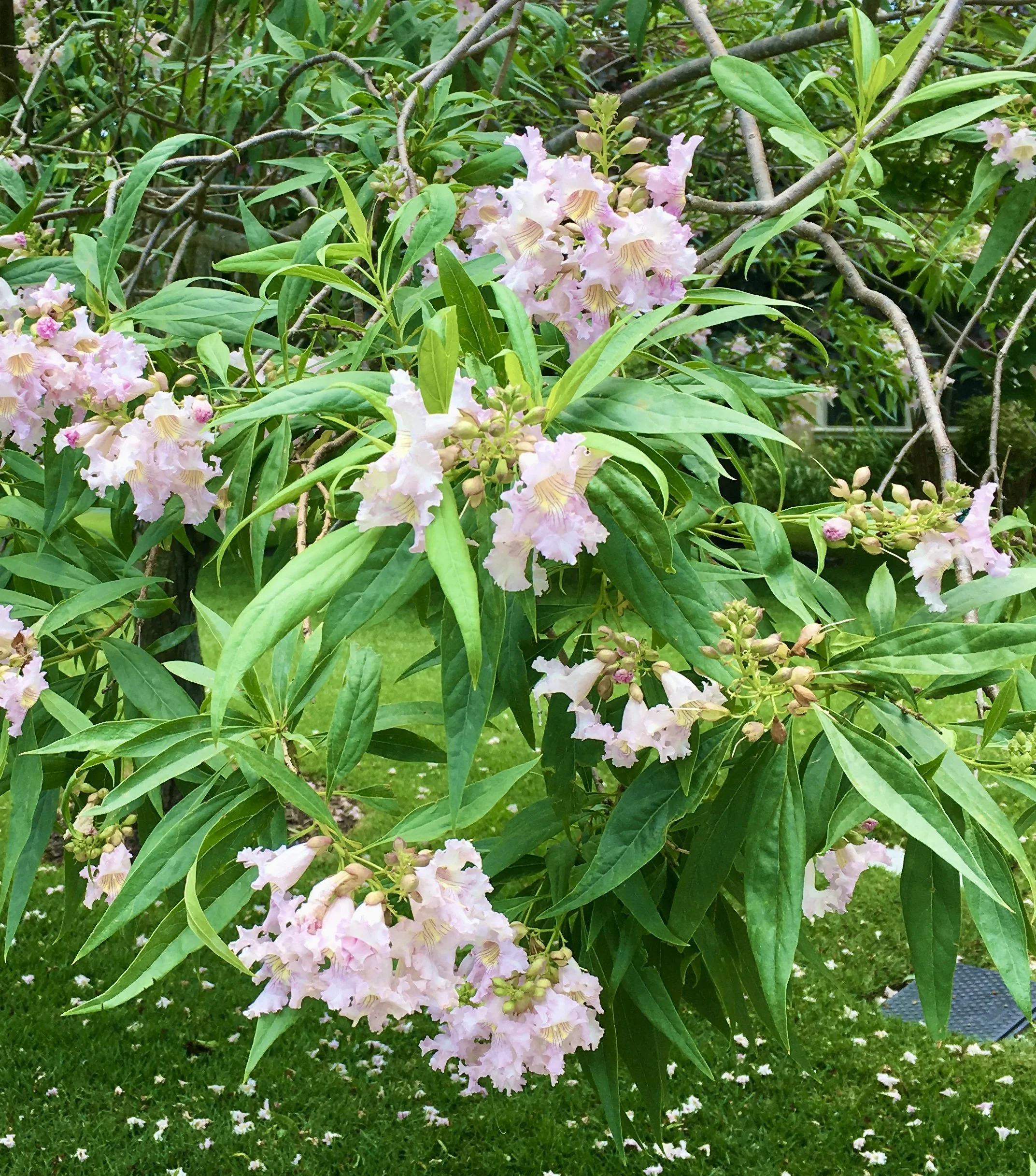
Desert Willow (Chilopsis linearis)
Desert Willow is one of the most beautiful and dependable small native trees for Central Texas landscapes. Despite its name, it is not a true willow but is prized for its graceful, willow-like foliage and abundant trumpet-shaped flowers that bloom from late spring through summer. The blossoms, which range from lavender-pink to deep purple with yellow and white markings, are highly attractive to hummingbirds, bees, and butterflies. Exceptionally heat and drought tolerant once established, Desert Willow thrives in full sun and well-drained soils, making it an outstanding choice for water-wise landscapes. Its long flowering season, airy form, and outstanding wildlife value make it a favorite for both residential gardens and naturalized settings.
Texas Mountain Laurel
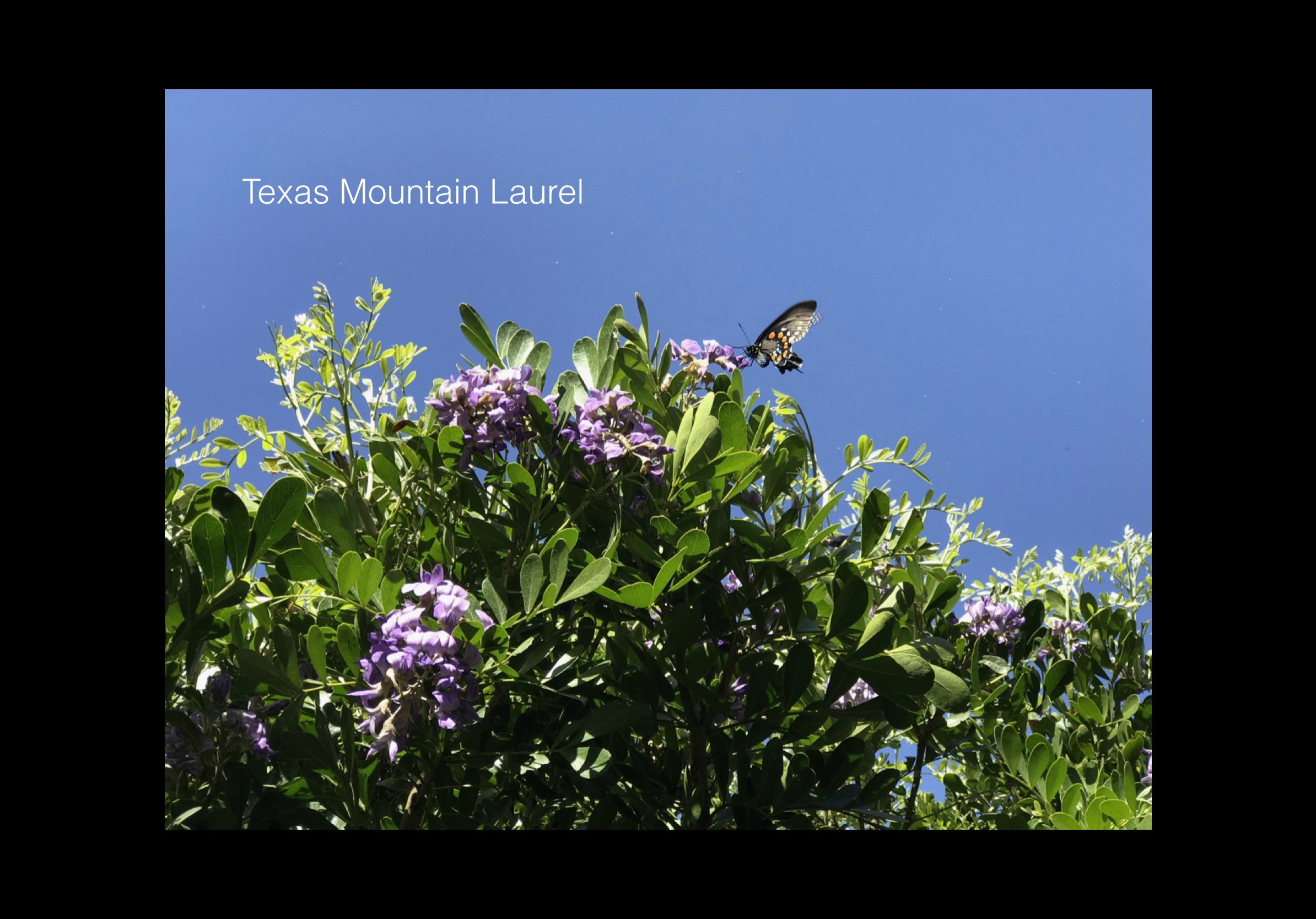
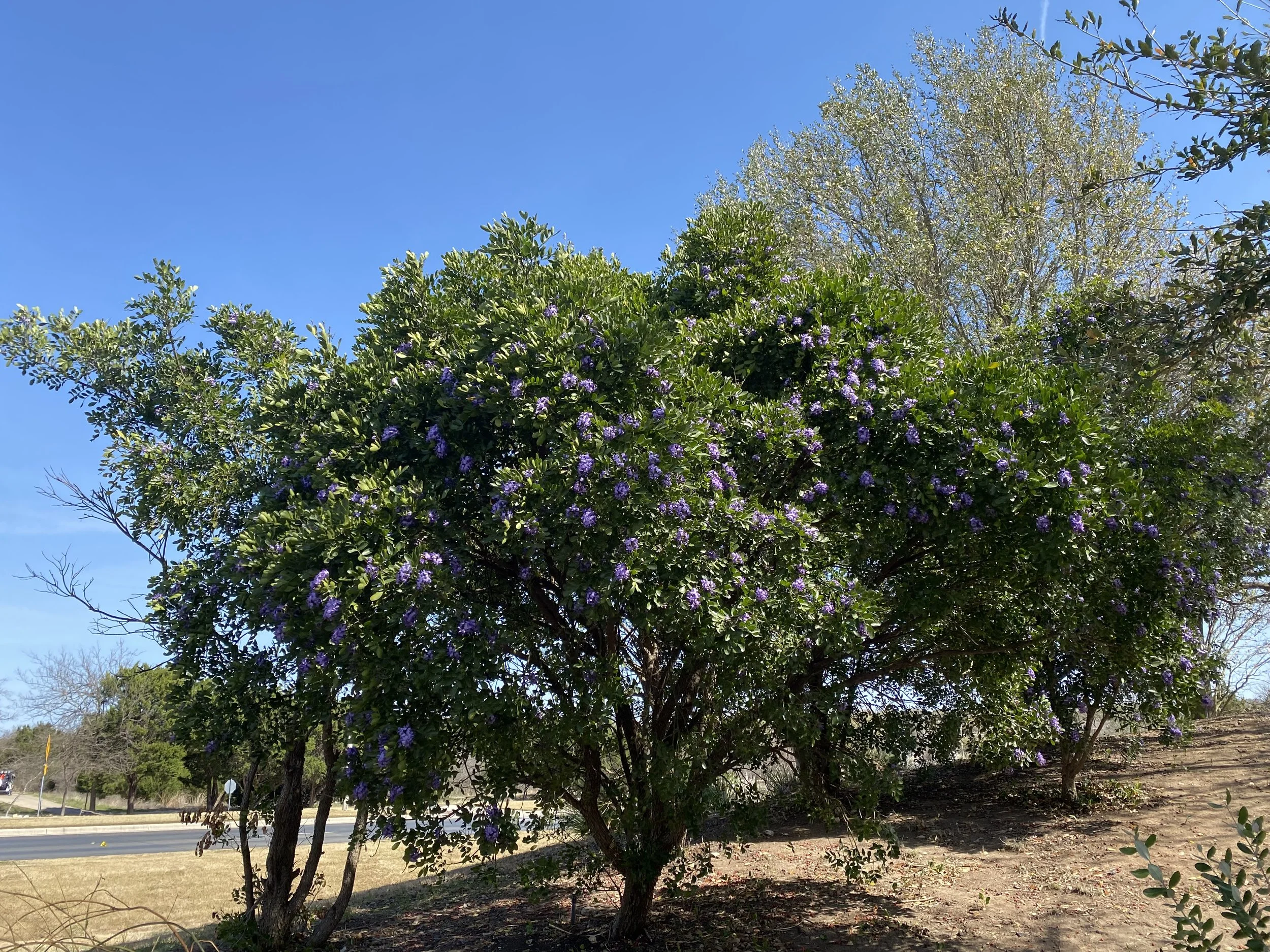
Texas Mountain Laurel (Sophora secundiflora) is one of the most treasured native small trees in Texas, prized for its glossy evergreen foliage and spectacular clusters of fragrant purple flowers. Blooming in early spring, the blossoms fill the air with a sweet grape-like fragrance and attract bees and other pollinators. Its dense, dark green canopy provides year-round beauty and makes an excellent focal point in the landscape.
Texas Mountain Laurel thrives in full sun to part shade and is highly adapted to the heat, drought, and alkaline soils of Central Texas. Slow growing but exceptionally long-lived, it requires little maintenance once established and is one of the finest native trees for residential landscapes.
Gregg’s Mistflower
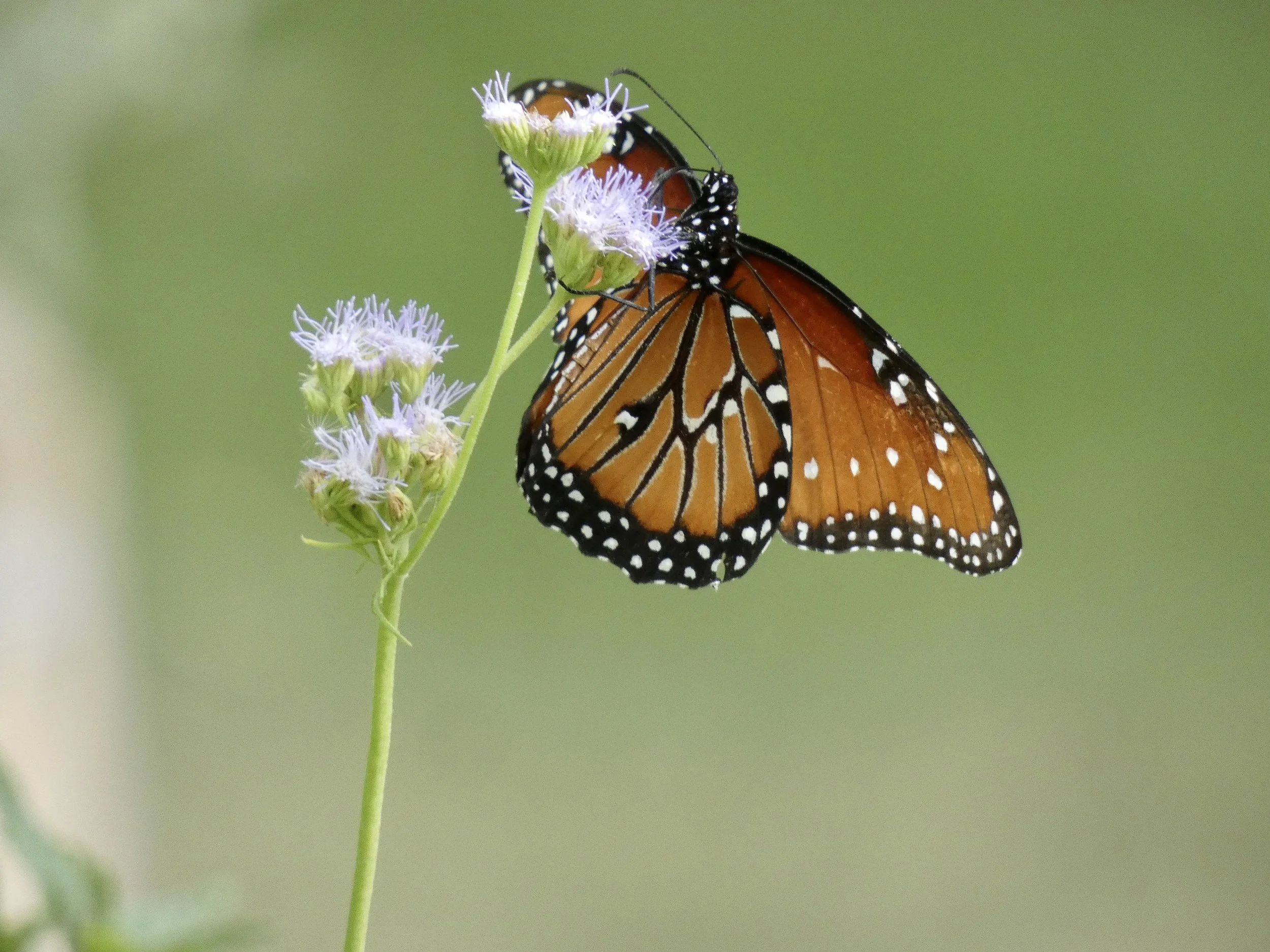
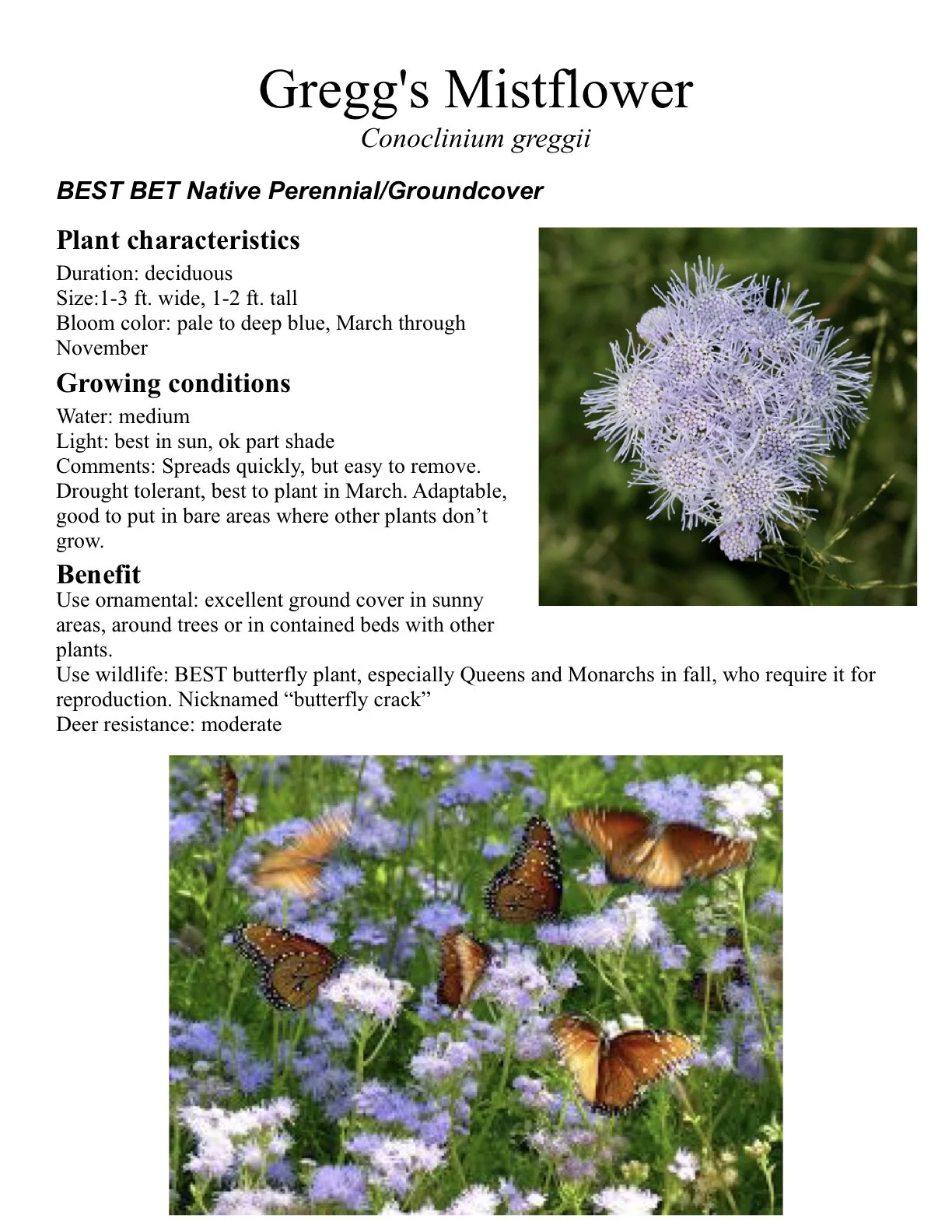
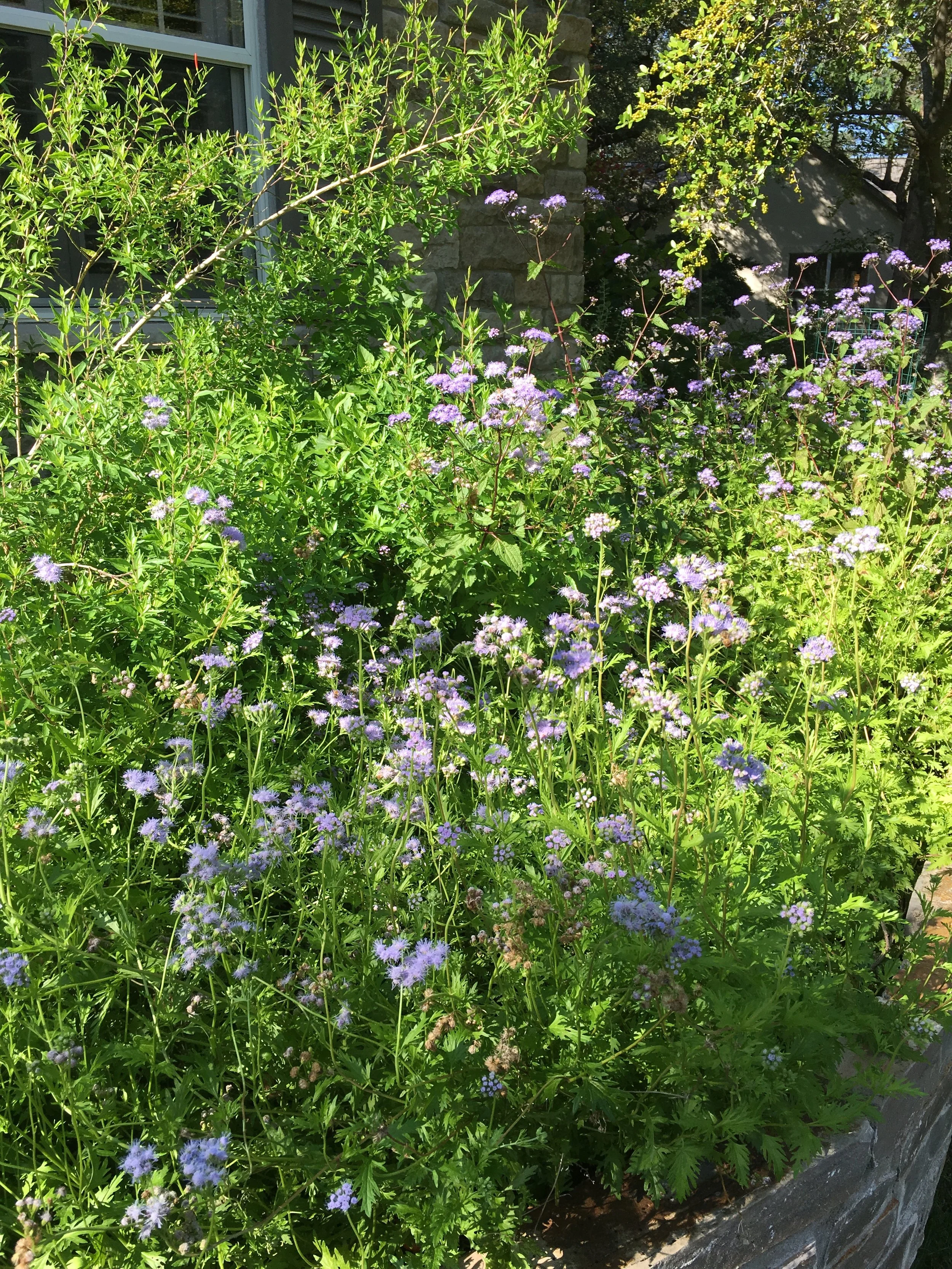
Gregg’s Mistflower (Conoclinium greggii) is one of the finest native plants for attracting butterflies to Central Texas gardens. Its clusters of soft lavender-blue flowers bloom from late summer through fall, often covering the plant with color when many other perennials have finished flowering. Butterflies, bees, and other pollinators are drawn to the abundant nectar produced by its blooms.
Gregg’s Mistflower thrives in full to part shade and is remarkably drought tolerant once established. It spreads gradually to form attractive colonies, making it an excellent choice for naturalized areas, pollinator gardens, and wildlife-friendly landscapes.
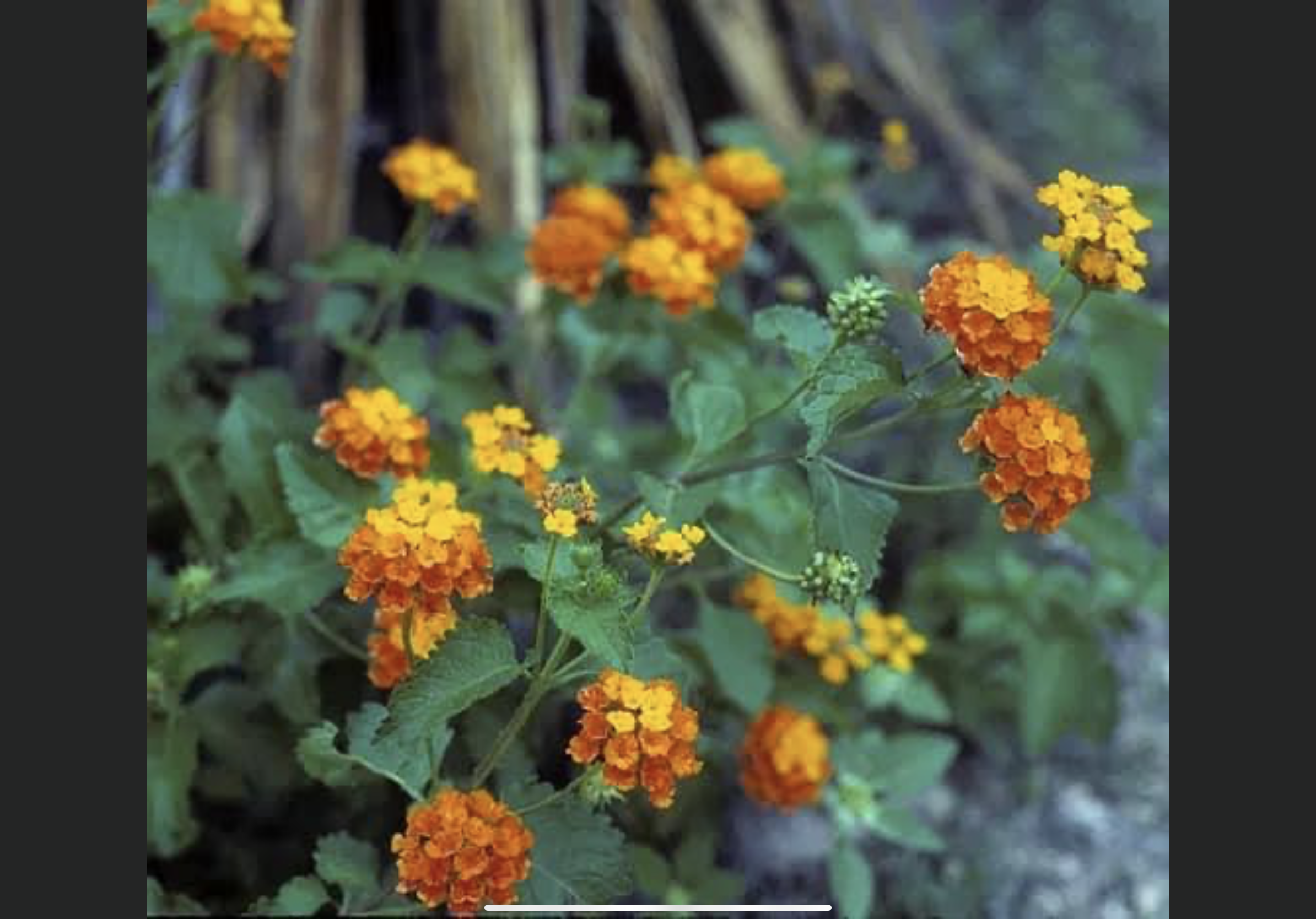
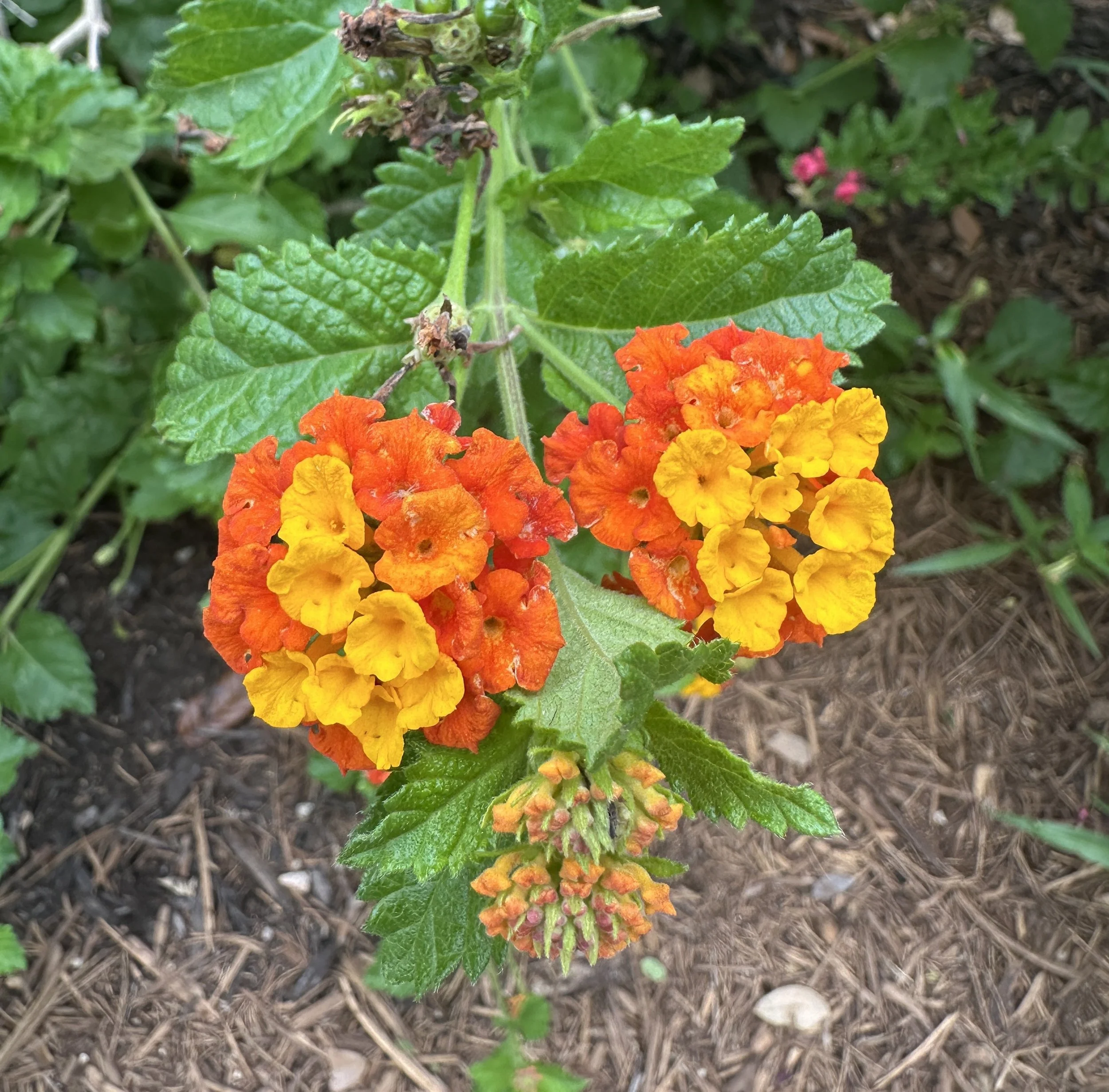
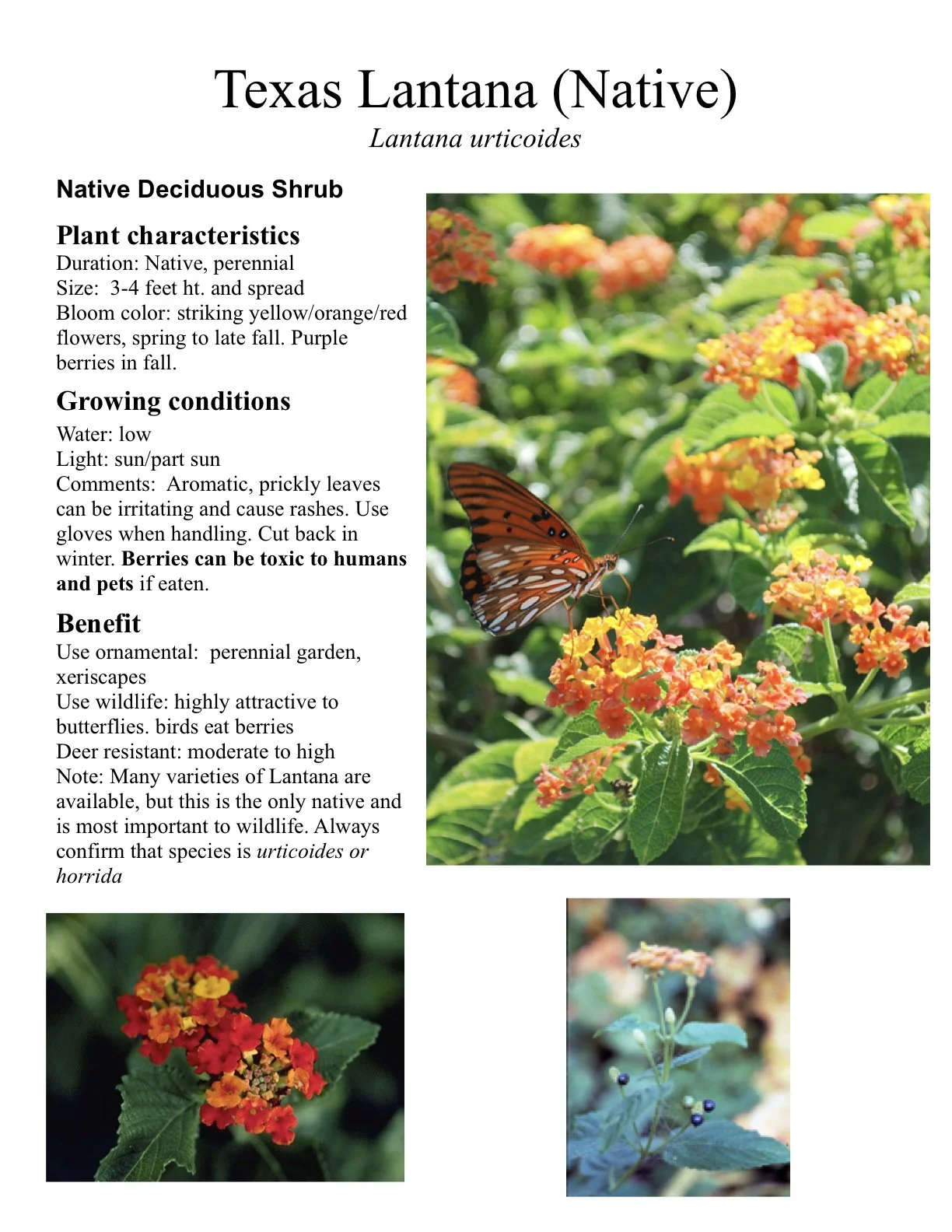
Texas Lantana
Texas Lantana (Lantana urticoides) is one of the toughest and most colorful native perennials for Central Texas landscapes. Its clusters of bright orange and yellow flowers bloom from spring until frost, attracting butterflies, bees, and other pollinators throughout the growing season. Texas Lantana thrives in full sun, tolerates heat, drought, and poor soils, and is highly resistant to deer, making it an excellent choice for low-maintenance, wildlife-friendly gardens.
Gardeners should take care not to confuse Texas Lantana with the many non-native lantana hybrids commonly sold in nurseries. While some cultivated lantanas are excellent landscape plants, others can be invasive, short-lived, or less beneficial to wildlife. For the greatest ecological value and reliability, I generally recommend the native Texas species whenever possible.
Texas Sage
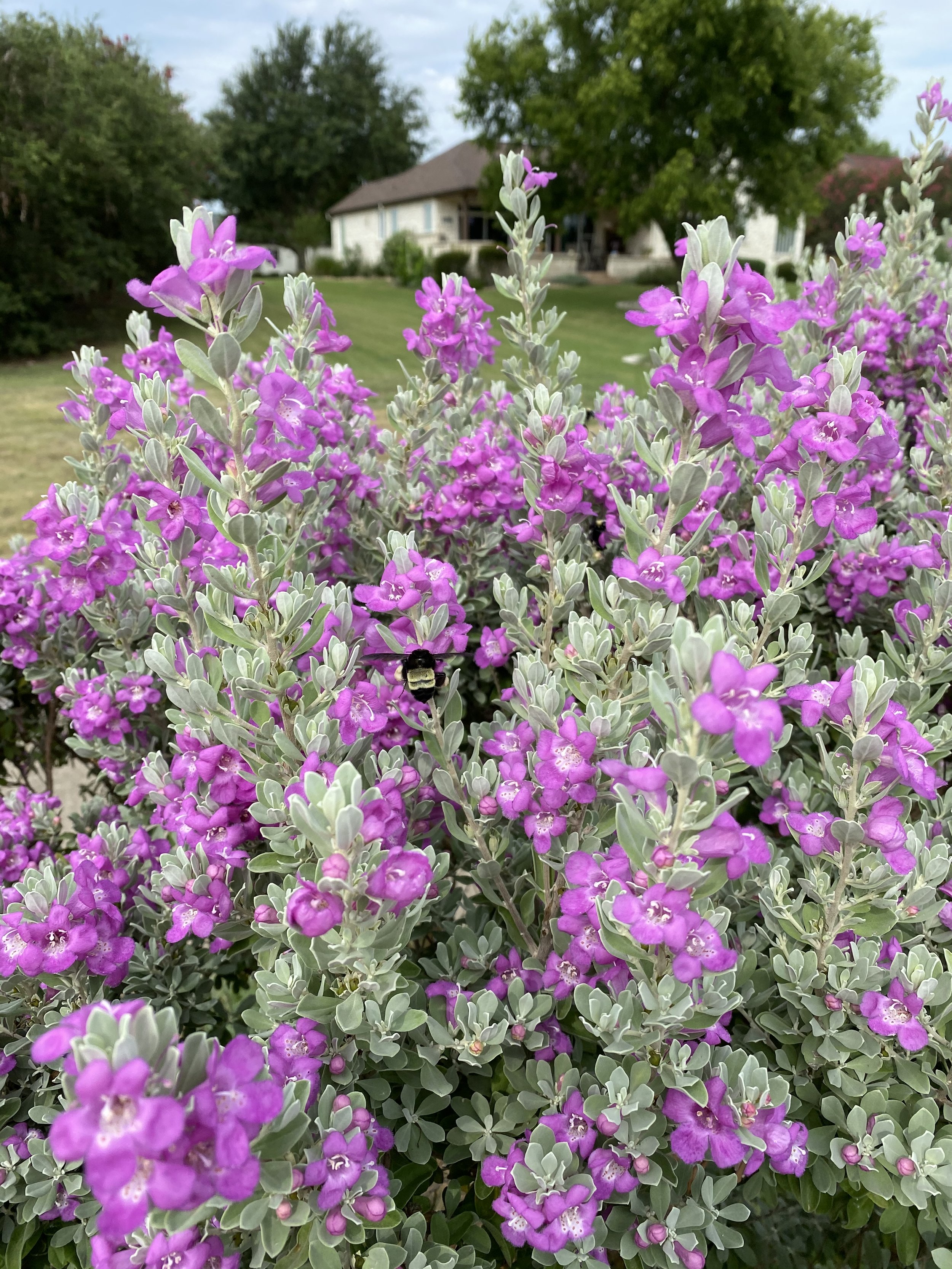
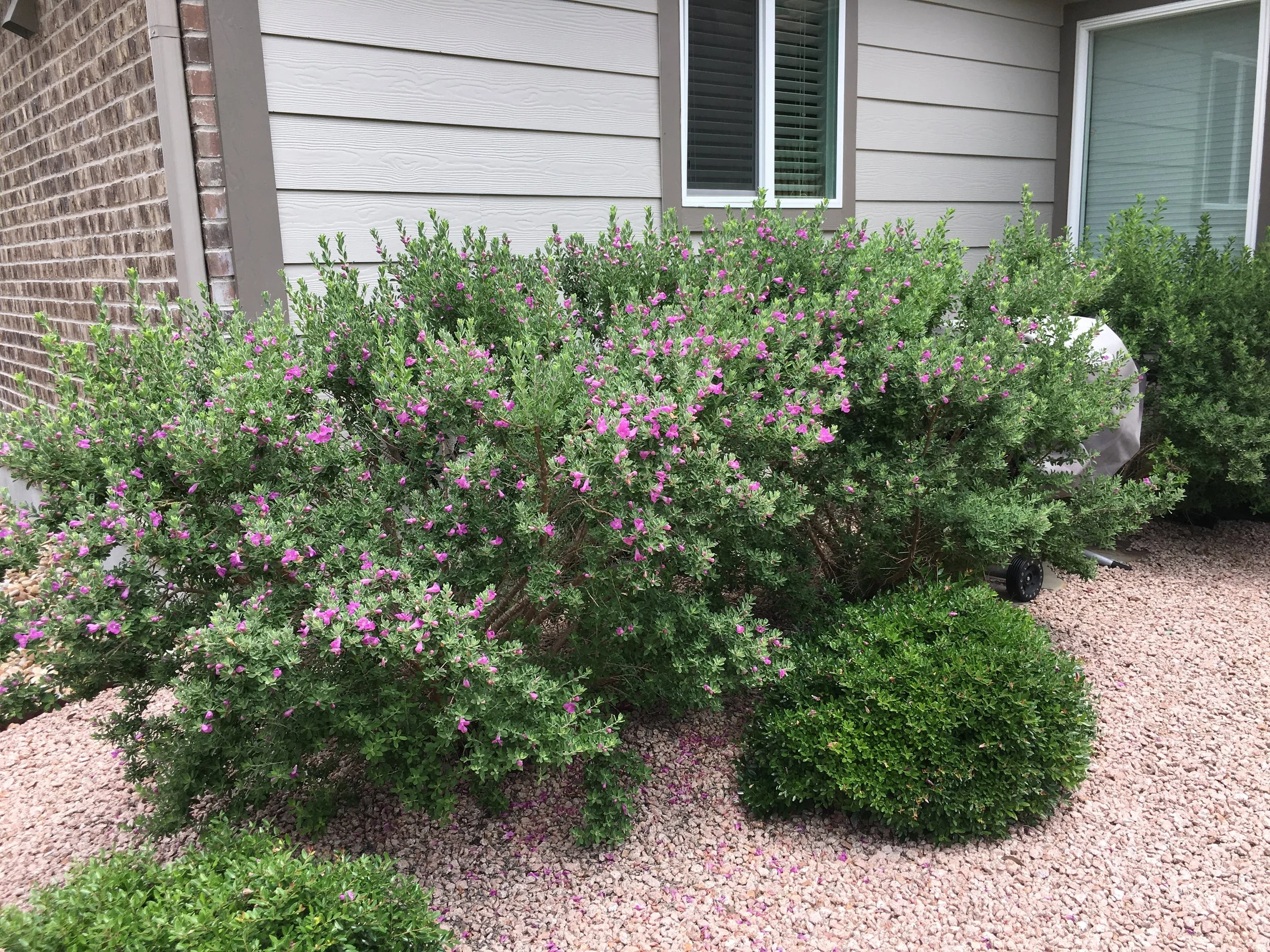
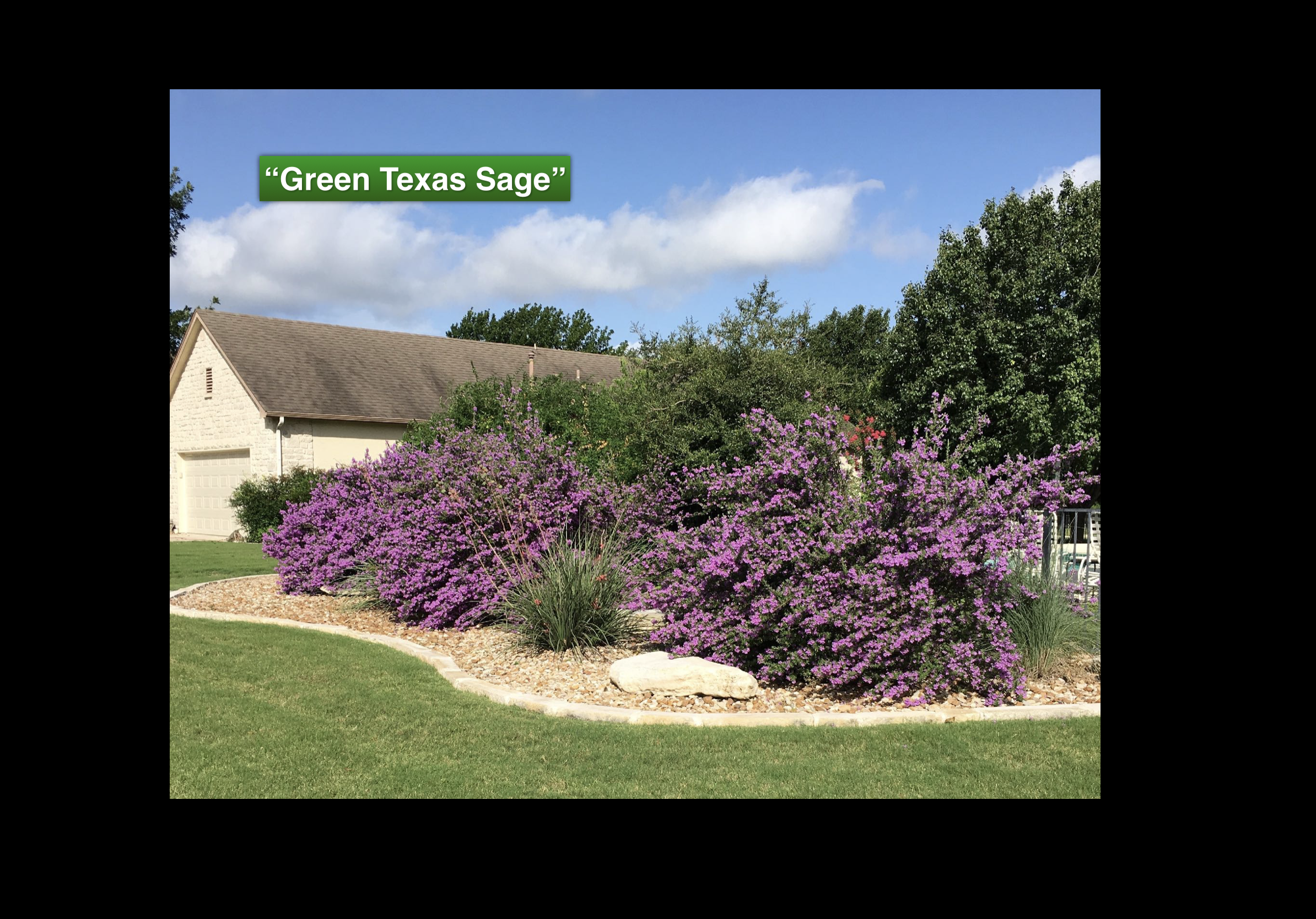
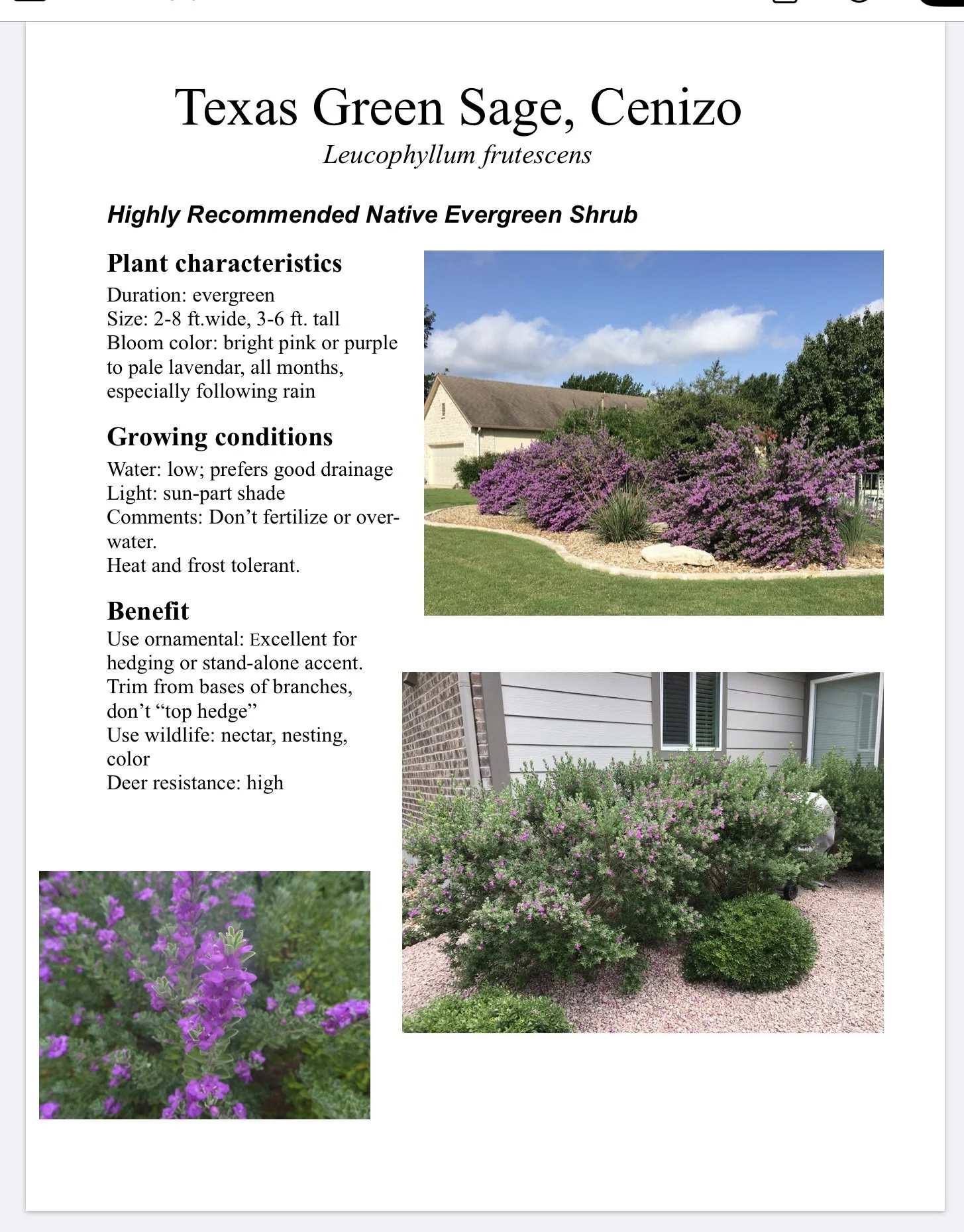
Texas Sage (Leucophyllum frutescens) is one of the most dependable evergreen native shrubs for Central Texas landscapes. It tolerates heat, drought, and reflected sun while producing lavender-purple flowers after periods of humidity and rain. Deer resistant and often used near utility boxes.